Rafael Pérez-Torres - Böcker
Visar alla böcker från författaren Rafael Pérez-Torres. Handla med fri frakt och snabb leverans.
4 produkter
4 produkter
273 kr
Skickas inom 7-10 vardagar
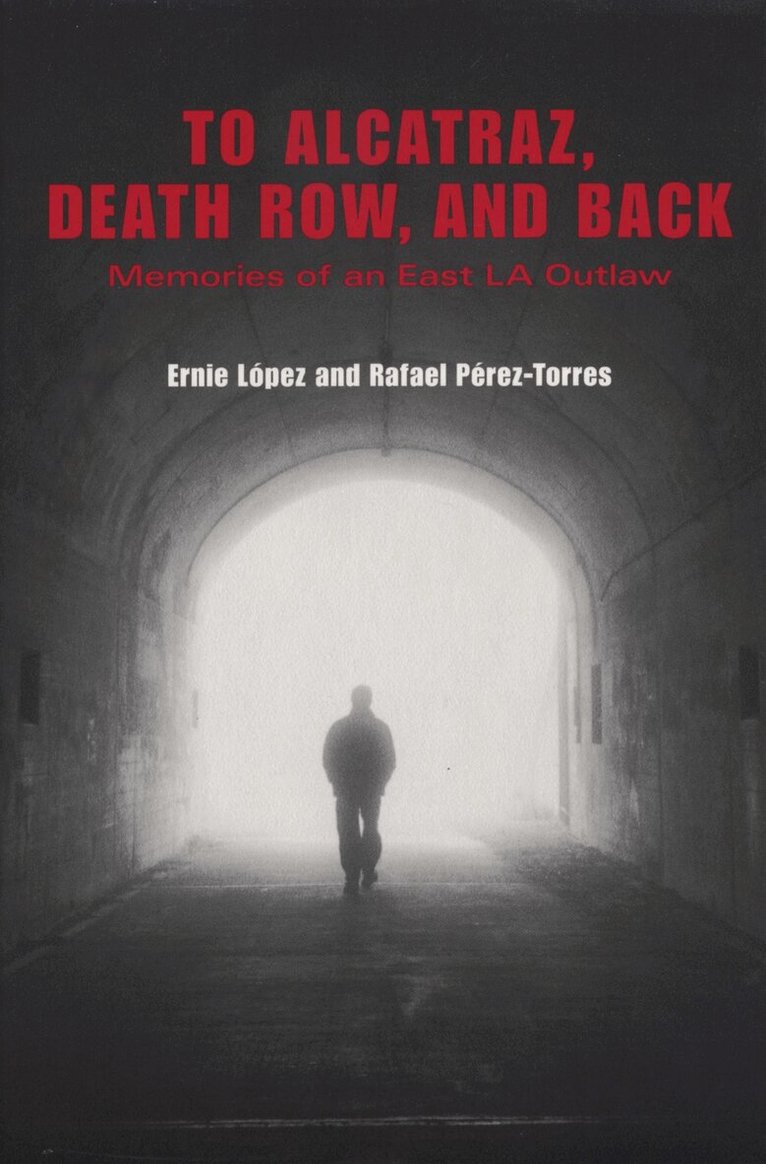
When Ernie LÓpez was a boy selling newspapers in Depression-era Los Angeles, his father beat him when he failed to bring home the expected eighty to ninety cents a day. When the beatings became unbearable, he took to petty stealing to make up the difference. As his thefts succeeded, Ernie's sense of necessity got tangled up with ambition and adventure. At thirteen, a joyride in a stolen car led to a sentence in California's harshest juvenile reformatory. The system's failure to show any mercy soon propelled LÓpez into a cycle of crime and incarceration that resulted in his spending decades in some of America's most notorious prisons, including four and a half years on death row for a murder LÓpez insists he did not commit. To Alcatraz, Death Row, and Back is the personal life story of a man who refused to be broken by either an abusive father or an equally abusive criminal justice system. While LÓpez freely admits that "I've been no angel," his insider's account of daily life in Alcatraz and San Quentin graphically reveals the violence, arbitrary infliction of excessive punishment, and unending monotony that give rise to gang cultures within the prisons and practically insure that parolees will commit far worse crimes when they return to the streets. Rafael PÉrez-Torres discusses how Ernie LÓpez's experiences typify the harsher treatment that ethnic and minority suspects often receive in the American criminal justice system, as well as how they reveal the indomitable resilience of Chicanos/as and their culture. As PÉrez-Torres concludes, "LÓpez's story presents us with the voice of one who-though subjected to a system meant to destroy his soul-not only endured but survived, and in surviving prevailed."
234 kr
Skickas inom 10-15 vardagar
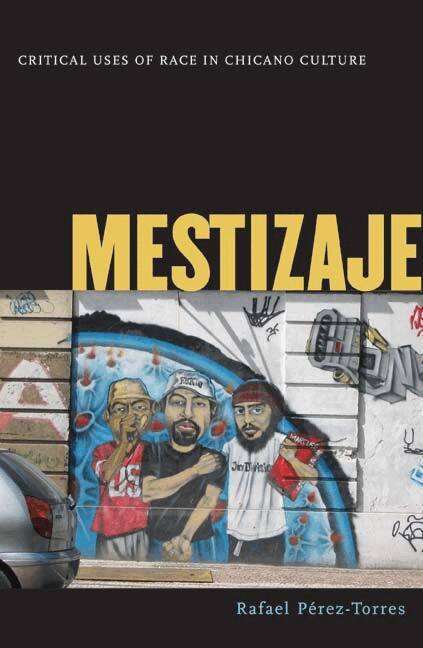
Focusing on the often unrecognized role race plays in expressions of Chicano culture, Mestizaje is a provocative exploration of the volatility and mutability of racial identities. In this important moment in Chicano studies, Rafael Pérez-Torres reveals how the concepts and realities of race, historical memory, the body, and community have both constrained and opened possibilities for forging new and potentially liberating multiracial identities. Informed by a broad-ranging theoretical investigation of identity politics and race and incorporating feminist and queer critiques, Pérez-Torres skillfully analyzes Chicano cultural production. Contextualizing the history of mestizaje, he shows how the concept of mixed race has been used to engage issues of hybridity and voice and examines the dynamics that make mestizo and mestiza identities resistant to, as well as affirmative of, dominant forms of power. He also addresses the role that mestizaje has played in expressive culture, including the hip-hop music of Cypress Hill and the vibrancy of Chicano poster art. Turning to issues of mestizaje in literary creation, Pérez-Torres offers critical readings of the works of Emma Pérez, Gil Cuadros, and Sandra Cisneros, among others. This book concludes with a consideration of the role that the mestizo body plays as a site of elusive or displaced knowledge. Moving beyond the oppositions—nationalism versus assimilation, men versus women, Texans versus Californians—that have characterized much of Chicano studies, Mestizaje synthesizes and assesses twenty-five years of pathbreaking thinking to make a case for the core components, sensibilities, and concerns of the discipline. Rafael Pérez-Torres is professor of English at the University of California, Los Angeles. He is author of Movements in Chicano Poetry: Against Myths, Against Margins, coauthor of To Alcatraz, Death Row, and Back: Memories of an East LA Outlaw, and coeditor of The Chicano Studies Reader: An Anthology of Aztlán, 1970–2000.
176 kr
Skickas inom 5-8 vardagar
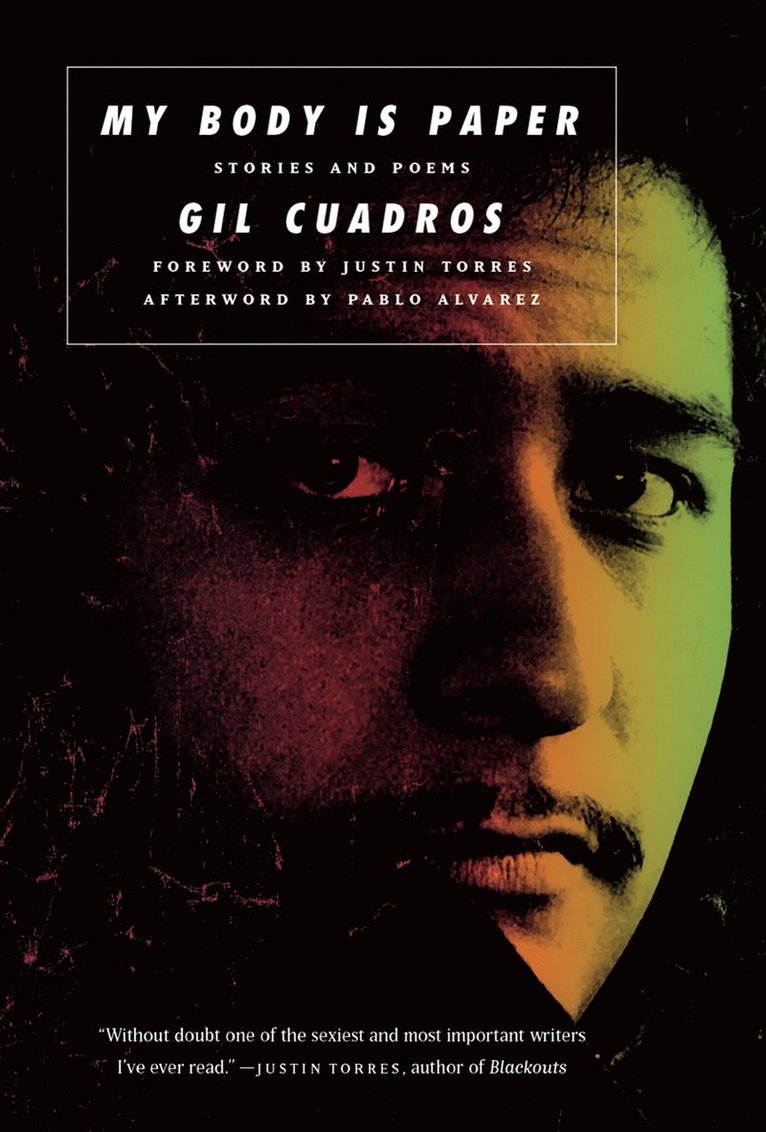
"Cuadros died of AIDS in 1996, two years after chronicling the disease in City of God, a book of poems and stories about queer Los Angeles. His belated follow-up takes the same form, with the same bracing urgency."—The New York Times "Without doubt one of the sexiest and most important writers I've ever read."—Justin Torres, author of Blackouts"My Body Is Paper is a testament to the unrelenting literary magic of Gil Cuadros. Through poetry and prose, Cuadros holds a mirror up to California, reflecting this land of dualities back at us. He gives us sunshine and sickness, ecstasy and drudgery, eros and death. I am so very grateful for his work."—Myriam Gurba, author of Creep: Accusations and ConfessionsSince City of God (1994) by Gil Cuadros was published 30 years ago, it has become an unlikely classic (an "essential book of Los Angeles" according to the LA Times), touching readers and writers who find in his work a singular evocation of Chicanx life in Los Angeles during and leading up to the AIDS epidemic, which took his life in 1996. Little did we know, Cuadros continued writing exuberant prose and poems in the period between his one published book and his untimely death at the age of 34. This recently discovered treasure, My Body Is Paper, is a stunning portrait of sex, family, religion, culture of origin, and the betrayals of the body. Tender and blistering, erotic and spiritual—Cuadros dives into these complexities which we grapple with today, showing us how to survive these times, and beyond.
415 kr
Skickas inom 7-10 vardagar
The Chicano Studies Reader, the best-selling anthology of articles from Aztlán: A Journal of Chicano Studies, has been newly expanded with a group of essays that focus on Chicana/o and Latina/o youth. This section, Generations against Exclusion, joins Decolonizing the Territory, Performing Politics, (Re)Configuring Identities, Remapping the World, and Continuing to Push Boundaries. Introductions to each section offer analysis and contextualization. This fourth edition of the Reader documents the foundation of Chicano studies, testifies to its broad disciplinary range, and explores its continuing development.