Eric Avila - Böcker
Visar alla böcker från författaren Eric Avila. Handla med fri frakt och snabb leverans.
5 produkter
5 produkter
111 kr
Skickas
In recent decades, culture--the values, attitudes, beliefs, and myths of a particular society and the objects through which they are organized--has earned prominent stature in the annals of American history. The United States often brings to mind Uncle Sam and the cowboys of the Old West, or the speeches of JFK and lyrics of Madonna. Words and images such as these have the power to represent, or contest, national, civic, and social identities. From the Boston Tea Party to the Dodgers, from the blues to Andy Warhol, dime novels to Disneyland, the history of American culture tells us how previous generations of Americans have imagined themselves, their nation, and their relationship to the world and its peoples.This Very Short Introduction lays out a chronological map of American culture, its thematic currents, and its creation by social groups ranging from the straight-laced Puritans of colonial New England to the techies of today's Silicon Valley. In doing so, it emphasizes the role of culture in the shaping of national identity. Across the lines of race, class, gender, sexuality, religion, ethnicity, generation, and geography, diverse Americans have helped to forge a national culture with an ultimately global reach, inventing stories to underscore the problems and possibilities of an American way of life.
Del 13 - American Crossroads
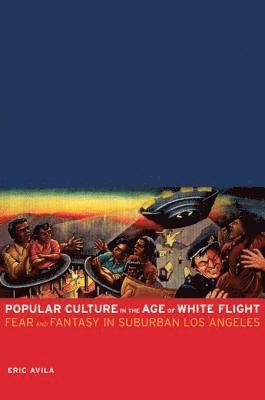
Popular Culture in the Age of White Flight
Fear and Fantasy in Suburban Los Angeles
Häftad, Engelska, 2006
519 kr
Skickas inom 3-6 vardagar
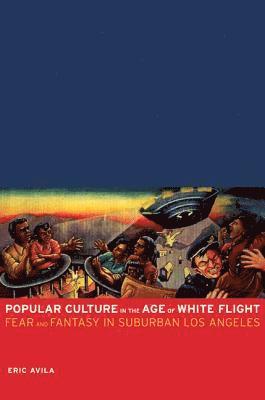
Los Angeles pulsed with economic vitality and demographic growth in the decades following World War II. This vividly detailed cultural history of L.A. from 1940 to 1970 traces the rise of a new suburban consciousness adopted by a generation of migrants who abandoned older American cities for Southern California's booming urban region. Eric Avila explores expressions of this new 'white identity' in popular culture with provocative discussions of Hollywood and film noir, Dodger Stadium, Disneyland, and L.A.'s renowned freeways. These institutions not only mirrored this new culture of suburban whiteness and helped shape it, but also, as Avila argues, reveal the profound relationship between the increasingly fragmented urban landscape of Los Angeles and the rise of a new political outlook that rejected the tenets of New Deal liberalism and anticipated the emergence of the New Right. Avila examines disparate manifestations of popular culture in architecture, art, music, and more to illustrate the unfolding urban dynamics of postwar Los Angeles.He also synthesizes important currents of new research in urban history, cultural studies, and critical race theory, weaving a textured narrative about the interplay of space, cultural representation, and identity amid the westward shift of capital and culture in postwar America.
266 kr
Skickas inom 7-10 vardagar
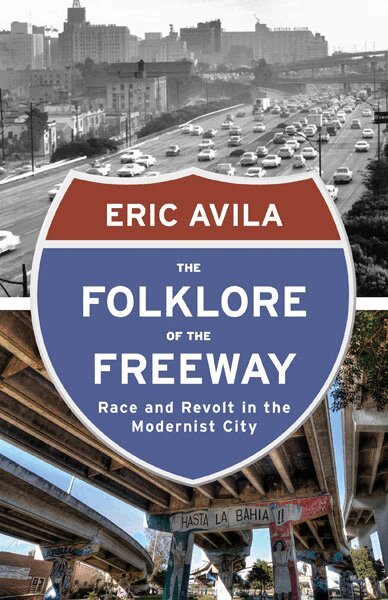
When the interstate highway program connected America’s cities, it also divided them, cutting through and destroying countless communities. Affluent and predominantly white residents fought back in a much heralded “freeway revolt,” saving such historic neighborhoods as Greenwich Village and New Orleans’s French Quarter. This book tells of the other revolt, a movement of creative opposition, commemoration, and preservation staged on behalf of the mostly minority urban neighborhoods that lacked the political and economic power to resist the onslaught of highway construction.Within the context of the larger historical forces of the 1960s and 1970s, Eric Avila maps the creative strategies devised by urban communities to document and protest the damage that highways wrought. The works of Chicanas and other women of color-from the commemorative poetry of Patricia Preciado Martin and Lorna Dee Cervantes to the fiction of Helena Maria Viramontes to the underpass murals of Judy Baca-expose highway construction as not only a racist but also a sexist enterprise. In colorful paintings, East Los Angeles artists such as David Botello, Carlos Almaraz, and Frank Romero satirize, criticize, and aestheticize the structure of the freeway. Local artists paint murals on the concrete piers of a highway interchange in San Diego’s Chicano Park. The Rondo Days Festival in St. Paul, Minnesota, and the Black Archives, History, and Research Foundation in the Overtown neighborhood of Miami preserve and celebrate the memories of historic African American communities lost to the freeway.Bringing such efforts to the fore in the story of the freeway revolt, The Folklore of the Freeway moves beyond a simplistic narrative of victimization. Losers, perhaps, in their fight against the freeway, the diverse communities at the center of the book nonetheless generate powerful cultural forces that shape our understanding of the urban landscape and influence the shifting priorities of contemporary urban policy.
Del 44 - Dumbarton Oaks Colloquium on the History of Landscape Architecture
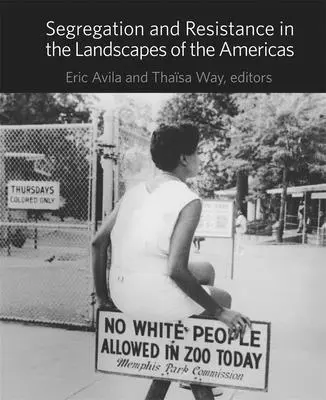
Segregation and Resistance in the Landscapes of the Americas
Inbunden, Engelska, 2023
620 kr
Skickas inom 7-10 vardagar
416 kr
Skickas inom 7-10 vardagar
The Chicano Studies Reader, the best-selling anthology of articles from Aztlán: A Journal of Chicano Studies, has been newly expanded with a group of essays that focus on Chicana/o and Latina/o youth. This section, Generations against Exclusion, joins Decolonizing the Territory, Performing Politics, (Re)Configuring Identities, Remapping the World, and Continuing to Push Boundaries. Introductions to each section offer analysis and contextualization. This fourth edition of the Reader documents the foundation of Chicano studies, testifies to its broad disciplinary range, and explores its continuing development.