Ran Zwigenberg - Böcker
Visar alla böcker från författaren Ran Zwigenberg. Handla med fri frakt och snabb leverans.
10 produkter
10 produkter
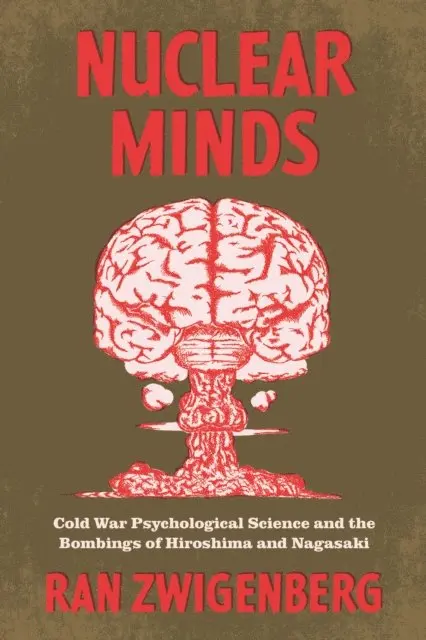
Nuclear Minds
Cold War Psychological Science and the Bombings of Hiroshima and Nagasaki
Inbunden, Engelska, 2023
1 019 kr
Skickas inom 7-10 vardagar
How researchers understood the atomic bomb’s effects on the human psyche before the recognition of Post-Traumatic Stress Disorder. In 1945, researchers on a mission to Hiroshima with the United States Strategic Bombing Survey canvassed survivors of the nuclear attack. This marked the beginning of global efforts—by psychiatrists, psychologists, and other social scientists—to tackle the complex ways in which human minds were affected by the advent of the nuclear age. A trans-Pacific research network emerged that produced massive amounts of data about the dropping of the bomb and subsequent nuclear tests in and around the Pacific rim. Ran Zwigenberg traces these efforts and the ways they were interpreted differently across communities of researchers and victims. He explores how the bomb’s psychological impact on survivors was understood before we had the concept of post-traumatic stress disorder. In fact, psychological and psychiatric research on Hiroshima and Nagasaki rarely referred to trauma or similar categories. Instead, institutional and political constraints—most notably the psychological sciences’ entanglement with Cold War science—led researchers to concentrate on short-term damage and somatic reactions or even, in some cases, on denial of victims’ suffering. As a result, very few doctors tried to ameliorate suffering. But, Zwigenberg argues, it was not only that doctors “failed” to issue the right diagnosis; the victims’ experiences also did not necessarily conform to our contemporary expectations. As he shows, the category of trauma should not be used uncritically in a non-Western context. Consequently, this book sets out, first, to understand the historical, cultural, and scientific constraints in which researchers and victims were acting and, second, to explore how suffering was understood in different cultural contexts before PTSD was a category of analysis.
Nuclear Minds
Cold War Psychological Science and the Bombings of Hiroshima and Nagasaki
Häftad, Engelska, 2023
290 kr
Skickas inom 7-10 vardagar
How researchers understood the atomic bomb’s effects on the human psyche before the recognition of Post-Traumatic Stress Disorder. In 1945, researchers on a mission to Hiroshima with the United States Strategic Bombing Survey canvassed survivors of the nuclear attack. This marked the beginning of global efforts—by psychiatrists, psychologists, and other social scientists—to tackle the complex ways in which human minds were affected by the advent of the nuclear age. A trans-Pacific research network emerged that produced massive amounts of data about the dropping of the bomb and subsequent nuclear tests in and around the Pacific rim. Ran Zwigenberg traces these efforts and the ways they were interpreted differently across communities of researchers and victims. He explores how the bomb’s psychological impact on survivors was understood before we had the concept of post-traumatic stress disorder. In fact, psychological and psychiatric research on Hiroshima and Nagasaki rarely referred to trauma or similar categories. Instead, institutional and political constraints—most notably the psychological sciences’ entanglement with Cold War science—led researchers to concentrate on short-term damage and somatic reactions or even, in some cases, on denial of victims’ suffering. As a result, very few doctors tried to ameliorate suffering. But, Zwigenberg argues, it was not only that doctors “failed” to issue the right diagnosis; the victims’ experiences also did not necessarily conform to our contemporary expectations. As he shows, the category of trauma should not be used uncritically in a non-Western context. Consequently, this book sets out, first, to understand the historical, cultural, and scientific constraints in which researchers and victims were acting and, second, to explore how suffering was understood in different cultural contexts before PTSD was a category of analysis.
1 282 kr
Skickas inom 7-10 vardagar
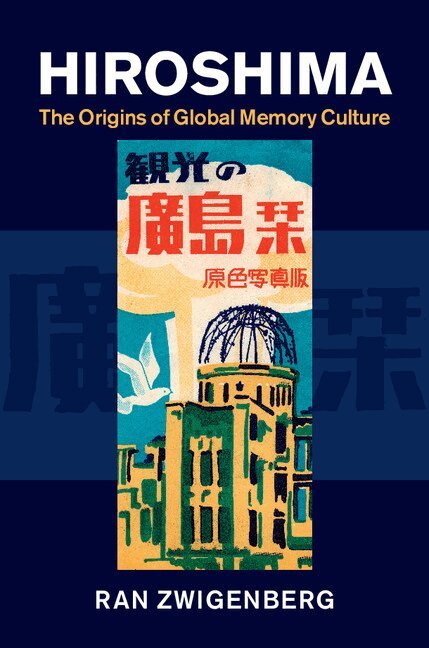
In 1962, a Hiroshima peace delegation and an Auschwitz survivor's organization exchanged relics and testimonies, including the bones and ashes of Auschwitz victims. This symbolic encounter, in which the dead were literally conscripted in the service of the politics of the living, serves as a cornerstone of this volume, capturing how memory was utilized to rebuild and redefine a shattered world. This is a powerful study of the contentious history of remembrance and the commemoration of the atomic bomb in Hiroshima in the context of the global development of Holocaust and World War II memory. Emphasizing the importance of nuclear issues in the 1950s and 1960s, Zwigenberg traces the rise of global commemoration culture through the reconstruction of Hiroshima as a 'City of Bright Peace', memorials and museums, global tourism, developments in psychiatry, and the emergence of the figure of the survivor-witness and its consequences for global memory practices.
441 kr
Skickas inom 7-10 vardagar
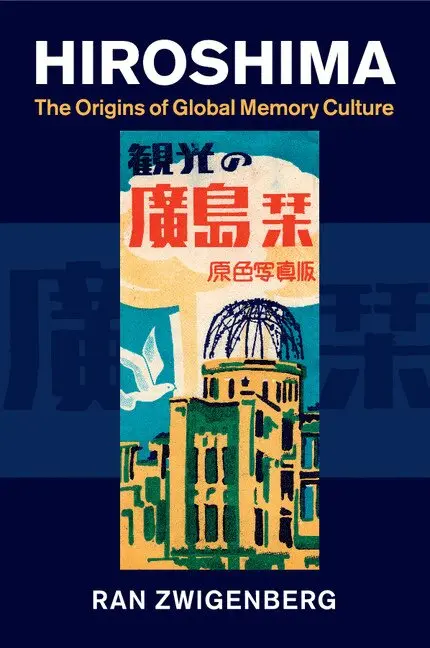
In 1962, a Hiroshima peace delegation and an Auschwitz survivor's organization exchanged relics and testimonies, including the bones and ashes of Auschwitz victims. This symbolic encounter, in which the dead were literally conscripted in the service of the politics of the living, serves as a cornerstone of this volume, capturing how memory was utilized to rebuild and redefine a shattered world. This is a powerful study of the contentious history of remembrance and the commemoration of the atomic bomb in Hiroshima in the context of the global development of Holocaust and World War II memory. Emphasizing the importance of nuclear issues in the 1950s and 1960s, Zwigenberg traces the rise of global commemoration culture through the reconstruction of Hiroshima as a 'City of Bright Peace', memorials and museums, global tourism, developments in psychiatry, and the emergence of the figure of the survivor-witness and its consequences for global memory practices.
1 445 kr
Skickas inom 7-10 vardagar
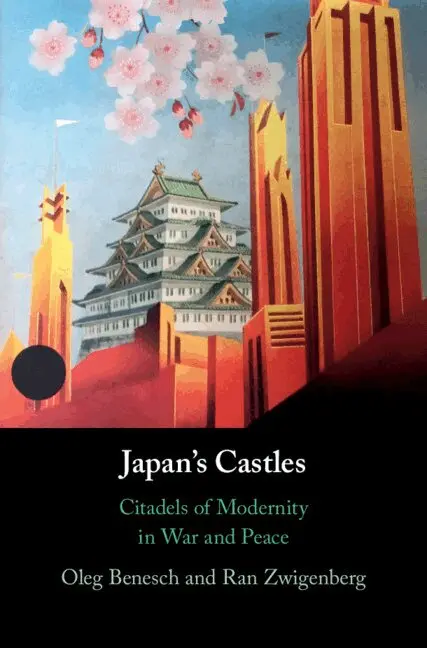
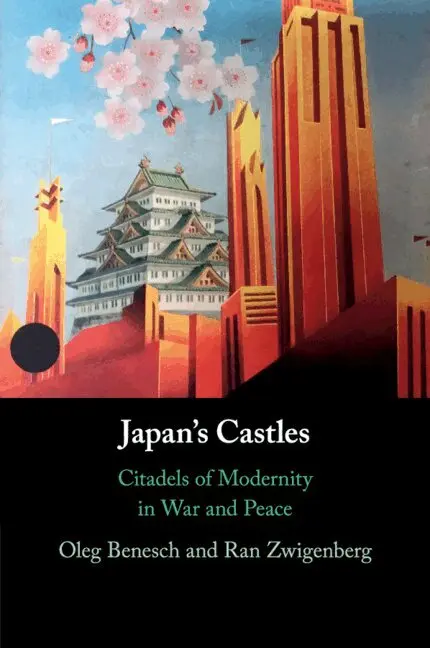
An innovative examination of heritage politics in Japan, showing how castles have been used to re-invent and recapture competing versions of the pre-imperial past and project possibilities for Japan's future. Oleg Benesch and Ran Zwigenberg argue that Japan's modern transformations can be traced through its castles. They examine how castle preservation and reconstruction campaigns served as symbolic ways to assert particular views of the past and were crucial in the making of an idealized premodern history. Castles have been used to craft identities, to create and erase memories, and to symbolically join tradition and modernity. Until 1945, they served as physical and symbolic links between the modern military and the nation's premodern martial heritage. After 1945, castles were cleansed of military elements and transformed into public cultural spaces that celebrated both modernity and the pre-imperial past. What were once signs of military power have become symbols of Japan's idealized peaceful past.
523 kr
Skickas inom 7-10 vardagar
An innovative examination of heritage politics in Japan, showing how castles have been used to re-invent and recapture competing versions of the pre-imperial past and project possibilities for Japan's future. Oleg Benesch and Ran Zwigenberg argue that Japan's modern transformations can be traced through its castles. They examine how castle preservation and reconstruction campaigns served as symbolic ways to assert particular views of the past and were crucial in the making of an idealized premodern history. Castles have been used to craft identities, to create and erase memories, and to symbolically join tradition and modernity. Until 1945, they served as physical and symbolic links between the modern military and the nation's premodern martial heritage. After 1945, castles were cleansed of military elements and transformed into public cultural spaces that celebrated both modernity and the pre-imperial past. What were once signs of military power have become symbols of Japan's idealized peaceful past.
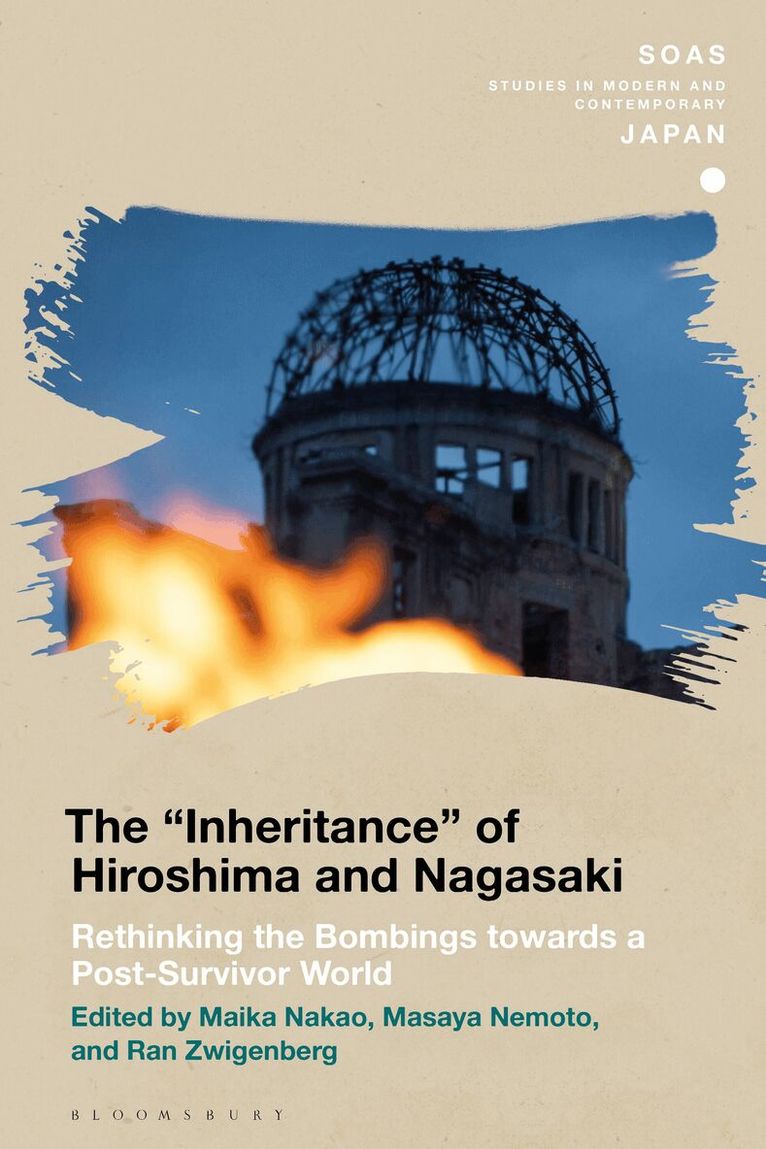
'Inheritance' of Hiroshima and Nagasaki
Rethinking the Bombings towards a Post-Survivor World
Inbunden, Engelska, 2026
946 kr
Kommande
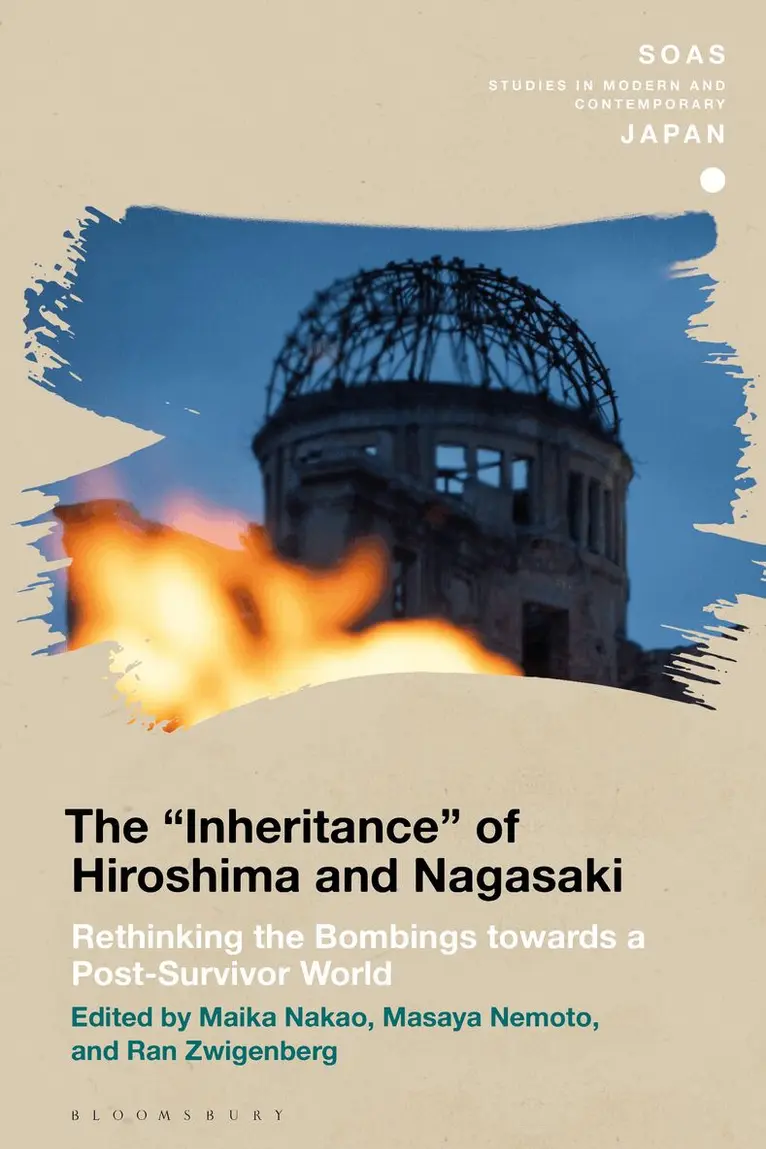
With 2025 marking the 80th anniversary of Hiroshima and Nagasaki, this timely study focuses on the challenge of keisho or ‘inheritance’ and the way a new generation of scholars and activists is re-examining the meaning of the A-bomb and the 80-year history of commemoration and activism in the stricken cities. Using a team of scholars based in the USA and Japan, many of who are academics from this new generation, The 'Inheritance' of Hiroshima and Nagasaki takes a critical look at the problem of inheritance and the current transitory moment in A-bomb commemoration and nuclear scholarship by looking at a range of historical topics from the 80-year history of post-atomic Hiroshima & Nagasaki, and beyond. The book does this by: examining historical memory in a way that disengages the two cities from a Japanese-national memory perspective by looking at global connections, on one hand, and the local history of the two cities; re-thinking the history of survivors, their experience, and their movement; and, finally, exploring material culture and the problem of inheritance and legacy.
'Inheritance' of Hiroshima and Nagasaki
Rethinking the Bombings towards a Post-Survivor World
Häftad, Engelska, 2026
331 kr
Kommande
With 2025 marking the 80th anniversary of Hiroshima and Nagasaki, this timely study focuses on the challenge of keisho or ‘inheritance’ and the way a new generation of scholars and activists is re-examining the meaning of the A-bomb and the 80-year history of commemoration and activism in the stricken cities. Using a team of scholars based in the USA and Japan, many of who are academics from this new generation, The 'Inheritance' of Hiroshima and Nagasaki takes a critical look at the problem of inheritance and the current transitory moment in A-bomb commemoration and nuclear scholarship by looking at a range of historical topics from the 80-year history of post-atomic Hiroshima & Nagasaki, and beyond. The book does this by: examining historical memory in a way that disengages the two cities from a Japanese-national memory perspective by looking at global connections, on one hand, and the local history of the two cities; re-thinking the history of survivors, their experience, and their movement; and, finally, exploring material culture and the problem of inheritance and legacy.
833 kr
Skickas inom 10-15 vardagar
This book chronicles the Kyoto/Kansai 1980s hardcore punk scene through the album Don’t Be Swindle by S.O.B., with a focus on Kyoto’s main venues and the networks they created.Apart from being the center of Japan’s cultural heritage, Kyoto is home to one of Japan’s leading avant-garde art and music scenes. The Kyoto University-affiliated venue Seibu Kodo has historically been the focus of this scene, creating an ethos and organizational core which hosted major international acts such as Frank Zappa and Talking Heads while pushing more local experimental and political acts. The hardcore punks in Kyoto, most of whom were high-school dropouts, borrowed the organizational structure and interacted with Seibu Kodo and its committees to create their own scene. By focusing on the seminal hardcore album Don’t Be Swindle by S.O.B. and using rich archival material, this book explains the connections and entanglements of space and scene in 1980s punk.
237 kr
Skickas inom 7-10 vardagar
This book chronicles the Kyoto/Kansai 1980s hardcore punk scene through the album Don’t Be Swindle by S.O.B., with a focus on Kyoto’s main venues and the networks they created.Apart from being the center of Japan’s cultural heritage, Kyoto is home to one of Japan’s leading avant-garde art and music scenes. The Kyoto University-affiliated venue Seibu Kodo has historically been the focus of this scene, creating an ethos and organizational core which hosted major international acts such as Frank Zappa and Talking Heads while pushing more local experimental and political acts. The hardcore punks in Kyoto, most of whom were high-school dropouts, borrowed the organizational structure and interacted with Seibu Kodo and its committees to create their own scene. By focusing on the seminal hardcore album Don’t Be Swindle by S.O.B. and using rich archival material, this book explains the connections and entanglements of space and scene in 1980s punk.