• Fri frakt över 249 kr
  • •
  • Snabba leveranser
  • •
  • Billiga böcker
Kundservice

Du är på sajten för privatpersoner.

Företag, bibliotek eller offentlig verksamhet?

Du handlar på classic.bokus.com, där alla dina funktioner finns intakta.
Till classic.bokus.com
Bokus logotyp. Gå till startsidan.
  • Erbjudanden
  • Student
  • Topplistor
  • Barn & ungdom
  • Bokus Play
  • E-böcker
  • Ljudböcker
  • Pocketböcker
  • Spel och pussel

Upp till 25% på utvalda nyheter →

Sidfot

Mina sidor

    Hjälp

    • Kundservice
    • Vanliga frågor och svar
    • Frakt och leverans
    • Retur vid ångerrätt
    • Reklamera vara
    • Betalning
    • Köpvillkor
    • Allmänna villkor
    • Information om webbplatsens tillgänglighet

    Om Bokus

    • Om oss
    • Pressrum
    • För studenter
    • För företag
    • För bibliotek och offentlig verksamhet
    • För leverantörer
    • Hållbarhet

    Populärt

    • Aktuella erbjudanden
    • Presentkort
    • Studentlitteratur
    • Nya böcker
    • Topplistor
    • Signerade böcker
    • Engelska böcker

    Inspiration

    • Boktips
    • BookTok
    • Barnbokskaraktärer
    • Populära författare
    Logotyp för Bokus
    Följ oss på Facebook (extern länk)Följ oss på Instagram (extern länk)Följ oss på YouTube (extern länk)Följ oss på TikTok (extern länk)
    bokus @ CookiesAnpassa cookiesIntegritetspolicyKöpvillkor
    Till Citymail hemsida (extern länk)Till Budbee hemsida (extern länk)Till Postnord hemsida (extern länk)Till Schenker hemsida (extern länk)Till Early Bird hemsida (extern länk)Till Walleys hemsida (extern länk)
    1. Historia och arkeologi
    2. Historia
    3. Asiens historia

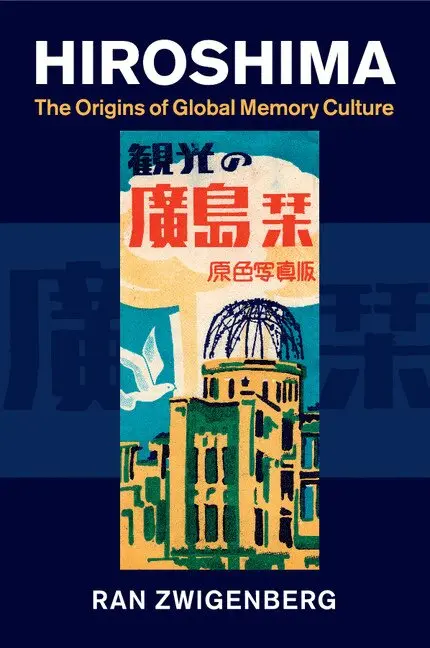
    Hiroshima

    The Origins of Global Memory Culture

    AvRan Zwigenberg

    Häftad, Engelska, 2016

    477 kr

    Beställningsvara. Skickas inom 7-10 vardagar. Fri frakt över 249 kr.

    Fler format och utgåvor

    Inbunden

    1 375 kr

    Beskrivning

    In 1962, a Hiroshima peace delegation and an Auschwitz survivor's organization exchanged relics and testimonies, including the bones and ashes of Auschwitz victims. This symbolic encounter, in which the dead were literally conscripted in the service of the politics of the living, serves as a cornerstone of this volume, capturing how memory was utilized to rebuild and redefine a shattered world. This is a powerful study of the contentious history of remembrance and the commemoration of the atomic bomb in Hiroshima in the context of the global development of Holocaust and World War II memory. Emphasizing the importance of nuclear issues in the 1950s and 1960s, Zwigenberg traces the rise of global commemoration culture through the reconstruction of Hiroshima as a 'City of Bright Peace', memorials and museums, global tourism, developments in psychiatry, and the emergence of the figure of the survivor-witness and its consequences for global memory practices.

    Produktinformation

    • Utgivningsdatum:2016-02-25
    • Mått:154 x 230 x 18 mm
    • Vikt:510 g
    • Format:Häftad
    • Språk:Engelska
    • Antal sidor:348
    • Förlag:Cambridge University Press
    • ISBN:9781107416598

    Utforska kategorier

    • Asiens historia inom Historia och arkeologi

    Mer om författaren

    Ran Zwigenberg graduated in history from Hunter College, City University of New York, after which he went to work for the United Nations. He recently finished his PhD in history at the Graduate Center of the City University of New York. Zwigenberg's research focuses on modern Japanese and European history, with a specialization in memory and intellectual history. He has published on issues of war memory, atomic energy and survivor politics, and has won numerous fellowships including from the Japan Foundation, the Social Science Research Council's IDRF fellowship, and the ACLS dissertation completion award. He has presented his work in Israel, Europe, the US and Japan. Zwigenberg is currently Assistant Professor in History and Asian Studies at Pennsylvania State University.

    Recensioner i media

    'This brilliant book reminds us of how Hiroshima and Auschwitz were first paired in the Cold War emotional imaginary and explicates beautifully the tensions between messages of peace and commodification of atrocity, and between instrumentalization and sanctification of survivors.' Dagmar Herzog, City University of New York

    Innehållsförteckning

    • Acknowledgements; Introduction; 1. 'The most modern city in the world': city planning, commemoration and atomic power in Hiroshima, 1945–55; 2. Modernity's angst: survivors between shame and pride: 1945–60; 3. Socialist bombs and peaceful atoms: exhibiting modernity and fighting for peace in Hiroshima, 1955–62; 4. Healing a sick world: Robert Lifton, PTSD, and the psychiatric reassessment of survivors and trauma; 5. The Hiroshima Auschwitz Peace March and the globalization of victimhood; 6. A sacred ground for peace: violence, tourism and the sanctification of the Peace Park, 1963–75; 7. Peeling the red apple: the Hiroshima Auschwitz Committee and the Hiroshima-Auschwitz museum, 1973–95; Conclusion: the other ground zero? Hiroshima, Auschwitz, 9.11 and the world between them; Index.