Ray C. Rist – författare
Visar alla böcker från författaren Ray C. Rist. Handla med fri frakt och snabb leverans.
18 produkter
18 produkter
Häftad, Engelska, 1977
562 kr
Skickas inom 3-6 vardagar
Häftad, Engelska, 2003
680 kr
Skickas inom 10-15 vardagar
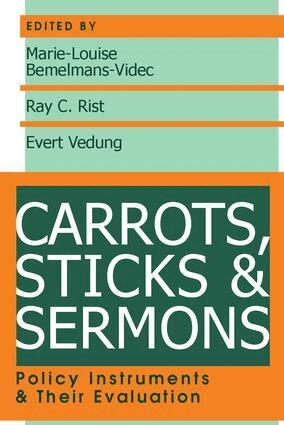
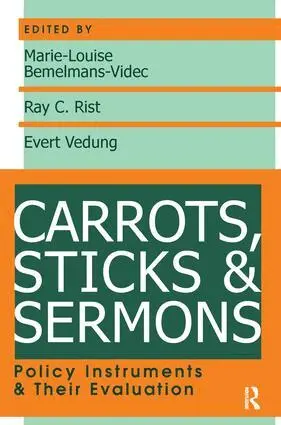
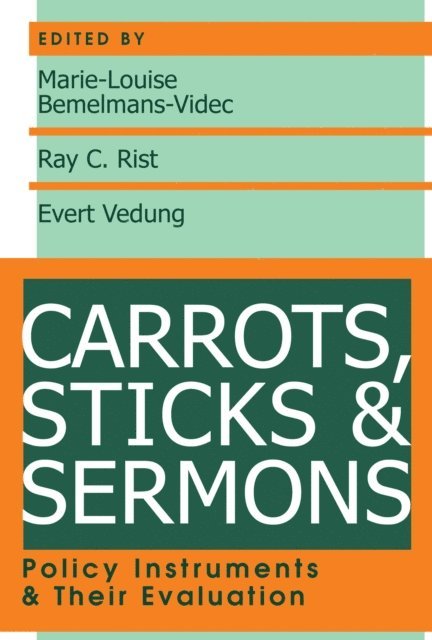
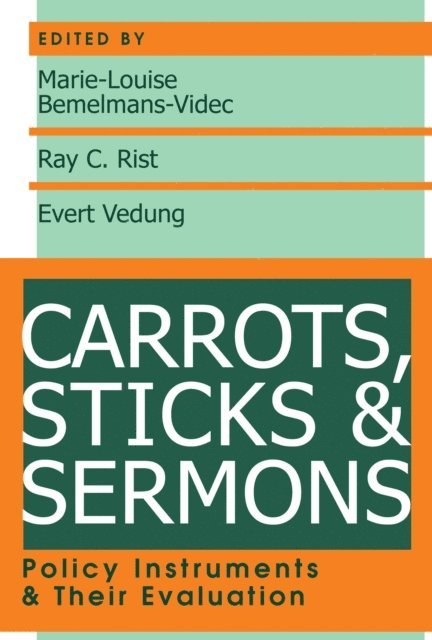
The literature on policy strategies, instruments, and styles is impressive. Still, a complex variety of theoretical and conceptual approaches and analytical tools hamper a good overview. Carrots, Sticks, and Sermons proposes such a framework for the field and clearly shows how public policy instruments are classified, packaged, and chosen, while highlighting the role evaluation plays in the instruments-choice process.Carrots, Sticks, and Sermons offers a comprehensive analysis of categories and typologies of policy instruments. It classifies sticks, carrots, and sermons - or, more specifically, regulation, economic means, and information. Readers are offered a comparative perspective of evaluation practice in foreign contexts. Special attention is paid to the examples of Sweden, the Netherlands, Belgium, England, Canada, the United States, and the Republic of Korea. As such, this volume crosses language barriers that stand in the way of dispersing research results among the international community of theoreticians and practitioners. As nations become increasingly interdependent, problems of implementation and evaluation of policy choices will become issues of increasing gravity.Carrots, Sticks, and Sermons provides insights into the traditional and current practice of policy and program evaluation in various contexts. The book's theory of comparative public policy will produce understanding and guidance in designing better policies. It will be of wide interest to those in the fields of public policy, particularly policy design, policy implementation, policy evaluation, comparative politics, and economics.
Häftad, Engelska, 1999
667 kr
Skickas inom 10-15 vardagar
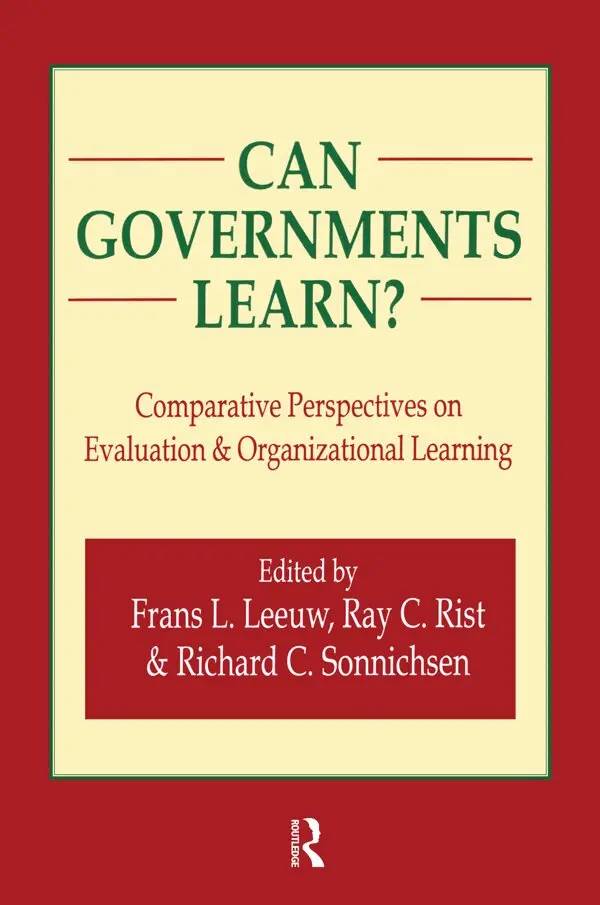
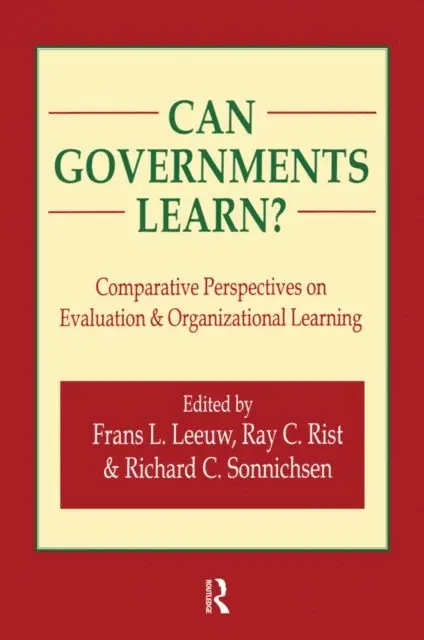
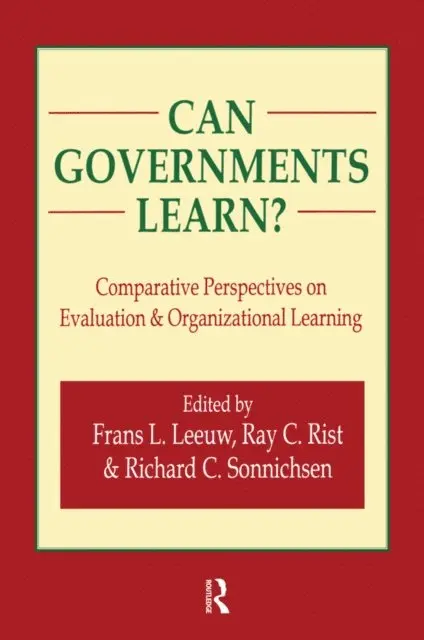
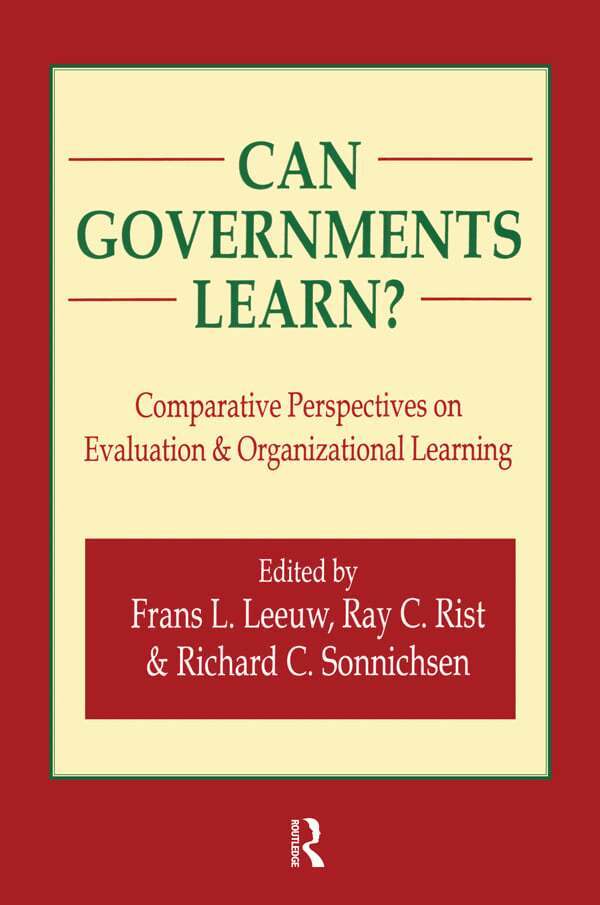
There is continual concern about the ability of governments to perform the duties and responsibilities that their citizens have come to expect from them. Many citizens view government as inept, arthritic, and dedicated to the preservation of the bureaucratic status quo. As we close the twentieth century, the challenge for democratic governments is to become adaptive, flexible, innovative, and creative. In short, they need to become learning organizations. This book explores what it will take for governments to break out of their traditional ways of approaching problems and leam new approaches to finding solutions.Can Governments Learn? examines organizational learning in the public sector. It seeks to understand what role policy and program evaluation information can play in helping governments to learn. Among the democratic societies that are studied are Belgium, Canada, the Netherlands, Sweden, and the United States. Their governmental systems have produced and learned from evaluation information in quite different ways. Significantly, the studies documented here show that the concept of organizational learning has vitality and applicability cross-nationally.Can Governments Learn ? evaluates preconditions for governmental learning as well as the institutional and human resource factors that contribute to the process. This is the third volume in the comparative policy analysis series. It is essential for policymakers, government officials, and scholars interested in improving the performance of governments.
Häftad, Engelska, 2002
434 kr
Skickas inom 10-15 vardagar
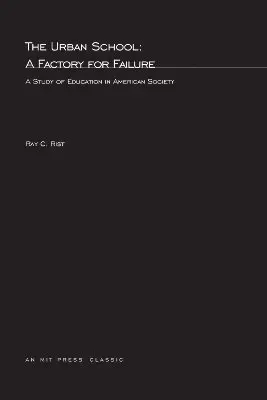
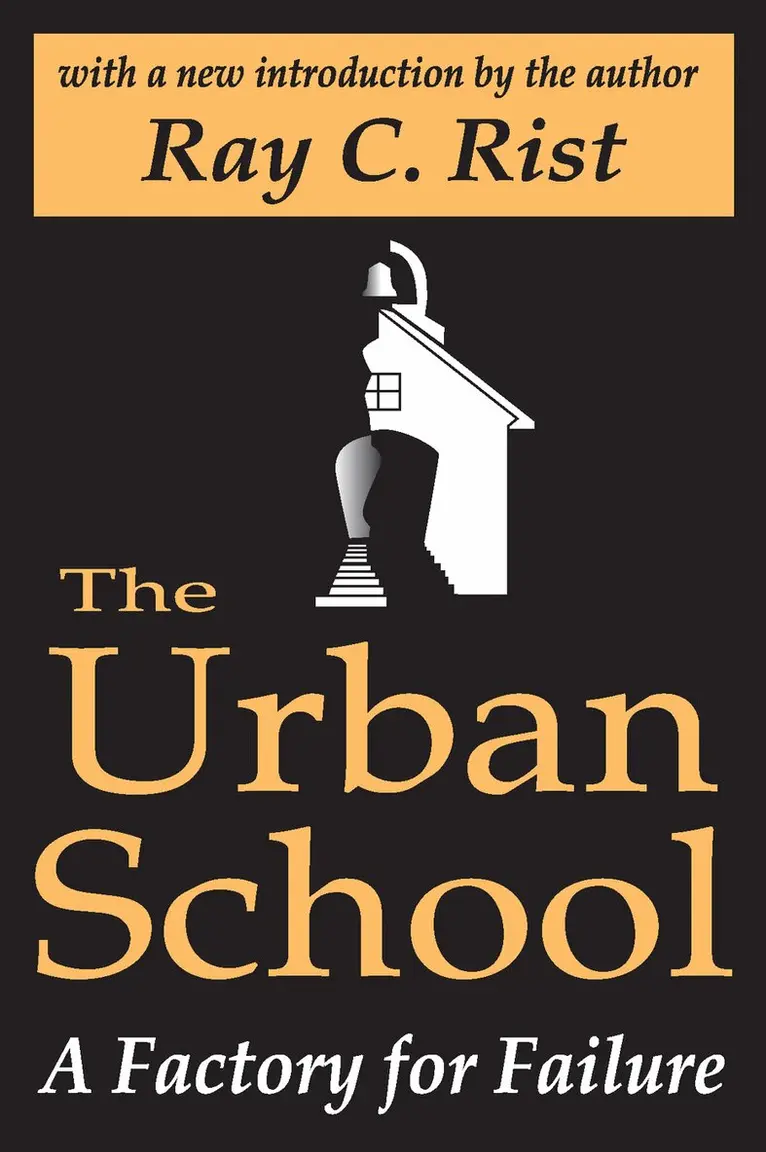
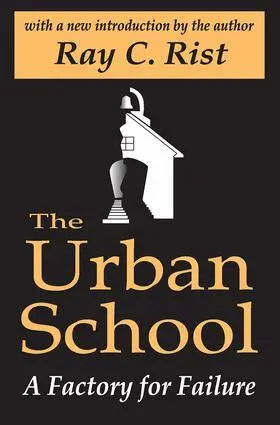
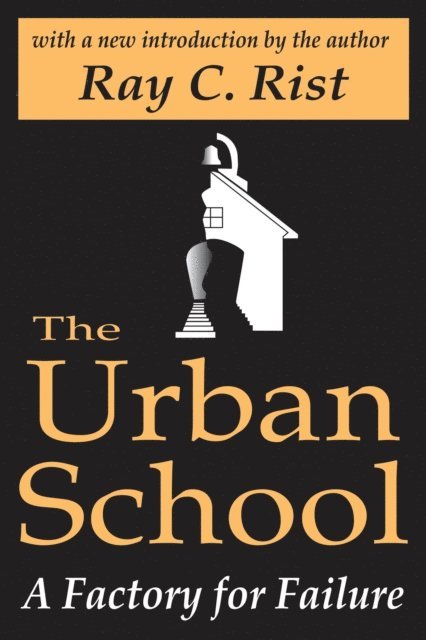
Americans worry continually about their schools with frequent discussions of the "crisis" in American education, of the "failures" of the public school systems, and of the inability of schools to meet the current challenges of contemporary life. Such concerns date back at least to the nineteenth century. A thread that weaves its way through the critiques of American elementary and secondary schools is that the educational system is not serving its children well, that more should be done to enhance achievement and higher performance. These critiques first began when the United States was industrializing and were later amplified when the Soviets and Japan were thought to be grinding down the competitive position of America. At the start of the twenty-first century, as we discuss globalization and maintaining our leadership position in the world economy, they are being heard again.The Urban School: A Factory for Failure challenges these assumptions about American education. Indeed, a basic premise of the book is that the American school system is working quite well-doing exactly what is expected of it. To wit, that the schools in the United States affirm, reflect, and reinforce the social inequalities that exist in the social structures of the society. Stated differently, the schools are not great engines for equalizing the existing social inequalities. Rather, they work to reinforce the social class differences that we have had in the past and continue to have in more pronounced ways at present.Rist uses both sociological and anthropological methods to examine life in one segregated African-American school in the mid-western United States. A classroom of some thirty children were followed from their first day of kindergarten through the second grade. Detailed accounts of the day-by-day process of sorting, stratifying, and separating the children by social class backgrounds demonstrates the means of ensuring that both the poor and middle-class students soon learned their appropriate place in the social hierarchy of the school. Instructional time, discipline, and teacher attention all varied by social class of the students, with those at the bottom of the ladder consistently receiving few positive rewards and many negative sanctions.When The Urban School was first published in 1973, the National School Boards Association called it one of the ten most influential books on American education for the year. It remains essential reading for educators, sociologists, and economists.
Häftad, Engelska, 2011
509 kr
Skickas inom 10-15 vardagar
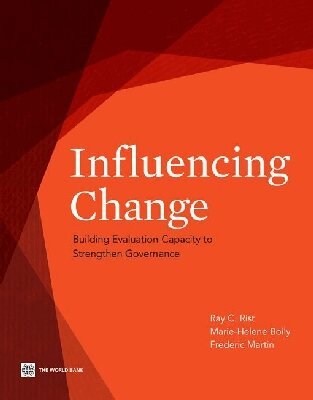
In the first section of this book, four chapters explore how evaluation can influence and interact with the change process in policy and institutional development. Wijayatilake recalls a convincing and riveting story about how evaluation was introduced in Sri-Lanka and what kind of striking results could be achieved in a few years through a progressive pragmatic approach and strong leadership. Wiesner reviews the role of evaluation in the formation of macroeconomic policy in Latin America and outlines the role of demand for improved results and performance and of the accountability from the politicians, the private sector and civil society and, in the end, the population. Dimitrov proposes a 7 step approach for tacking institutional Performance evaluation and applies it to the case of the Black Sea Trade and Development Bank. Jaljouli addresses the challenge of the integration of development strategy and the evaluation process and uses Dubai as a case study. In the second section of this book, five chapters present a variety of lessons learnt and good practices in Evaluation Capacity Building (ECB). Heider presents a structured approach to capacity development working at three levels: individual training, institutional development, and an enabling environment and suggests moving from capacities to capabilities. Agrawal and Rao identify various factions influencing the use of evaluation results and show in the case of India how capacity building was used to increase this use. Andriantseheno addresses how an M and E system for a major development program can be set up as part of a programmatic approach using the case study of the Environment/Rural Development and Food Security program in Madagascar. Porter outlines the potential of the helping approaches an evaluation capacity development strategy and uses the Bana Barona/Abantwanu Bethu project in South Africa to prove his point. Clotteau et al. review major challenges in ECB and present a variety of ECB strategies to design and implement Results-Based National M and E systems, building upon a number of experiences in Africa, Asia, and Latin America. The third section of the book discusses new perspectives on ECB. Picciotto outlines a path for the future of development evaluation on the basis of a review of emerging endogenous and exogenous trends. By surveying recent theoretical developments in ECB, Nielsen and Attström map the perspectives offered by the contributors in terms of scope, purpose, definitions, and methods and relate key findings and recommendations to the ECB framework offered by Heider’ chapter. Van den Berg illustrates how evaluation capacity has been developed and could be further developed in a critical area for the future, i.e. in environment and development. From a review of the first and second sections of the book, Dahlgren underlines that building up evaluation capacity requires not only competence and quality, but taking into account the political and institutional context, cost aspects, the relative importance between learning and accountability, and the differences and similarities between monitoring and evaluation. Finally, following a review of the same papers, McAllister explores the interface between the evaluation function and organizational leadership in setting results strategy and the limitation of results approaches as implemented by the international development community. Overall, the stimulating comparative analysis of the papers presented in sections 1 and 2, questions and own thoughts on perspectives for ECB in the future made by those senior evaluation specialists allow for a more thorough and nuanced book.
Häftad, Engelska, 2013
397 kr
Skickas inom 10-15 vardagar
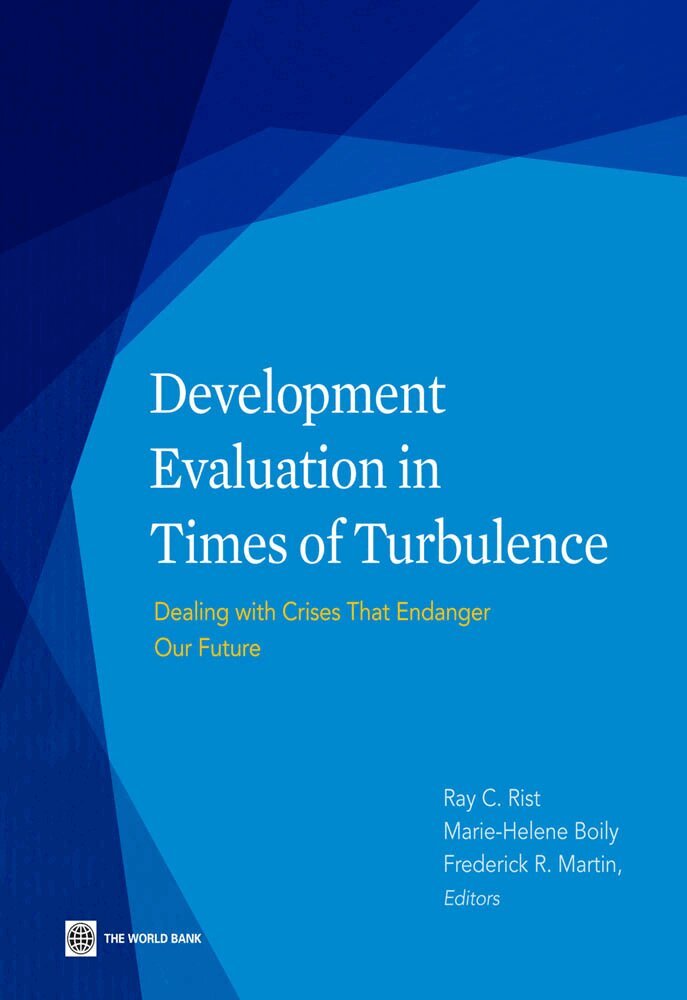
The presence of turbulence in multiple areas of our society-food, fuel, and finances-being but three critical areas presently being impacted means that long-held assumptions are no longer true, that the past is not prologue, and that the future is not clear. And enter into this unstable present the discipline of evaluation-a discipline formed and shaped in the past fifty years of stability, little turbulence, and strong assumptions that everything will go according to plan. If things do not go well, it is because of either a poor theory of change on how to bring about positive outcomes, or weak efforts at implementation. It is not because of the stormy present upsetting our quiet past. As it is, conventional evaluation behaviour and beliefs are ill suited for these times. The transformational nature of the 'Arab Spring' is just one arena in which it is clear that a business as usual approach to evaluation is entirely inappropriate.The papers in this volume are from the 2011 Global Assembly of the International Development Evaluation Association (IDEAS). Nearly 350 development evaluators from eighty-five countries came together in Amman, Jordan to discuss and analyse the consequences of turbulence on evaluation. The intent of these papers is to systematically assess what changes have come during this time of turbulence and how these changes are impacting the craft of development evaluation. To be clear: this book is not about how to assess the impacts of crises on development and on people's lives. It is about the meaning of a changed world and changed assumptions on the concepts and methods used in evaluation.
Inbunden, Engelska, 2023
2 059 kr
Skickas inom 10-15 vardagar
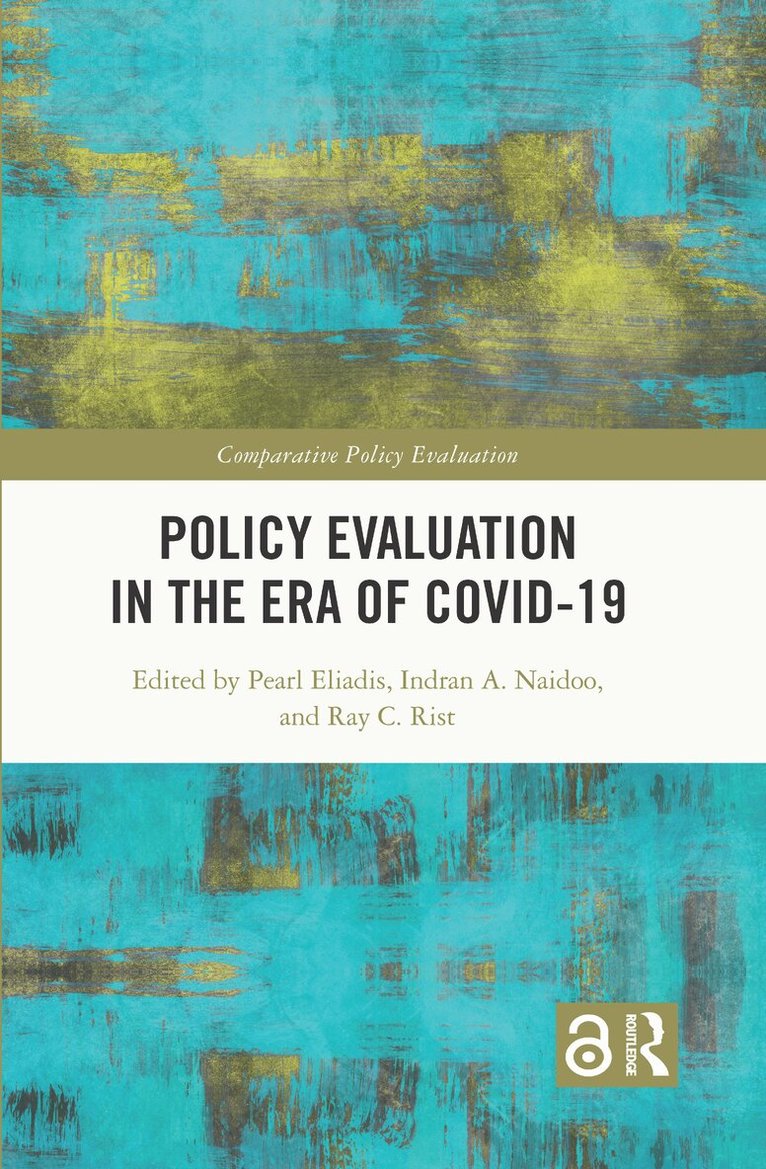
Did evaluation meet the challenges of the COVID-19 crisis? How were evaluation practices, architectures, and values affected? Policy Evaluation in the Era of COVID-19 is the first to offer a broad canvas that explores government responses and ideas to tackle the challenges that evaluation practice faces in preparing for the next global crisis. Practitioners and established academic experts in the field of policy evaluation present a sophisticated synthesis of institutional, national, and disciplinary perspectives, with insights drawn from developments in Australia, Canada and the UK, as well as the UN.Contributors examine the impacts of evaluation on socioeconomic recovery planning, government innovations in pivoting internal operations to address the crisis, and the role of parliamentary and audit institutions during the pandemic. Chapters also example the Sustainable Development Goals, and the inadequacy of human rights-based approaches in evaluation, while examining the imperative proposed by some authors that it is time that we take seriously the call for substantial transformation.Written in a clear and accessible style, Policy Evaluation in the Era of COVID-19 offers a much-needed insight on the role evaluation played during this unique and critical juncture in history.The Open Access version of this book, available at https://www.taylorfrancis.com/books/oa-edit/10.4324/9781003376316, has been made available under a Creative Commons Attribution-Non Commercial-No Derivatives 4.0 license.
Häftad, Engelska, 2024
584 kr
Skickas inom 10-15 vardagar
Did evaluation meet the challenges of the COVID-19 crisis? How were evaluation practices, architectures, and values affected? Policy Evaluation in the Era of COVID-19 is the first to offer a broad canvas that explores government responses and ideas to tackle the challenges that evaluation practice faces in preparing for the next global crisis. Practitioners and established academic experts in the field of policy evaluation present a sophisticated synthesis of institutional, national, and disciplinary perspectives, with insights drawn from developments in Australia, Canada and the UK, as well as the UN.Contributors examine the impacts of evaluation on socioeconomic recovery planning, government innovations in pivoting internal operations to address the crisis, and the role of parliamentary and audit institutions during the pandemic. Chapters also example the Sustainable Development Goals, and the inadequacy of human rights-based approaches in evaluation, while examining the imperative proposed by some authors that it is time that we take seriously the call for substantial transformation.Written in a clear and accessible style, Policy Evaluation in the Era of COVID-19 offers a much-needed insight on the role evaluation played during this unique and critical juncture in history.The Open Access version of this book, available at https://www.taylorfrancis.com/books/oa-edit/10.4324/9781003376316, has been made available under a Creative Commons Attribution-Non Commercial-No Derivatives 4.0 license.
Häftad, Engelska, 2017
680 kr
Skickas inom 10-15 vardagar
Now more than ever, policy evaluation is an important component in addressing the world's economic crisis. Before it can do so, the discipline must adapt to changing economic and political environments. The contributors address a basic question: What impact do crises have on evaluation and how can evaluation contribute in times of turbulence?Examining the state of evaluation today, the volume's editors cover a broad range of topics, including post-hoc evaluation; shifting economic paradigms; the World Bank Group's response to the global economic crisis; challenges in evaluating financial literacy; evaluating counter-terrorism programs; evaluation in the context of humanitarian crises; and why civil society organizations in sub-Saharan Africa matter in evaluating poverty interventions.The contributors explore the role of evaluation in the search for solutions to global instability. They recognize, however, that in order to address unprecedented crises, evaluation itself needs to be evaluated and updated as part of the process of change and reform. This volume is the latest in Transaction's well-respected Comparative Policy Evaluation series.
Häftad, Engelska, 2018
447 kr
Skickas inom 10-15 vardagar
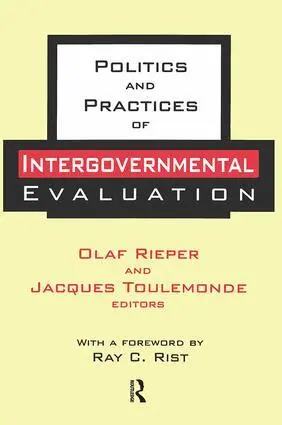
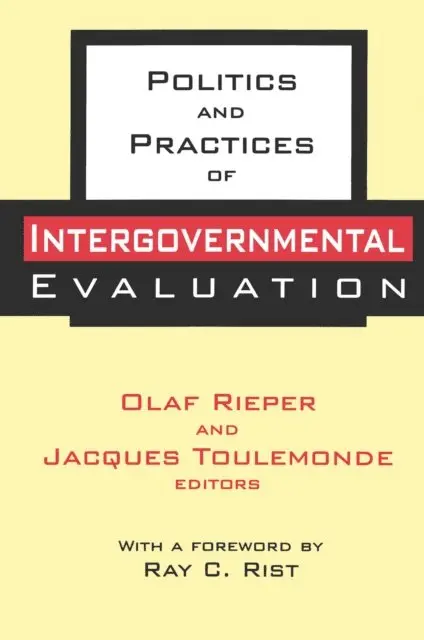
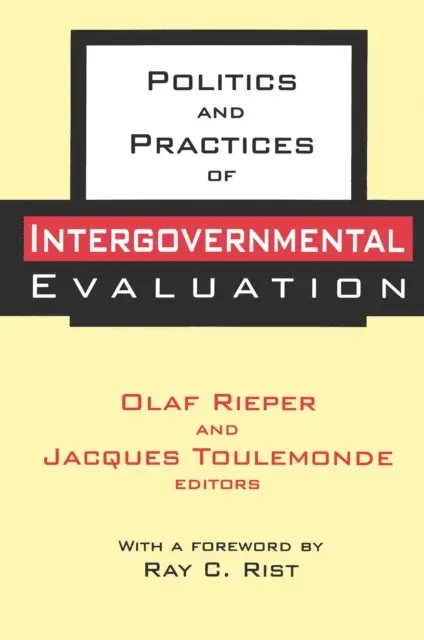
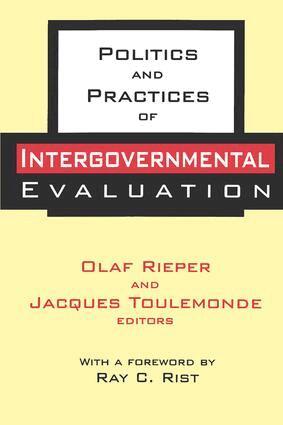
Great intellectual effort has gone into the development of sophisticated designs and methodologies to study individual policies, programs, and projects. Costly efforts to find the smallest evidence of a policy or program impact have been undertaken in the presumption that such data are central to policy decision making. Meanwhile, the intergovernmental nature of political and policy governance has been ignored. Whether it is Canada, the United States, England, Denmark, Sweden, Germany, Japan, or any other industrial country, the governmental structure is essentially a web of interrelated policies, programs, and projects. To understand local responsibilities and requirements, one must also understand the role that regional and national governmental agencies and administrations play. Politics and Practice of Intergovernmental Evaluation is a landmark work in the area of the evaluation of intergovernmental policies, programs, and projects. Comparative and cross-national in its perspective, the material presented here not only provides a systematic theoretical and empirical treatment of intergovernmental evaluation, but does so with case material from seven nations and the European Union. No other such comparative work exists on this topic. Contributors include: Jan Eric Furubo; Mary Henkel; Linda G. Morra; Robert V. Segsworth and Dale H. Poel; and Willi Zimmermann and Peter Knoepfel. The Politics and Practice of Intergovernmental Evaluation will be of interest to political theorists, policymakers, and scholars and students of government and the evaluation community.
Inbunden, Engelska, 2020
1 743 kr
Skickas inom 10-15 vardagar
There is continual concern about the ability of governments to perform the duties and responsibilities that their citizens have come to expect from them. Many citizens view government as inept, arthritic, and dedicated to the preservation of the bureaucratic status quo. As we close the twentieth century, the challenge for democratic governments is to become adaptive, flexible, innovative, and creative. In short, they need to become learning organizations. This book explores what it will take for governments to break out of their traditional ways of approaching problems and leam new approaches to finding solutions.Can Governments Learn? examines organizational learning in the public sector. It seeks to understand what role policy and program evaluation information can play in helping governments to learn. Among the democratic societies that are studied are Belgium, Canada, the Netherlands, Sweden, and the United States. Their governmental systems have produced and learned from evaluation information in quite different ways. Significantly, the studies documented here show that the concept of organizational learning has vitality and applicability cross-nationally.Can Governments Learn ? evaluates preconditions for governmental learning as well as the institutional and human resource factors that contribute to the process. This is the third volume in the comparative policy analysis series. It is essential for policymakers, government officials, and scholars interested in improving the performance of governments.
Inbunden, Engelska, 2017
2 343 kr
Skickas inom 10-15 vardagar
The literature on policy strategies, instruments, and styles is impressive. Still, a complex variety of theoretical and conceptual approaches and analytical tools hamper a good overview. Carrots, Sticks, and Sermons proposes such a framework for the field and clearly shows how public policy instruments are classified, packaged, and chosen, while highlighting the role evaluation plays in the instruments-choice process.Carrots, Sticks, and Sermons offers a comprehensive analysis of categories and typologies of policy instruments. It classifies sticks, carrots, and sermons - or, more specifically, regulation, economic means, and information. Readers are offered a comparative perspective of evaluation practice in foreign contexts. Special attention is paid to the examples of Sweden, the Netherlands, Belgium, England, Canada, the United States, and the Republic of Korea. As such, this volume crosses language barriers that stand in the way of dispersing research results among the international community of theoreticians and practitioners. As nations become increasingly interdependent, problems of implementation and evaluation of policy choices will become issues of increasing gravity.Carrots, Sticks, and Sermons provides insights into the traditional and current practice of policy and program evaluation in various contexts. The book's theory of comparative public policy will produce understanding and guidance in designing better policies. It will be of wide interest to those in the fields of public policy, particularly policy design, policy implementation, policy evaluation, comparative politics, and economics.
Inbunden, Engelska, 2017
1 276 kr
Skickas inom 10-15 vardagar
Americans worry continually about their schools with frequent discussions of the "crisis" in American education, of the "failures" of the public school systems, and of the inability of schools to meet the current challenges of contemporary life. Such concerns date back at least to the nineteenth century. A thread that weaves its way through the critiques of American elementary and secondary schools is that the educational system is not serving its children well, that more should be done to enhance achievement and higher performance. These critiques first began when the United States was industrializing and were later amplified when the Soviets and Japan were thought to be grinding down the competitive position of America. At the start of the twenty-first century, as we discuss globalization and maintaining our leadership position in the world economy, they are being heard again.The Urban School: A Factory for Failure challenges these assumptions about American education. Indeed, a basic premise of the book is that the American school system is working quite well-doing exactly what is expected of it. To wit, that the schools in the United States affirm, reflect, and reinforce the social inequalities that exist in the social structures of the society. Stated differently, the schools are not great engines for equalizing the existing social inequalities. Rather, they work to reinforce the social class differences that we have had in the past and continue to have in more pronounced ways at present.Rist uses both sociological and anthropological methods to examine life in one segregated African-American school in the mid-western United States. A classroom of some thirty children were followed from their first day of kindergarten through the second grade. Detailed accounts of the day-by-day process of sorting, stratifying, and separating the children by social class backgrounds demonstrates the means of ensuring that both the poor and middle-class students soon learned their appropriate place in the social hierarchy of the school. Instructional time, discipline, and teacher attention all varied by social class of the students, with those at the bottom of the ladder consistently receiving few positive rewards and many negative sanctions.When The Urban School was first published in 1973, the National School Boards Association called it one of the ten most influential books on American education for the year. It remains essential reading for educators, sociologists, and economists.
Inbunden, Engelska, 2013
2 137 kr
Skickas inom 10-15 vardagar
Now more than ever, policy evaluation is an important component in addressing the world's economic crisis. Before it can do so, the discipline must adapt to changing economic and political environments. The contributors address a basic question: What impact do crises have on evaluation and how can evaluation contribute in times of turbulence?Examining the state of evaluation today, the volume's editors cover a broad range of topics, including post-hoc evaluation; shifting economic paradigms; the World Bank Group's response to the global economic crisis; challenges in evaluating financial literacy; evaluating counter-terrorism programs; evaluation in the context of humanitarian crises; and why civil society organizations in sub-Saharan Africa matter in evaluating poverty interventions.The contributors explore the role of evaluation in the search for solutions to global instability. They recognize, however, that in order to address unprecedented crises, evaluation itself needs to be evaluated and updated as part of the process of change and reform. This volume is the latest in Transaction's well-respected Comparative Policy Evaluation series.
Häftad, Engelska, 2015
440 kr
Skickas inom 5-8 vardagar
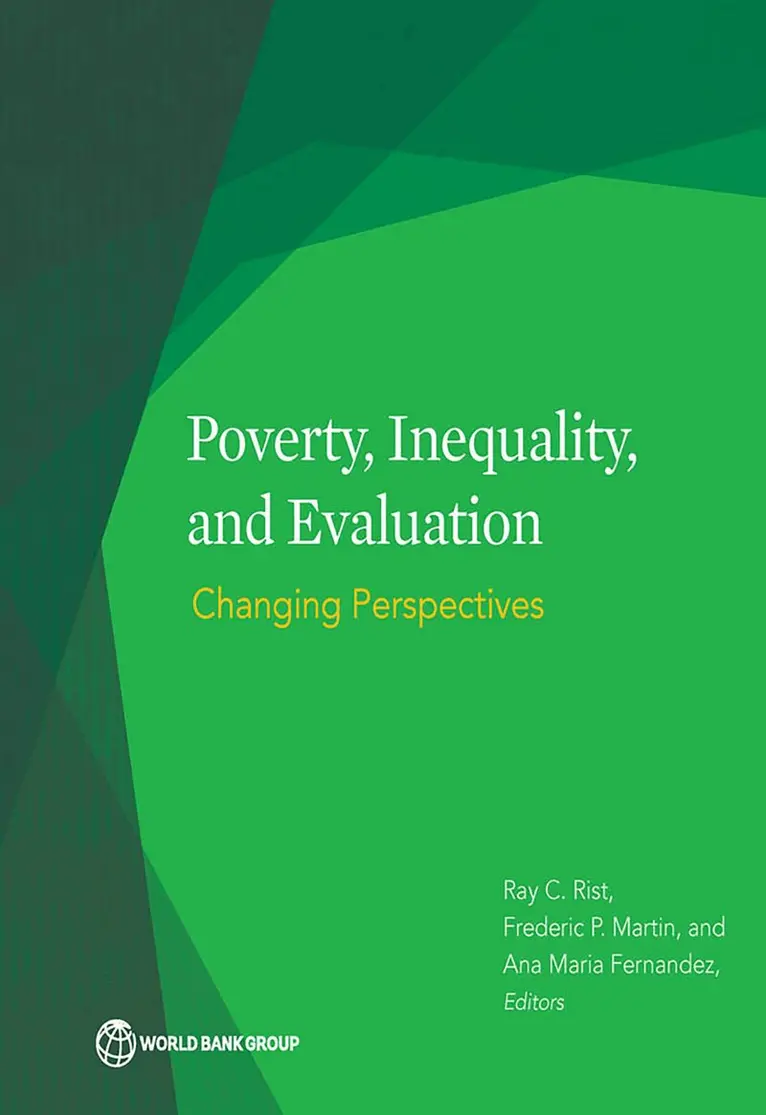
The basic premise of this book is that the conversation on the future of development needs to shift from a focus on poverty to that of inequality. The poverty emphasis is in an intellectual and political cul de sac. It does not address the fundamental question of why people are poor nor what can be done structurally and institutionally to reduce and eliminate it. The various chapters illustrate in the context of various countries and sectors around the world, the significant contributions that evaluators can make in terms of improvement of the analytical framework, analysis of the performance and results of specific programs and projects, as well as assessing and designing better public management systems in terms of poverty and inequality reduction. Beyond the specific contributions presented, three characteristics characterize those evaluations to be relevant for poverty and inequality analysis: a global-local approach: Global to move beyond disciplinary boundaries and consider cross-cutting issues, local to account for the diversity of countries, sectors, institutions and cultures considered; a problem-solving orientation: The issue evaluated is the core focus and determines the choice of evaluation methods to analyze this issue from a variety of angles; an evolutionary approach: Chapters presented are from iconoclasts who do not have any pre-established theory or school of thought to defend. This is the result of openness of mind and ability to adapt the analytical framework, the evaluation methods, and the interpretation of results in a constant interaction with the stakeholders. Such characteristics make evaluation a domain that can help understand better complex issues like poverty, inequality, vulnerability, and their interactions as well as propose a relevant and useful theory of change for public policies and projects to improve the plight of a large part of the world population in industrialized and developing countries alike.
Del 3 - The International Library of Comparative Public Policy series
Policy Evaluation
Linking Theory to Practice
Inbunden, Engelska, 1995
4 686 kr
Skickas inom 5-8 vardagar
For governments to be successful in achieving their objectives, they need to select the correct policy instruments. This volume addresses the role of policy instruments in achieving policy objectives.Policy Evaluation provides a systematic assessment of the impact that public policy evaluations have on the governance of democratic societies. This book emphasises the impacts of policy evaluations on the formulation, implementation and accountability functions of governments. At all three phases of the policy cycle, there is a need for coherent and systematic evaluation. This book demonstrates how such evaluations can be conducted and the opportunities for their subsequent utilization.
Inbunden, Engelska, 2014
830 kr
Tillfälligt slut
Inbunden, Engelska, 1996
1 115 kr
Tillfälligt slut
Great intellectual effort has gone into the development of sophisticated designs and methodologies to study individual policies, programs, and projects. Costly efforts to find the smallest evidence of a policy or program impact have been undertaken in the presumption that such data are central to policy decision making. Meanwhile, the intergovernmental nature of political and policy governance has been ignored. Whether it is Canada, the United States, England, Denmark, Sweden, Germany, Japan, or any other industrial country, the governmental structure is essentially a web of interrelated policies, programs, and projects. To understand local responsibilities and requirements, one must also understand the role that regional and national governmental agencies and administrations play. Politics and Practice of Intergovernmental Evaluation is a landmark work in the area of the evaluation of intergovernmental policies, programs, and projects. Comparative and cross-national in its perspective, the material presented here not only provides a systematic theoretical and empirical treatment of intergovernmental evaluation, but does so with case material from seven nations and the European Union. No other such comparative work exists on this topic. Contributors include: Jan Eric Furubo; Mary Henkel; Linda G. Morra; Robert V. Segsworth and Dale H. Poel; and Willi Zimmermann and Peter Knoepfel. The Politics and Practice of Intergovernmental Evaluation will be of interest to political theorists, policymakers, and scholars and students of government and the evaluation community.