Rekha Pande – författare
Visar alla böcker från författaren Rekha Pande. Handla med fri frakt och snabb leverans.
8 produkter
8 produkter
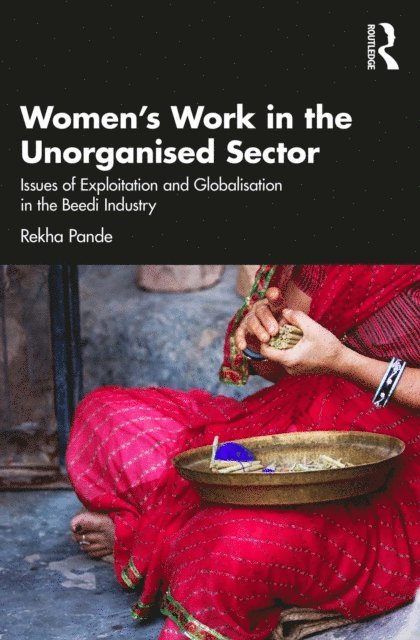
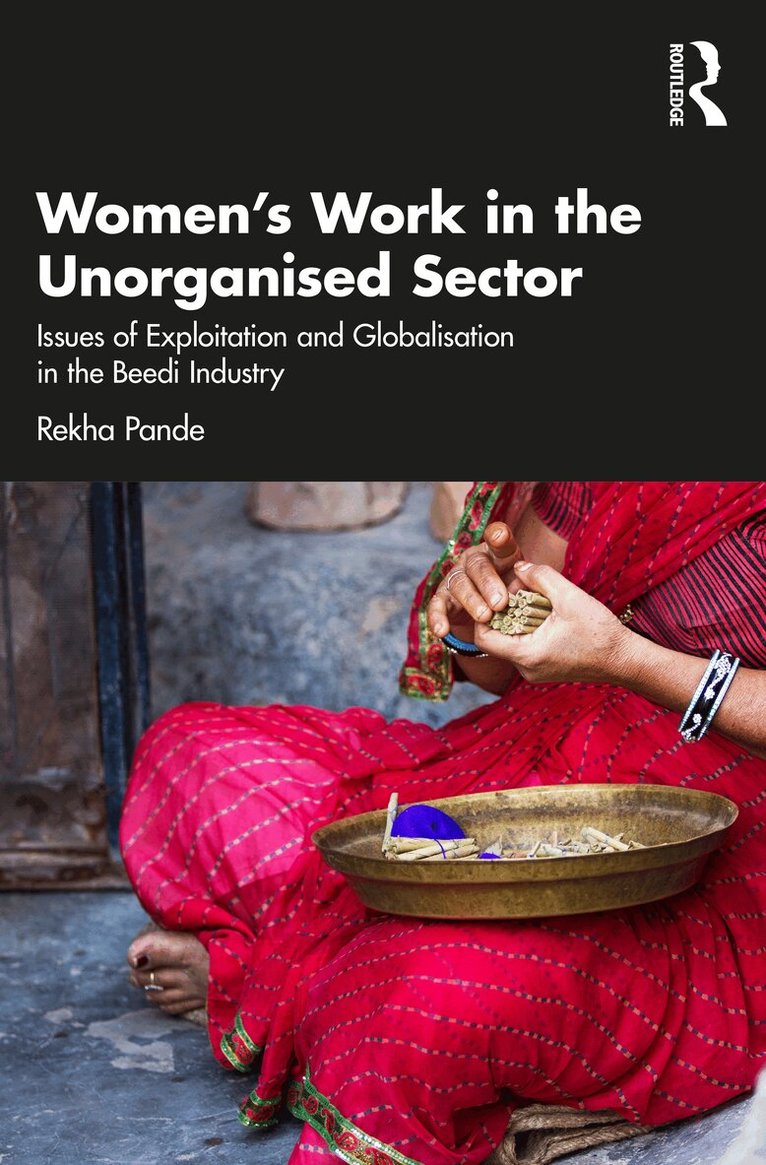
Women's Work in the Unorganized Sector
Issues of Exploitation and Globalisation in the Beedi Industry
Inbunden, Engelska, 2022
1 909 kr
Skickas inom 10-15 vardagar
This book probes into the beedi industry, a highly gendered and class-divided unorganised sector in India. It introduces an analysis of the lives, health status and work of the Indian women and girl children in the industry and discusses the role of gender constructions, global capitalism, and global racism in shaping the ideologies and conceptions about men and women at work.The volume presents a gendered postcolonial perspective on women's employment in the context of social and economic processes that are critical to globalization. It focuses on Telangana's Nizamabad district - where a majority of the women population are employed in the beedi industry. Through detailed surveys and case studies, the author analyses different aspects of exploitation of these women such as poor working conditions, income inequalities, health risks and the realities of child labour in the process of beedi making.Richly detailed, this book will be of great interest to students, researchers and teachers of geography, particularly human geography and feminist geography, women and gender studies, feminism, labour economics, capitalism, development studies, political sociology, and cultural studies. It will also be of interest to gender and feminist geographers, occupational health professionals, NGOs, and those interested in the issues of gender and development.
Women's Work in the Unorganized Sector
Issues of Exploitation and Globalisation in the Beedi Industry
Häftad, Engelska, 2022
472 kr
Skickas
This book probes into the beedi industry, a highly gendered and class-divided unorganised sector in India. It introduces an analysis of the lives, health status and work of the Indian women and girl children in the industry and discusses the role of gender constructions, global capitalism, and global racism in shaping the ideologies and conceptions about men and women at work.The volume presents a gendered postcolonial perspective on women's employment in the context of social and economic processes that are critical to globalization. It focuses on Telangana's Nizamabad district - where a majority of the women population are employed in the beedi industry. Through detailed surveys and case studies, the author analyses different aspects of exploitation of these women such as poor working conditions, income inequalities, health risks and the realities of child labour in the process of beedi making.Richly detailed, this book will be of great interest to students, researchers and teachers of geography, particularly human geography and feminist geography, women and gender studies, feminism, labour economics, capitalism, development studies, political sociology, and cultural studies. It will also be of interest to gender and feminist geographers, occupational health professionals, NGOs, and those interested in the issues of gender and development.
1 951 kr
Kommande
The modern Indian State, with all its democratic paraphernalia, seemed to have never undergone thorough academic scrutiny, whether in the mainstream or otherwise. Historians, political analysts, economists, and sociologists have all been trying to understand the nature and dynamics of the Indian state and the political system as a whole. Gunnar Myrdal described the Indian State as a 'Soft State' due to its inability to eradicate poverty. Hamza Alavi introduces the concept of an 'Over Developed State' in South Asia with a strong defense component, but whether this applies to India is debated. The Marxist thesis on the nature of the Indian state aims to explain the dominant class character of the coalitions that underlie state policies. Historically, the Indian state has been a product of continuous contestations between colonial and nationalist traditions, a legacy that places the very concept of the 'Indian state' in flux. Although ideologically the state was based on concepts like the White Man’s Burden, it did not significantly interfere with social formations in terms of caste and religious arrangements until it deemed fit to intervene, either to maintain order or gain support from a faction. Interventions in social formations, such as fuelling communalism, occurred only when the colonial state sought to create factions within the ruling elite. The larger fact remains clear: reasonable restrictions and a belief in human reason and individual freedom were largely overshadowed by the coercive apparatus of the military, police, and law. Similarly, Bhikhu Parekh argues for the intersection of the modern state deriving from homogeneity and cultural heterogeneity. However, the ideological deliberations between the three tenets—utilitarianism, evangelicalism, and orientalism—shaped the policies of the state that followed, each offering different approaches toward governing a vast and diverse land. In addition to promoting economic motives such as plantation, commercial gains, and de-industrialization, the new state introduced far-reaching changes in the structure of education and criminal laws. Meanwhile, the civil laws of both Hindus and Muslims were largely dominated by elite traditions. Some argue that the colonial state was not autonomous in the truest sense, as it had to constantly align with the priorities of the traditional elite. Fragmentation, incoherence, and the dilemmas of the postcolonial condition constitute significant features of the contemporary Indian lifeworld. India maintains the colonial dichotomy of ‘inner tradition’ and ‘outer modernity’ as the semantic framework of cognition and practice. Moreover, a persisting colonially wedged schism exists between the inner tradition of the socio-cultural sphere and the outer modernity of the politico-economic sphere. Human agents attempt to assign varying significance to different aspects of the world, maintaining their identity and politico-ethical positioning as responsive beings in inconsistent and problematic situations. They achieve this not by consistently adhering to one side of the dilemma but by switching from one side to the other as the situation requires. The crucial question arises: whether to treat India as a monolithic political entity. However, the reality is that the Indian State comprises a variety of institutions. Political institutions operate within a complex socio-cultural matrix at three levels – national, state, and local. To locate and understand these institutions in the social matrices in which they are embedded justifies the need for a historical understanding of their inception and historicity as they have evolved over time. In short, it has become necessary not to treat India as a political monolith but as a compendium of myriad institutions operating in an equally diverse socio-economic environment. This requires a multidisciplinary approach so that each institution can be understood in relation to its social context. Thus the conference aims to have an understanding of the processes of continuity and change in the state and society of India during pre-colonial and post-colonial times is vital for evaluating the contemporary Indian state. In the current era of advanced research, there is an increasing scope to answer the historical question: 'What was the nature of Indian society, and how was it reflected in the state structure?' Recently, historians have argued that the state in India represented itself as the protector of social norms to legitimize its sovereign power over society and acted as a guiding force for the early development of administrative technology, social transformation, and trans-local and trans-continental commercial activities. It is argued that its power arose by offering an integral sphere of coordination, competition, and contestation between different groups, communities, and polities. Therefore, it is important in the present context to historically contextualize the process of regional state formation and the transformation of the relationship between the state and society in a broader perspective in pre-colonial and post-colonial India.
845 kr
Kommande
The modern Indian State, with all its democratic paraphernalia, seemed to have never undergone thorough academic scrutiny, whether in the mainstream or otherwise. Historians, political analysts, economists, and sociologists have all been trying to understand the nature and dynamics of the Indian state and the political system as a whole. Gunnar Myrdal described the Indian State as a 'Soft State' due to its inability to eradicate poverty. Hamza Alavi introduces the concept of an 'Over Developed State' in South Asia with a strong defense component, but whether this applies to India is debated. The Marxist thesis on the nature of the Indian state aims to explain the dominant class character of the coalitions that underlie state policies. Historically, the Indian state has been a product of continuous contestations between colonial and nationalist traditions, a legacy that places the very concept of the 'Indian state' in flux. Although ideologically the state was based on concepts like the White Man’s Burden, it did not significantly interfere with social formations in terms of caste and religious arrangements until it deemed fit to intervene, either to maintain order or gain support from a faction. Interventions in social formations, such as fuelling communalism, occurred only when the colonial state sought to create factions within the ruling elite. The larger fact remains clear: reasonable restrictions and a belief in human reason and individual freedom were largely overshadowed by the coercive apparatus of the military, police, and law. Similarly, Bhikhu Parekh argues for the intersection of the modern state deriving from homogeneity and cultural heterogeneity. However, the ideological deliberations between the three tenets—utilitarianism, evangelicalism, and orientalism—shaped the policies of the state that followed, each offering different approaches toward governing a vast and diverse land. In addition to promoting economic motives such as plantation, commercial gains, and de-industrialization, the new state introduced far-reaching changes in the structure of education and criminal laws. Meanwhile, the civil laws of both Hindus and Muslims were largely dominated by elite traditions. Some argue that the colonial state was not autonomous in the truest sense, as it had to constantly align with the priorities of the traditional elite. Fragmentation, incoherence, and the dilemmas of the postcolonial condition constitute significant features of the contemporary Indian lifeworld. India maintains the colonial dichotomy of ‘inner tradition’ and ‘outer modernity’ as the semantic framework of cognition and practice. Moreover, a persisting colonially wedged schism exists between the inner tradition of the socio-cultural sphere and the outer modernity of the politico-economic sphere. Human agents attempt to assign varying significance to different aspects of the world, maintaining their identity and politico-ethical positioning as responsive beings in inconsistent and problematic situations. They achieve this not by consistently adhering to one side of the dilemma but by switching from one side to the other as the situation requires. The crucial question arises: whether to treat India as a monolithic political entity. However, the reality is that the Indian State comprises a variety of institutions. Political institutions operate within a complex socio-cultural matrix at three levels – national, state, and local. To locate and understand these institutions in the social matrices in which they are embedded justifies the need for a historical understanding of their inception and historicity as they have evolved over time. In short, it has become necessary not to treat India as a political monolith but as a compendium of myriad institutions operating in an equally diverse socio-economic environment. This requires a multidisciplinary approach so that each institution can be understood in relation to its social context. Thus the conference aims to have an understanding of the processes of continuity and change in the state and society of India during pre-colonial and post-colonial times is vital for evaluating the contemporary Indian state. In the current era of advanced research, there is an increasing scope to answer the historical question: 'What was the nature of Indian society, and how was it reflected in the state structure?' Recently, historians have argued that the state in India represented itself as the protector of social norms to legitimize its sovereign power over society and acted as a guiding force for the early development of administrative technology, social transformation, and trans-local and trans-continental commercial activities. It is argued that its power arose by offering an integral sphere of coordination, competition, and contestation between different groups, communities, and polities. Therefore, it is important in the present context to historically contextualize the process of regional state formation and the transformation of the relationship between the state and society in a broader perspective in pre-colonial and post-colonial India.
Globalization, Technology Diffusion and Gender Disparity
Social Impacts of ICTs
Inbunden, Engelska, 2012
2 431 kr
Skickas inom 5-8 vardagar
2 724 kr
Skickas inom 5-8 vardagar
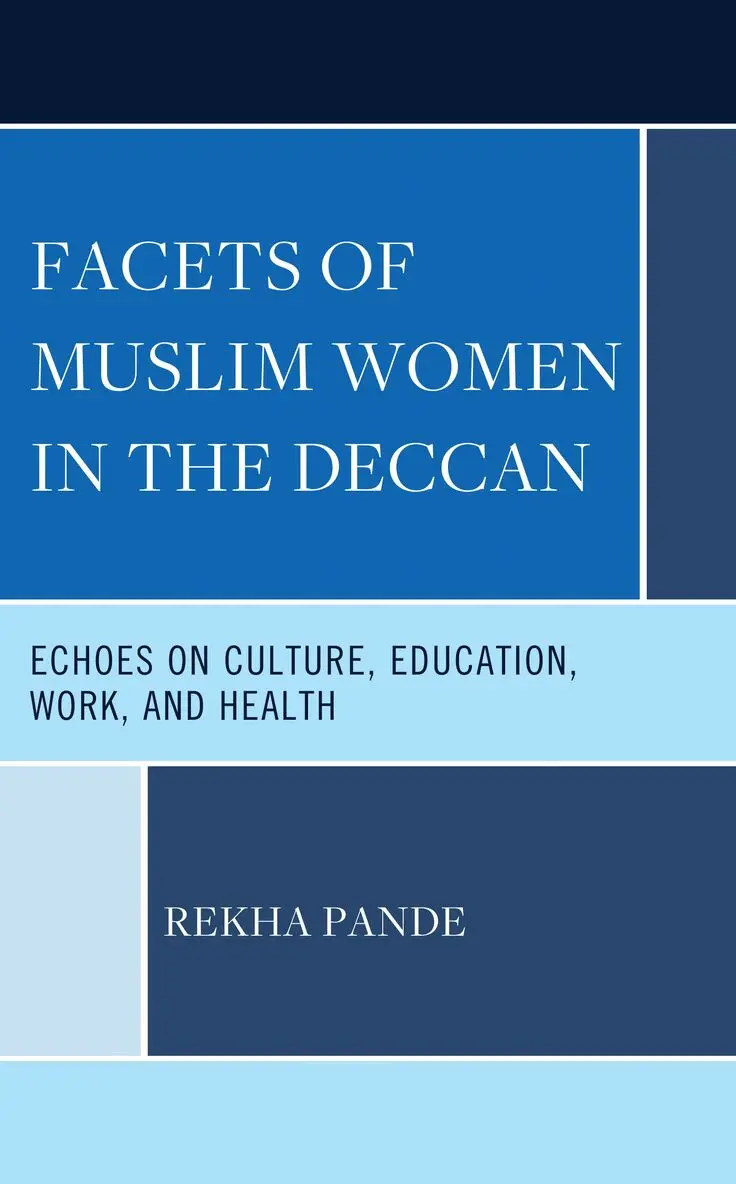
Facets of Muslim Women in the Deccan
Echoes on Culture, Education, Work, and Health
Inbunden, Engelska, 2024
1 343 kr
Skickas inom 10-15 vardagar
Facets of Muslim Women in the Deccan: Echoes on Culture, Education, Work, and Health investigates Deccan, a cultural and historical heart of India, with a focus on Muslim women and collects observations and findings in the field focusing on issues of history and culture, family, education, work, and health. It is women who carry the double burden of poverty and discrimination and, as some studies in the various sections show, Deccan is no different. These women, though not a homogeneous group by way of caste, class, religion, or economic activity, share a common struggle against oppression and exploitative conditions. Utilizing primary data, this book delves into topics of culture, family, education, and the feminization of labor in organized sectors.
550 kr
Skickas inom 5-8 vardagar