Rhys H. Williams - Böcker
Visar alla böcker från författaren Rhys H. Williams. Handla med fri frakt och snabb leverans.
11 produkter
11 produkter
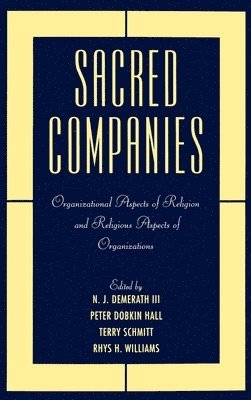
Sacred Companies
Organizational Aspects of Religion and Religious Aspects of Organizations
Inbunden, Engelska, 1998
2 236 kr
Skickas inom 5-8 vardagar
Religion is intrinsically social, and hence irretrievably organizational. Religion and organizations have separately been the objects of frequent study but their confluence has rarely been considered. This interdisciplinary collection of mostly unpublished papers is the first volume to tackle this neglected subject. The result of a three-year research project at Yale sponsored by the Lilly Endowment, the volume looks at such topics as the historical sources and patterns of U.S. religious institutions, contemporary patterns of denominational authority, the congregation as organization, and the interface between religious and secular institutions.
534 kr
Skickas inom 7-10 vardagar
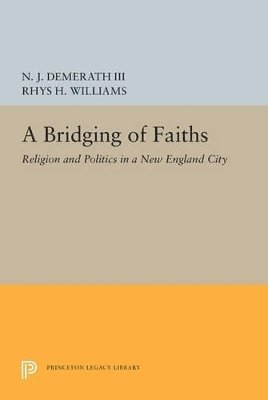
Homelessness, black neighborhood development, problems of abortion and sex education--how does religion affect the politics of an American city confronting these and other concerns? And what differences have "church and state" issues made in these struggles? In answering such questions, A Bridging of Faiths conveys a feeling of the urgent social theater of Springfield, Massachusetts, and provides both a contemporary and historical sense of how power shapes and is shaped by the civic culture. Recalling the immediacy and provocativeness of classic community studies like Middletown and Yankee City, the work draws on the voices of Springfielders themselves, while it exposes tendencies that prevail throughout contemporary America. This is a tale of two establishments: Protestant for three centuries, Springfield has been for the last fifty years a Catholic city. In looking at its emerging demographic, political, and economic patterns, the book shows how church and state interact at the local level, where lives are actually lived, as opposed to how the law and public opinion say they ought to interact at the more abstract federal level.While religion is more politically influential than some social scientists might have expected, it does not possess the kind of power feared by many constitutionalists. Politicians are seeking to redefine themselves in relation to religion and in other ways, and religion as a whole faces subtle crises of mobility, authority, and secularization. From these complexities, new patterns of cultural and political authority have emerged in Springfield, similar to those now affecting other American communities and the nation. Originally published in 1992. The Princeton Legacy Library uses the latest print-on-demand technology to again make available previously out-of-print books from the distinguished backlist of Princeton University Press. These editions preserve the original texts of these important books while presenting them in durable paperback and hardcover editions. The goal of the Princeton Legacy Library is to vastly increase access to the rich scholarly heritage found in the thousands of books published by Princeton University Press since its founding in 1905.
2 567 kr
Skickas inom 3-6 vardagar
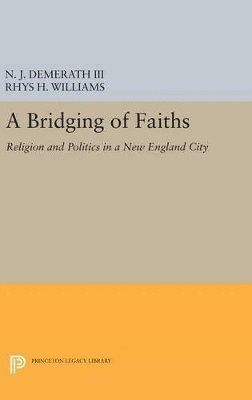
Homelessness, black neighborhood development, problems of abortion and sex education--how does religion affect the politics of an American city confronting these and other concerns? And what differences have "church and state" issues made in these struggles? In answering such questions, A Bridging of Faiths conveys a feeling of the urgent social theater of Springfield, Massachusetts, and provides both a contemporary and historical sense of how power shapes and is shaped by the civic culture. Recalling the immediacy and provocativeness of classic community studies like Middletown and Yankee City, the work draws on the voices of Springfielders themselves, while it exposes tendencies that prevail throughout contemporary America. This is a tale of two establishments: Protestant for three centuries, Springfield has been for the last fifty years a Catholic city. In looking at its emerging demographic, political, and economic patterns, the book shows how church and state interact at the local level, where lives are actually lived, as opposed to how the law and public opinion say they ought to interact at the more abstract federal level.While religion is more politically influential than some social scientists might have expected, it does not possess the kind of power feared by many constitutionalists. Politicians are seeking to redefine themselves in relation to religion and in other ways, and religion as a whole faces subtle crises of mobility, authority, and secularization. From these complexities, new patterns of cultural and political authority have emerged in Springfield, similar to those now affecting other American communities and the nation. Originally published in 1992. The Princeton Legacy Library uses the latest print-on-demand technology to again make available previously out-of-print books from the distinguished backlist of Princeton University Press. These editions preserve the original texts of these important books while presenting them in durable paperback and hardcover editions. The goal of the Princeton Legacy Library is to vastly increase access to the rich scholarly heritage found in the thousands of books published by Princeton University Press since its founding in 1905.
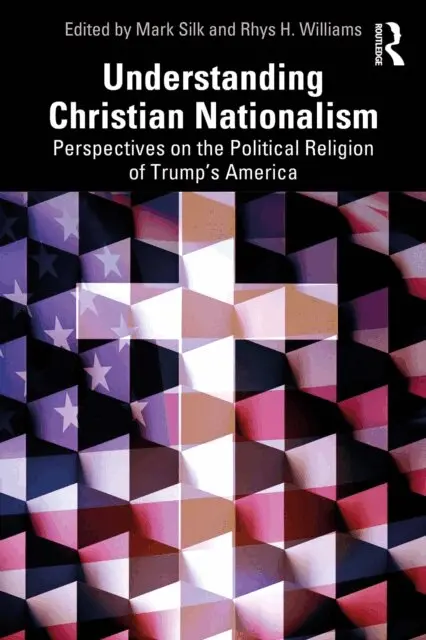
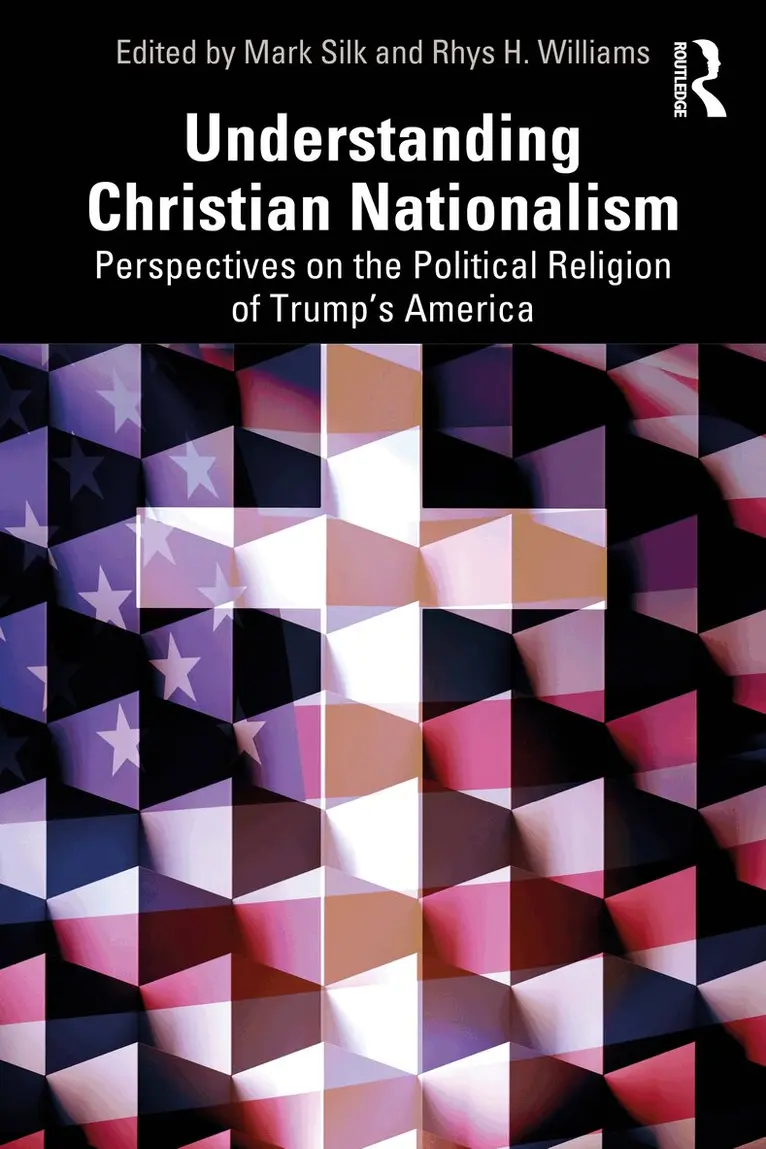
Understanding Christian Nationalism
Perspectives on the Political Religion of Trump's America
Häftad, Engelska, 2026
617 kr
Kommande
Offering the first comprehensive, interdisciplinary account of what Christian nationalism in America is and isn’t, and how it became the political religion of Donald Trump’s MAGA movement, the essays in this book describe the way Christian nationalism has embedded itself in American politics.Understanding Christian Nationalism emphasizes that Christian nationalism’s sacralization of the US must be seen against the backdrop of American civil religion, which since the founding of the republic has represented the country in sacred terms that transcend political partisanship. By contrast, partisanship is central to the Christian nationalist enterprise. Although Christian nationalist politics can be found in the 19th century, the book shows that the Christian nationalism experienced in today’s America derives from the rise of the religious right in the late 1970s. Adapting civil religious language to advance the electoral success of the Republican Party, the religious right set the stage for the MAGA movement by promoting the restoration of a country dominated by White, heterosexual men, when Protestant Christianity enjoyed favored status as the country’s effective religious establishment. The collection makes clear that the use of religious language to characterize the US is not exclusively an expression of Christian nationalism. It also demonstrates that many Christian nationalists in America see themselves as part of an international movement to restore Christian values around the world.Featuring essays that use historical methods, media analysis, survey data, interview and ethnographic observations, this book is essential to students, instructors, and readers in sociology, social theory, sociology of religion, cultural sociology, US history, and politics to understand the Christian nationalism integral to Trump’s appeal and electoral success.
Understanding Christian Nationalism
Perspectives on the Political Religion of Trump's America
Inbunden, Engelska, 2026
2 258 kr
Kommande
Offering the first comprehensive, interdisciplinary account of what Christian nationalism in America is and isn’t, and how it became the political religion of Donald Trump’s MAGA movement, the essays in this book describe the way Christian nationalism has embedded itself in American politics.Understanding Christian Nationalism emphasizes that Christian nationalism’s sacralization of the US must be seen against the backdrop of American civil religion, which since the founding of the republic has represented the country in sacred terms that transcend political partisanship. By contrast, partisanship is central to the Christian nationalist enterprise. Although Christian nationalist politics can be found in the 19th century, the book shows that the Christian nationalism experienced in today’s America derives from the rise of the religious right in the late 1970s. Adapting civil religious language to advance the electoral success of the Republican Party, the religious right set the stage for the MAGA movement by promoting the restoration of a country dominated by White, heterosexual men, when Protestant Christianity enjoyed favored status as the country’s effective religious establishment. The collection makes clear that the use of religious language to characterize the US is not exclusively an expression of Christian nationalism. It also demonstrates that many Christian nationalists in America see themselves as part of an international movement to restore Christian values around the world.Featuring essays that use historical methods, media analysis, survey data, interview and ethnographic observations, this book is essential to students, instructors, and readers in sociology, social theory, sociology of religion, cultural sociology, US history, and politics to understand the Christian nationalism integral to Trump’s appeal and electoral success.
Civil Religion Today
Religion and the American Nation in the Twenty-First Century
Inbunden, Engelska, 2021
954 kr
Skickas inom 10-15 vardagar
Moves the discussion of American civil religion into the twenty-first century Civil Religion, a term made popular by sociologist Robert Bellah a little over fifty years ago, describes how people might share in a sacred sense of their nation. While hotly debated, the idea continues to enjoy wide application among academics and journalists. Bellah used civil religion to make sense of the turmoil of the 1960s, especially moral debates provoked by the Vietnam War. Now, a half-century later, American society is again riven by conflict over immigration, economic inequality, racial oppression, and "culture wars" issues. Is Bellah's hopeful assessment still useful for understanding contemporary America? If not, how should we think of it differently?Civil Religion Today reassesses the term to take stock of its usefulness after fifty years of engagement in the field. Looking both at the concept and at ground-level studies of how we might find civil religion in practice, this book aims to push the conversation forward, considering how and in what ways it is helpful in our current social and political context, evaluating which parts are worth keeping, which can be reformulated, and which can now be usefully discarded. It suggests we go "beyond Bellah" in theory and practice, thinking about American society in a new century.
Civil Religion Today
Religion and the American Nation in the Twenty-First Century
Häftad, Engelska, 2021
251 kr
Skickas
Moves the discussion of American civil religion into the twenty-first century Civil Religion, a term made popular by sociologist Robert Bellah a little over fifty years ago, describes how people might share in a sacred sense of their nation. While hotly debated, the idea continues to enjoy wide application among academics and journalists. Bellah used civil religion to make sense of the turmoil of the 1960s, especially moral debates provoked by the Vietnam War. Now, a half-century later, American society is again riven by conflict over immigration, economic inequality, racial oppression, and "culture wars" issues. Is Bellah's hopeful assessment still useful for understanding contemporary America? If not, how should we think of it differently?Civil Religion Today reassesses the term to take stock of its usefulness after fifty years of engagement in the field. Looking both at the concept and at ground-level studies of how we might find civil religion in practice, this book aims to push the conversation forward, considering how and in what ways it is helpful in our current social and political context, evaluating which parts are worth keeping, which can be reformulated, and which can now be usefully discarded. It suggests we go "beyond Bellah" in theory and practice, thinking about American society in a new century.
362 kr
Skickas inom 7-10 vardagar
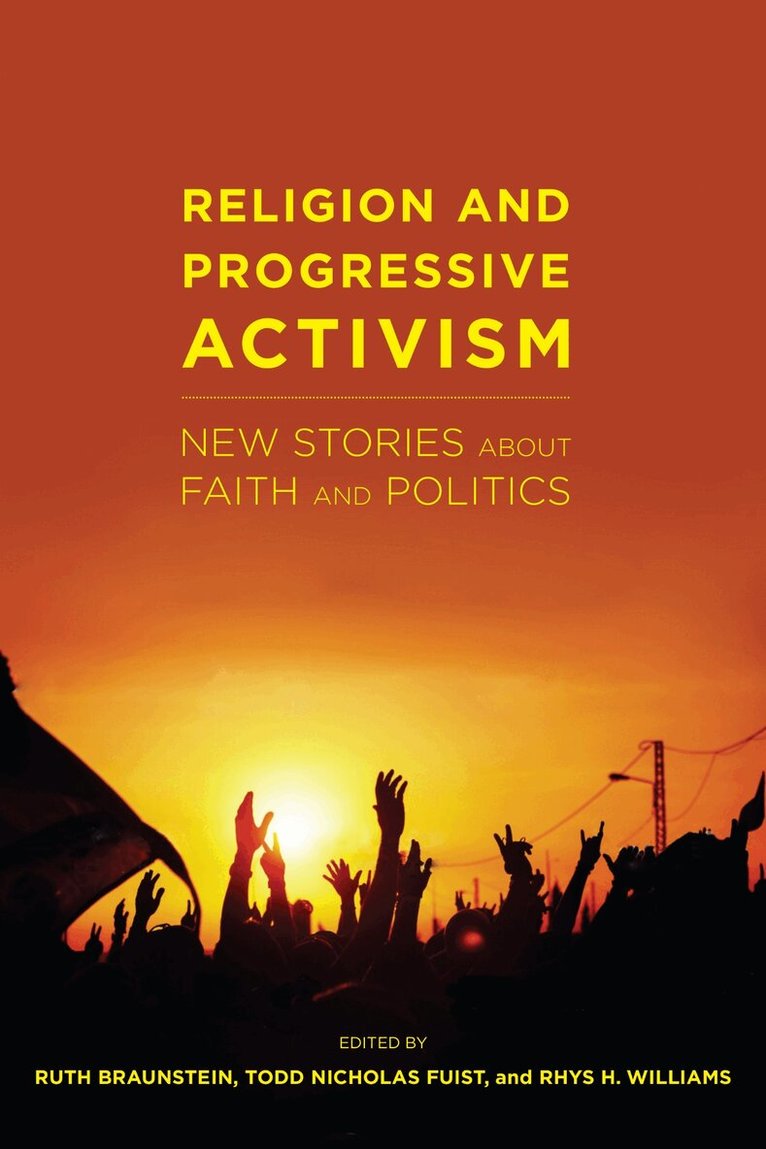
New stories about religiously motivated progressive activism challenge common understandings of the American political landscape.To many mainstream-media saturated Americans, the terms "progressive" and "religious" may not seem to go hand-in-hand. As religion is usually tied to conservatism, an important way in which religion and politics intersect is being overlooked. Religion and Progressive Activism focuses on this significant intersection, revealing that progressive religious activists are a driving force in American public life, involved in almost every political issue or area of public concern. This volume brings together leading experts who dissect and analyze the inner worlds and public strategies of progressive religious activists from the local to the transnational level. It provides insight into documented trends, reviews overlooked case studies, and assesses the varied ways in which progressive religion forces us to deconstruct common political binaries such as right/left and progress/tradition. In a coherent and accessible way, this book engages and rethinks long accepted theories of religion, of social movements, and of the role of faith in democratic politics and civic life. Moreover, by challenging common perceptions of religiously motivated activism, it offers a more grounded and nuanced understanding of religion and the American political landscape.
1 061 kr
Skickas inom 10-15 vardagar
New stories about religiously motivated progressive activism challenge common understandings of the American political landscape.To many mainstream-media saturated Americans, the terms "progressive" and "religious" may not seem to go hand-in-hand. As religion is usually tied to conservatism, an important way in which religion and politics intersect is being overlooked. Religion and Progressive Activism focuses on this significant intersection, revealing that progressive religious activists are a driving force in American public life, involved in almost every political issue or area of public concern. This volume brings together leading experts who dissect and analyze the inner worlds and public strategies of progressive religious activists from the local to the transnational level. It provides insight into documented trends, reviews overlooked case studies, and assesses the varied ways in which progressive religion forces us to deconstruct common political binaries such as right/left and progress/tradition. In a coherent and accessible way, this book engages and rethinks long accepted theories of religion, of social movements, and of the role of faith in democratic politics and civic life. Moreover, by challenging common perceptions of religiously motivated activism, it offers a more grounded and nuanced understanding of religion and the American political landscape.
954 kr
Skickas inom 10-15 vardagar
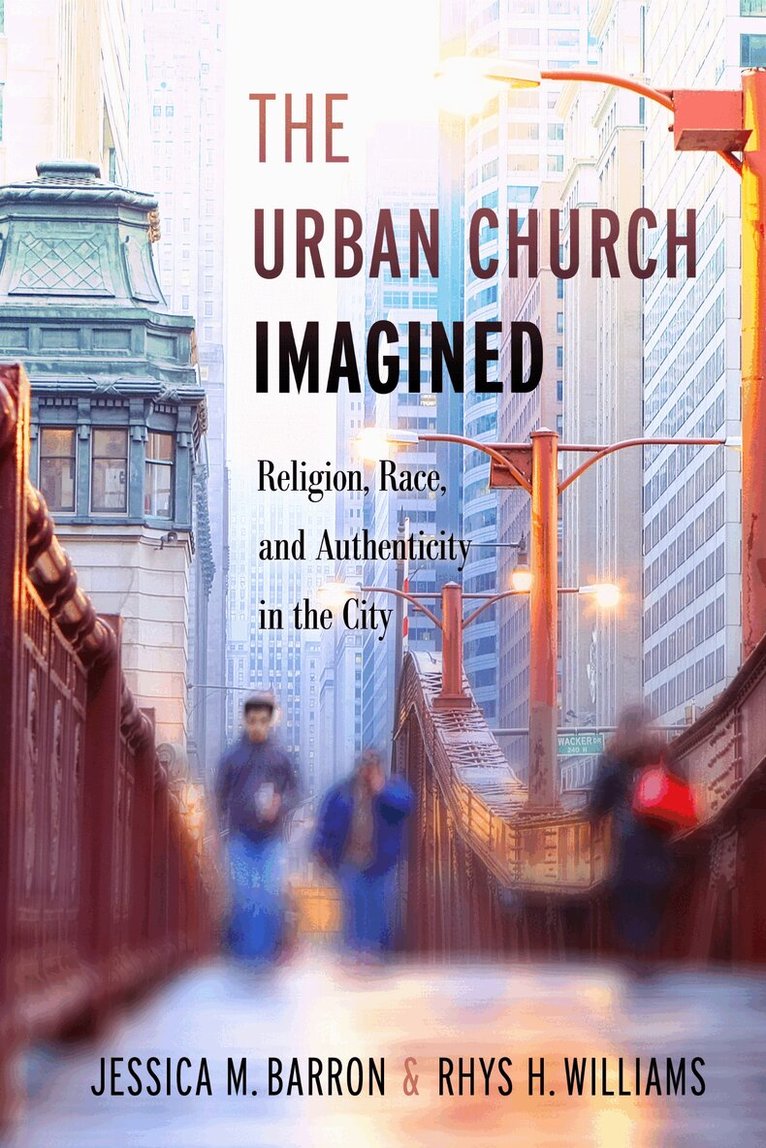
Explores the role of race and consumer culture in attracting urban congregants to an evangelical church The Urban Church Imagined illuminates the dynamics surrounding white urban evangelical congregations' approaches to organizational vitality and diversifying membership. Many evangelical churches are moving to urban, downtown areas to build their congregations and attract younger, millennial members. The urban environment fosters two expectations. First, a deep familiarity and reverence for popular consumer culture, and second, the presence of racial diversity. Church leaders use these ideas when they imagine what a "city church" should look like, but they must balance that with what it actually takes to make this happen. In part, racial diversity is seen as key to urban churches presenting themselves as "in touch" and "authentic." Yet, in an effort to seduce religious consumers, church leaders often and inadvertently end up reproducing racial and economic inequality, an unexpected contradiction to their goal of inclusivity. Drawing on several years of research, Jessica M. Barron and Rhys H. Williams explore the cultural contours of one such church in downtown Chicago. They show that church leaders and congregants' understandings of the connections between race, consumer culture, and the city is a motivating factor for many members who value interracial interactions as a part of their worship experience. But these explorations often unintentionally exclude members along racial and classed lines. Indeed, religious organizations' efforts to engage urban environments and foster integrated congregations produce complex and dynamic relationships between their racially diverse memberships and the cultivation of a safe haven in which white, middle-class leaders can feel as though they are being a positive force in the fight for religious vitality and racial diversity. The book adds to the growing constellation of studies on urban religious organizations, as well as emerging scholarship on intersectionality and congregational characteristics in American religious life. In so doing, it offers important insights into racially diverse congregations in urban areas, a growing trend among evangelical churches. This work is an important case study on the challenges faced by modern churches and urban institutions in general.
362 kr
Skickas inom 7-10 vardagar
Explores the role of race and consumer culture in attracting urban congregants to an evangelical church The Urban Church Imagined illuminates the dynamics surrounding white urban evangelical congregations' approaches to organizational vitality and diversifying membership. Many evangelical churches are moving to urban, downtown areas to build their congregations and attract younger, millennial members. The urban environment fosters two expectations. First, a deep familiarity and reverence for popular consumer culture, and second, the presence of racial diversity. Church leaders use these ideas when they imagine what a "city church" should look like, but they must balance that with what it actually takes to make this happen. In part, racial diversity is seen as key to urban churches presenting themselves as "in touch" and "authentic." Yet, in an effort to seduce religious consumers, church leaders often and inadvertently end up reproducing racial and economic inequality, an unexpected contradiction to their goal of inclusivity. Drawing on several years of research, Jessica M. Barron and Rhys H. Williams explore the cultural contours of one such church in downtown Chicago. They show that church leaders and congregants' understandings of the connections between race, consumer culture, and the city is a motivating factor for many members who value interracial interactions as a part of their worship experience. But these explorations often unintentionally exclude members along racial and classed lines. Indeed, religious organizations' efforts to engage urban environments and foster integrated congregations produce complex and dynamic relationships between their racially diverse memberships and the cultivation of a safe haven in which white, middle-class leaders can feel as though they are being a positive force in the fight for religious vitality and racial diversity. The book adds to the growing constellation of studies on urban religious organizations, as well as emerging scholarship on intersectionality and congregational characteristics in American religious life. In so doing, it offers important insights into racially diverse congregations in urban areas, a growing trend among evangelical churches. This work is an important case study on the challenges faced by modern churches and urban institutions in general.