Richard Breitman - Böcker
Visar alla böcker från författaren Richard Breitman. Handla med fri frakt och snabb leverans.
15 produkter
15 produkter
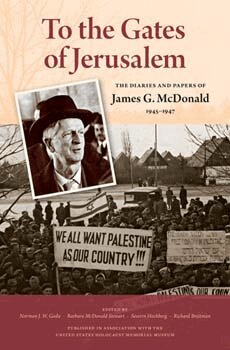
To the Gates of Jerusalem
The Diaries and Papers of James G. McDonald, 1945-1947
Inbunden, Engelska, 2014
337 kr
Skickas inom 10-15 vardagar
This volume, the third in a series of James G. McDonald's edited diaries and papers, covers his work from 1945, with the formation of the Anglo-American Committee, through 1947, with the United Nations' decision to partition Palestine between Jews and Arabs. The "Anglo-American Committee of Inquiry Regarding the Problems of European Jewry and Palestine" was a group charged with finding a solution to the problem of European Jewish Refugees in the context of the increasingly unstable British Mandate in Palestine. McDonald's diaries and papers offer the most thorough personal account we have of the Committee and the politics surrounding it. His diary is part travelogue through the desolation of postwar Europe and a Middle East being transformed by new Jewish settlements and growing Arab intransigence. McDonald maintained discreet contact with Zionist and moderate Arab leaders throughout the Committee's hearings and deliberations. He was instrumental in the recommendation that 100,000 Jewish refugees enter Palestine and won President Truman's trust in order to counter attempts to nullify the report's recommendations.
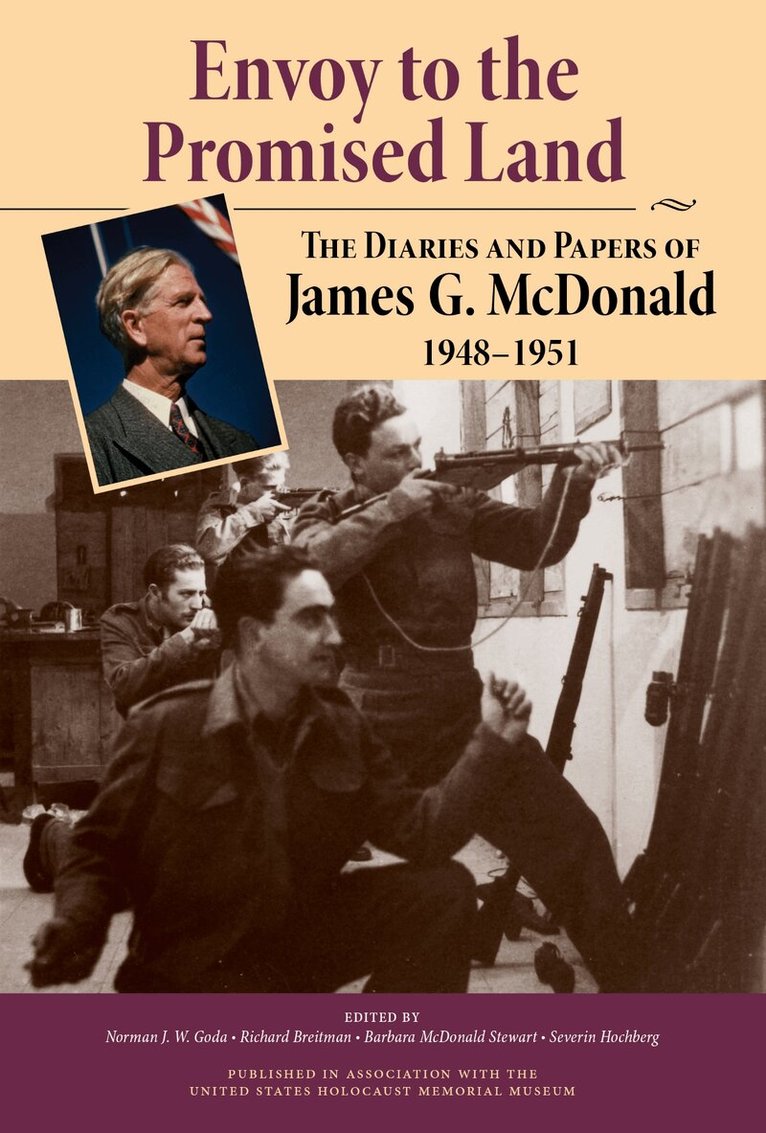
Envoy to the Promised Land
The Diaries and Papers of James G. McDonald, 1948–1951
Inbunden, Engelska, 2017
667 kr
Skickas inom 10-15 vardagar
Just before Israel emerged as a state in May 1948, key United States officials hesitated and backtracked. Undersecretary of State Robert Lovett told Moshe Sharett of the Jewish Agency for Palestine that the US had expected a peaceful transition to dual states in Palestine. Now, war between Jews and Arabs and a broader regional conflict loomed. Apart from the Cold War repercussions, another mass slaughter of Jews would roil the US in a presidential election year.James G. McDonald arrived in Israel soon after its birth, serving as US special representative and later as its first ambassador. McDonald continued his longstanding practice of dictating a diary, which remained for many decades in private hands. Here his letters, private papers, and exchanges with the US State Department and the White House are interspersed chronologically with his diary entries. Envoy to the Promised Land is a major new source for the history of US-Israeli relations.Brilliantly describing the tense climate in Israel almost day by day, McDonald offers an in-depth portrait of key Israeli politicians and analyzes the early stages of issues that still haunt the country today: the disputed boundaries of the new state, the status of Jerusalem, questions of peace with Arab states and Israel's security, Israel's relationship with the United Nations, and the problem of Palestinian refugees.These papers and diaries from 1948 to 1951 follow the widely praised Advocate for the Doomed (IUP), Refugees and Rescue (IUP), and To the Gates of Jerusalem (IUP). Together these four volumes significantly revise the ways we view the Holocaust, its aftermath, and the early history of Israel.
557 kr
Skickas inom 10-15 vardagar
How does one explain America's failure to take bold action to resist the Nazi persecution and murder of European Jews? In contrast to recent writers who place the blame on anti-Semitism in American society at large and within the Roosevelt administration in particular, Richard Breitman and Alan M. Kraut seek the answer in a detailed analysis of American political realities and bureaucratic processes. Drawing on exhaustive archival research, the authors describe and analyze American immigration policy as well as rescue and relief efforts directed toward European Jewry between 1933 and 1945. They contend that U.S. policy was the product of preexisting restrictive immigration laws; an entrenched State Department bureaucracy committed to a narrow defense of American interests; public opposition to any increase in immigration; and the reluctance of Franklin D. Roosevelt to accept the political risks of humanitarian measures to benefit the European Jews. The authors find that the bureaucrats who made and implemented refugee policy were motivated by institutional priorities and reluctance to take risks, rather than by moral or humanitarian concerns.
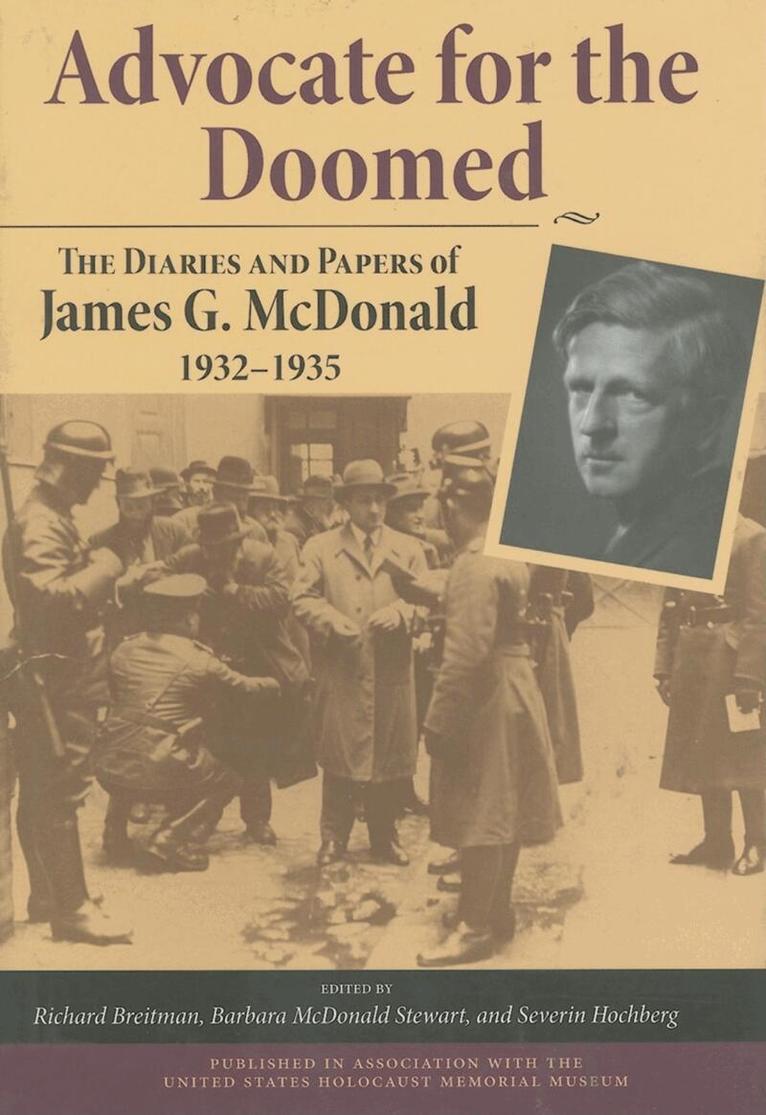
Advocate for the Doomed
The Diaries and Papers of James G. McDonald, 1932-1935
Inbunden, Engelska, 2007
584 kr
Skickas inom 10-15 vardagar
The private diary of James G. McDonald (1886–1964) offers a unique and hitherto unknown source on the early history of the Nazi regime and the Roosevelt administration's reactions to Nazi persecution of German Jews. Considered for the post of U.S. ambassador to Germany at the start of FDR's presidency, McDonald traveled to Germany in 1932 and met with Hitler soon after the Nazis came to power. Fearing Nazi intentions to remove or destroy Jews in Germany, in 1933 he became League of Nations High Commissioner for Refugees and sought aid from the international community to resettle outside the Reich Jews and others persecuted there. In late 1935 he resigned in protest at the lack of support for his work.This is the eagerly awaited first of a projected three-volume work that will significantly revise the ways that scholars and the world view the antecedents of the Holocaust, the Shoah itself, and its aftermath.
390 kr
Skickas inom 10-15 vardagar
New evidence presented in Refugees and Rescue challenges widely held opinions about Franklin D. Roosevelt's views on the rescue of European Jews before and during the Holocaust. The struggles of presidential confidant James G. McDonald, who resigned as League of Nations High Commissioner for Refugees in 1935, and his allies to transfer many of the otherwise doomed are disclosed here for the first time. Although McDonald's efforts as chairman of FDR's advisory committee on refugees from May 1938 until nearly the end of the war were hampered by the pervasive antisemitic attitudes of those years, fears about security, and changing presidential wartime priorities, tens of thousands did find haven. McDonald's 1935–1936 diary entries and the other primary sources presented here offer new insights into these conflicts and into Roosevelt's inconsistent attitudes toward the "Jewish question" in Europe. Following the lauded Advocate for the Doomed (IUP, 2007), this is the second of a projected three-volume work that will significantly revise views of the Holocaust, its antecedents, and its aftermath.
422 kr
Skickas inom 7-10 vardagar
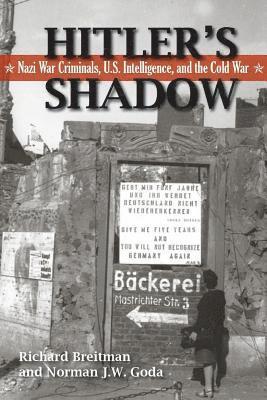
This book is a direct result of the 1998 Nazi War Crimes Disclosure Act. Drawing upon many documents declassified under this law, the authors demonstrate what US intelligence agencies learned about Nazi crimes during World War II and about the nature of Nazi intelligence agencies' role in the Holocaust. It examines how some US corporations found ways to profit from Nazi Germany's expropriation of the property of German Jews. This book also reveals startling new details on the Cold War connections between the US government and Hitler's former officers. At a time when intelligence successes and failures are at the center of public discussion, US Intelligence and the Nazis also provides an unprecedented inside look at how intelligence agencies function during war and peacetime.
943 kr
Skickas inom 7-10 vardagar
This book is a direct result of the 1998 Nazi War Crimes Disclosure Act. Drawing upon many documents declassified under this law, the authors demonstrate what US intelligence agencies learned about Nazi crimes during World War II and about the nature of Nazi intelligence agencies' role in the Holocaust. It examines how some US corporations found ways to profit from Nazi Germany's expropriation of the property of German Jews. This book also reveals startling new details on the Cold War connections between the US government and Hitler's former officers. At a time when intelligence successes and failures are at the center of public discussion, US Intelligence and the Nazis also provides an unprecedented inside look at how intelligence agencies function during war and peacetime.
290 kr
Skickas inom 7-10 vardagar
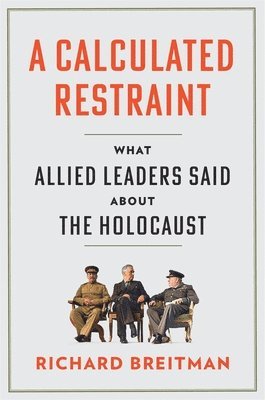
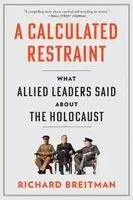
An eminent historian of the Holocaust examines why Churchill, Roosevelt, and Stalin, though faced with mounting evidence of the Nazi extermination of Jews, were reluctant to speak out against the atrocities.The Allied leaders rarely spoke directly about the Holocaust in public. When Churchill and Stalin alluded to Nazi mass murder of civilians in early speeches, they said much less than they knew. Not until December 1942 did Allied governments issue a joint statement about Nazi Germany’s policy of exterminating the Jews of Europe. Roosevelt deferred his own public statement until March 1944. Why didn’t these leaders speak up sooner?Through close readings of public and private statements, Richard Breitman pieces together the competing motivations that drove each leader’s response to the atrocities. All three knew that their reactions would be politically sensitive, as Nazi propagandists frequently alleged that the Allies were fighting on behalf of Jews, and that Jews were the puppet masters behind their governments. At a time of globally prevalent antisemitism, these calumnies had force. After the German invasion of the USSR, moreover, Stalin clearly wanted to focus on the threat to the Soviet state and people. At the same time, Churchill and Roosevelt realized that complete silence would prompt accusations of willful blindness. They usually finessed this dilemma by denouncing Nazi atrocities in general, prioritizing wartime constraints over moral considerations.Timely and incisive, A Calculated Restraint sheds new light on the relationship between World War II and the Holocaust. Ultimately, the Allied leaders’ responses cannot be reduced to a matter of character. What they said—and chose not to say—about the Holocaust must be understood in light of the political and military exigencies that drove their decision-making.
210 kr
Skickas inom 7-10 vardagar
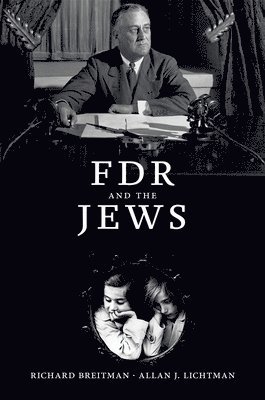
Nearly seventy-five years after World War II, a contentious debate lingers over whether Franklin Delano Roosevelt turned his back on the Jews of Hitler's Europe. Defenders claim that FDR saved millions of potential victims by defeating Nazi Germany. Others revile him as morally indifferent and indict him for keeping America's gates closed to Jewish refugees and failing to bomb Auschwitz's gas chambers.In an extensive examination of this impassioned debate, Richard Breitman and Allan J. Lichtman find that the president was neither savior nor bystander. In FDR and the Jews, they draw upon many new primary sources to offer an intriguing portrait of a consummate politician-compassionate but also pragmatic-struggling with opposing priorities under perilous conditions. For most of his presidency Roosevelt indeed did little to aid the imperiled Jews of Europe. He put domestic policy priorities ahead of helping Jews and deferred to others' fears of an anti-Semitic backlash. Yet he also acted decisively at times to rescue Jews, often withstanding contrary pressures from his advisers and the American public. Even Jewish citizens who petitioned the president could not agree on how best to aid their co-religionists abroad.Though his actions may seem inadequate in retrospect, the authors bring to light a concerned leader whose efforts on behalf of Jews were far greater than those of any other world figure. His moral position was tempered by the political realities of depression and war, a conflict all too familiar to American politicians in the twenty-first century.
292 kr
Skickas inom 3-6 vardagar
331 kr
Skickas inom 7-10 vardagar
530 kr
Skickas inom 3-6 vardagar
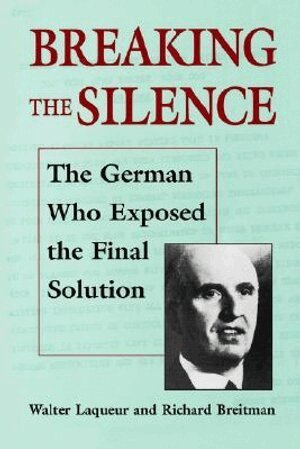
Through unparalleled historical detective work, noted scholars Walter Laqueur and Richard Breitman reveal the inspiring tale of Eduard Schulte, the Breslau business leader who risked his life to gather information about such Nazi activities as the revised date of the German attack on Poland and the Nazi plan for mass extermination of European Jews. First published in 1986, Breaking the Silence is reissued with both a new foreword and afterword by the authors.
156 kr
Skickas inom 5-8 vardagar
275 kr
Skickas inom 7-10 vardagar
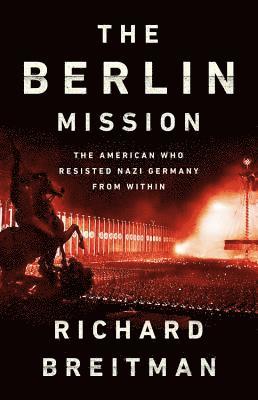
Raymond Geist was sent to Berlin as a consul in 1929. He was not from the right social class to become an ambassador - a role reserved for men of means in the 1920s - and in his duties as a consul he primarily handled visas for emigrants intending to move to the US. Once Hitler's government began to oppress certain categories of German and Austrian citizens as well as foreigners, the consular office became vitally important. It was Geist who expedited the exits of Albert Einstein and Sigmund Freud, and Geist who understood best the urgency of the situation in Germany and the potential catastrophe that awaited the persecuted groups.Geist was a constant presence in Berlin while US ambassadors and consul generals cycled in and out. Despite a secret homosexual relationship with a German that posed a threat to his career-and to his lover's life-Geist fearlessly challenged the police state whenever it abused Americans in Germany or threatened US interests. He balanced his diplomatic discretion with the imperative to save lives: he secured visas for hundreds of refugees and unaccompanied children while he maintained a working relationship with the most important Nazi officials, including Heinrich Himmler, Reinhard Heydrich and Hermann Göring. As relations between the US and Nazi Germany deteriorated, Geist remained the most knowledgeable, capable and valuable analyst and problem solver in Berlin. He was the first American official to advise his government that what lay ahead for Germany's Jews was what would later become known as the Holocaust.
206 kr
Skickas inom 5-8 vardagar