Richard Charlton-Taylor - Böcker
Visar alla böcker från författaren Richard Charlton-Taylor. Handla med fri frakt och snabb leverans.
4 produkter
4 produkter
266 kr
Skickas
The German Army was all-conquering until late 1941 when, only a few miles short of Moscow, it ran out of steam. Maniacal defence, the Russian winter and exhaustion all played their part and, although they didn't realise it, the German forces wouldn't advance further on this front. While they continued their offensives into 1942, Soviet defenses had stiffened. Its equipment – notably the T-34 – had improved and the Germans had lost too many of their best men: the savvy NCOs and experienced junior officers that gave the Wehrmacht its edge over the opposition. They had lost their moral compass as well. Complicity in the massacres of the SS-Einsatzgruppen, the barbarity of the anti-Partisan operations and summary execution for those who flagged, were the hallmarks of the German Army's fight for survival against people it considered less than human. Outnumbered, under attack on many other fronts, their homeland bombarded unceasingly from the air, the German servicemen endured the hell of the Eastern Front until their armies were destroyed in 1945. While the morality of the regime they fought for and its reprehensible actions should never be forgotten, what cannot be denied is the indefatigable courage of the German infantrymen. Fully illustrated with over 200 contemporary photographs and illustrations – and exploring a broad range of topics from uniform, weapons and provisions to tactics and communications – this title provides valuable insights into the Germans' main theater of operations in World War II.
266 kr
Skickas
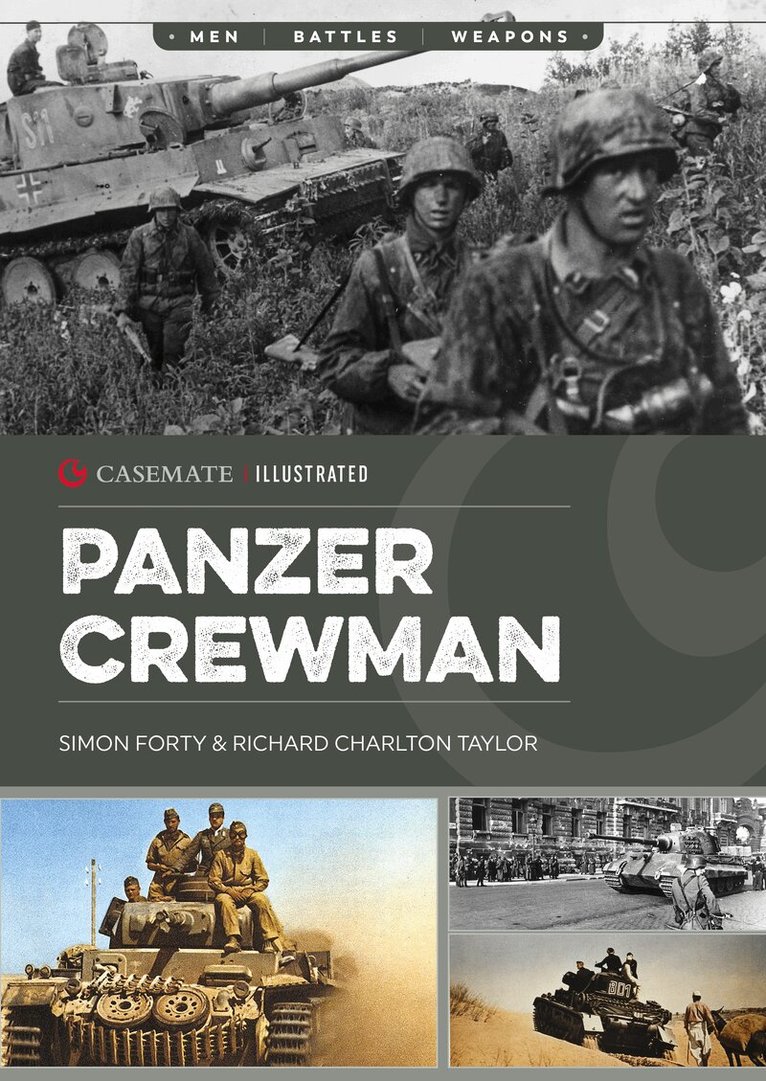
A fully illustrated introduction to the role, and experience, of the Panzer crewman.The German Panzerwaffe ripped up the rulebooks of war that had been laid down by the grinding slaughter of the trenches of World War I. Armored vehicles, close-air support, and bold leadership based on mission command, Auftragstaktik, cut a deadly swathe through the armies of east and west Europe. The Panzers made a significant contribution to Nazi successes; they remained steadfast in defense as their conquests slipped away their grasp from the apogee at Stalingrad and El Alamein in late 1942, through the long years of retreat to final defeat. Attrition and overwhelming odds blunted the opportunities for advances, but with increasingly powerful weaponry, the Panzerwaffe stiffened the German defensive backbone right to the end.Part of the reason for these successes was undoubtedly the Panzers themselves, but it wasn’t just the weapons that led to the Panzers’ successes—it was the way they were handled. A weapon is only as good as those who use it and the Panzertruppen—from higher command down to individual crew members—proved themselves to be very good at using their weapons. Not just the men who fought in the tanks but those who maintained them and kept them in the field, recovered and rebuilt the casualties, and dealt with the over-complexity of design and the huge variety of types of tank, weapon and ammunition. Selection and training standards—so good in the early war years—may have dropped off as wartime exigencies bit deep, but from 1939 to 1945 German Panzer crew were second to none. This Casemate Illustrated provides a full introduction to the role, and experience, of the Panzer crewman.
266 kr
Skickas
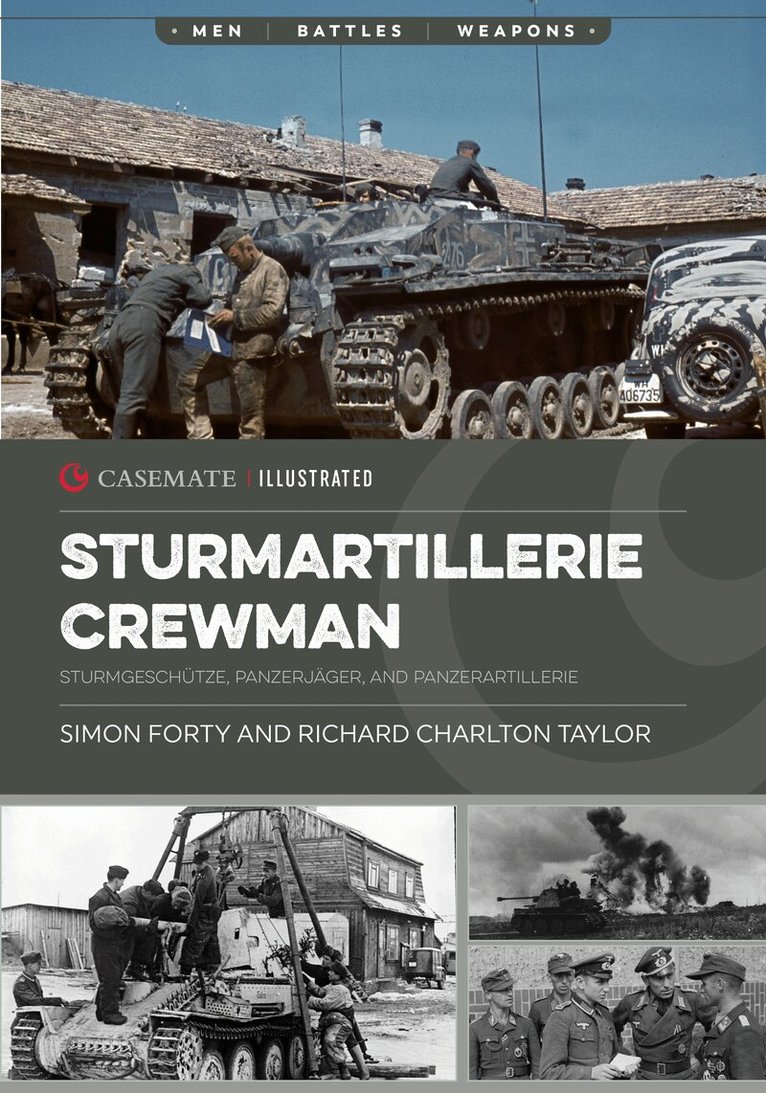
The German procurement process resulted in a wide range of gun-armed armored vehicles—assault guns, tank destroyers and self-propeled artillery—mounting both German and captured guns. Some were developed from existing German chassis; many employed captured enemy vehicles or were built in the factories of the countries they had conquered.Originally designed as infantry support vehicles, the Sturmgeschütz arm was controlled by the artillery but ended the war having knocked out more enemy tanks than the Panzers. Mainly built on the chassis of the PzKpfw III, particularly after it became obsolete, the StuGs proved durable and effective in infantry support and, when upgunned and even without a turret, as tank killers.The Germans produced a range of vehicles to fend off enemy armor. They mounted increasingly larger guns on any chassis they could lay their hands on, often captured vehicles—the Marder series on French or Czech chassis. There was also the Jagdpanzer range, better protected with an armored casemate providing overhead armor, based on tank chassis. Heavier Jagdpanzer were produced as the war continued the Hornisse/Nashorn (but without overhead protection), the Ferdinand/Elefant and the Jagdpanther armed with 8.8cm weapons. A few of the massive 12.8cm-armed Jagdtiger appeared before war’s end.Blitzkrieg showed that the Panzer divisions needed mobile artillery support, so the Germans mounted artillery weapons on tracked chassis: first PzKpfw Is and IIs and then PzKpfw IIIs and 38(t)s. The best known are the Wespe (on the PzKpfw II), the Grille (on the PzKpfw 38(t)), the Hummel (on the Geschützwagen III/IV), and the Sturmpanzer (on the PzKpfw IV).While some of the crew duties on these vehicles were similar to those of the Panzertruppen, they were completely different vehicles to fight in and fight with: strategically, operationally, tactically and logistically. This fully illustrated book tells the story of the soldiers who crewed these vehicles.
412 kr
Skickas inom 3-6 vardagar
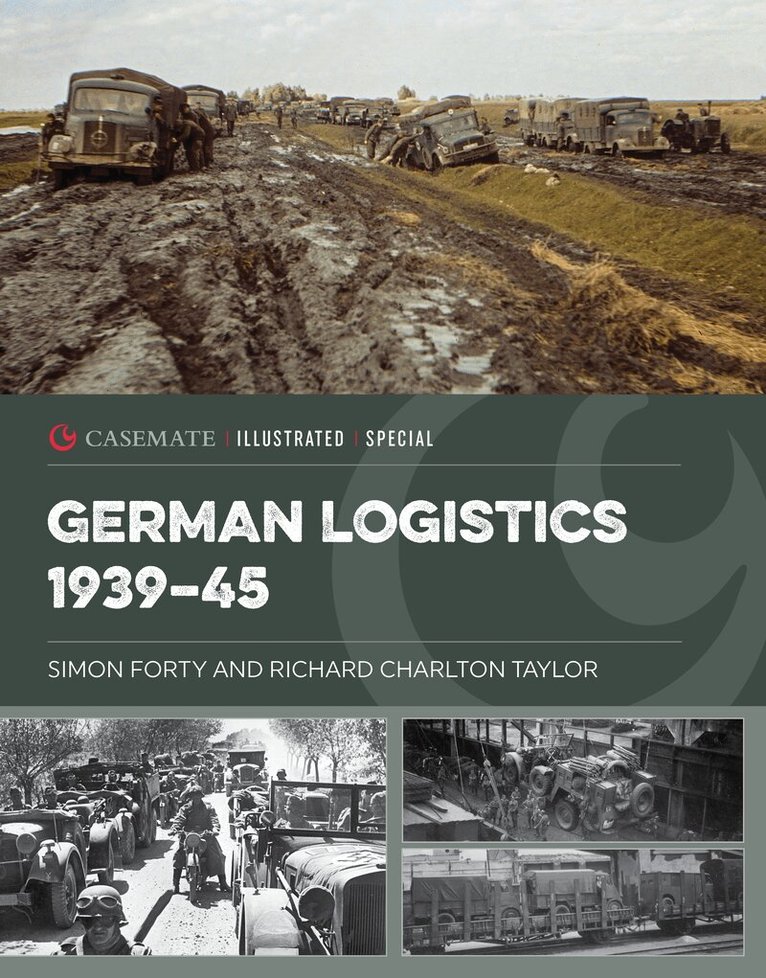
The successes of the Blitzkrieg campaigns of 1939–41 fostered an image of Germany’s unstoppable modern military machine. Yet beneath the surface lay a critical vulnerability: logistics. Postwar narratives often point to overwhelming Soviet manpower, American industrial superiority, or Hitler’s erratic leadership as causes of Germany’s defeat. While these factors undoubtedly influenced the course of the war, the decisive factor in the Wehrmacht’s failure was logistical inadequacy.Despite examples of resilience—advancing so far across the Russian steppe, maintaining industrial output under strategic Allied bombardment, and keeping the railways running—Germany’s logistical system collapsed at key moments. In Moscow, troops froze without the winter gear that was stranded in depots. In North Africa, vital supplies failed to reach the front. At Stalingrad, air resupply proved impossible. In Normandy and the Ardennes, rail and fuel shortages proved fatal. Germany’s success in the early war years hid the cracks in the system, and short-term wins came at a cost to its future.This fully illustrated volume examines the logistics of the Wehrmacht’s largely horse-drawn supply system, its successes, and its ultimate failure.Casemate Illustrated Specials offer unparalleled detail into the weapons, equipment, and machinery of war. Detailed, focused text is accompanied by hundreds of photographs, illustrations, and diagrams, providing a wealth of visual information for the historian, modeler, or researcher.