Richard Kraut - Böcker
Visar alla böcker från författaren Richard Kraut. Handla med fri frakt och snabb leverans.
16 produkter
16 produkter
1 100 kr
Skickas inom 7-10 vardagar
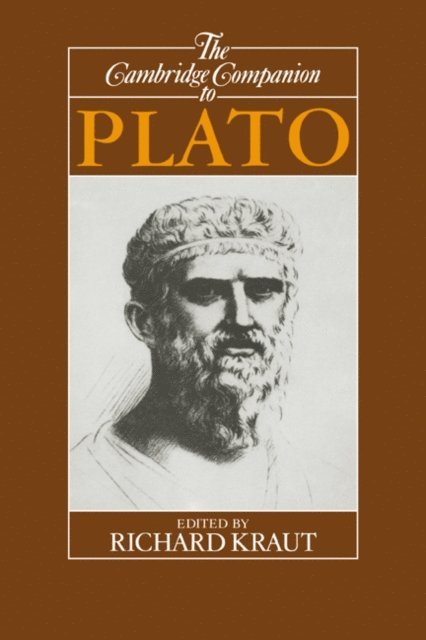
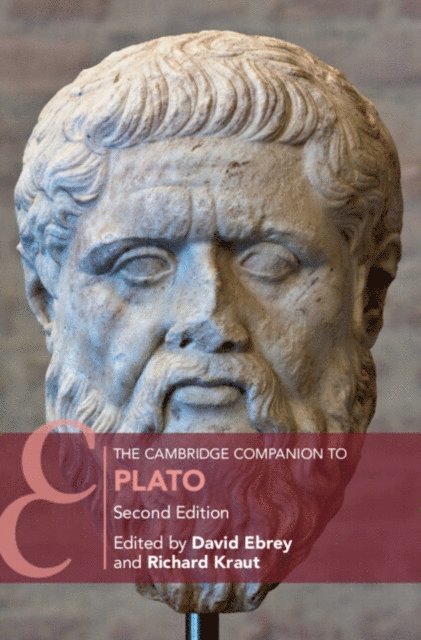
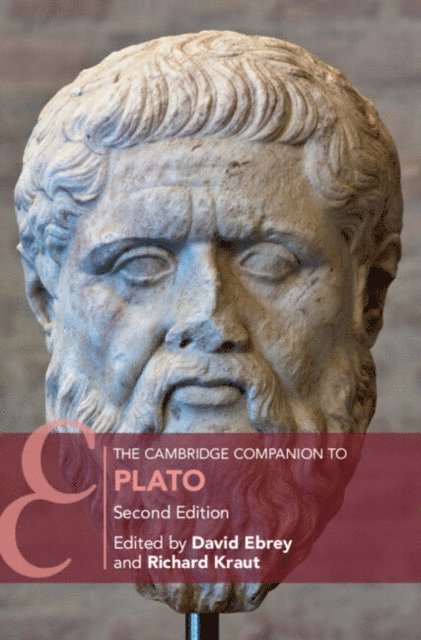
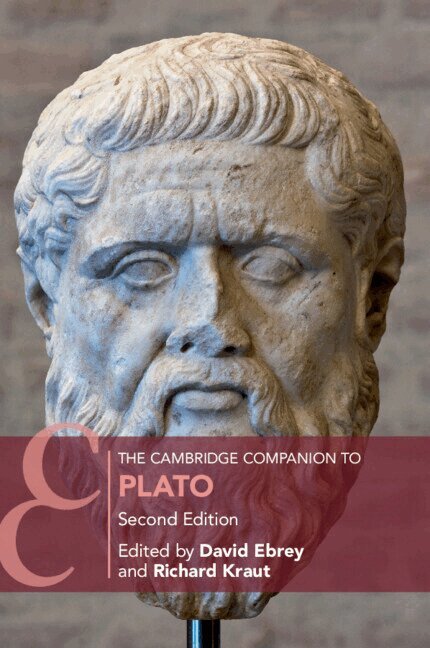
The first edition of the Cambridge Companion to Plato (1992), edited by Richard Kraut, shaped scholarly research and guided new students for thirty years. This new edition introduces students to fresh approaches to Platonic dialogues while advancing the next generation of research. Of its seventeen chapters, nine are entirely new, written by a new generation of scholars. Six others have been thoroughly revised and updated by their original authors. The volume covers the full range of Plato's interests, including ethics, political philosophy, epistemology, metaphysics, aesthetics, religion, mathematics, and psychology. Plato's dialogues are approached as unified works and considered within their intellectual context, and the revised introduction suggests a way of reading the dialogues that attends to the differences between them while also tracing their interrelations. The result is a rich and wide-ranging volume which will be valuable for all students and scholars of Plato.
360 kr
Skickas inom 7-10 vardagar
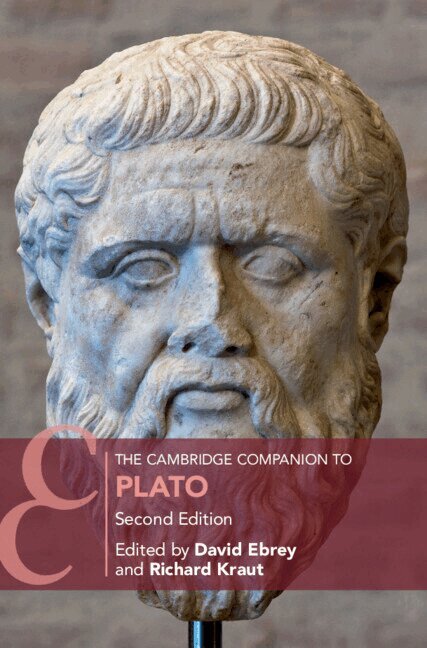
The first edition of the Cambridge Companion to Plato (1992), edited by Richard Kraut, shaped scholarly research and guided new students for thirty years. This new edition introduces students to fresh approaches to Platonic dialogues while advancing the next generation of research. Of its seventeen chapters, nine are entirely new, written by a new generation of scholars. Six others have been thoroughly revised and updated by their original authors. The volume covers the full range of Plato's interests, including ethics, political philosophy, epistemology, metaphysics, aesthetics, religion, mathematics, and psychology. Plato's dialogues are approached as unified works and considered within their intellectual context, and the revised introduction suggests a way of reading the dialogues that attends to the differences between them while also tracing their interrelations. The result is a rich and wide-ranging volume which will be valuable for all students and scholars of Plato.
2 371 kr
Skickas inom 5-8 vardagar
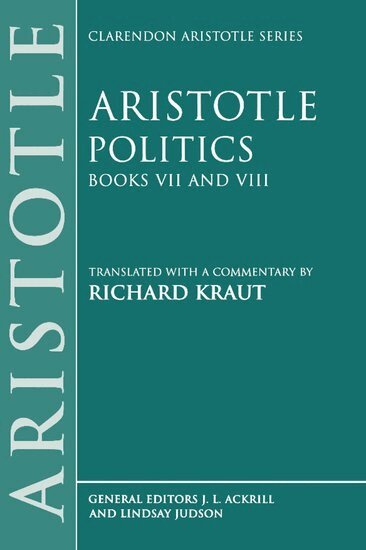
The Clarendon Aristotle Series is designed for both students and professionals. It provides accurate translations of selected Aristotelian texts, accompanied by incisive commentaries which focus on philosophical problems and issues. This volume contains a clear and accurate translation of the last two books of Aristotle's Politics, together with a philosophical commentary. It is well suited to the requirements of students, including those who do not know Greek. The Politics is a key document in Western political thought; it raises and discusses many theoretical and practical political issues which are still debated today. In Books VII and VIII Aristotle gives his fullest picture of the ideal civic community, as a model for actual political systems. In such a community citizens share equally in political deliberation by drawing on a common conception of the good, and all are educated by the city to participate in its culture. Aristotle's discussion ranges over such issues as commerce, property, marriage, abortion, censorship, education, and the place of music and poetry in civic life.
758 kr
Skickas inom 5-8 vardagar
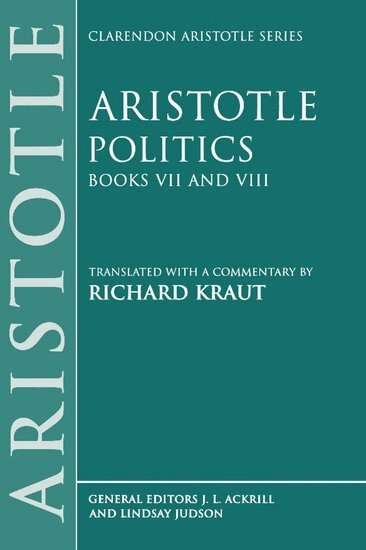
The Clarendon Aristotle Series is designed for both students and professionals. It provides accurate translations of selected Aristotelian texts, accompanied by incisive commentaries which focus on philosophical problems and issues. This volume contains a clear and accurate translation of the last two books of Aristotle's Politics, together with a philosophical commentary. It is well suited to the requirements of students, including those who do not know Greek. The Politics is a key document in Western political thought; it raises and discusses many theoretical and practical political issues which are still debated today. In Books VII and VIII Aristotle gives his fullest picture of the ideal civic community, as a model for actual political systems. In such a community citizens share equally in political deliberation by drawing on a common conception of the good, and all are educated by the city to participate in its culture. Aristotle's discussion ranges over such issues as commerce, property, marriage, abortion, censorship, education, and the place of music and poetry in civic life.
590 kr
Skickas inom 5-8 vardagar
This book presents a wide-ranging overview of Aristotle's political thought that makes him come alive as a philosopher who can speak to our own times. Beginning with a critique of subjectivist accounts of well-being, Kraut goes on to assess Aristotle's objective and universalistic account of eudaimonia and excellent activity. He offers a detailed interpretation of Aristotle's conception of justice in the Nicomachean Ethics, and then turns to the major themes of the Politics: the political nature of human beings, the city's priority over the individual, the justification of slavery, the defence of the family and property, the pluralistic nature of cities and the need for their unification, the distinction between good citizenship and full virtue, the value and limits of popular control over elites, the corrosive effects of poverty and wealth, the critique of democratic conceptions of freedom and equality, and the radically egalitarian institutions of the ideal society. Aristotle's political philosophy, as Kraut reads it, provides a model of the way in which a rich understanding of human well-being can guide the amelioration of a world in which agreement about the human good is rarely, if ever, achieved.
928 kr
Skickas inom 3-6 vardagar
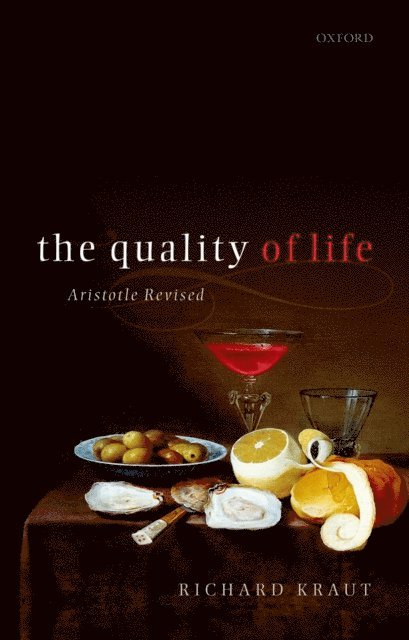
The Quality of Life: Aristotle Revised presents a philosophical theory about the constituents of human well-being. The principal idea is that what Aristotle calls 'external goods' - wealth, reputation, power - have at most an indirect bearing on the quality of our lives. Starting with Aristotle's thoughts about this topic, Kraut increasingly modifies (and occasionally rejects) that stance. He argues that the way in which we experience the world is what well-being consists in. A good internal life comprises, in part, pleasure but far more valuable is the quality of our emotional, intellectual, social, and perceptual experiences. These offer the potential for a richer and deeper quality of life than that which is available to many other animals. A good human life is immeasurably better than that of a simple creature that feels only the pleasures of nourishment; even if it felt pleasure for millions of years, human life would be superior. In opposition to contemporary discussions of well-being, which often appeal to a thought experiment devised by Robert Nozick, Kraut concludes that the quality of our lives consists entirely in the quality of our experiences. While others hold that we must live in 'the real world' to live well and that one's interior life has little or no value on its own, Kraut's interpretation of this thought experiment supports the opposite conclusion.
366 kr
Skickas inom 5-8 vardagar
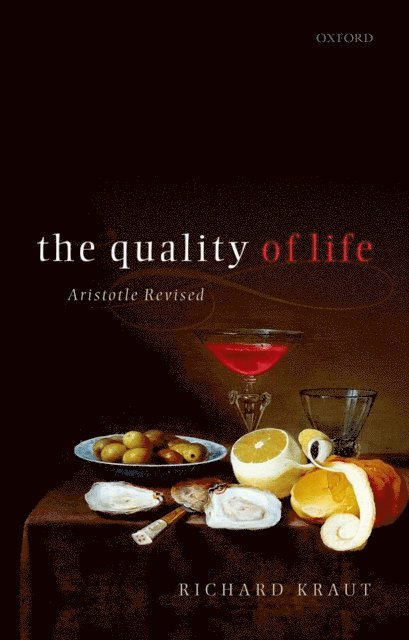
The Quality of Life: Aristotle Revised presents a philosophical theory about the constituents of human well-being. The principal idea is that what Aristotle calls 'external goods' - wealth, reputation, power - have at most an indirect bearing on the quality of our lives. Starting with Aristotle's thoughts about this topic, Kraut increasingly modifies (and occasionally rejects) that stance. He argues that the way in which we experience the world is what well-being consists in. A good internal life comprises, in part, pleasure but far more valuable is the quality of our emotional, intellectual, social, and perceptual experiences. These offer the potential for a richer and deeper quality of life than that which is available to many other animals. A good human life is immeasurably better than that of a simple creature that feels only the pleasures of nourishment; even if it felt pleasure for millions of years, human life would be superior. In opposition to contemporary discussions of well-being, which often appeal to a thought experiment devised by Robert Nozick, Kraut concludes that the quality of our lives consists entirely in the quality of our experiences. While others hold that we must live in 'the real world' to live well and that one's interior life has little or no value on its own, Kraut's interpretation of this thought experiment supports the opposite conclusion.
825 kr
Skickas inom 5-8 vardagar
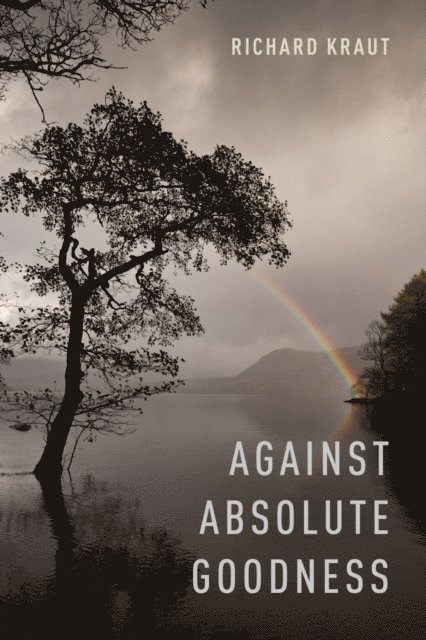
Are there things we should value because they are, quite simply, good? If so, such things might be said to have "absolute goodness." They would be good simpliciter or full stop - not good for someone, not good of a kind, but nonetheless good (period). They might also be called "impersonal values." The reason why we ought to value such things, if there are any, would merely be the fact that they are, quite simply, good things. In the twentieth century, G. E. Moore was the great champion of absolute goodness, but he is not the only philosopher who posits the existence and importance of this property. Against these friend of absolute goodness, Richard Kraut here builds the argument he made in WHAT IS GOOD AND WHY, demonstrating that goodness is not a reason-giving property - in fact, there may be no such thing. It is, he holds, an insidious category of practical thought, because it can be and has been used to justify what is harmful and condemn what is beneficial. Impersonal value draws us away from what is good for persons. His strategy for opposing absolute goodness is to search for domains of practical reasoning in which it might be thought to be needed, and this leads him to an examination of a wide variety of moral phenomena: pleasure, knowledge, beauty, love, cruelty, suicide, future generations, bio-diversity, killing in self-defense, and the extinction of our species. Even persons, he proposes, should not be said to have absolute value. The special importance of human life rests instead on the great advantages that such lives normally offer. "When one reads this, one sees the possibility of real philosophical progress. If Kraut is right, I'd be wrong to say that this book is good, period. Or even great, period. But I will say that, as a work of philosophy, and for those who read it, it is excellent indeed." - Russ Shafer-Landau, Philosophy, University of Wisconsin-Madison
373 kr
Skickas inom 10-15 vardagar
What is good? How can we know, and how important is it? In this book Richard Kraut, one of our most respected analytical philosophers, reorients these questions around the notion of what causes human beings to flourish--that is, what is good for us. Observing that we can sensibly talk about what is good for plants and animals no less than what is good for people, Kraut advocates a general principle that applies to the entire world of living things: what is good for complex organisms consists in the maturation and exercise of their natural powers.Drawing on the insights of ancient Greek philosophy, Kraut develops this thought into a good-centered moral philosophy, an "ethics of well-being" that requires all of our efforts to do some good. Even what is good of a kind--good poems no less than good people--must be good for someone. Pleasure plays a key role in this idea of flourishing life, but Kraut opposes the current philosophical orthodoxy of well-being, which views a person's welfare as a construct of rational desires or plans, actual or ideal. The practical upshot of Kraut's theory is that many common human pursuits--for riches, fame, domination--are in themselves worthless, while some of the familiar virtues--justice, honesty, and autonomy--are good for every human being.
1 122 kr
Skickas inom 3-6 vardagar
Aristotle's Nicomachean Ethics, which equates the ultimate end of human life with happiness (eudaimonia), is thought by many readers to argue that this highest goal consists in the largest possible aggregate of intrinsic goods. Richard Kraut proposes instead that Aristotle identifies happiness with only one type of good: excellent activity of the rational soul. In defense of this reading, Kraut discusses Aristotle's attempt to organize all human goods into a single structure, so that each subordinate end is desirable for the sake of some higher goal. This book also emphasizes the philosopher's hierarchy of natural kinds, in which every type of creature achieves its good by imitating divine life. As Kraut argues, Aristotle's belief that thinking is the sole activity of the gods leads him to an intellectualist conception of the ethical virtues. Aristotle values these traits because, by subordinating emotion to reason, they enhance our ability to lead a life devoted to philosophy or politics.
886 kr
Skickas inom 3-6 vardagar
This fresh outlook on Socrates' political philosophy in Plato's early dialogues argues that it is both more subtle and less authoritarian than has been supposed. Focusing on the Crito, Richard Kraut shows that Plato explains Socrates' refusal to escape from jail and his acceptance of the death penalty as arising not from a philosophy that requires blind obedience to every legal command but from a highly balanced compromise between the state and the citizen. In addition, Professor Kraut contends that our contemporary notions of civil disobedience and generalization arguments are not present in this dialogue.
1 476 kr
Skickas inom 10-15 vardagar
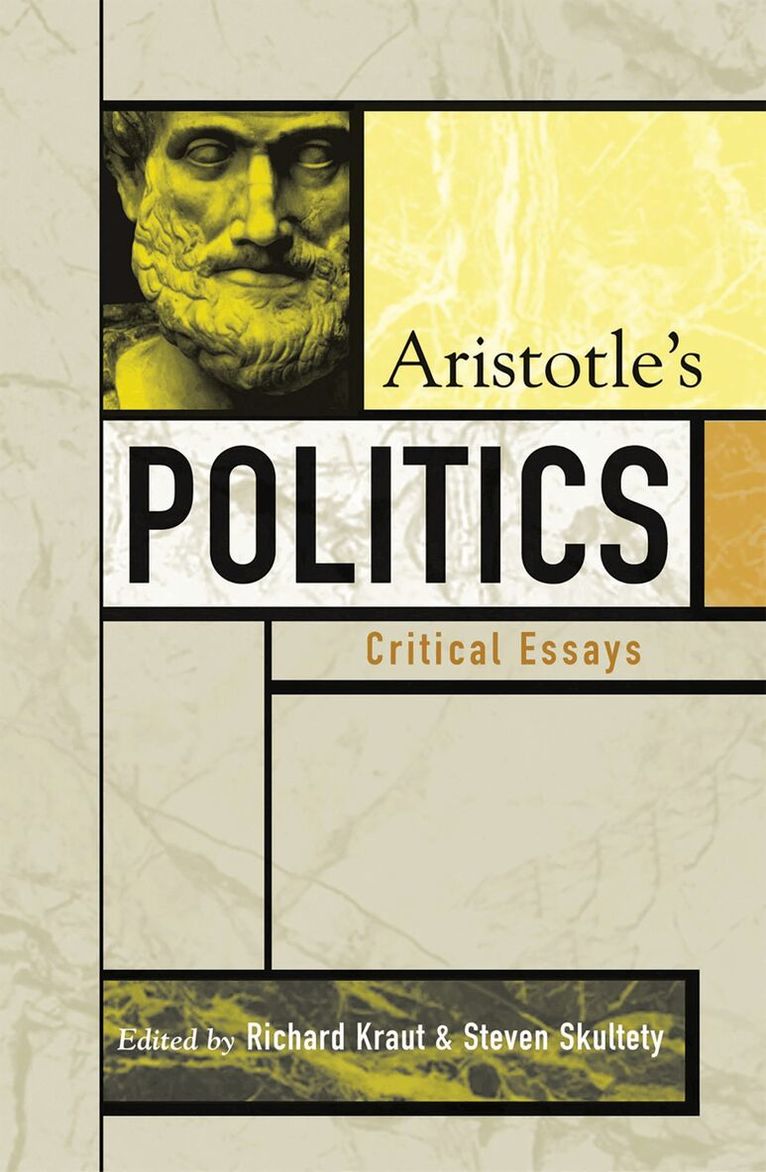
Aristotle's Politics is widely recognized as one of the classics of the history of political philosophy, and like every other such masterpiece, it is a work about which there is deep division. Many readers of Aristotle are uncertain whether his Politics has any contribution to make to contemporary debates about political life and political theory. The essays in this volume aim to address, implicitly or explicitly, this very question about the relevance of Arisotle's thinking in contemporary political philosophy. Written by leading scholars in lucid and accessible style, the nine essays in this volume will be a critical resource for newcomers to Aristotle.
528 kr
Skickas inom 10-15 vardagar
Aristotle's Politics is widely recognized as one of the classics of the history of political philosophy, and like every other such masterpiece, it is a work about which there is deep division. Many readers of Aristotle are uncertain whether his Politics has any contribution to make to contemporary debates about political life and political theory. The essays in this volume aim to address, implicitly or explicitly, this very question about the relevance of Arisotle's thinking in contemporary political philosophy. Written by leading scholars in lucid and accessible style, the nine essays in this volume will be a critical resource for newcomers to Aristotle.
607 kr
Skickas inom 10-15 vardagar
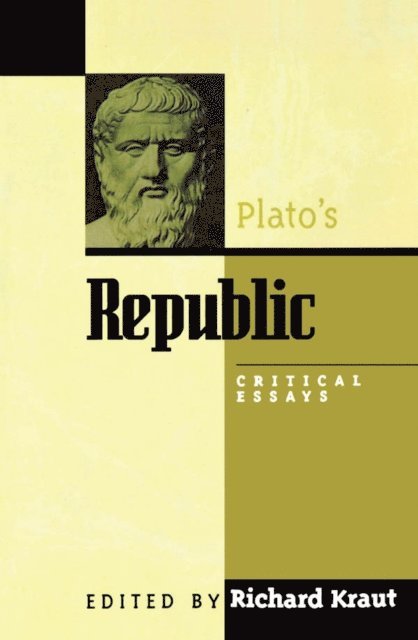
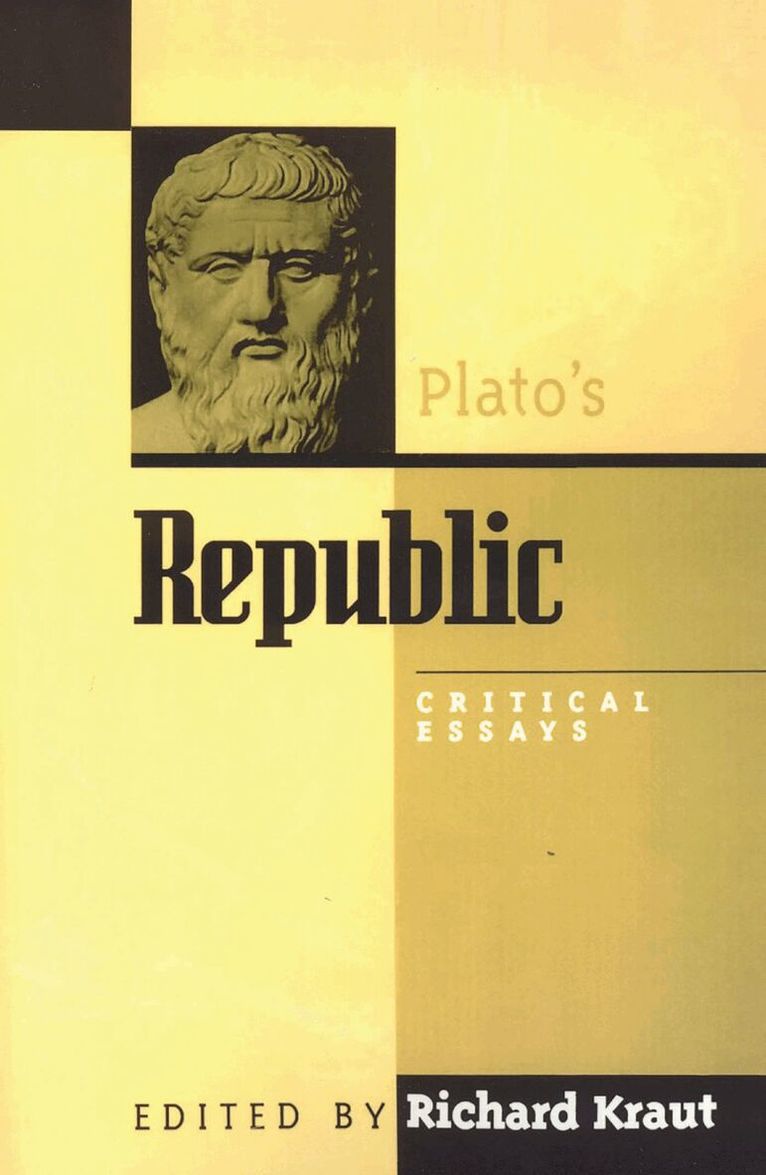
Designed for courses in the history of philosophy, social and political theory, government, and Plato specifically, Plato's Republic: Critical Essays will enrich students' understanding of this profoundly influential work. The comprehensive collection covers Plato's social and political thought, his metaphysics and epistemology, his ethical theory, and his attitude towards women. The essays, chosen for their clarity and ability to stimulate student discussion, are related to one another in ways that will help students see the connections among the various strands of Plato's thought. The book includes an index of passages to guide students through parts of the Republic that they find challenging.
1 192 kr
Skickas inom 7-10 vardagar
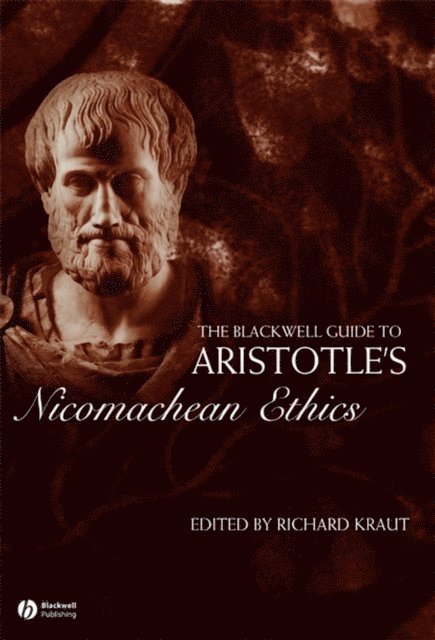
The Blackwell Guide to Aristotle’s Nicomachean Ethics illuminates Aristotle’s ethics for both academics and students new to the work, with sixteen newly commissioned essays by distinguished international scholars. The structure of the book mirrors the organization of the Nichomachean Ethics itself.Discusses the human good, the general nature of virtue, the distinctive characteristics of particular virtues, voluntariness, self-control, and pleasure.
402 kr
Skickas inom 7-10 vardagar
The Blackwell Guide to Aristotle’s Nicomachean Ethics illuminates Aristotle’s ethics for both academics and students new to the work, with sixteen newly commissioned essays by distinguished international scholars. The structure of the book mirrors the organization of the Nichomachean Ethics itself.Discusses the human good, the general nature of virtue, the distinctive characteristics of particular virtues, voluntariness, self-control, and pleasure.