• Fri frakt över 249 kr
  • •
  • Snabba leveranser
  • •
  • Billiga böcker
Kundservice

Du är på sajten för privatpersoner.

Företag, bibliotek eller offentlig verksamhet?

Du handlar på classic.bokus.com, där alla dina funktioner finns intakta.
Till classic.bokus.com
Bokus logotyp. Gå till startsidan.
  • Erbjudanden
  • Nyheter
  • Student
  • Topplistor
  • Barn & ungdom
  • Bokus Play
  • E-böcker
  • Pocketböcker
  • Spel & pussel

10% rabatt på allt med kod: NYSTART10 →

Sidfot

Mina sidor

    Hjälp

    • Kundservice
    • Vanliga frågor och svar
    • Frakt och leverans
    • Retur vid ångerrätt
    • Reklamera vara
    • Betalning
    • Köpvillkor
    • Allmänna villkor
    • Information om webbplatsens tillgänglighet

    Om Bokus

    • Om oss
    • Pressrum
    • För studenter
    • För företag
    • För bibliotek och offentlig verksamhet
    • För leverantörer
    • Hållbarhet

    Populärt

    • Aktuella erbjudanden
    • Presentkort
    • Studentlitteratur
    • Nya böcker
    • Topplistor
    • Signerade böcker
    • Engelska böcker

    Inspiration

    • Boktips
    • BookTok
    • Populära bokserier
    • Barnbokskaraktärer
    • Populära författare
    Logotyp för Bokus
    Följ oss på Facebook (extern länk)Följ oss på Instagram (extern länk)Följ oss på YouTube (extern länk)Följ oss på TikTok (extern länk)
    bokus @ CookiesAnpassa cookiesIntegritetspolicyKöpvillkor
    Till Citymail hemsida (extern länk)Till Budbee hemsida (extern länk)Till Postnord hemsida (extern länk)Till Schenker hemsida (extern länk)Till Early Bird hemsida (extern länk)Till Walleys hemsida (extern länk)
    1. Filosofi och religion
    2. Filosofi
    3. Filosofiska discipliner

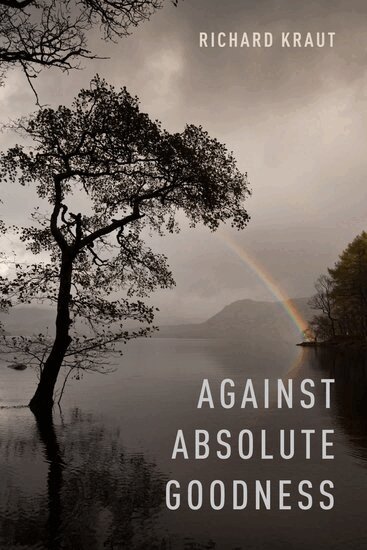
    Against Absolute Goodness

    AvRichard Kraut

    Inbunden, Engelska, 2011

    Del i serien Oxford Moral Theory

    1 506 kr

    Beställningsvara. Skickas inom 5-8 vardagar. Fri frakt över 249 kr.

    Fler format och utgåvor

    E-bok

    997 kr

    E-bok

    997 kr

    Beskrivning

    Are there things we should value because they are, quite simply, good? If so, such things might be said to have "absolute goodness." They would be good simpliciter or full stop - not good for someone, not good of a kind, but nonetheless good (period). They might also be called "impersonal values." The reason why we ought to value such things, if there are any, would merely be the fact that they are, quite simply, good things. In the twentieth century, G. E. Moore was the great champion of absolute goodness, but he is not the only philosopher who posits the existence and importance of this property. Against these friend of absolute goodness, Richard Kraut here builds the argument he made in WHAT IS GOOD AND WHY, demonstrating that goodness is not a reason-giving property - in fact, there may be no such thing. It is, he holds, an insidious category of practical thought, because it can be and has been used to justify what is harmful and condemn what is beneficial. Impersonal value draws us away from what is good for persons. His strategy for opposing absolute goodness is to search for domains of practical reasoning in which it might be thought to be needed, and this leads him to an examination of a wide variety of moral phenomena: pleasure, knowledge, beauty, love, cruelty, suicide, future generations, bio-diversity, killing in self-defense, and the extinction of our species. Even persons, he proposes, should not be said to have absolute value. The special importance of human life rests instead on the great advantages that such lives normally offer. "When one reads this, one sees the possibility of real philosophical progress. If Kraut is right, I'd be wrong to say that this book is good, period. Or even great, period. But I will say that, as a work of philosophy, and for those who read it, it is excellent indeed." - Russ Shafer-Landau, Philosophy, University of Wisconsin-Madison

    Produktinformation

    • Utgivningsdatum:2011-12-22
    • Mått:147 x 213 x 27 mm
    • Vikt:363 g
    • Format:Inbunden
    • Språk:Engelska
    • Serie:Oxford Moral Theory
    • Antal sidor:240
    • Förlag:OUP USA
    • ISBN:9780199844463

    Utforska kategorier

    • Filosofiska discipliner inom Filosofi och religion

    Mer om författaren

    Richard Kraut was educated at the University of Michigan and Princeton University. He has taught in the Philosophy Departments at the University of Illinois at Chicago, and Northwestern University, where he is Charles E. and Emma H. Morrison Professor in the Humanities.

    Recensioner i media

    this is a good book for introducing value theory. Its language is easy-flowing, its style conversational. It covers a wide range of relevant topics for such a relatively short book by its use of brief chapters.

    Innehållsförteckning

    • Contents ; Acknowledgments ; 1. Moore and the Idea of Goodness ; 2. Goodness Before and After Moore ; 3. An Argument for Absolute Goodness ; 4. Absolute Evil, Relative Goodness ; 5. Recent Skepticism about Goodness ; 6. Being Good and Being Good for Someone ; 7. Non-Instrumental Advantageousness ; 8. The Problem of Intelligibility ; 9. The Problem of Double Value ; 10. Pleasure Reconsidered ; 11. Scanlon's Buck-Passing Account of Value ; 12. Moore's Argument Against Relative Goodness ; 13. Goodness and Variability ; 14. Impersonality: an Ethical Objection to Absolute Goodness ; 15. Further Reflections on the Ethical Objection ; 16. Moore's Mistake About Unobserved Beauty ; 17. Better States of Affairs and Buck-Passing ; 18. The Enjoyment of Beauty ; 19. Is Love Absolutely Good? ; 20. Is Cruelty Absolutely Bad? ; 21. Kant on Suicide ; 22. Future Generations ; 23. Bio-Diversity ; 24. Is Equality Absolutely Good? ; 25. The Value of Persons and Other Creatures ; 26. Euthanasia ; 27. The Extinction of Humankind ; 28. The Case Against Absolute Goodness Reviewed ; 29. The Problem of Intelligibility Revisited ; 30. Attributive and Predicative Uses of <"Good>" ; Appendix A: Killing Persons ; Appendix B: J. David Velleman on the Value Inhering in Persons ; Appendix C: Robert Merrihew Adams on the Highest Good ; Appendix D: Thomas Hurka on the Structure of Goods ; Appendix E: Jeff McMahan on Impersonal Value ; Appendix F: Other Authors and Uses ; 1. Plato ; 2. Aristotle ; 3. John Rawls ; 4. John Broome ; Bibliography