Robert G. Morrison - Böcker
Visar alla böcker från författaren Robert G. Morrison. Handla med fri frakt och snabb leverans.
7 produkter
7 produkter
1 722 kr
Skickas inom 5-8 vardagar
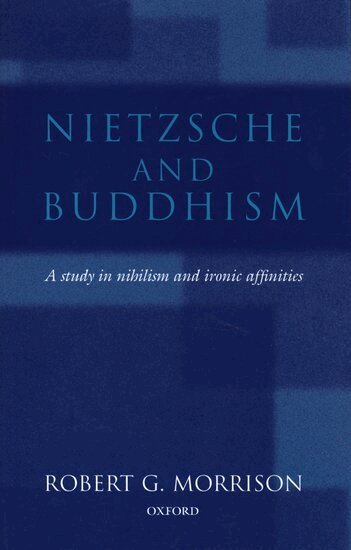
Robert Morrison offers an illuminating comparative study of two linked and interactive traditions that have had great influence in twentieth-century thought:Buddhism and the philosophy of Nietzsche. Nietzsche saw a direct historical parallel between the cultural situation of his own time and of the India of the Buddha's age: the emergence of nihilism as a consequence of loss of traditional belief. Nietzche's fear, still resonant today, was that Europe was about to enter a nihilistic era, in which people, no longer able to believe in the old religious and moral values, would feel themselves adrift in a meaningless cosmos where life seems to have no particular purpose or end. Though he admired Buddhism as a noble and humane response to this situation, Nietzsche came to think that it was wrong in not seeking to overcome nihilism, and constituted a threat to the future of Europe. It was in reaction against nihilism that he forged his own affirmative philosophy, aiming at the transvaluation of all values. Nietzsche's view of Buddhism has been very influential in the West; Dr Morrison gives a careful critical examination of this view, argues that in fact Buddhism is far from being a nihilistic religion, and offers a counterbalancing Buddhist view of the Nietzschean enterprise. He draws out the affinities and conceptual similarities between the two, and concludes that, ironically, Nietzsche's aim of self-overcoming is akin to the Buddhist notion of citta-bhavana (mind-cultivation). Had Nietzsche lived in an age where Buddhism was better understood, Morrison suggests, he might even have found in the Buddha a model of his hypothetical Ubermensch.
659 kr
Skickas inom 5-8 vardagar
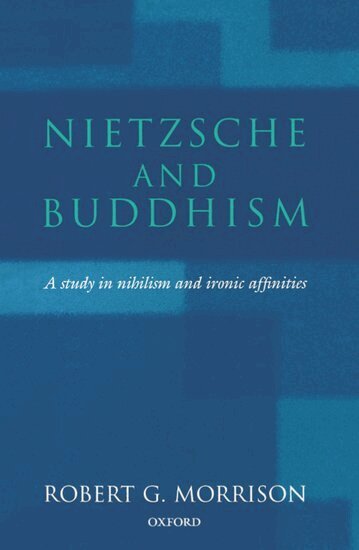
Robert Morrison offers an illuminating comparative study of two linked and interacting traditions that have had great influence in twentieth-century thought: Buddhism and the philosophy of Nietzsche. Nietzsche saw a direct historical parallel between the cultural situation of his own time and of the India of the Buddhas age: the emergence of nihilism as a consequence of loss of traditional belief. Nietzsche's fear, still resonant today, was that Europe was about to enter a nihilistic era in which people, no longer able to believe in the old religious and moral values, would feel themselves adrift in a meaningless cosmos where life seems to have no particular purpose or end. Though he admired Buddhism as a noble and humane response to this situation, Nietzsche came to think that it was wrong in not seeking to overcome nihilism, and constituted a threat to the future of Europe. It was in reaction against nihilism that he forged his own affirmative philosophy, aiming at the transvaluation of all values. Nietzsche's view of Buddhism has been very influential in the West; Dr Morrison gives a careful critical examination of this view, argues that in fact Buddhism is far from being a nihilistic religion, and offers a counterbalancing Buddhist view of the Nietzschean enterprise. He draws out the affinities and conceptual similarities between the two, and concludes that, ironically, Nietzsche's aim of self-overcoming is akin to the Buddhist notion of citta-bhavana (mind-cultivation). Had Nietzsche lived in an age where Buddhism was better understood, Morrison suggests, he might even have found in the Buddha a model of his hypothetical übermensch. 'illuminating . . . Nietzsche was a genius, if a very odd one, and the Buddhist practitioner with an interest in philosophy should not neglect him. Morrison's explanatory work can be recommended . . . A paperback edition must be hoped for.' The Middle Way
1 166 kr
Skickas inom 5-8 vardagar
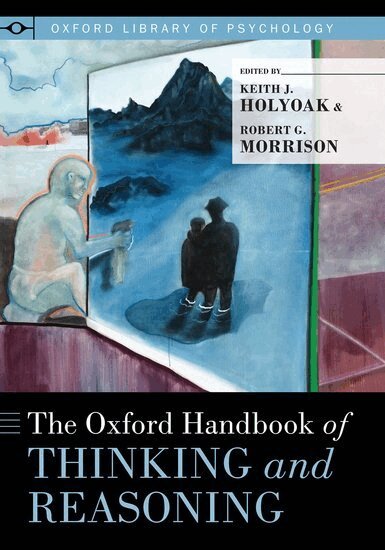
Thinking and reasoning, long the academic province of philosophy, have over the past century emerged as core topics of empirical investigation and theoretical analysis in the modern fields of cognitive psychology, cognitive science, and cognitive neuroscience. Formerly seen as too complicated and amorphous to be included in early textbooks on the science of cognition, the study of thinking and reasoning has since taken off, brancing off in a distinct direction from the field from which it originated.The Oxford Handbook of Thinking and Reasoning is a comprehensive and authoritative handbook covering all the core topics of the field of thinking and reasoning. Written by the foremost experts from cognitive psychology, cognitive science, and cognitive neuroscience, individual chapters summarize basic concepts and findings for a major topic, sketch its history, and give a sense of the directions in which research is currently heading. Chapters include introductions to foundational issues and methods of study in the field, as well as treatment of specific types of thinking and reasoning and their application in a broad range of fields including business, education, law, medicine, music, and science. The volume will be of interest to scholars and students working in developmental, social and clinical psychology, philosophy, economics, artificial intelligence, education, and linguistics.
1 072 kr
Skickas inom 7-10 vardagar
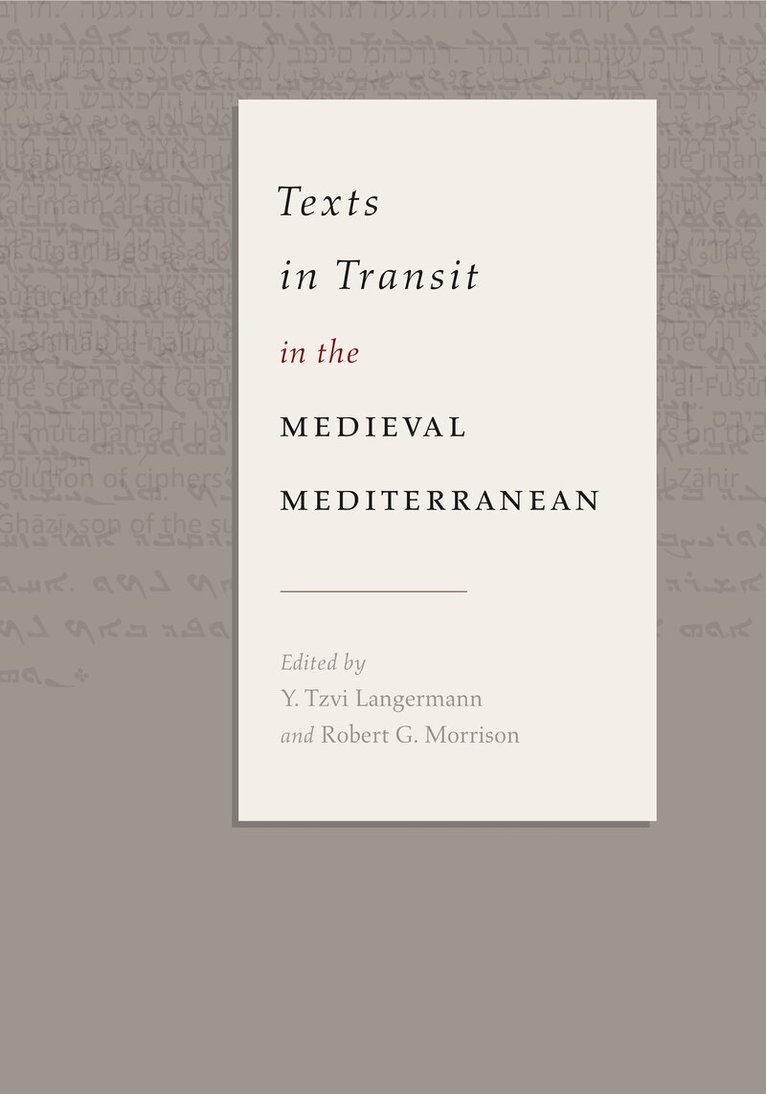
This collection of essays studies the movement of texts in the Mediterranean basin in the medieval period from historical and philological perspectives. Rejecting the presumption that texts simply travel without changing, the contributors examine closely the nature of these writings, which are concerned with such topics as science and medicine, and how they changed over the course of their journeys. Transit and transformation give texts new subtexts and contexts, providing windows through which to study how memory, encryption, oral communication, cultural and religious values, and knowledge traveled and were shared, transformed, and preserved. This volume broadens how we think about texts, communication, and knowledge in the medieval world.Aside from the editors, the contributors are Mushegh Asatryan, Brian N. Becker, Leonardo Capezzone, Leigh Chipman, Ofer Elior, Zohar Hadromi-Allouche, B. Harun Küçük, Israel M. Sandman, and Tamás Visi.
729 kr
Skickas inom 7-10 vardagar
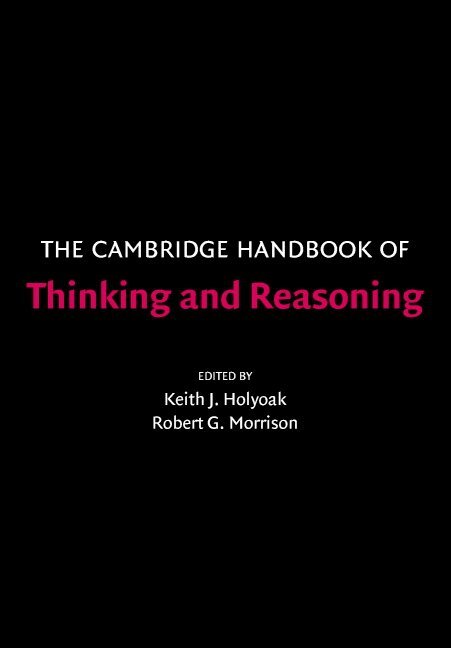
The Cambridge Handbook of Thinking and Reasoning is a comprehensive and authoritative 2005 handbook covering all the core topics of the field of thinking and reasoning. Written by the foremost experts from cognitive psychology, cognitive science, and cognitive neuroscience, individual chapters summarize basic concepts and findings for a major topic, sketch its history, and give a sense of the directions in which research is currently heading. The volume also includes work related to developmental, social and clinical psychology, philosophy, economics, artificial intelligence, linguistics, education, law, and medicine. Scholars and students in all these fields and others will find this to be a valuable collection.
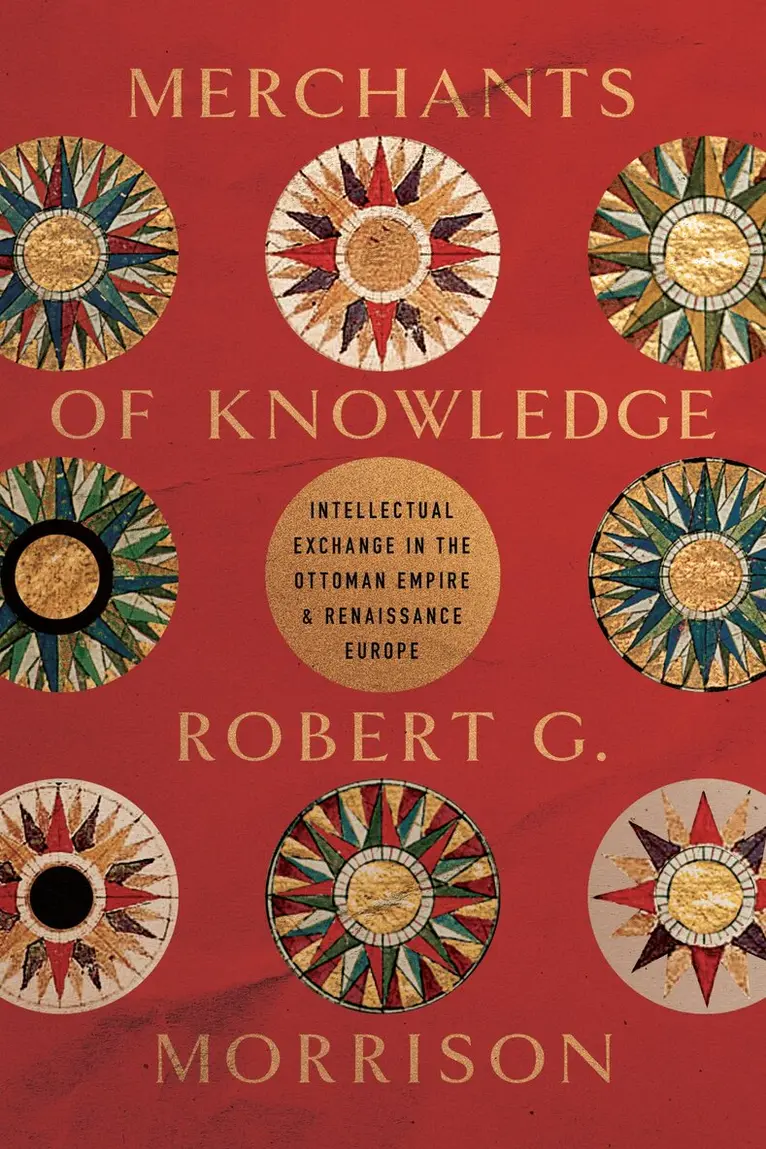
Merchants of Knowledge
Intellectual Exchange in the Ottoman Empire and Renaissance Europe
Inbunden, Engelska, 2025
1 510 kr
Skickas inom 7-10 vardagar
Between 1450 and 1550, a remarkable century of intellectual exchange developed across the Eastern Mediterranean. As Renaissance Europe depended on knowledge from the Ottoman Empire, and the courts of Mehmed the Conqueror and Bayezid II greatly benefitted from knowledge coming out of Europe, merchants of knowledge—multilingual and transregional Jewish scholars—became an important bridge among the powers.With this book, Robert Morrison is the first to track the network of scholars who mediated exchanges in astronomy, astrology, Qabbalah, and philosophy. Their books, manuscripts, and acts of translation all held economic value, thus commercial and intellectual exchange commingled—knowledge became transactional as these merchants exchanged texts for more intellectual material and social capital. While parallels between medieval Islamic astronomy and the famous heliocentric arrangement posited by Copernicus are already known, Morrison reveals far deeper networks of intellectual exchange that extended well beyond theoretical astronomy and shows how religion, science, and philosophy, areas that will eventually develop into separate fields, were once interwoven. The Renaissance portrayed in Merchants of Knowledge is not, from the perspective of the Ottoman Muslim contacts of the Jewish merchants of knowledge, hegemonic. It's a Renaissance permeated by diversity, the cultural and political implications of which the West is only now waking up to.
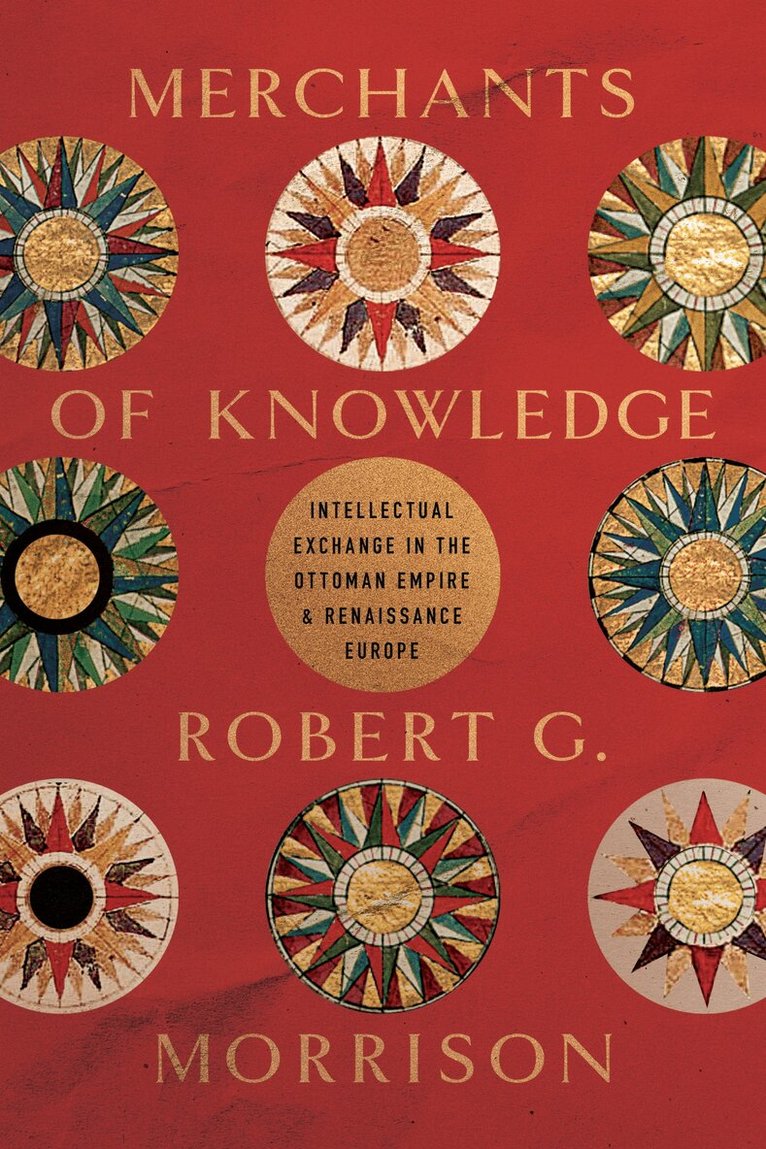
Merchants of Knowledge
Intellectual Exchange in the Ottoman Empire and Renaissance Europe
Häftad, Engelska, 2025
370 kr
Skickas
Between 1450 and 1550, a remarkable century of intellectual exchange developed across the Eastern Mediterranean. As Renaissance Europe depended on knowledge from the Ottoman Empire, and the courts of Mehmed the Conqueror and Bayezid II greatly benefitted from knowledge coming out of Europe, merchants of knowledge—multilingual and transregional Jewish scholars—became an important bridge among the powers.With this book, Robert Morrison is the first to track the network of scholars who mediated exchanges in astronomy, astrology, Qabbalah, and philosophy. Their books, manuscripts, and acts of translation all held economic value, thus commercial and intellectual exchange commingled—knowledge became transactional as these merchants exchanged texts for more intellectual material and social capital. While parallels between medieval Islamic astronomy and the famous heliocentric arrangement posited by Copernicus are already known, Morrison reveals far deeper networks of intellectual exchange that extended well beyond theoretical astronomy and shows how religion, science, and philosophy, areas that will eventually develop into separate fields, were once interwoven. The Renaissance portrayed in Merchants of Knowledge is not, from the perspective of the Ottoman Muslim contacts of the Jewish merchants of knowledge, hegemonic. It's a Renaissance permeated by diversity, the cultural and political implications of which the West is only now waking up to.