Robert Nicole - Böcker
Visar alla böcker från författaren Robert Nicole. Handla med fri frakt och snabb leverans.
2 produkter
2 produkter
562 kr
Tillfälligt slut
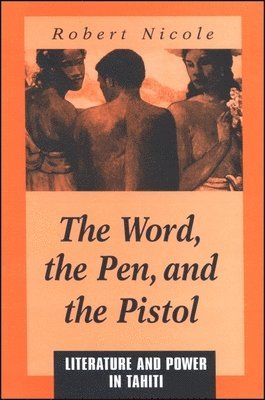
This postcolonial study explores the Western myth of Tahiti as a paradise, as well as the complex and diverse ways the Maohi people have responded to this myth.The Word, The Pen, and the Pistol explores the relationships between history, power, knowledge, and certain cultural productions such as literature in colonial and postcolonial contexts. Borrowing from the theoretical works of Michel Foucault and Edward Said, the book reveals in the French colonial territory of French Polynesia the complicit relationship between imperialism and colonial texts, between the image of Tahiti as "paradise on earth" and other instruments of management, and between discourses such as the "Noble Savage" and various technologies of discipline and ordering. In particular, the book discusses the role that such men as Buffon, Rousseau, Bouganville, Loti, Gauguin, and Gobineau and institutions such as science, phrenology, scholarship, racism, travel literature, education, and tourism played in creating, supporting, authorizing, disseminating and enforcing certain images of the Polynesian. The book simultaneously details the complex and diverse responses of Maohi people to these romanticized Western discourses and reconstructs the spaces used by them to inscribe their resistance.
575 kr
Skickas inom 7-10 vardagar
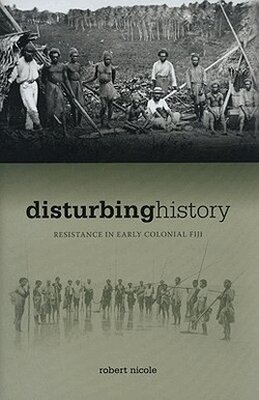
"Disturbing History" focuses on Fiji's people and their agency in responding to and engaging the multifarious forms of authority and power that were manifest in the colony from 1874 to 1914. By concentrating on the lives of ordinary Fijians, the book presents alternate ways of reconstructing the island's past. Couched in the traditions of social, subaltern, and people's histories, the study is an excavation of a large mass of material that tells the often moving stories of lives that have largely been overlooked by historians. These challenge conventional historical accounts that tend to celebrate the nation, represent Fiji's colonial experience as ordered and peaceful, or British tutelage as benevolent.In its contribution to post-colonial theory, "Disturbing History" reveals resistance as a constant but partial and untidy mix of other constituents such as collaboration, consent, appropriation, and opportunism, which together form the colonial landscape. In turn, colonialism in Fiji is shown as a force shaped in struggle, fractured and often fragile, with a presence and application in the daily lives of people that was often chaotic, imperfect, and susceptible to subversion.The book divides the period of study into two broad categories: organized resistance and everyday forms of resistance.These forms reveal a complex web of relationships between powerful and subordinate groups and among subordinate groups themselves. The author concludes that resistance cannot be framed as a totality but as a multilayered and multidimensional reality.