Roberto Di Ceglie – författare
Visar alla böcker från författaren Roberto Di Ceglie. Handla med fri frakt och snabb leverans.
12 produkter
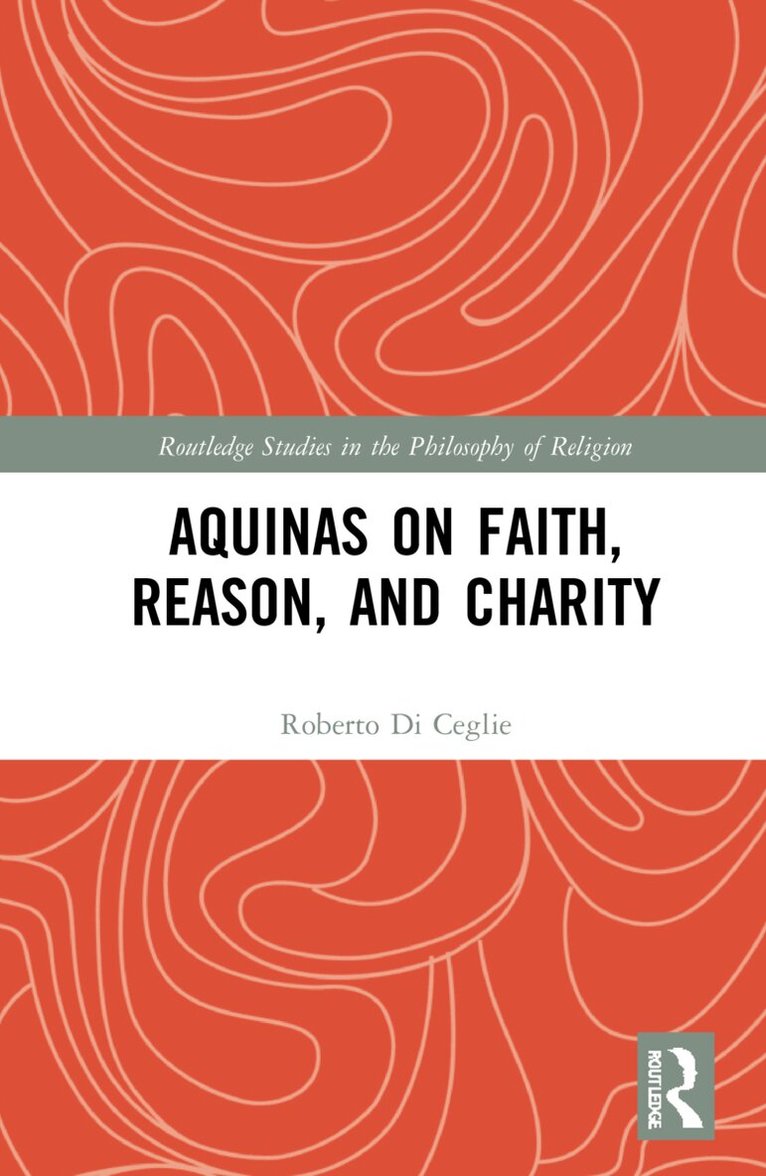
Aquinas on Faith, Reason, and Charity
E-bok, 2022
762 kr
Lägg i varukorg
This book offers a new reading of Aquinas’s views on faith. The author argues that the theological nature of faith is crucial to Aquinas’s thought, and that it gives rise to a particular and otherwise incomprehensible relationship with reason. The first part of the book examines various modern and …
Aquinas on Faith, Reason, and Charity
E-bok, 2022
746 kr
Lägg i varukorg
This book offers a new reading of Aquinas’s views on faith. The author argues that the theological nature of faith is crucial to Aquinas’s thought, and that it gives rise to a particular and otherwise incomprehensible relationship with reason. The first part of the book examines various modern and …
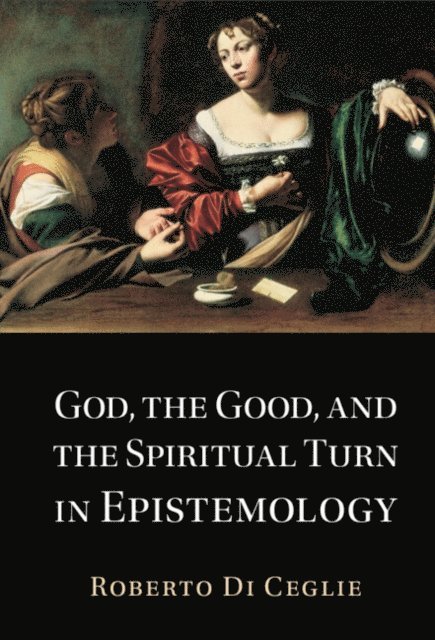
God, the Good, and the Spiritual Turn in Epistemology
Häftad, 2026
420 kr
Lägg i varukorg
In this book, Roberto Di Ceglie offers an historical, theological, and epistemological investigation exploring how commitments to God and/or the good generate the optimum condition to achieve knowledge. Di Ceglie criticizes the common belief that to attain knowledge, one must always be ready to …
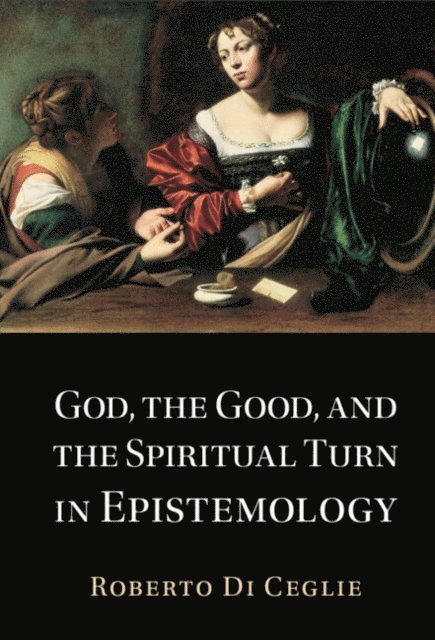
God, the Good, and the Spiritual Turn in Epistemology
Inbunden, 2022
1260 kr
Lägg i varukorg
In this book, Roberto Di Ceglie offers an historical, theological, and epistemological investigation exploring how commitments to God and/or the good generate the optimum condition to achieve knowledge. Di Ceglie criticizes the common belief that to attain knowledge, one must always be ready to …
God, the Good, and the Spiritual Turn in Epistemology
E-bok, 2022
426 kr
Lägg i varukorg
In this book, Roberto Di Ceglie offers an historical, theological, and epistemological investigation exploring how commitments to God and/or the good generate the optimum condition to achieve knowledge. Di Ceglie criticizes the common belief that to attain knowledge, one must always be ready to …
God, the Good, and the Spiritual Turn in Epistemology
E-bok, 2022
440 kr
Lägg i varukorg
In this book, Roberto Di Ceglie offers an historical, theological, and epistemological investigation exploring how commitments to God and/or the good generate the optimum condition to achieve knowledge. Di Ceglie criticizes the common belief that to attain knowledge, one must always be ready to …
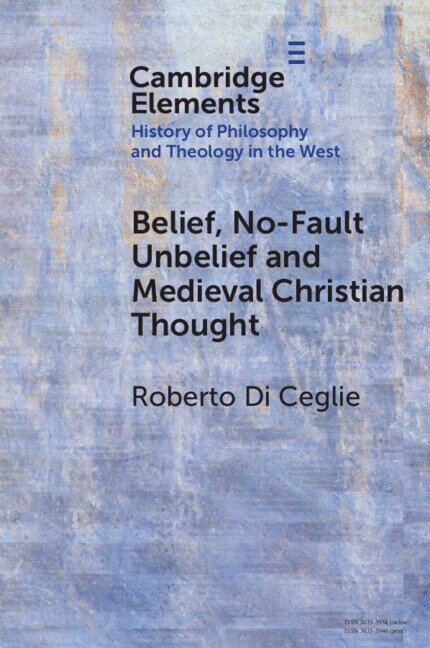
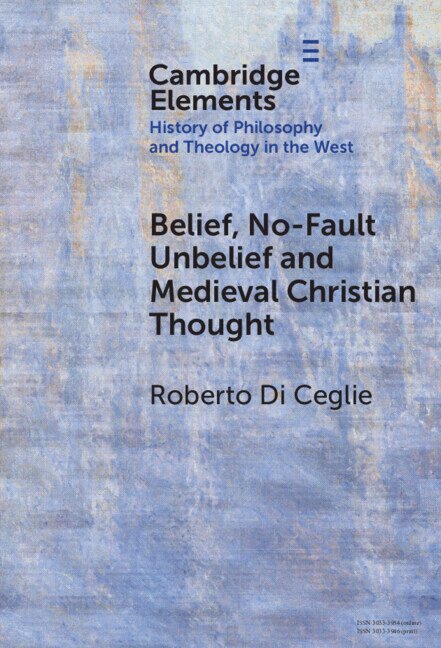
Belief, No-Fault Unbelief and Medieval Christian Thought
Häftad, 2026
282 kr
Lägg i varukorg
Traditionally, Christians have viewed unbelief as resulting from moral and/or cognitive shortcomings. However, a recent proposal such as John Schellenberg's 'divine hiddenness argument' for atheism has supported the idea that there is no-fault unbelief. In this Element, the author draws on …
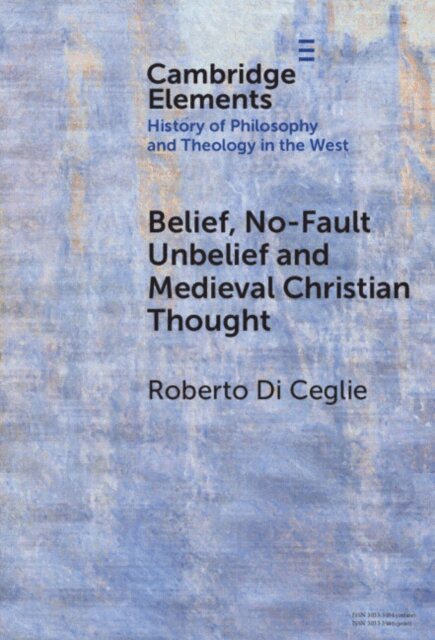
Belief, No-Fault Unbelief and Medieval Christian Thought
Inbunden, 2026
911 kr
Lägg i varukorg
Traditionally, Christians have viewed unbelief as resulting from moral and/or cognitive shortcomings. However, a recent proposal such as John Schellenberg's 'divine hiddenness argument' for atheism has supported the idea that there is no-fault unbelief. In this Element, the author draws on …
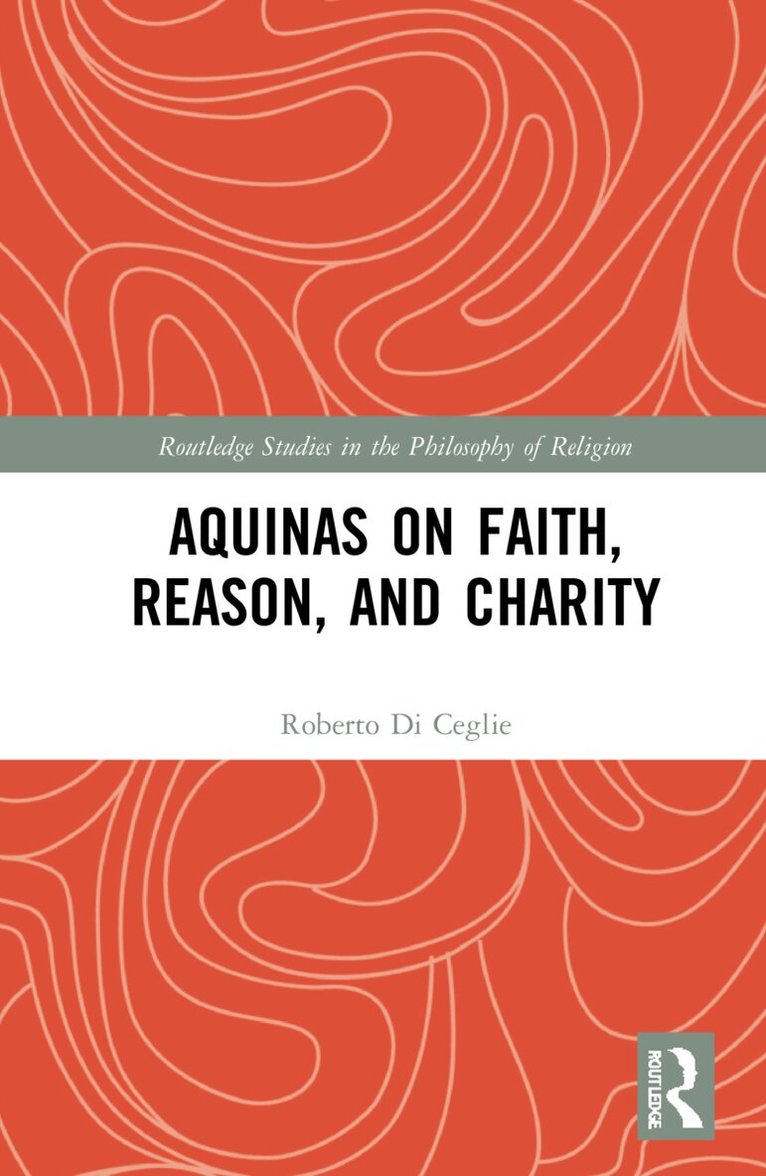
Aquinas on Faith, Reason, and Charity
Inbunden, 2022
2512 kr
Lägg i varukorg
This book offers a new reading of Aquinas’s views on faith. The author argues that the theological nature of faith is crucial to Aquinas’s thought, and that it gives rise to a particular and otherwise incomprehensible relationship with reason.The first part of the book examines various modern and …
Aquinas on Faith, Reason, and Charity
Häftad, 2024
648 kr
Lägg i varukorg
This book offers a new reading of Aquinas’s views on faith. The author argues that the theological nature of faith is crucial to Aquinas’s thought, and that it gives rise to a particular and otherwise incomprehensible relationship with reason.The first part of the book examines various modern and …