Rochona Majumdar - Böcker
Visar alla böcker från författaren Rochona Majumdar. Handla med fri frakt och snabb leverans.
7 produkter
7 produkter
2 213 kr
Skickas inom 5-8 vardagar
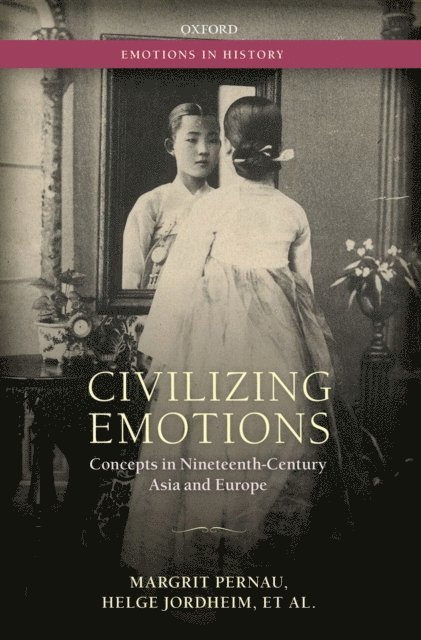
At the beginning of the twenty-first century, the vocabulary of civility and civilization is very much at the forefront of political debate. Most of these debates proceed as if the meaning of these words were self-evident. This is where Civilizing Emotions intervenes, tracing the history of the concepts of civility and civilization and thus adding a level of self-reflexivity to the present debates. Unlike previous histories, Civilizing Emotions takes a global perspective, highlighting the roles of civility and civilization in the creation of a new and hierarchized global order in the era of high imperialism and its entanglements with the developments in a number of well-chosen European and Asian countries.Emotions were at the core of the practices linked to the creation of a new global order in the nineteenth century. Civilizing Emotions explores why and how emotions were an asset in civilizing peoples and societies - their control and management, but also their creation and their ascription to different societies and social groups. The study is a contribution to the history of emotions, to global history, and to the history of concepts, three rapidly developing and innovative research areas which are here being brought together for the first time.
1 142 kr
Skickas inom 7-10 vardagar
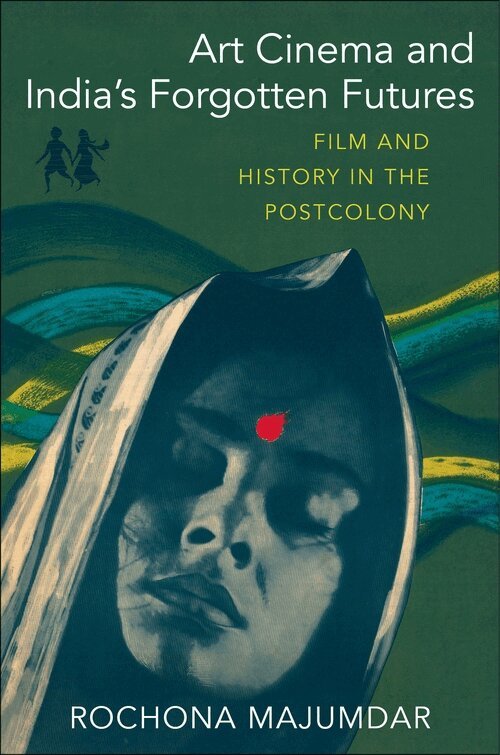
Co-Winner, 2023 Chidananda Dasgupta Award for the Best Writing on Cinema, Chidananda Dasgupta Memorial TrustShortlisted, 2022 MSA Book Prize, Modernist Studies AssociationLonglisted, 2022 Moving Image Book Award, Kraszna-Krausz FoundationThe project of Indian art cinema began in the years following independence in 1947, at once evoking the global reach of the term “art film” and speaking to the aspirations of the new nation-state. In this pioneering book, Rochona Majumdar examines key works of Indian art cinema to demonstrate how film emerged as a mode of doing history and that, in so doing, it anticipated some of the most influential insights of postcolonial thought.Majumdar details how filmmakers as well as a host of film societies and publications sought to foster a new cinematic culture for the new nation, fueled by enthusiasm for a future of progress and development. Good films would help make good citizens: art cinema would not only earn global prestige but also shape discerning individuals capable of exercising aesthetic and political judgment. During the 1960s, however, Satyajit Ray, Mrinal Sen, and Ritwik Ghatak—the leading figures of Indian art cinema—became disillusioned with the belief that film was integral to national development. Instead, Majumdar contends, their works captured the unresolvable contradictions of the postcolonial present, which pointed toward possible, yet unrealized futures.Analyzing the films of Ray, Sen, and Ghatak, and working through previously unexplored archives of film society publications, Majumdar offers a radical reinterpretation of Indian film history. Art Cinema and India’s Forgotten Futures offers sweeping new insights into film’s relationship with the postcolonial condition and its role in decolonial imaginations of the future.
291 kr
Skickas inom 7-10 vardagar
Co-Winner, 2023 Chidananda Dasgupta Award for the Best Writing on Cinema, Chidananda Dasgupta Memorial TrustShortlisted, 2022 MSA Book Prize, Modernist Studies AssociationLonglisted, 2022 Moving Image Book Award, Kraszna-Krausz FoundationThe project of Indian art cinema began in the years following independence in 1947, at once evoking the global reach of the term “art film” and speaking to the aspirations of the new nation-state. In this pioneering book, Rochona Majumdar examines key works of Indian art cinema to demonstrate how film emerged as a mode of doing history and that, in so doing, it anticipated some of the most influential insights of postcolonial thought.Majumdar details how filmmakers as well as a host of film societies and publications sought to foster a new cinematic culture for the new nation, fueled by enthusiasm for a future of progress and development. Good films would help make good citizens: art cinema would not only earn global prestige but also shape discerning individuals capable of exercising aesthetic and political judgment. During the 1960s, however, Satyajit Ray, Mrinal Sen, and Ritwik Ghatak—the leading figures of Indian art cinema—became disillusioned with the belief that film was integral to national development. Instead, Majumdar contends, their works captured the unresolvable contradictions of the postcolonial present, which pointed toward possible, yet unrealized futures.Analyzing the films of Ray, Sen, and Ghatak, and working through previously unexplored archives of film society publications, Majumdar offers a radical reinterpretation of Indian film history. Art Cinema and India’s Forgotten Futures offers sweeping new insights into film’s relationship with the postcolonial condition and its role in decolonial imaginations of the future.
447 kr
Skickas inom 10-15 vardagar
Writing Postcolonial History addresses the relationship between postcolonial theory and history. It provides students with critical analyses of postcolonial histories from around the world. In addition, it discusses the benefits and shortcomings of this form of writing by situating postcolonial history amidst other modes of historical inquiry. The field of postcolonial history is complex. Even though many scholars share a set of commonalities, there are still important differences in emphasis. Through discussion of key texts, Writing Postcolonial History provides students with an accessible analysis and overview of the key areas of debate. This book is an effort to address the relationship between postcolonial theory and history; a regional critique of postcolonial theory; a consideration of the relative merits and drawbacks of postcolonial historical writing.
1 724 kr
Skickas inom 7-10 vardagar
An innovative cultural history of the evolution of modern marriage practices in Bengal, Marriage and Modernity challenges the assumption that arranged marriage is an antiquated practice. Rochona Majumdar demonstrates that in the late colonial period Bengali marriage practices underwent changes that led to a valorization of the larger, intergenerational family as a revered, “ancient” social institution, with arranged marriage as the apotheosis of an “Indian” tradition. She meticulously documents the ways that these newly embraced “traditions”-the extended family and arranged marriage-entered into competition and conversation with other emerging forms of kinship such as the modern unit of the couple, with both models participating promiscuously in the new “marketplace” for marriages, where matrimonial advertisements in the print media and the payment of dowry played central roles. Majumdar argues that together the kinship structures newly asserted as distinctively Indian and the emergence of the marriage market constituted what was and still is modern about marriages in India.Majumdar examines three broad developments related to the modernity of arranged marriage: the growth of a marriage market, concomitant debates about consumption and vulgarity in the conduct of weddings, and the legal regulation of family property and marriages. Drawing on matrimonial advertisements, wedding invitations, poems, photographs, legal debates, and a vast periodical literature, she shows that the modernization of families does not necessarily imply a transition from extended kinship to nuclear family structures, or from matrimonial agreements negotiated between families to marriage contracts between individuals. Colonial Bengal tells a very different story.
427 kr
Skickas inom 7-10 vardagar
An innovative cultural history of the evolution of modern marriage practices in Bengal, Marriage and Modernity challenges the assumption that arranged marriage is an antiquated practice. Rochona Majumdar demonstrates that in the late colonial period Bengali marriage practices underwent changes that led to a valorization of the larger, intergenerational family as a revered, “ancient” social institution, with arranged marriage as the apotheosis of an “Indian” tradition. She meticulously documents the ways that these newly embraced “traditions”-the extended family and arranged marriage-entered into competition and conversation with other emerging forms of kinship such as the modern unit of the couple, with both models participating promiscuously in the new “marketplace” for marriages, where matrimonial advertisements in the print media and the payment of dowry played central roles. Majumdar argues that together the kinship structures newly asserted as distinctively Indian and the emergence of the marriage market constituted what was and still is modern about marriages in India.Majumdar examines three broad developments related to the modernity of arranged marriage: the growth of a marriage market, concomitant debates about consumption and vulgarity in the conduct of weddings, and the legal regulation of family property and marriages. Drawing on matrimonial advertisements, wedding invitations, poems, photographs, legal debates, and a vast periodical literature, she shows that the modernization of families does not necessarily imply a transition from extended kinship to nuclear family structures, or from matrimonial agreements negotiated between families to marriage contracts between individuals. Colonial Bengal tells a very different story.
1 333 kr
Kommande
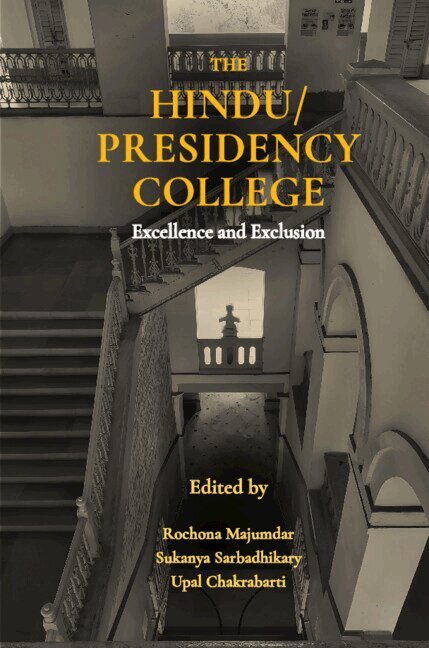
With a focus on the Hindu/Presidency College, this book offers new ways of doing histories of education in colonial and postcolonial historical settings. Each essay utilizes new archival materials to present "liberal arts" education as an arena of competition, conversation, the rise of new disciplines, and politics. The everyday life of the College comes alive in a set of interdisciplinary essays that analyse different aspects of the institution's existence from student publications to the challenges of under-funding. Together, they shed new light on the daily labour and strife as well as the work of the imagination that shaped a centre of excellence. Excellence, however, was also premised upon social, cultural, and financial exclusions that cannot be ignored as we write new global histories of education and intellectual life in postcolonial India. The volume offers vital historical insight into the survival and challenges faced by an educational institution that is salutary as higher education, globally, faces unprecedented challenges.