Ron Jenkins - Böcker
Visar alla böcker från författaren Ron Jenkins. Handla med fri frakt och snabb leverans.
15 produkter
15 produkter
2 107 kr
Skickas inom 10-15 vardagar
2 107 kr
Skickas inom 10-15 vardagar
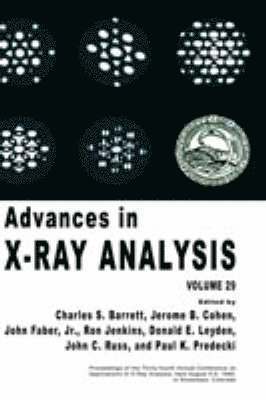
The 37th Annual Denver Conference on Applications of X-Ray Analysis was held August 1-5, 1988, at the Sheraton Steamboat Resort and Conference Center, Steamboat Springs, Colorado. As usual, alternating with x-ray diffraction, the emphasis this year was x-ray fluorescence, but as has been the pattern for several occasions over the last few years, the Plenary Session did not deal with that subject, specifically. In an attempt to introduce the audience to one of the new developments in x-ray analysis, the title of the session was "High Brilliance Sources/Applications," and dealt exclusively with synchrotron radiation, a topic which has made a very large impact on the x-ray community over the last decade. As the organizer and co-chairman of the Plenary Session (with Paul Predecki), it is my responsibility to report on that session here. The Conference had the privilege of obtaining the services of some of the preeminent practitioners of research using this remarkable x-ray source; they presented the audience with unusually lucid descriptions of the work which has been accomplished in the development and application of the continuous, high intensity, tunable, polarized and collimated x-rays available from no facility other than these specialized storage rings. The opening lecture (and I use that term intentionally) was an enthusiastic description of "What is Synchrotron Radiation?" by Professor Boris Batterman of Cornell University and the Cornell High Energy Synchrotron Sourc(! (CHESS).
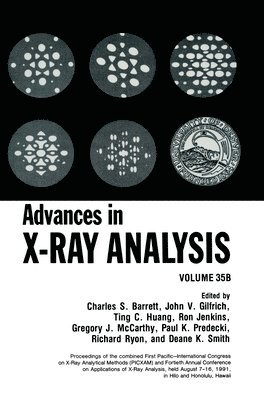
Proceedings of Combined First Pacific-International Conference on X-Ray Analytical Methods and Fortieth Annual Conference on Applications of X-Ray Analysis Held in Hilo and Honolulu, Hawaii, August 7-16, 1991
Inbunden, Engelska, 1992
855 kr
Skickas inom 10-15 vardagar
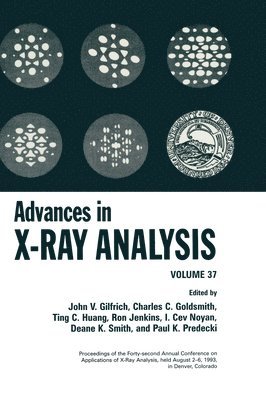
Advances in x-Ray Analysis
Proccedings of the Forty-Second Annual Conference on Applications of X-Ray Analysis Held in Denver, Colorado, August 2-6,
Inbunden, Engelska, 1994
855 kr
Skickas inom 10-15 vardagar
3 158 kr
Skickas inom 10-15 vardagar
The 43rd Annual Conference on Applications ofX-ray Analysis was held August 1-5, 1994, at the Sheraton Steamboat Resort & Conference Center in Steamboat Springs, Colorado. The Denver X-Ray Conference has evolved from the 1950's into an international forum for the interaction of scientists, engineers and technologists interested in the use of x-rays in materials characterization. It has not only acted as a venue but has both stimulated and nurtured many of the principal developments in this field over the years. The major changes that have been occurring on the national and international scene as a result of the end of the cold war have dramatic-ally affected the way the materials community does business. The removal of defense priorities and development funds from most new materials initiatives has stimulated the char acterization communities to look to increasing the speed of their methods. This is being accom plished via the development of very fast dynamic characterization procedures which can rapidly and intelligently monitor and optimize the formation of a desired microstructure. The develop ment of intelligent characterization procedures applied in real-time during the manufacturing process can lead to the ability to design desired microstructures. Another potential advantage to this approach is its ability to characterize the actual amount of material which goes into a final product; permitting a rapid transition from R&D to manufacturing by avoiding the prob lems associated with scale-up.
3 158 kr
Skickas inom 10-15 vardagar
The 39th Denver Conference on Applications of X-ray Analysis was held July 31-August 4, 1995, at the Sheraton Hotel, Colorado Springs, Colorado. The year 1995 was a special year for the X-ray analysis community, since it represented the 100th anniversary ofthe discovery ofX-rays by Wilhelm Roentgen. In commemoration of this event, the Plenary Session of the conference was entitled "THE ROENTGEN COMMEMORATIVE SESSION:1895-1995, "100 YEARS OF PROGRESS IN X-RA Y SCIENCE AND APPLICATIONS". It is interesting to note that while we celebrate 100 years ofthe use ofX-ray techniques in general, and about 80 years ofX-ray diffraction and spectroscopy in particular, the Denver X-ray Conference has been in place for about half ofthat time period! Like the X-ray methods it represents, the Denver Conference on Applications ofX-ray Analysis has grown and matured, has survived the rigors oftime, and today, provides the worlds' best annual forum for the exchange of experiences and developments in the various fields ofX-ray analysis. Imagine, when the Denver Conference started in 1951, there were no personal computer- in fact, there were no computers, period! There was no SEM, no microprobe, there were no Si(Li) detectors, no transistors, no synchrotrons, Hugo Rietveld was a child, and many members who regularly attend Denver Meetings today, weren't even born yet! As I write this foreword, a copy of volurne 1 of Advances in X-ray Analysis lays in front of me on my desk.
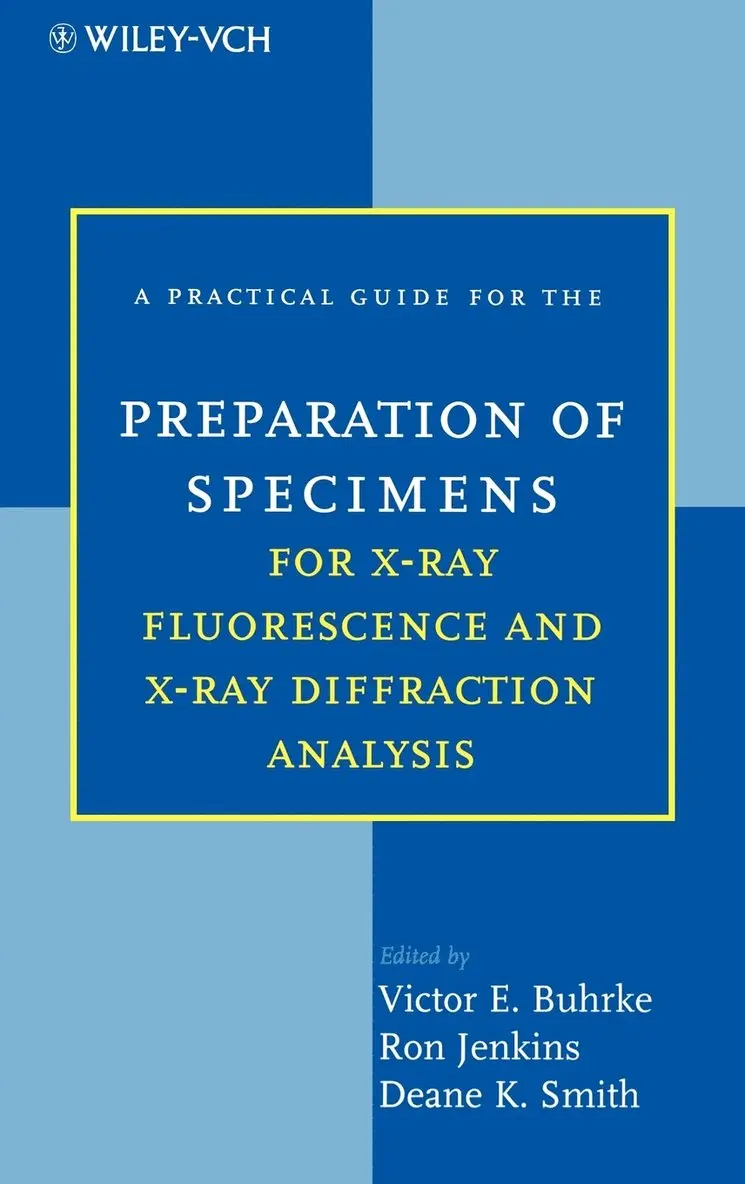
Practical Guide for the Preparation of Specimens for X-Ray Fluorescence and X-Ray Diffraction Analysis
Inbunden, Engelska, 1998
2 793 kr
Skickas inom 7-10 vardagar
The first hands-on guide to XRD and XRF sampling and specimen preparation Systematic errors from poor sampling and improper specimen preparation can easily render X-ray diffraction (XRD) and X-ray fluorescence (XRF) data of questionable use for analysis. But, until now, the practical information that can help to reduce these errors has never been readily available in one volume. This book fills a vital gap in the literature, bringing together a wealth of material previously available only in workbooks, company manuals, and other inside sources. It provides detailed coverage of the major tasks involved in X-ray analysis - complete with theory, step-by-step methods, equipment suggestions, and problem-solving tips. With a full complement of tools and techniques, this comprehensive guide helps both beginners and experienced analysts to make the best decision on sample treatment and get accurate XRD and XRF results-saving valuable time, money, and effort. Covers X-ray techniques for analyzing biological, geological, metallic, ceramic, and other materials* Addresses all aspects of specimen preparation, including handling unusual or very small samples, liquids and solutions, and more* Features special chapters on specimen preparation equipment and XRF standards* Contains useful bibliography and helpful references.
Del 212 - Chemical Analysis: A Series of Monographs on Analytical Chemistry and Its Applications
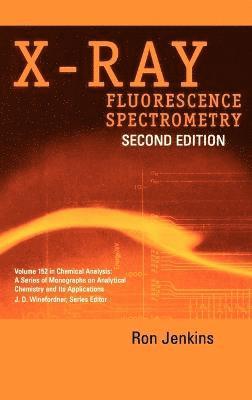
X-Ray Fluorescence Spectrometry
Inbunden, Engelska, 1999
1 973 kr
Skickas inom 7-10 vardagar
X-ray fluorescence spectroscopy, one of the most powerful and flexible techniques available for the analysis and characterization of materials today, has gone through major changes during the past decade.Fully revised and expanded by 30%, X-Ray Fluorescence Spectrometry, Second Edition incorporates the latest industrial and scientific trends in all areas. It updates all previous material and adds new chapters on such topics as the history of X-ray fluorescence spectroscopy, the design of X-ray spectrometers, state-of-the-art applications, and X-ray spectra.Ron Jenkins draws on his extensive experience in training and consulting industry professionals for this clear and concise treatment, covering first the basic aspects of X rays, then the methodology of X-ray fluorescence spectroscopy and available instrumentation. He offers a comparison between wavelength and energy dispersive spectrometers as well as step-by-step guidelines to X-ray spectrometric techniques for qualitative and quantitative analysis-from specimen preparation to real-world industrial application.Favored by the American Chemical Society and the International Centre for Diffraction Data, X-Ray Fluorescence Spectrometry, Second Edition is an ideal introduction for newcomers to the field and an invaluable reference for experienced spectroscopists-in chemical analysis, geology, metallurgy, and materials science.An up-to-date review of X-ray spectroscopic techniques. This proven guidebook for industry professionals is thoroughly updated and expanded to reflect advances in X-ray analysis over the last decade. X-Ray Fluorescence Spectrometry, Second Edition includes: The history of X-ray fluorescence spectrometry-new to this edition.A critical review of the most useful X-ray spectrometers.Techniques and procedures for quantitative and qualitative analysis.Modern applications and industrial trends.X-ray spectra-new to this edition.
Del 158 - Chemical Analysis: A Series of Monographs on Analytical Chemistry and Its Applications
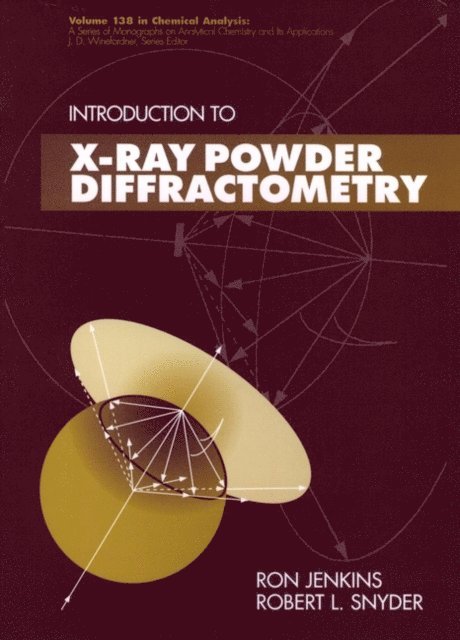
Introduction to X-Ray Powder Diffractometry
Inbunden, Engelska, 1996
2 119 kr
Skickas inom 7-10 vardagar
When bombarded with X-rays, solid materials produce distinct scattering patterns similar to fingerprints. X-ray powder diffraction is a technique used to fingerprint solid samples, which are then identified and cataloged for future use-much the way the FBI keeps fingerprints on file. The current database of some 70,000 material prints has been put to a broad range of uses, from the analysis of moon rocks to testing drugs for purity. Introduction to X-ray Powder Diffractometry fully updates the achievements in the field over the past fifteen years and provides a much-needed explanation of the state-of-the-art techniques involved in characterizing materials. It covers the latest instruments and methods, with an emphasis on the fundamentals of the diffractometer, its components, alignment, calibration, and automation. The first three chapters outline diffraction theory in clear language, accessible to both students and professionals in chemistry, physics, geology, and materials science. The book's middle chapters describe the instrumentation and procedures used in X-ray diffraction, including X-ray sources, X-ray detection, and production of monochromatic radiation. The chapter devoted to instrument design and calibration is followed by an examination of specimen preparation methods, data collection, and reduction. The final two chapters provide in-depth discussions of qualitative and quantitative analysis. While the material is presented in an orderly progression, beginning with basic concepts and moving on to more complex material, each chapter stands on its own and can be studied independently or used as a professional reference. More than 230 illustrations and tables demonstrate techniques and clarify complex material. Self-contained, timely, and user-friendly, Introduction to X-ray Powder Diffractometry is an enormously useful text and professional reference for analytical chemists, physicists, geologists and materials scientists, and upper-level undergraduate and graduate students in materials science and analytical chemistry. X-ray powder diffraction-a technique that has matured significantly in recent years-is used to identify solid samples and determine their composition by analyzing the so-called "fingerprints" they generate when X-rayed. This unique volume fulfills two major roles: it is the first textbook devoted solely to X-ray powder diffractometry, and the first up-to-date treatment of the subject in 20 years. This timely, authoritative volume features:* Clear, concise descriptions of both theory and practice-including fundamentals of diffraction theory and all aspects of the diffractometer* A treatment that reflects current trends toward automation, covering the newest instrumentation and automation techniques* Coverage of all the most common applications, with special emphasis on qualitative and quantitative analysis* An accessible presentation appropriate for both students and professionals* More than 230 tables and illustrations Introduction to X-ray Powder Diffractometry, a collaboration between two internationally known and respected experts in the field, provides invaluable guidance to anyone using X-ray powder diffractometers and diffractometry in materials science, ceramics, the pharmaceutical industry, and elsewhere.
3 802 kr
Skickas inom 10-15 vardagar
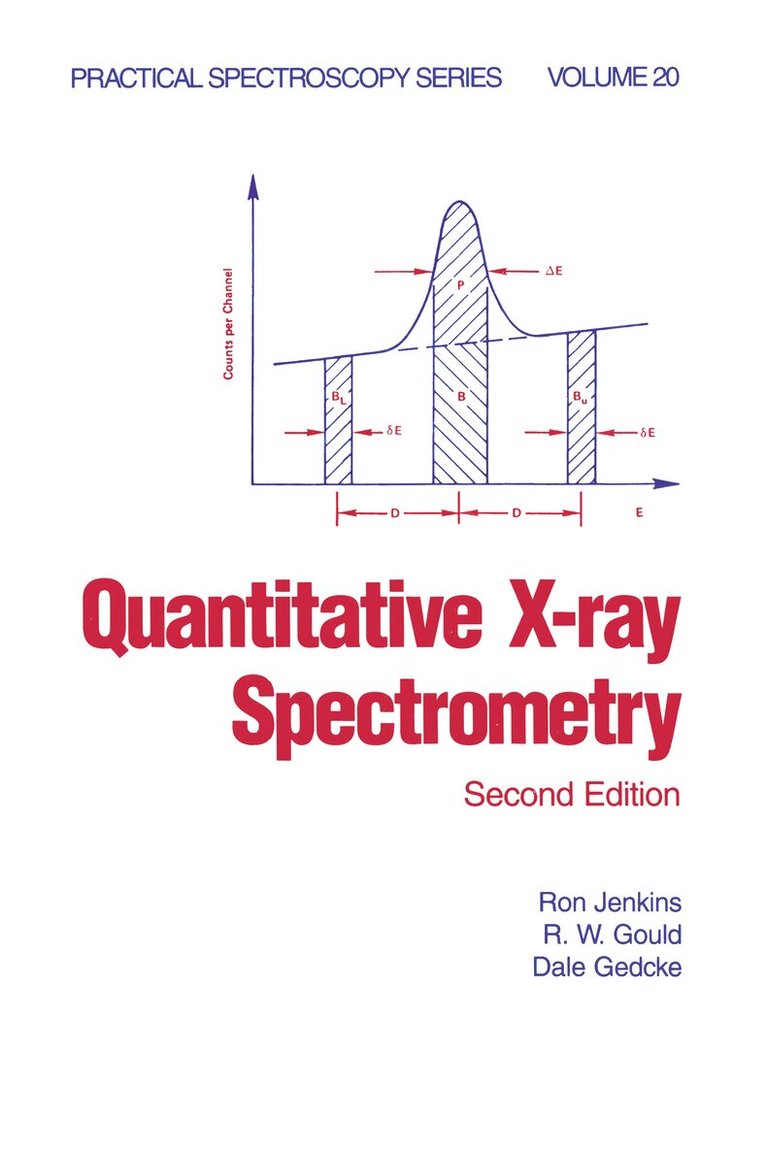
This work covers important aspects of X-ray spectrometry, from basic principles to the selection of instrument parameters and sample preparation. This edition explicates the use of combined X-ray fluorescence and X-ray diffraction data, and features new applications in environmental studies, forensic science, archeometry and the analysis of metals and alloys, minerals and ore, ceramic materials, catalysts and trace metals.;This work is intended for spectroscopists, analytical chemists, materials scientists, experimental physicists, mineralogists, biologists, geologists and graduate-level students in these disciplines.
537 kr
Skickas inom 10-15 vardagar
The 41st Annual Conference on Applications of X-Ray Analysis was held August 2-6, 1993, at the Sheraton Denver Technical Center Hotel, Denver, Colorado. From its modest beginnings in the early 1950's, the Denver X-Ray Conference has grown to become a major venue in the national scientific calendar, with an ever-growing overseas participation. The 1993 Conference was the latest of these annual gatherings of x-ray analysts, who come together to discuss topics of current interest in diffraction and fluorescence. As the size and flavor of the Conference has changed over the years, so too have the methods and techniques of x-ray materials analysis matured. Science is advanced by the creativity of a few and the mistakes of many. It is important, therefore, that from time to time we sit back and reflect on how we got where we are, and where we are likely to go next. There has been no greater impact on the field than the introduction of the digital computer, and the Plenary Session of the 1993 Conference, "Impact of the PC in X-Ray Analysis," was designed to reflect on the role of the personal computer in the metamorphosis of x-ray instrumentation and techniques. Since the personal computer is a creation of non-x-ray specialists, we, as a group, have simply attached ourselves to the coat-tails of experts and developers in the PC field and taken advantage of new computer systems as and when they were developed.
537 kr
Skickas inom 10-15 vardagar
The 41st Annual Conference on Applications of X-Ray Analysis was held August 3-7, 1992, at the Sheraton Colorado Springs Hotel, Colorado Springs, Colorado. The Conference is recognized to be a major event in the x-ray analysis field, bringing together scientists and engineers from around the world to discuss the state of the art in x-ray applications as well as indications for further developments. In recent years, one of the most exciting and important developments in the x-ray field has been the applications of grazing-incidence x-rays for surface and thin-film analysis. To introduce the conference attendees to these "leading-edge" developments, the topic for the Plenary Session was "Grazing-Incidence X Ray Characterization of Materials. " The Conference had the privilege of inviting leading experts in the field of x-ray thin film analysis to deliver lectures at the Plenary Session. Dr. D. K. Bowen, University of Warwick, U. K. , opened the session with a lecture on "Grazing Incidence X-Ray Scattering from Thin Films. " He reviewed and compared grazing incidence diffraction, fluorescence and reflectivity techniques. Results of experimental and theoretical analysis were also discussed. Dr. B. Lenge1er, Forchungszentrum Ju1ich, Germany, followed with a lecture on "Grazing Incidence Diffuse X-Ray Scattering from Thin Films. " He concentrated on the use of newly developed "off-specular" reflectivity techniques for the determination of vertical roughness, lateral correlation length and contour exponent on surfaces.
537 kr
Skickas inom 10-15 vardagar
537 kr
Skickas inom 10-15 vardagar
The 38th Annual Denver Conference on Applications of X-Ray Analysis was held July 31 - August 4, 1989, at the Sheraton Denver Technical Center, Denver, Colorado. The conference alternates emphasis between x-ray diffraction and x-ray fluorescence, and this being an odd year the emphasis was on diffraction. Thus the Plenary Session was slanted toward diffraction in general and thin film analysis in particular. The Plenary Session on x-ray analysis of thin films did not just happen this year but really began four years ago with Paul Predecki suggesting a special session devoted to thin film techniques. The session generated a great deal of interest, so Paul suggested that a workshop on thin films should be slated for the 1987 conference. A full day was devoted to the workshop, which was split into a half day on epitaxial thin films and the other half day on polycrystalline thin films. The workshop attendance indicated a great deal of interest in this topic, leading to this year's Plenary Session. The first two speakers of the Plenary Session (B. Tanner and K. Bowen) have been key throughout the thin film activities. They were invited speakers for the 1985 special session on thin films and instructors for the 1987 workshop on epitaxial thin films.
2 107 kr
Skickas inom 10-15 vardagar
The 37th Annual Denver Conference on Applications of X-Ray Analysis was held August 1-5, 1988, at the Sheraton Steamboat Resort and Conference Center, Steamboat Springs, Colorado. As usual, alternating with x-ray diffraction, the emphasis this year was x-ray fluorescence, but as has been the pattern for several occasions over the last few years, the Plenary Session did not deal with that subject, specifically. In an attempt to introduce the audience to one of the new developments in x-ray analysis, the title of the session was "High Brilliance Sources/Applications," and dealt exclusively with synchrotron radiation, a topic which has made a very large impact on the x-ray community over the last decade. As the organizer and co-chairman of the Plenary Session (with Paul Predecki), it is my responsibility to report on that session here. The Conference had the privilege of obtaining the services of some of the preeminent practitioners of research using this remarkable x-ray source; they presented the audience with unusually lucid descriptions of the work which has been accomplished in the development and application of the continuous, high intensity, tunable, polarized and collimated x-rays available from no facility other than these specialized storage rings. The opening lecture (and I use that term intentionally) was an enthusiastic description of "What is Synchrotron Radiation?" by Professor Boris Batterman of Cornell University and the Cornell High Energy Synchrotron Sourc(! (CHESS).