Ruth Bienstock Anolik - Böcker
Visar alla böcker från författaren Ruth Bienstock Anolik. Handla med fri frakt och snabb leverans.
5 produkter
5 produkter
533 kr
Skickas inom 5-8 vardagar
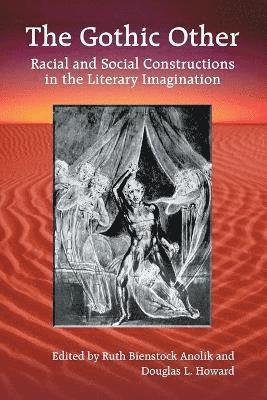
Literary use of the Gothic is marked by an anxious encounter with otherness, with the dark and mysterious unknown. From its earliest manifestations in the turbulent eighteenth century, this seemingly escapist mode has provided for authors a useful ground upon which to safely confront very real fears and horrors.The essays here examine texts in which Gothic fear is relocated onto the figure of the racial and social Other, the Other who replaces the supernatural ghost or grotesque monster as the code for mystery and danger, ultimately becoming as horrifying, threatening and unknowable as the typical Gothic manifestation. The range of essays reveals that writers from many canons and cultures are attracted to the Gothic as a ready medium for expression of racial and social anxieties. The essays are grouped into sections that focus on such topics as race, religion, class, and centers of power.
533 kr
Skickas inom 5-8 vardagar
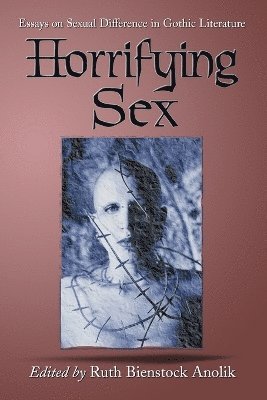
The Gothic moment in literary history arose in the age of the Enlightenment, and the Gothic fascination with the unknown reflects the Enlightenment's response to the limits of reason. Traditionally, the emblem of the unknown that lurks in the Gothic is the supernatural, the monstrous, and the inhuman. Often overlooked is the observation that Gothic texts are also haunted by figures that represent the mystery of sexuality.This collection of essays sharpens that observation and asserts that Gothic anxieties about sexuality are likewise rooted in fear of the unknown, represented by sexual practices and desires that either lie hidden or deviate from cultural norms. The first three sections refer to popular as well as marginalized Gothic texts to portray the three prototypes of sexual "deviance": the female sexual Other in "The Fatal Woman"; the male sexual Other in "The Satanic Male"; and the homosexual Other in "Homosexual Horror." The fourth section covers literary works that celebrate sexual difference and question the idea that the sexually "deviant" is socially Other.
533 kr
Skickas inom 5-8 vardagar
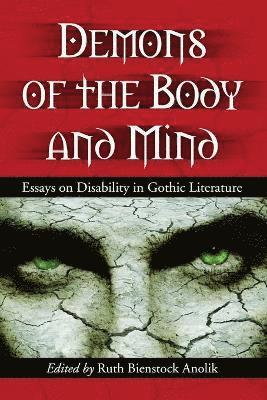
The Gothic mode, typically preoccupied by questions of difference and otherness, consistently imagines the Other as a source of grotesque horror. The sixteen critical essays in this collection examine the ways in which those suffering from mental and physical ailments are refigured as Other, and how they are imagined to be monstrous. Together, the essays highlight the Gothic inclination to represent all ailments as visibly monstrous, even those, such as mental illness, which were invisible. Paradoxically, the Other also becomes a pitiful figure, often evoking empathy. This exploration of illness and disability represents a strong addition to Gothic studies.
533 kr
Skickas inom 5-8 vardagar
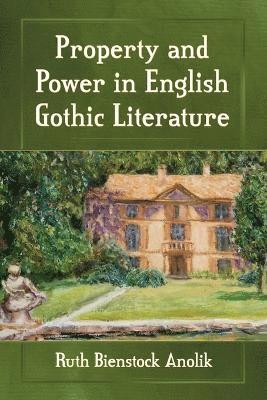
Eighteenth-century England witnessed major social and economic changes, including the commodification of property, person and text through legal containments--enclosure, coverture, primogeniture, copyright. English Gothic authors responded with tropes that worked to dispel the assurances of possession--the contested castle, the beleaguered yet enduring woman, the haunting ghost, the disjointed narrative--warning that seemingly mundane codes of ownership have menacing implications, such as the civil death of women through marriage. This book explores the masterplot of the English Gothic text as a response to the Enlightenment's rational certainty regarding possession of self, property and narrative.
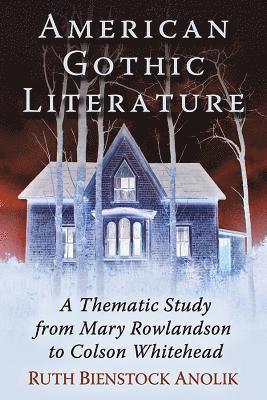
American Gothic Literature
A Thematic Study from Mary Rowlandson to Colson Whitehead
Häftad, Engelska, 2018
533 kr
Skickas inom 5-8 vardagar
American Gothic literature inherited many time-worn tropes from its English Gothic precursor, along with a core preoccupation: anxiety about power and property. Yet the transatlantic journey left its mark on the genre--the English ghostly setting becomes the wilderness haunted by spectral Indians. The aristocratic villain is replaced by the striving, independent young man. The dispossession of Native Americans and African Americans adds urgency to traditional Gothic anxieties about possession.The unchanging role of woman in early Gothic narratives parallels the status of American women, even after the Revolution. Twentieth-century Gothic works offer inclusion to previously silent voices, including immigrant writers with their own cultural traditions. The 21st century unleashes the zombie horde--the latest incarnation of the voracious American.