• Fri frakt över 249 kr
  • •
  • Snabba leveranser
  • •
  • Billiga böcker
Kundservice

Du är på sajten för privatpersoner.

Företag, bibliotek eller offentlig verksamhet?

Du handlar på classic.bokus.com, där alla dina funktioner finns intakta.
Till classic.bokus.com
Bokus logotyp. Gå till startsidan.
  • Erbjudanden
  • Nyheter
  • Student
  • Topplistor
  • Barn & ungdom
  • Bokus Play
  • E-böcker
  • Pocketböcker
  • Spel & pussel

10% rabatt på allt med kod NYSTART10 →

Sidfot

Mina sidor

    Hjälp

    • Kundservice
    • Vanliga frågor och svar
    • Frakt och leverans
    • Retur vid ångerrätt
    • Reklamera vara
    • Betalning
    • Köpvillkor
    • Allmänna villkor
    • Information om webbplatsens tillgänglighet

    Om Bokus

    • Om oss
    • Pressrum
    • För studenter
    • För företag
    • För bibliotek och offentlig verksamhet
    • För leverantörer
    • Hållbarhet

    Populärt

    • Aktuella erbjudanden
    • Presentkort
    • Studentlitteratur
    • Nya böcker
    • Topplistor
    • Signerade böcker
    • Engelska böcker

    Inspiration

    • Boktips
    • BookTok
    • Populära bokserier
    • Barnbokskaraktärer
    • Populära författare
    Logotyp för Bokus
    Följ oss på Facebook (extern länk)Följ oss på Instagram (extern länk)Följ oss på YouTube (extern länk)Följ oss på TikTok (extern länk)
    bokus @ CookiesAnpassa cookiesIntegritetspolicyKöpvillkor
    Till Citymail hemsida (extern länk)Till Budbee hemsida (extern länk)Till Postnord hemsida (extern länk)Till Schenker hemsida (extern länk)Till Early Bird hemsida (extern länk)Till Walleys hemsida (extern länk)
    1. Skönlitteratur
    2. Litteraturvetenskap
    3. Litteraturvetenskap

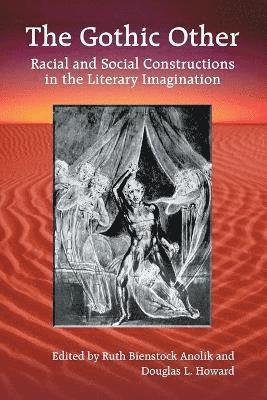
    Gothic Other

    Racial and Social Constructions in the Literary Imagination

    AvRuth Bienstock Anolik,Douglas L. Howard

    Häftad, Engelska, 2004

    543 kr

    Beställningsvara. Skickas inom 5-8 vardagar. Fri frakt över 249 kr.

    Beskrivning

    Literary use of the Gothic is marked by an anxious encounter with otherness, with the dark and mysterious unknown. From its earliest manifestations in the turbulent eighteenth century, this seemingly escapist mode has provided for authors a useful ground upon which to safely confront very real fears and horrors.The essays here examine texts in which Gothic fear is relocated onto the figure of the racial and social Other, the Other who replaces the supernatural ghost or grotesque monster as the code for mystery and danger, ultimately becoming as horrifying, threatening and unknowable as the typical Gothic manifestation. The range of essays reveals that writers from many canons and cultures are attracted to the Gothic as a ready medium for expression of racial and social anxieties. The essays are grouped into sections that focus on such topics as race, religion, class, and centers of power.

    Produktinformation

    • Utgivningsdatum:2004-07-15
    • Mått:152 x 229 x 16 mm
    • Vikt:431 g
    • Format:Häftad
    • Språk:Engelska
    • Antal sidor:320
    • Förlag:McFarland & Co Inc
    • ISBN:9780786418589

    Utforska kategorier

    • Litteraturvetenskap inom Skönlitteratur

    Mer om författaren

    Ruth Bienstock Anolik teaches at Villanova University and writes extensively on the Gothic mode. Her articles have been published in Modern Language Studies, Studies in Jewish Literature,, and other journals and collections. Douglas L. Howard is the Writing Center Coordinator and an Assistant Professor in the English Department at Suffolk County Community College in Selden, New York. His publications include articles in Literature and Theology, The Chronicle of Higher Education and This Thing of Ours: Investigating the Sopranos (Columbia University Press, 2002). He lives in Greenlawn, New York.

    Innehållsförteckning

    • Table of ContentsAcknowledgments      Introduction: The Dark Unknown      PART I: DEMONIZING THE RACIAL OTHER, HUMANIZING THE SELF1. White Terror, Black Dreams: Gothic Constructions of Race in the Nineteenth Century      2. Slavery and Civic Recovery: Gothic Interventions in Whitman and Weld      3. Cane: Jean Toomer’s Gothic Black Modernism      4. Mixed Blood Couples: Monsters and Miscegenation in U.S. Horror Cinema      5. Diseased States, Public Minds: Native American Ghosts in Early National Literature      6. Yellow Peril, Dark Hero: Fu Manchu and the “Gothic Bedevilment” of Racist Intent      7. A Return to the Caves: E.M. Forster’s Gothic Passage      PART II: DEMONIZING THE RELIGIOUS OTHER, HUMANIZING THE SELF8. Gothic Routes, or the Thrills of Ethnography: Frances Calderon de la Barca’s Life in Mexico      1439. The Infamous Svengali: George Du Maurier’s Satanic Jew      PART III: DARK MASTER, DARK SLAVE: CLASS HATRED AND CLASS FEAR10. The Death of Zofloya; or, The Moor as Epistemological Limit      11. “The Vampyre”: Romantic Metaphysics and the Aristocratic Other      12. “Screaming While School Was in Session”: The Construction of Monstrosity in Stephen King’s Schoolhouse Gothic      PART IV: WHEN THE SELF IS THE OTHER: HUMANIZING THE OTHER, DEMONIZING THE OPRESSOR13. The Cage of Obscene Birds: The Myth of the Southern Garden in Frederick Douglass’s My Bondage and My Freedom      14. Gothic in the Himalayas: Powell and Pressburger’s Black Narcissus      PART V: WHEN THE OTHER IS THE SELF: DECONSTRUCTING THE CATEGORIES15. Defanging Dracula: The Disappearing Other in Coppola’s Bram Stoker’s Dracula      289List of Contributors      Index