Sachin Sapatnekar - Böcker
Visar alla böcker från författaren Sachin Sapatnekar. Handla med fri frakt och snabb leverans.
7 produkter
7 produkter
1 593 kr
Skickas inom 10-15 vardagar
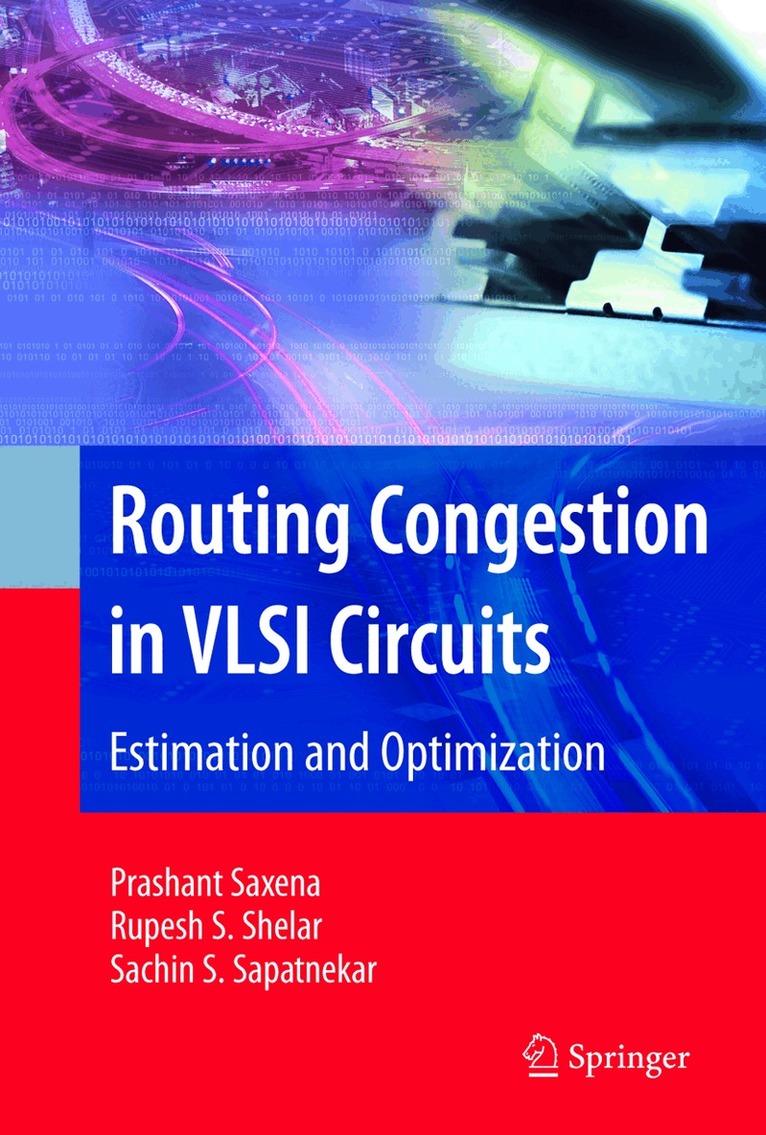
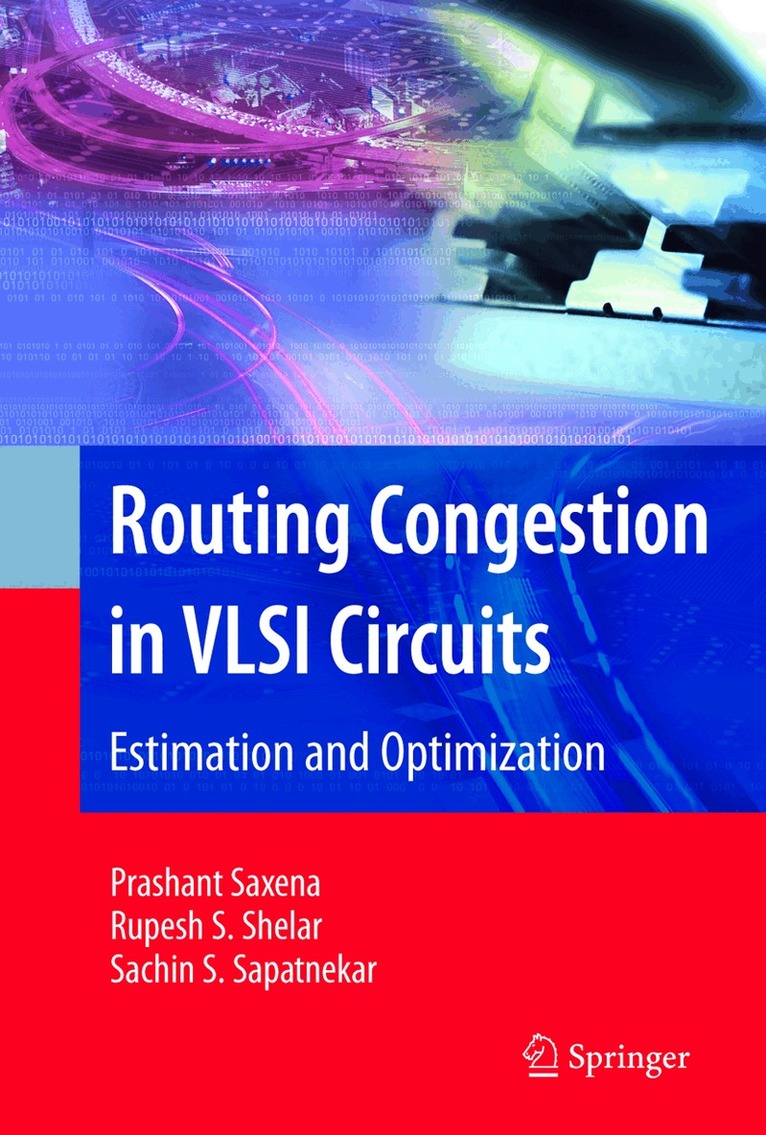
With dramatic increases in on-chip packing densities, routing congestion has become a major problem in integrated circuit design, impacting convergence, performance, and yield, and complicating the synthesis of critical interc- nects. The problem is especially acute as interconnects are becoming the performance bottleneck in modern integrated circuits. Even with more than 30% of white space, some of the design blocks in modern microprocessor and ASIC designs cannot be routed successfully. Moreover, this problem is likely to worsen considerably in the coming years due to design size and technology scaling. There is an inherent tradeo? between choosing a minimum delay path for interconnect nets, and the need to detour the routes to avoid “tra?c jams”; congestion management involves intelligent allocation of the available int- connect resources, up-front planning of the wire routes for even distributions, and transformations that make the physical synthesis ?ow congestion-aware. The book explores this tradeo? that lies at the heart of all congestion m- agement, in seeking to address the key question: how does one optimize the traditional design goals such as the delay or the area of a circuit, while still ensuring that the circuit remains routable? It begins by motivating the c- gestion problem, explaining why this problem is important and how it will trend. It then progresses with comprehensive discussions of the techniques available for estimating and optimizing congestion at various stages in the design ?ow.
2 121 kr
Skickas inom 10-15 vardagar
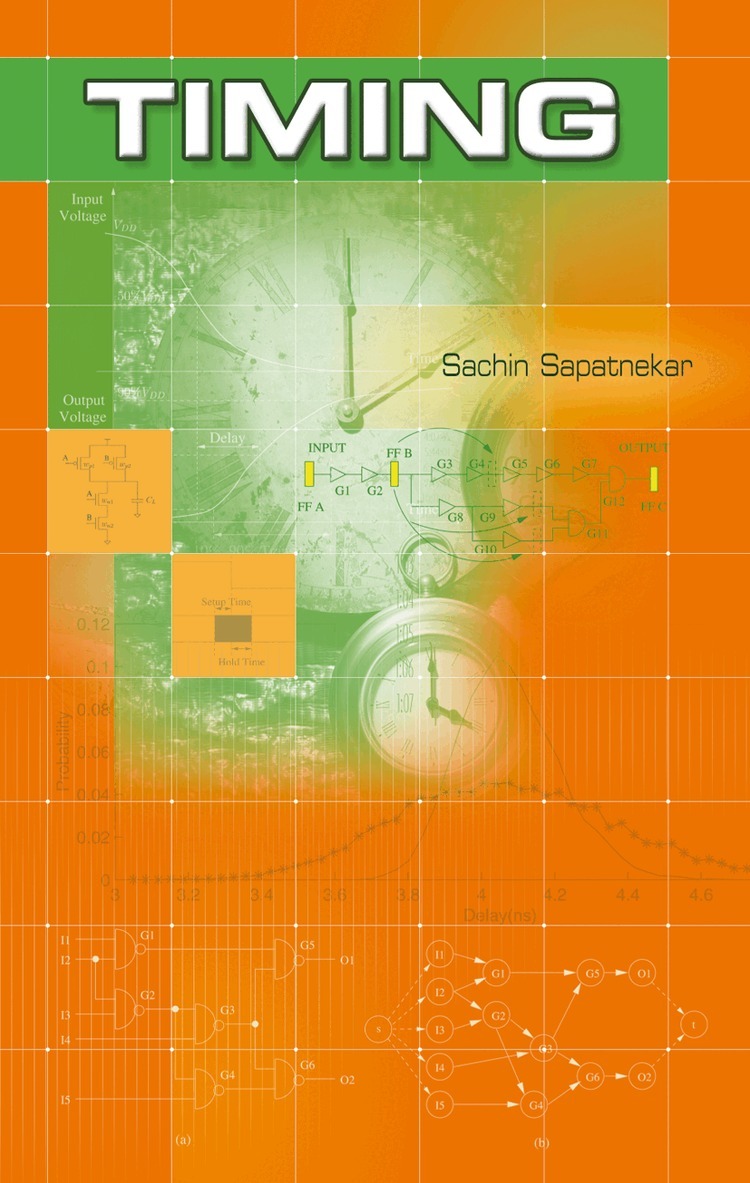
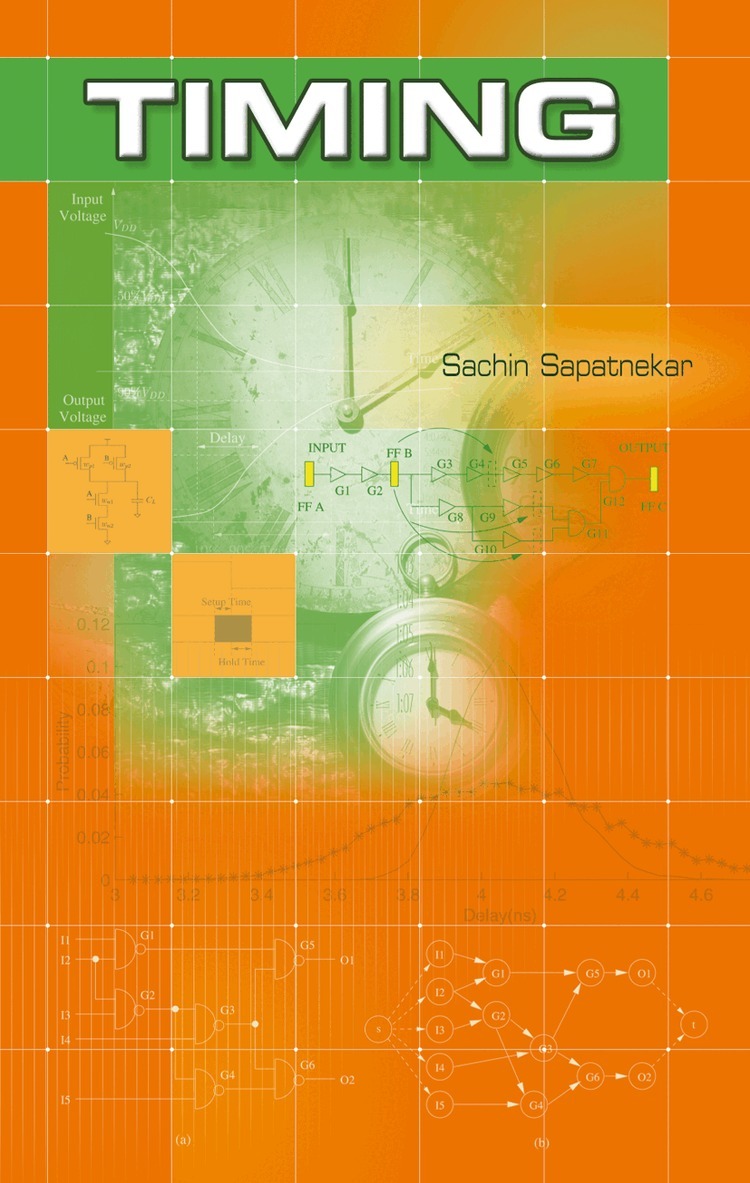
With the advent of nanometer technologies, circuit performance constraints are becoming ever more stringent. In this context, automated timing analysis and optimization becomes imperative for the design of high-performance circuits that must satisfy a demanding set of constraints. Timing overviews the state of the art in timing analysis and optimization, and is intended to serve as a compendium that can provide an introduction to the uninitiated reader, as a ready reference for a practitioner, or as a source for the accomplished researcher. A comprehensive overview of the basics of timing analysis is provided, and this is augmented with techniques that incorporate physical effects arising in deep submicron and nanometer technologies. The book provides an in-depth treatment of the analysis of interconnect systems, static timing analysis for combinational circuits, timing analysis for sequential circuits, and timing optimization techniques at the transistor and layout levels. The intended audience includes CAD tool developers, graduate students, research professionals, and the merely curious.
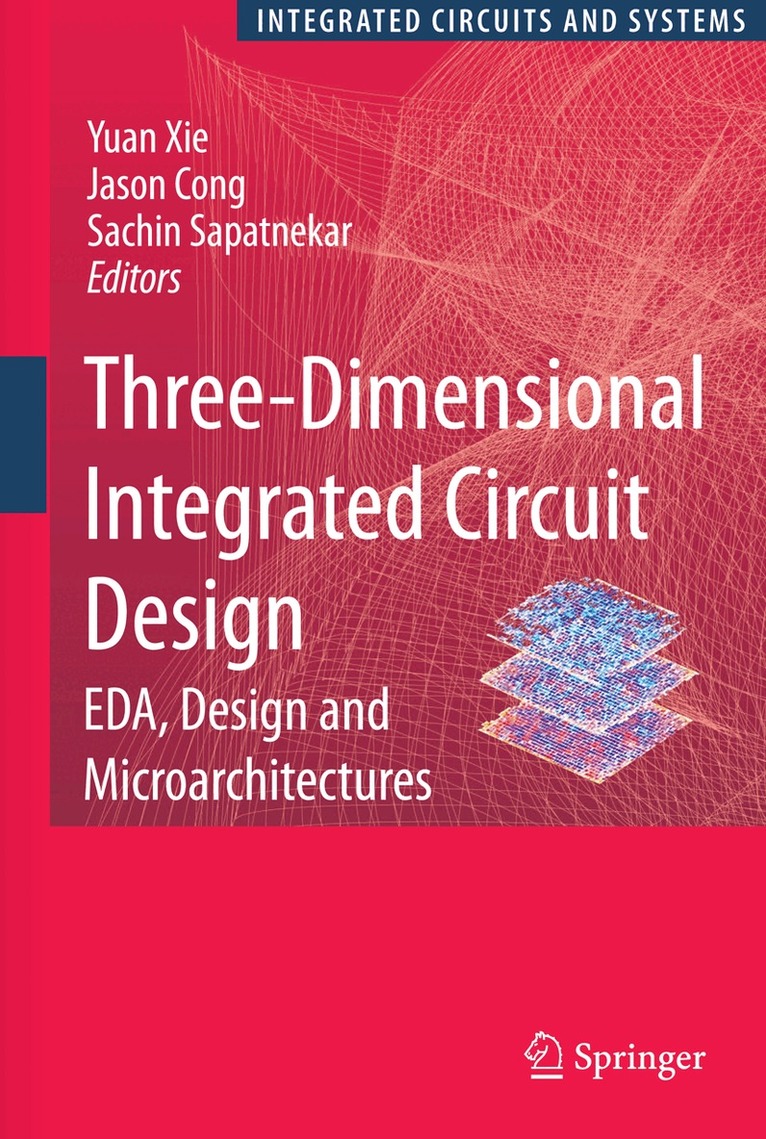
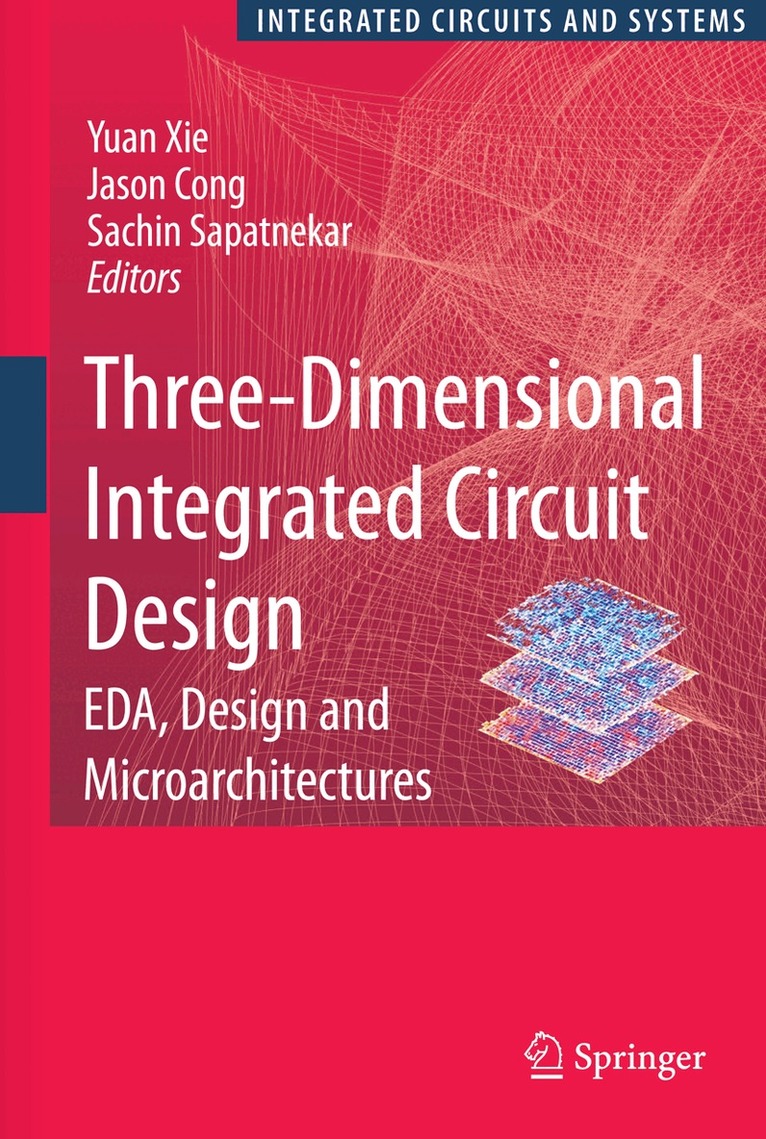
Three-Dimensional Integrated Circuit Design
EDA, Design and Microarchitectures
Inbunden, Engelska, 2009
1 593 kr
Skickas inom 10-15 vardagar
We live in a time of great change. In the electronics world, the last several decades have seen unprecedented growth and advancement, described by Moore’s law. This observation stated that transistor density in integrated circuits doubles every 1. 5–2 years. This came with the simultaneous improvement of individual device perf- mance as well as the reduction of device power such that the total power of the resulting ICs remained under control. No trend remains constant forever, and this is unfortunately the case with Moore’s law. The trouble began a number of years ago when CMOS devices were no longer able to proceed along the classical scaling trends. Key device parameters such as gate oxide thickness were simply no longer able to scale. As a result, device o- state currents began to creep up at an alarming rate. These continuing problems with classical scaling have led to a leveling off of IC clock speeds to the range of several GHz. Of course, chips can be clocked higher but the thermal issues become unmanageable. This has led to the recent trend toward microprocessors with mul- ple cores, each running at a few GHz at the most. The goal is to continue improving performance via parallelism by adding more and more cores instead of increasing speed. The challenge here is to ensure that general purpose codes can be ef?ciently parallelized. There is another potential solution to the problem of how to improve CMOS technology performance: three-dimensional integrated circuits (3D ICs).
1 170 kr
Skickas inom 10-15 vardagar
With dramatic increases in on-chip packing densities, routing congestion has become a major problem in integrated circuit design, impacting convergence, performance, and yield, and complicating the synthesis of critical interc- nects. The problem is especially acute as interconnects are becoming the performance bottleneck in modern integrated circuits. Even with more than 30% of white space, some of the design blocks in modern microprocessor and ASIC designs cannot be routed successfully. Moreover, this problem is likely to worsen considerably in the coming years due to design size and technology scaling. There is an inherent tradeo? between choosing a minimum delay path for interconnect nets, and the need to detour the routes to avoid “tra?c jams”; congestion management involves intelligent allocation of the available int- connect resources, up-front planning of the wire routes for even distributions, and transformations that make the physical synthesis ?ow congestion-aware. The book explores this tradeo? that lies at the heart of all congestion m- agement, in seeking to address the key question: how does one optimize the traditional design goals such as the delay or the area of a circuit, while still ensuring that the circuit remains routable? It begins by motivating the c- gestion problem, explaining why this problem is important and how it will trend. It then progresses with comprehensive discussions of the techniques available for estimating and optimizing congestion at various stages in the design ?ow.
2 121 kr
Skickas inom 10-15 vardagar
With the advent of nanometer technologies, circuit performance constraints are becoming ever more stringent. In this context, automated timing analysis and optimization becomes imperative for the design of high-performance circuits that must satisfy a demanding set of constraints. Timing overviews the state of the art in timing analysis and optimization, and is intended to serve as a compendium that can provide an introduction to the uninitiated reader, as a ready reference for a practitioner, or as a source for the accomplished researcher. A comprehensive overview of the basics of timing analysis is provided, and this is augmented with techniques that incorporate physical effects arising in deep submicron and nanometer technologies. The book provides an in-depth treatment of the analysis of interconnect systems, static timing analysis for combinational circuits, timing analysis for sequential circuits, and timing optimization techniques at the transistor and layout levels. The intended audience includes CAD tool developers, graduate students, research professionals, and the merely curious.
1 564 kr
Skickas inom 5-8 vardagar
We live in a time of great change. In the electronics world, the last several decades have seen unprecedented growth and advancement, described by Moore’s law. This observation stated that transistor density in integrated circuits doubles every 1. 5–2 years. This came with the simultaneous improvement of individual device perf- mance as well as the reduction of device power such that the total power of the resulting ICs remained under control. No trend remains constant forever, and this is unfortunately the case with Moore’s law. The trouble began a number of years ago when CMOS devices were no longer able to proceed along the classical scaling trends. Key device parameters such as gate oxide thickness were simply no longer able to scale. As a result, device o- state currents began to creep up at an alarming rate. These continuing problems with classical scaling have led to a leveling off of IC clock speeds to the range of several GHz. Of course, chips can be clocked higher but the thermal issues become unmanageable. This has led to the recent trend toward microprocessors with mul- ple cores, each running at a few GHz at the most. The goal is to continue improving performance via parallelism by adding more and more cores instead of increasing speed. The challenge here is to ensure that general purpose codes can be ef?ciently parallelized. There is another potential solution to the problem of how to improve CMOS technology performance: three-dimensional integrated circuits (3D ICs).
Del 2 - Encyclopedia Of Thermal Packaging
Encyclopedia Of Thermal Packaging, Set 2: Thermal Packaging Tools - Volume 4: Thermally-informed Design Of Microelectronic Components
Inbunden, Engelska, 2014
3 383 kr
Skickas inom 3-6 vardagar
Thermal and mechanical packaging - the enabling technologies for the physical implementation of electronic systems - are responsible for much of the progress in miniaturization, reliability, and functional density achieved by electronic, microelectronic, and nanoelectronic products during the past 50 years. The inherent inefficiency of electronic devices and their sensitivity to heat have placed thermal packaging on the critical path of nearly every product development effort in traditional, as well as emerging, electronic product categories.Successful thermal packaging is the key differentiator in electronic products, as diverse as supercomputers and cell phones, and continues to be of pivotal importance in the refinement of traditional products and in the development of products for new applications. The Encyclopedia of Thermal Packaging, compiled in four multi-volume sets (Set 1: Thermal Packaging Techniques, Set 2: Thermal Packaging Tools, Set 3: Thermal Packaging Applications, and Set 4: Thermal Packaging Configurations) will provide a comprehensive, one-stop treatment of the techniques, tools, applications, and configurations of electronic thermal packaging. Each of the author-written sets presents the accumulated wisdom and shared perspectives of a few luminaries in the thermal management of electronics.Set 2: Thermal Packaging ToolsThe second set in the encyclopedia, Thermal Packaging Tools, includes volumes dedicated to thermal design of data centers, techniques and models for the design and optimization of heat sinks, the development and use of reduced-order “compact” thermal models of electronic components, a database of critical material thermal properties, and a comprehensive exploration of thermally-informed electronic design. The numerical and analytical techniques described in these volumes are among the primary tools used by thermal packaging practitioners and researchers to accelerate product and system development and achieve “correct by design” thermal packaging solutions.The four sets in the Encyclopedia of Thermal Packaging will provide the novice and student with a complete reference for a quick ascent on the thermal packaging ';learning curve,'; the practitioner with a validated set of techniques and tools to face every challenge, and researchers with a clear definition of the state-of-the-art and emerging needs to guide their future efforts. This encyclopedia will, thus, be of great interest to packaging engineers, electronic product development engineers, and product managers, as well as to researchers in thermal management of electronic and photonic components and systems, and most beneficial to undergraduate and graduate students studying mechanical, electrical, and electronic engineering.