Yuan Xie – författare
Visar alla böcker från författaren Yuan Xie. Handla med fri frakt och snabb leverans.
10 produkter
10 produkter
Inbunden, Engelska, 2009
1 631 kr
Skickas inom 10-15 vardagar
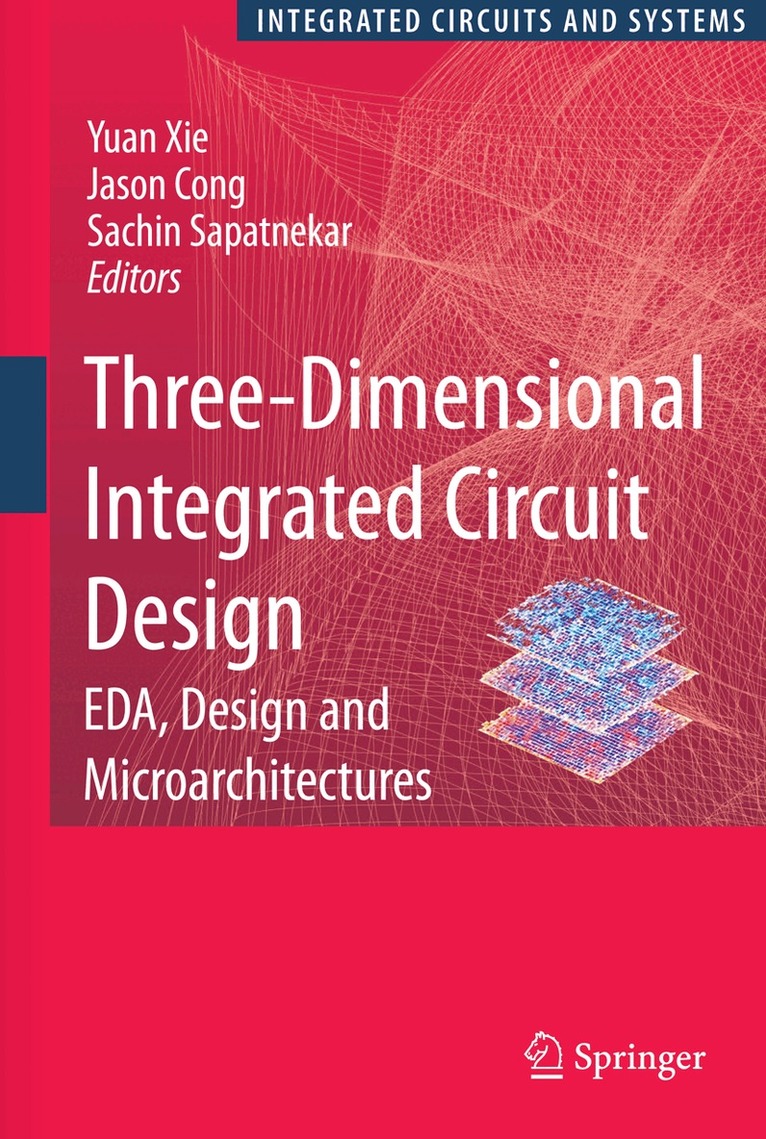
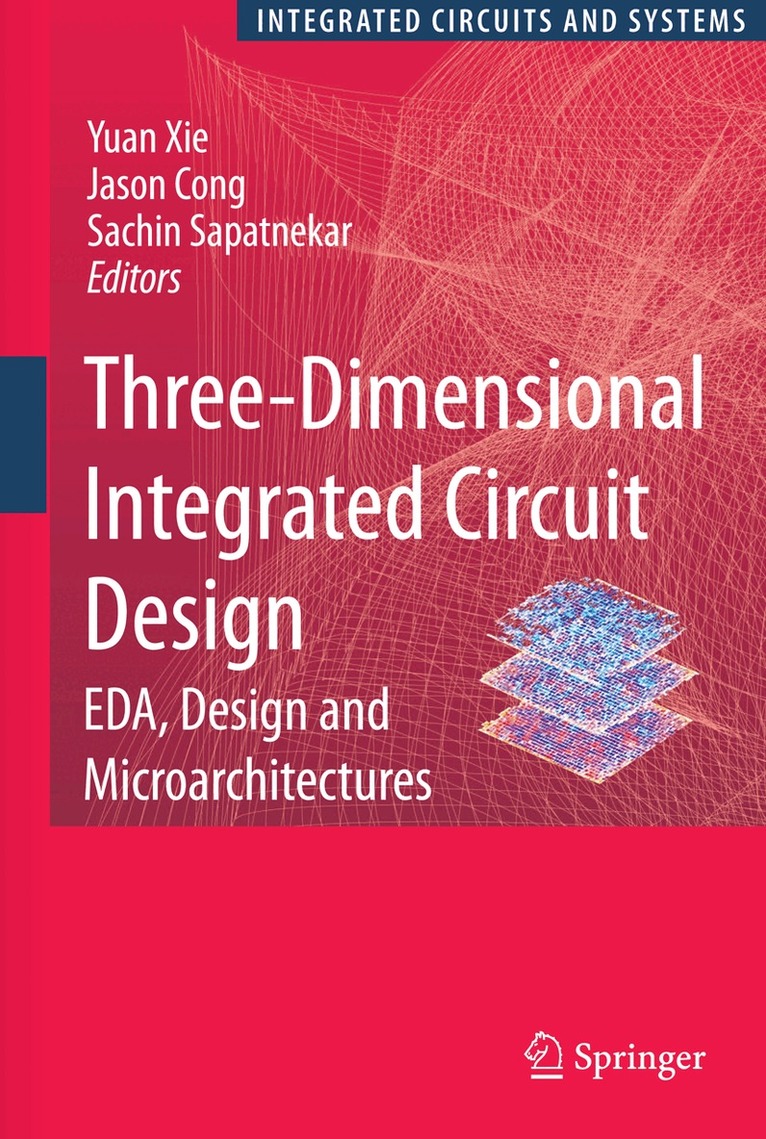
We live in a time of great change. In the electronics world, the last several decades have seen unprecedented growth and advancement, described by Moore’s law. This observation stated that transistor density in integrated circuits doubles every 1. 5–2 years. This came with the simultaneous improvement of individual device perf- mance as well as the reduction of device power such that the total power of the resulting ICs remained under control. No trend remains constant forever, and this is unfortunately the case with Moore’s law. The trouble began a number of years ago when CMOS devices were no longer able to proceed along the classical scaling trends. Key device parameters such as gate oxide thickness were simply no longer able to scale. As a result, device o- state currents began to creep up at an alarming rate. These continuing problems with classical scaling have led to a leveling off of IC clock speeds to the range of several GHz. Of course, chips can be clocked higher but the thermal issues become unmanageable. This has led to the recent trend toward microprocessors with mul- ple cores, each running at a few GHz at the most. The goal is to continue improving performance via parallelism by adding more and more cores instead of increasing speed. The challenge here is to ensure that general purpose codes can be ef?ciently parallelized. There is another potential solution to the problem of how to improve CMOS technology performance: three-dimensional integrated circuits (3D ICs).
E-bok
PDF, Engelska, 20091 977 kr
Läs direkt efter köp
We live in a time of great change. In the electronics world, the last several decades have seen unprecedented growth and advancement, described by Moore’s law. This observation stated that transistor density in integrated circuits doubles every 1. 5–2 years. This came with the simultaneous improvement of individual device perf- mance as well as the reduction of device power such that the total power of the resulting ICs remained under control. No trend remains constant forever, and this is unfortunately the case with Moore’s law. The trouble began a number of years ago when CMOS devices were no longer able to proceed along the classical scaling trends. Key device parameters such as gate oxide thickness were simply no longer able to scale. As a result, device o- state currents began to creep up at an alarming rate. These continuing problems with classical scaling have led to a leveling off of IC clock speeds to the range of several GHz. Of course, chips can be clocked higher but the thermal issues become unmanageable. This has led to the recent trend toward microprocessors with mul- ple cores, each running at a few GHz at the most. The goal is to continue improving performance via parallelism by adding more and more cores instead of increasing speed. The challenge here is to ensure that general purpose codes can be ef?ciently parallelized. There is another potential solution to the problem of how to improve CMOS technology performance: three-dimensional integrated circuits (3D ICs).
Inbunden, Engelska, 2013
1 090 kr
Skickas inom 10-15 vardagar
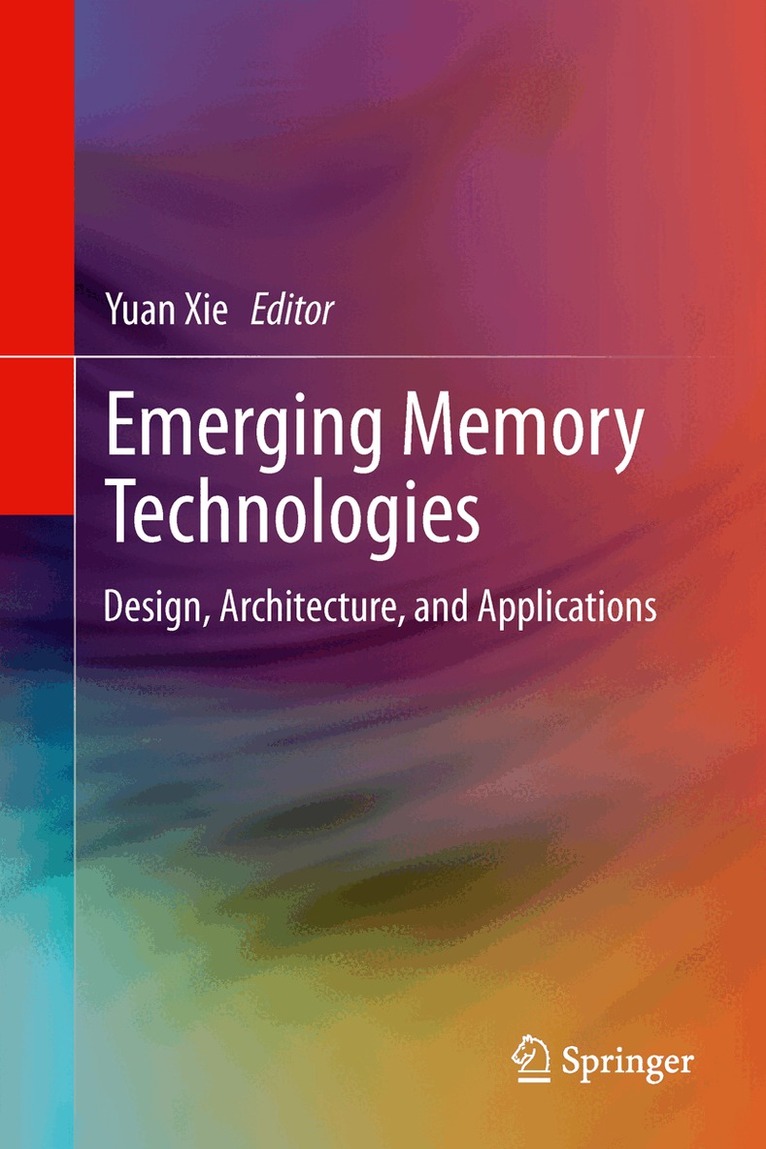
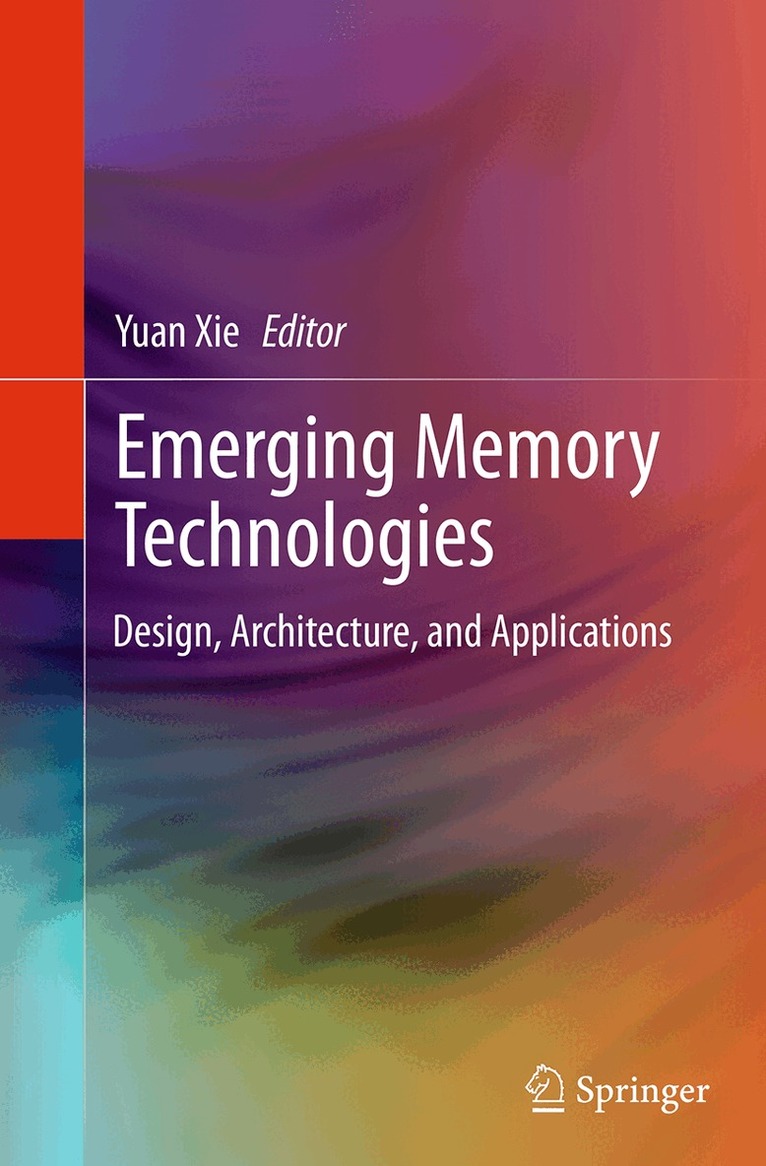
This book explores the design implications of emerging, non-volatile memory (NVM) technologies on future computer memory hierarchy architecture designs. Since NVM technologies combine the speed of SRAM, the density of DRAM, and the non-volatility of Flash memory, they are very attractive as the basis for future universal memories. This book provides a holistic perspective on the topic, covering modeling, design, architecture and applications. The practical information included in this book will enable designers to exploit emerging memory technologies to improve significantly the performance/power/reliability of future, mainstream integrated circuits.
E-bok
PDF, Engelska, 20131 367 kr
Läs direkt efter köp
This book explores the design implications of emerging, non-volatile memory (NVM) technologies on future computer memory hierarchy architecture designs. Since NVM technologies combine the speed of SRAM, the density of DRAM, and the non-volatility of Flash memory, they are very attractive as the basis for future universal memories. This book provides a holistic perspective on the topic, covering modeling, design, architecture and applications. The practical information included in this book will enable designers to exploit emerging memory technologies to improve significantly the performance/power/reliability of future, mainstream integrated circuits.
Häftad, Engelska, 2012
1 541 kr
Skickas inom 5-8 vardagar
We live in a time of great change. In the electronics world, the last several decades have seen unprecedented growth and advancement, described by Moore’s law. This observation stated that transistor density in integrated circuits doubles every 1. 5–2 years. This came with the simultaneous improvement of individual device perf- mance as well as the reduction of device power such that the total power of the resulting ICs remained under control. No trend remains constant forever, and this is unfortunately the case with Moore’s law. The trouble began a number of years ago when CMOS devices were no longer able to proceed along the classical scaling trends. Key device parameters such as gate oxide thickness were simply no longer able to scale. As a result, device o- state currents began to creep up at an alarming rate. These continuing problems with classical scaling have led to a leveling off of IC clock speeds to the range of several GHz. Of course, chips can be clocked higher but the thermal issues become unmanageable. This has led to the recent trend toward microprocessors with mul- ple cores, each running at a few GHz at the most. The goal is to continue improving performance via parallelism by adding more and more cores instead of increasing speed. The challenge here is to ensure that general purpose codes can be ef?ciently parallelized. There is another potential solution to the problem of how to improve CMOS technology performance: three-dimensional integrated circuits (3D ICs).
Häftad, Engelska, 2016
1 221 kr
Skickas inom 10-15 vardagar
This book explores the design implications of emerging, non-volatile memory (NVM) technologies on future computer memory hierarchy architecture designs. Since NVM technologies combine the speed of SRAM, the density of DRAM, and the non-volatility of Flash memory, they are very attractive as the basis for future universal memories. This book provides a holistic perspective on the topic, covering modeling, design, architecture and applications. The practical information included in this book will enable designers to exploit emerging memory technologies to improve significantly the performance/power/reliability of future, mainstream integrated circuits.
Häftad, Engelska, 2015
440 kr
Skickas inom 10-15 vardagar
The emerging three-dimensional (3D) chip architectures, with their intrinsic capability of reducing the wire length, promise attractive solutions to reduce the delay of interconnects in future microprocessors. 3D memory stacking enables much higher memory bandwidth for future chip-multiprocessor design, mitigating the "memory wall" problem. In addition, heterogenous integration enabled by 3D technology can also result in innovative designs for future microprocessors. This book first provides a brief introduction to this emerging technology, and then presents a variety of approaches to designing future 3D microprocessor systems, by leveraging the benefits of low latency, high bandwidth, and heterogeneous integration capability which are offered by 3D technology.
E-bok
PDF, Engelska, 2022535 kr
Läs direkt efter köp
The emerging three-dimensional (3D) chip architectures, with their intrinsic capability of reducing the wire length, promise attractive solutions to reduce the delay of interconnects in future microprocessors. 3D memory stacking enables much higher memory bandwidth for future chip-multiprocessor design, mitigating the "memory wall" problem. In addition, heterogenous integration enabled by 3D technology can also result in innovative designs for future microprocessors. This book first provides a brief introduction to this emerging technology, and then presents a variety of approaches to designing future 3D microprocessor systems, by leveraging the benefits of low latency, high bandwidth, and heterogeneous integration capability which are offered by 3D technology.
Inbunden, Engelska, 2026
1 947 kr
Skickas inom 5-8 vardagar
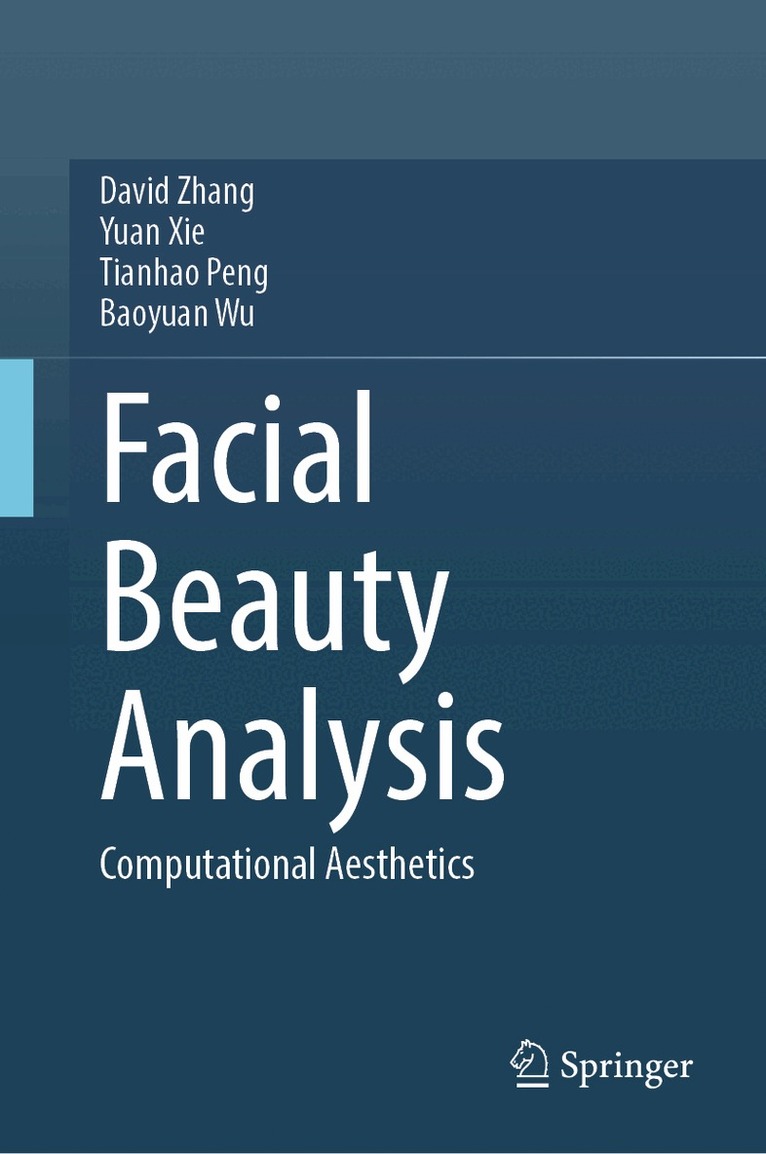
Facial beauty is an intriguing and multifaceted subject that has captivated human interest, crossing cultural and scientific boundaries for centuries. In today’s digital age, understanding facial beauty is no longer just an art but a sophisticated science, the analysis and enhancement of facial beauty leverage advanced technologies such as machine learning, computer vision, and biometrics. This book, “Facial Beauty Analysis: Computational Aesthetics,” is based on our research and aims to offer an in-depth exploration of the latest advancements on both 2D and 3D facial beauty analysis.By combining principles from computer vision, pattern recognition, machine learning, and deep learning, this book provides comprehensive insights into landmark detection, feature extraction, beauty prediction, and facial attractiveness enhancement. It introduces cutting-edge innovations such as geometric prior guided hybrid deep neural networks, GAN-based facial beautification, and 3D facial beauty analysis, ensuring readers are equipped with the latest advancements. The content is thoughtfully crafted to empower readers with both foundational concepts and the latest tools required to stay ahead in this rapidly evolving domain.Targeted toward researchers, professionals, and graduate students, “Facial Beauty Analysis: Computational Aesthetics,” aims to systematically cover both 2D and 3D facial beauty analysis, providing comprehensive insights into feature extraction, beauty prediction, and facial enhancement. This book offers both foundational knowledge and cutting-edge methodologies to advance the field of facial beauty analysis. Whether you’re exploring the fundamentals or seeking to apply the latest technologies, this book is a valuable asset for anyone dedicated to advancing the field of facial beauty analysis.
E-bok
Engelska, 20262 435 kr
Läs direkt efter köp
Facial beauty is an intriguing and multifaceted subject that has captivated human interest, crossing cultural and scientific boundaries for centuries. In today’s digital age, understanding facial beauty is no longer just an art but a sophisticated science, the analysis and enhancement of facial beauty leverage advanced technologies such as machine learning, computer vision, and biometrics. This book, “Facial Beauty Analysis: Computational Aesthetics,” is based on our research and aims to offer an in-depth exploration of the latest advancements on both 2D and 3D facial beauty analysis.By combining principles from computer vision, pattern recognition, machine learning, and deep learning, this book provides comprehensive insights into landmark detection, feature extraction, beauty prediction, and facial attractiveness enhancement. It introduces cutting-edge innovations such as geometric prior guided hybrid deep neural networks, GAN-based facial beautification, and 3D facial beauty analysis, ensuring readers are equipped with the latest advancements. The content is thoughtfully crafted to empower readers with both foundational concepts and the latest tools required to stay ahead in this rapidly evolving domain.Targeted toward researchers, professionals, and graduate students, “Facial Beauty Analysis: Computational Aesthetics,” aims to systematically cover both 2D and 3D facial beauty analysis, providing comprehensive insights into feature extraction, beauty prediction, and facial enhancement. This book offers both foundational knowledge and cutting-edge methodologies to advance the field of facial beauty analysis. Whether you’re exploring the fundamentals or seeking to apply the latest technologies, this book is a valuable asset for anyone dedicated to advancing the field of facial beauty analysis.