Sally Thomas - Böcker
Visar alla böcker från författaren Sally Thomas. Handla med fri frakt och snabb leverans.
12 produkter
12 produkter
415 kr
Skickas inom 10-15 vardagar
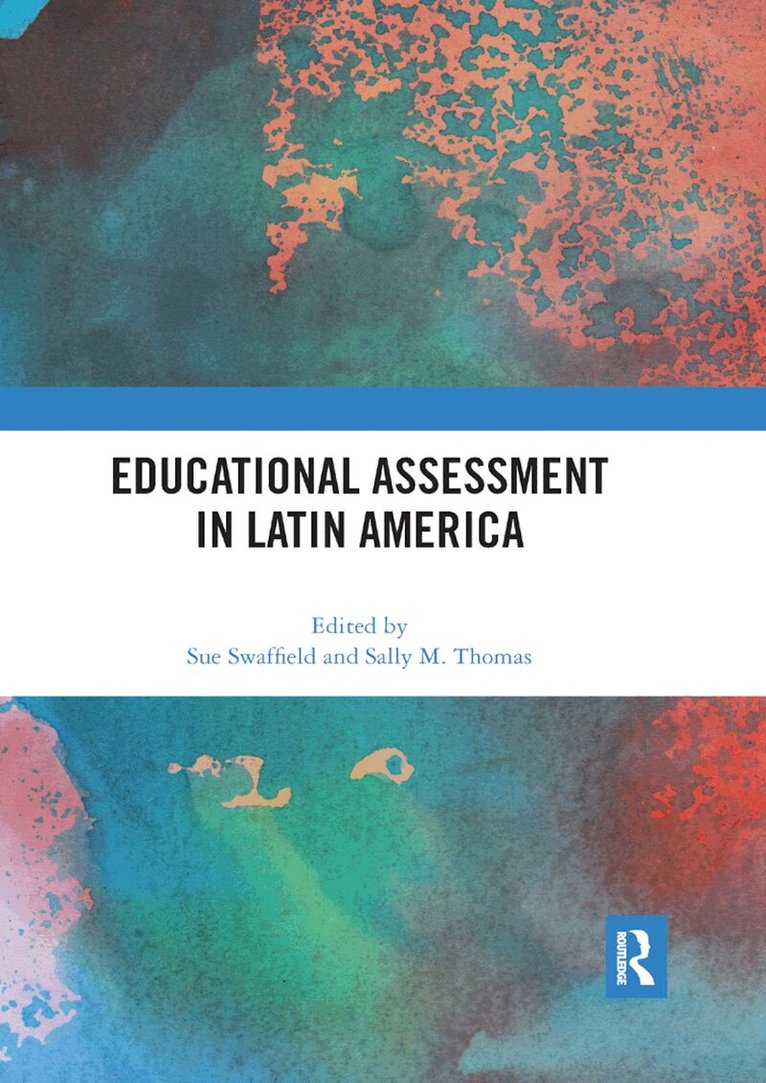
This collection presents educational assessment research from Latin America, adding to a relatively small but growing body of research considering educational assessment and evaluation issues in this large region. The predominance of Chile reflects its early highly centralized education system, and the fact that it adopted national testing before other Latin American countries. It was also an early participant in international assessment programmes. Other countries have followed the trend of implementing national testing, and to a lesser extent participating in international surveys. The complementary development of technical expertise in quantitative research methods has enabled extensive analysis of the large data sets generated by these testing and assessment programmes. Taken together, the evidence reported provides a means not only of reviewing educational quality issues in Latin America, but also of facilitating comparisons that allow the context specificity of equivalent research conducted in western developed countries to be considered. The chapters in this book were originally published as a special issue of Assessment in Education: Principles, Policy and Practice.
1 390 kr
Skickas inom 10-15 vardagar
This collection presents educational assessment research from Latin America, adding to a relatively small but growing body of research considering educational assessment and evaluation issues in this large region. The predominance of Chile reflects its early highly centralized education system, and the fact that it adopted national testing before other Latin American countries. It was also an early participant in international assessment programmes. Other countries have followed the trend of implementing national testing, and to a lesser extent participating in international surveys. The complementary development of technical expertise in quantitative research methods has enabled extensive analysis of the large data sets generated by these testing and assessment programmes. Taken together, the evidence reported provides a means not only of reviewing educational quality issues in Latin America, but also of facilitating comparisons that allow the context specificity of equivalent research conducted in western developed countries to be considered. The chapters in this book were originally published as a special issue of Assessment in Education: Principles, Policy and Practice.
97 kr
Tillfälligt slut
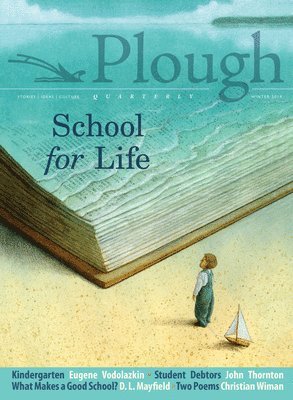
What we want for schools reveals what we value as a society.“What’s the point of school?” Parents have a stock set of responses, but the question remains unsettled, even two centuries after the Prussians invented compulsory education. The Prussian idea of what a school is for – to mold the populace to serve the state – seems unacceptable today. In vogue, instead, are slogans like “acquiring marketable skills” and “realizing your full potential.” These ideas powerfully shape our culture. Ultimately, they boil down to pursuing one supreme value: individual success in a competitive world.Schools are a mirror of our society as a whole; what we want for schools makes plain what and whom we value in our common life. In the Christian tradition, the life of discipleship is also a school. In this educational community, under the instruction of our one Teacher, we learn not to seek empowerment, but to find strength in weakness; not to out-achieve others, but to serve them; not to pursue our passion, but to obey a call.Also in this issue: poetry by Christian Wiman; reviews of new books by Robert Macfarlane, Jackie Morris, Francisco Cantú, Leif Enger, Carol Anderson, Stephanie Land, and Susan Wise Bauer; and art by Margaret McWethy, Albrecht Dürer, Raphael, Gérard David, Jackie Morris, Gustaf Tenggren, Sergey Dushkin, Anja Percival, Dmitry Samofalov, Christoph Wetzel, Sherrie York, Cathleen Rehfield, Paweł Kuczyński, and Jason Landsel.Plough Quarterly features stories, ideas, and culture for people eager to put their faith into action. Each issue brings you in-depth articles, interviews, poetry, book reviews, and art to help you put Jesus’ message into practice and find common cause with others.
100 kr
Skickas inom 5-8 vardagar
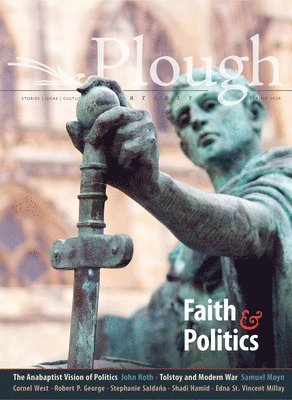
No matter who wins the next election, Caesar will remain Caesar, doing some good and some bad. But Christians report to a different king.This issue starts with a provocation. In his opening letter, editor Peter Mommsen suggests Christians are too excited about the wrong politics: “Questions of public justice should matter deeply to Christians. We dare not be indifferent about securing healthcare for all and ending interventionist wars; we must seek to reduce abortions and strengthen families. When an election comes, we should pray and then, perhaps, lend our support to a candidate we judge may, on balance, advance social righteousness. But if the early Christians and the Anabaptists are right, this isn’t the politics that matters most. And so, as a matter of faithfulness, we should question how much it deserves of our passion and time. Our allegiance belongs elsewhere.”In contrast to an election campaign, this politics may feel grittier and less glamorous. This issue of Plough Quarterly explores what this alternate vision of faithful Christian witness in the political sphere might look like.You’ll find articles on:What two leading political theorists of left and right agree onWhat persecution taught Anabaptists about politicsThe Bruderhof’s interactions with the stateTolstoy’s case against making war more humaneHow some Christians read Romans 13 under fascism
100 kr
Skickas inom 5-8 vardagar
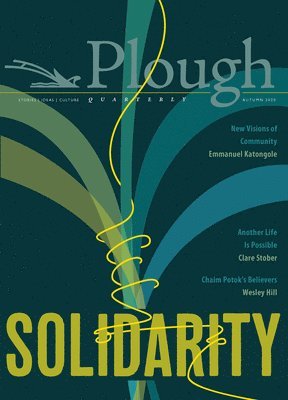
The summer of 2020 has shown us how much we all depend on one another.Whatever else they do, pandemics show us we are not alone. Covid-19 is proof that, yes, there is such a thing as society; the disease has spread precisely because we aren’t autonomous individuals disconnected from each other, but rather all belong to one great body of humanity. The pain inflicted by the pandemic is far from equally distributed. Yet it reveals ever more clearly how much we all depend on one another, and how urgently necessary it is for us to bear one another’s burdens.It’s a good time, then, to talk about solidarity. The more so because it’s a theme that’s also raised by this year’s other major development, the international protests for racial justice following George Floyd’s death. The protests, too, raised the question of solidarity in guilt, even guilt across generations. By taking up our common guilt with all humanity, we come into solidarity with the one who bears it and redeems it all. In Christ, sins are forgiven, guilt abolished, and a new way of living together becomes possible. This solidarity in forgiveness gives rise to a life of love.This issue of Plough explores what solidarity means, and what it looks like to live it out today, whether in Uganda, Bolivia, or South Korea, in an urban church, a Bruderhof, or a convent.
202 kr
Skickas inom 5-8 vardagar
322 kr
Skickas inom 5-8 vardagar
434 kr
Skickas inom 3-6 vardagar
191 kr
Skickas inom 5-8 vardagar
334 kr
Skickas inom 5-8 vardagar
328 kr
Skickas inom 5-8 vardagar
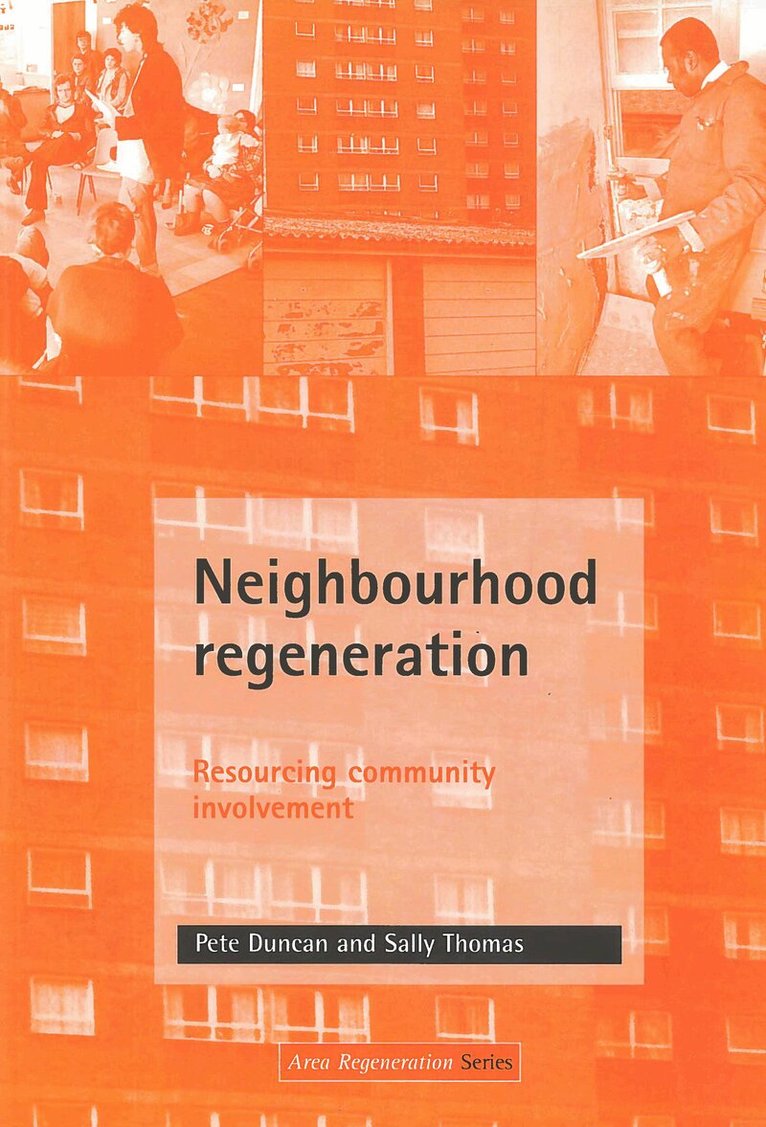
Despite a positive policy climate, much current practice in neighbourhood regeneration lacks meaningful, sustainable community involvement. Too much power and control rests in the hands of local authorities, statutory agencies and professionals. This report suggests that to balance this unequal partnership, neighbourhood regeneration strategies need to focus much more directly on the less tangible outcomes of regeneration, particularly the empowerment of local communities through genuine capacity building. Without it, real and lasting benefits are unlikely to be achieved.Neighbourhood regeneration looks at how community capacity building is currently delivered within neighbourhood regeneration programmes, focusing on the key issue of resourcing. The authors frame this review within the context of the government's emerging national strategy for neighbourhood renewal, Bringing Britain together, and the Local Government Association's New Commitment to Regeneration initiative.The report aims to establish:what works and what does not;how existing funding might be improved;what additional resources may be needed to fill in the gaps in current provision;who should provide these additional resources;how resources might best be targeted;how resourcing community involvement can be linked to emerging proposals for neighbourhood management and joined-up action by regeneration agencies.It also suggests the formation of a Neighbourhood Empowerment Fund to help fill the strategic and financial gaps that exist in current regeneration initiatives.Based on structured interviews with a wide range of national organisations and a questionnaire survey of local agencies involved in area regeneration programmes, Neighbourhood regeneration provides a useful picture of current practice, highlighting a broad cross-section of views and opinions from those with extensive experience in the field.The report is essential reading for policy makers in community- and agency-led regeneration partnerships, local authorities and communities themselves, as well as anyone with an interest in neighbourhood regeneration strategies.
248 kr
Skickas inom 5-8 vardagar