Salvatore Settis - Böcker
Visar alla böcker från författaren Salvatore Settis. Handla med fri frakt och snabb leverans.
14 produkter
14 produkter
771 kr
Skickas inom 7-10 vardagar
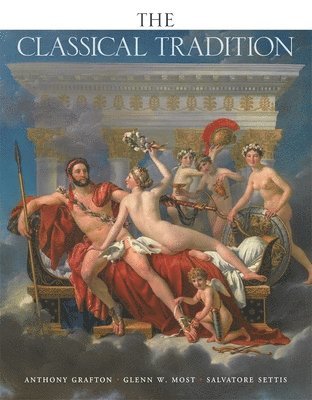
“A vast cabinet of curiosities.”—Stephen Greenblatt“Eclectic rather than exhaustive, less an encyclopedia than a buffet.”—Frederic Raphael, Literary ReviewHow do we get from the polis to the police? Or from Odysseus’s sirens to those of an ambulance? The legacy of ancient Greece and Rome is all around us, imitated, resisted, reworked, and misunderstood. In this beautifully illustrated and encyclopedic compendium, a team of leading scholars investigates the afterlife of this rich heritage in the fields of literature, philosophy, art, architecture, history, politics, religion, and science.From Academy to Zoology, Aristotle and the Argonauts to Pegasus and Persia, The Classical Tradition looks at facts and adages, people, places, and ideas to reveal how the Classical tradition has shaped human endeavors from government to medicine, drama to urban planning, legal theory to popular culture. At once authoritative and accessible, learned and entertaining, it illuminates the vitality of these enduring influences.
730 kr
Skickas inom 5-8 vardagar
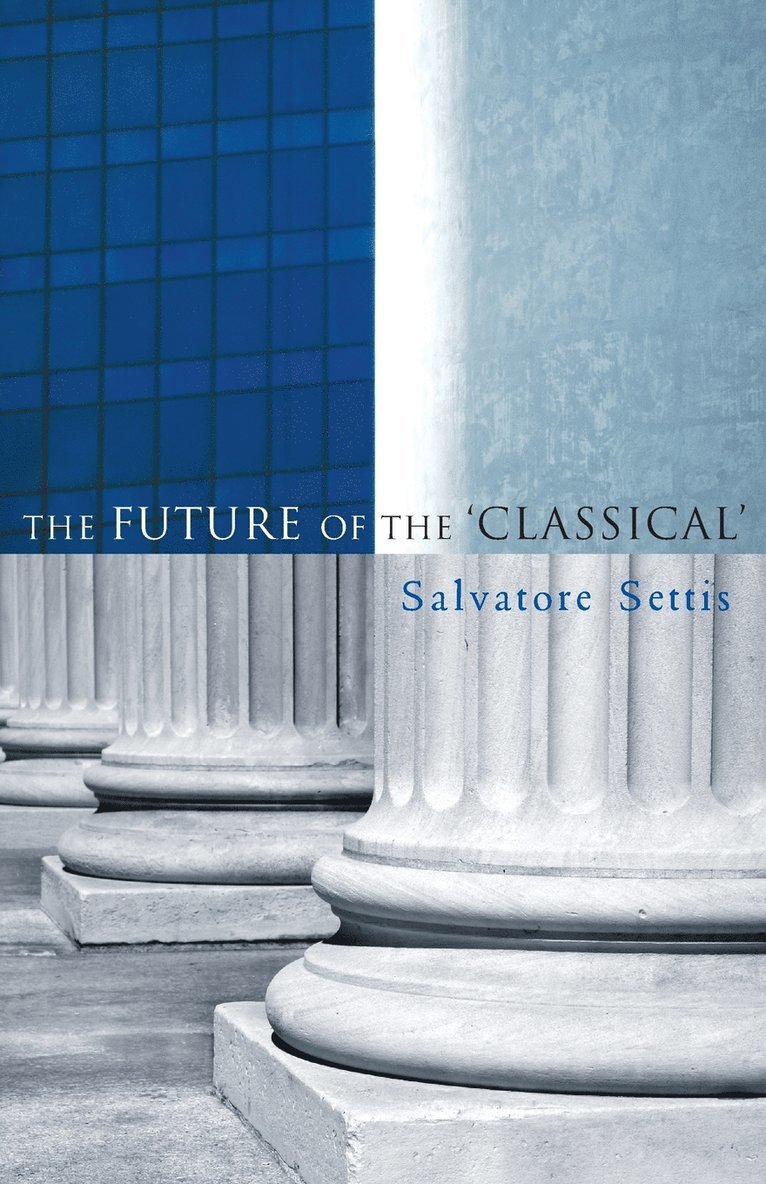
Every era has invented a different idea of the ‘classical’ to create its own identity. Thus the ‘classical’ does not concern only the past: it is also concerned with the present and a vision of the future. In this elegant new book, Salvatore Settis traces the ways in which we have related to our ‘classical’ past, starting with post-modern American skyscrapers and working his way back through our cultural history to the attitudes of the Greeks and Romans themselves. Settis argues that this obsession with cultural decay, ruins and a ‘classical’ past is specifically European and the product of a collective cultural trauma following the collapse of the Roman Empire. This situation differed from that of the Aztec and Inca empires whose collapse was more sudden and more complete, and from the Chinese Empire which always enjoyed a high degree of continuity. He demonstrates how the idea of the ‘classical’ has changed over the centuries through an unrelenting decay of ‘classicism’ and its equally unrelenting rebirth in an altered form. In the Modern Era this emulation of the ‘ancients’ by the ‘moderns’ was accompanied by new trends: the increasing belief that the former had now been surpassed by the latter, and an increasing preference for the Greek over the Roman. These conflicting interpretations were as much about the future as they were about the past. No civilization can invent itself if it does not have other societies in other times and other places to act as benchmarks. Settis argues that we will be better equipped to mould new generations for the future once we understand that the ‘classical’ is not a dead culture we inherited and for which we can take no credit, but something startling that has to be re-created every day and is a powerful spur to understanding the ‘other’.
284 kr
Skickas inom 5-8 vardagar
Every era has invented a different idea of the ‘classical’ to create its own identity. Thus the ‘classical’ does not concern only the past: it is also concerned with the present and a vision of the future. In this elegant new book, Salvatore Settis traces the ways in which we have related to our ‘classical’ past, starting with post-modern American skyscrapers and working his way back through our cultural history to the attitudes of the Greeks and Romans themselves. Settis argues that this obsession with cultural decay, ruins and a ‘classical’ past is specifically European and the product of a collective cultural trauma following the collapse of the Roman Empire. This situation differed from that of the Aztec and Inca empires whose collapse was more sudden and more complete, and from the Chinese Empire which always enjoyed a high degree of continuity. He demonstrates how the idea of the ‘classical’ has changed over the centuries through an unrelenting decay of ‘classicism’ and its equally unrelenting rebirth in an altered form. In the Modern Era this emulation of the ‘ancients’ by the ‘moderns’ was accompanied by new trends: the increasing belief that the former had now been surpassed by the latter, and an increasing preference for the Greek over the Roman. These conflicting interpretations were as much about the future as they were about the past. No civilization can invent itself if it does not have other societies in other times and other places to act as benchmarks. Settis argues that we will be better equipped to mould new generations for the future once we understand that the ‘classical’ is not a dead culture we inherited and for which we can take no credit, but something startling that has to be re-created every day and is a powerful spur to understanding the ‘other’.
432 kr
Skickas inom 7-10 vardagar
Arising from the proceedings of two symposia, this text is composed of contributions by scholars who examine the social, intellectual and historical contexts of the work of the Italian Renaissance artist Giovanni di Lutero, who used the name Dosso.
187 kr
Skickas
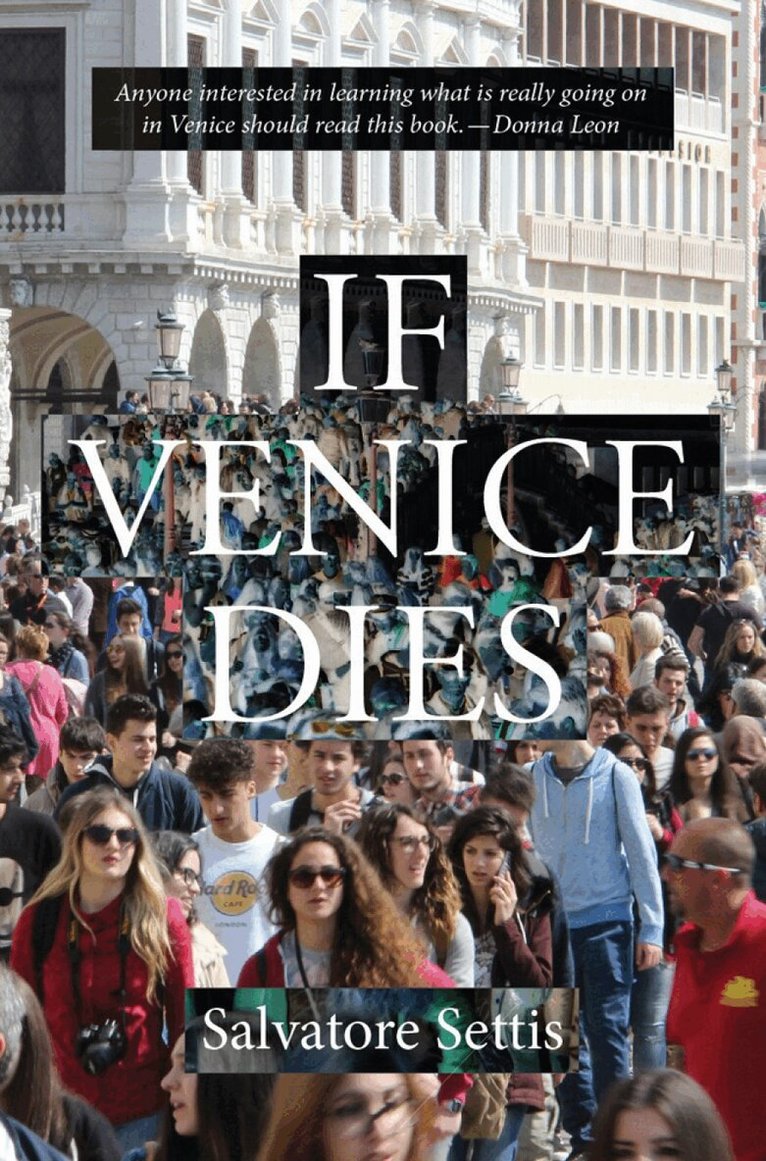
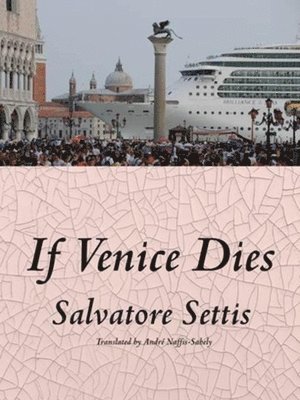
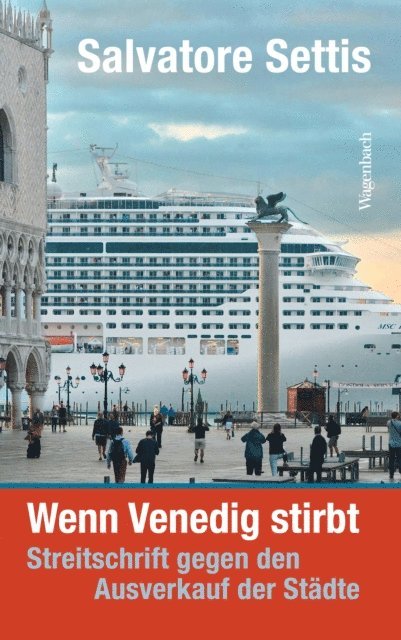
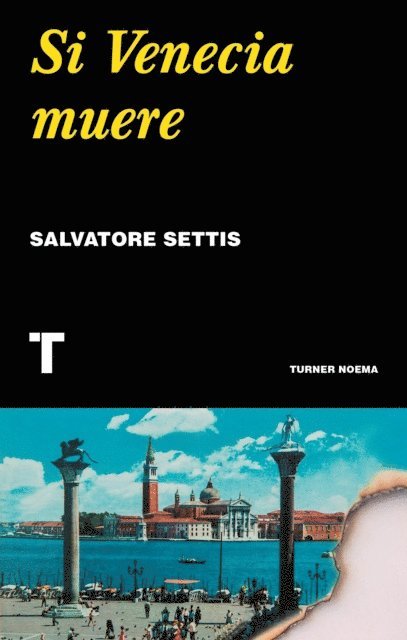
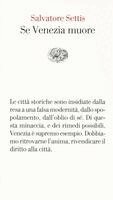
What is Venice worth? To whom does this urban treasure belong? This eloquent book by the internationally renowned art historian Salvatore Settis urgently poses these questions, igniting a new debate about the Pearl of the Adriatic and cultural patrimony at large. Venetians are increasingly abandoning their hometown - there's now only one resident for every 140 visitors and Venice's fragile fate has become emblematic of the future of historic cities everywhere as it capitulates to tourists and those who profit from them. In If Venice Dies, a fiery blend of history and cultural analysis, Settis argues that 'hit-and-run' visitors are turning landmark urban setting into shopping malls and theme parks. He warns Western civilisation's prime achievements face impending ruin from mass tourism and global cultural homogenisation. This is passionate plea to secure Venice's future, written with consummate authority, wide-ranging erudition, and elan.
150 kr
Skickas inom 3-6 vardagar
305 kr
Skickas inom 3-6 vardagar
7 193 kr
Tillfälligt slut
8 044 kr
Tillfälligt slut
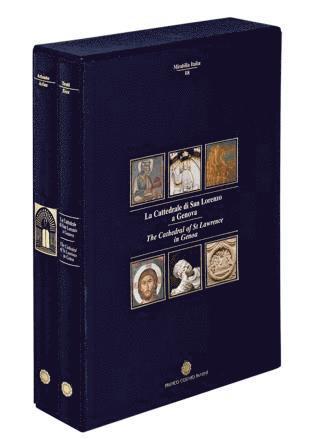
Founded probably in the 5th or 6th century, the Cathedral of Genoa was later rebuilt in Romanesque style and devoted to St. Lawrence the martyr. Money came from the successful enterprises of the Genoese fleets in the Crusades. After a fire in 1296, the building was partly restored, the inner colonnades rebuilt and matronei and frescoes added. In 1550 the Perugian architect Galeazzo Alessi was commissioned by the city magistrates to plan the reconstruction of the entire building, but the construction of the cathedral didn't finish until the 17th century. Among the artworks inside the church are ceiling frescoes, paintings and altarpieces by Luca Cambiaso, Federico Barocci, Lazzaro Tavarone and Gaetano Previati, while sculpture include works by Domenico Gagini, Andrea Sansovino, Giacomo and Guglielmo Della Porta. Impressive are also the works of art and silverware kept in the Museum of the Treasury which lies under the cathedral. One of the most important pieces is the Sacred bowl brought by Guglielmo Embriaco after the conquest of Cesarea and supposed to be the chalice used by Christ during the Last Supper.
Highlights in the quantum theory of condensed matter
A symposium to honour Mario Tosi on his 72nd birthday
Häftad, Engelska, 2005
251 kr
Skickas inom 7-10 vardagar
The birth of condensed matter physics in Italy is linked to a small number of very distinguished scientists. Mario Tosi, Professor of Physics of Matter at the Scuola Normale Superiore, is unquestionably among the leading figures, a true founder of the theoretical activity in the country and a true catalyst of novel research directions internationally. This volume collects the proceedings of a symposium held at Scuola Normale Superiore di Pisa, designed to show Mario Tosi's broad, deep influence in very diverse areas of the quantum theory of condensed matter. The topics covered in the volume represent the breadth of his interests and the highlights in the quantum theory of condensed matter: liquids, electronic states in complex structures, quantum degenerate gases, many-body physics.
6 947 kr
Tillfälligt slut
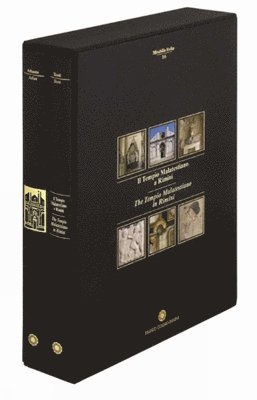
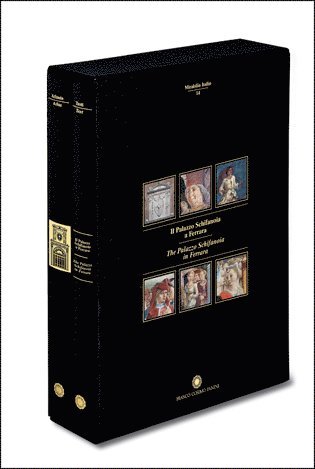
The name of the building comes from the phrase 'schivar la noia' (escape from boredom) and refers to its function, a place of leisure for the court. In 1465 Borso d'Este gave the court architect Pietro Benvenuto degli Ordini the task of converting and extending the building. In the same year the sculptor Domenico di Paris painted the stuccoes in the Sala delle Virtu' (hall of virtues), while the painters from Ferrara workshop, such as Francesco del Cossa, frescoed the main hall with the magnificent Ciclo dei Mesi (cycle of the months), one of the greatest examples of humanistic astrological culture. It includes texts by J. Bentini, M. Bertozzi, W. Cupperi, C. Di Francesco, V. Farinella, M. Folin, F. Frisoni, V. Gheroldi, M. Toffanello, R. Varese, G. Venturi. It features photographs by A. Ghirlandini. The text is in English and Italian. "Mirabilia Italia" is a unique series.It owes its existence to an innovative and ambitious project: an atlas of the great monuments of Italy that will display them in all their details, from the best known to the least. This series represents a completely new way of documenting art."Mirabilia Italia" provides a guided tour of each monument, fully and accurately explained. Each atlas contains hundreds of colour photographs, arranged in a precise topographical sequence and accompanied by diagrams showing the exact location of each detail.The atlas is complemented by a volume of texts edited by the premier scholars in the field, consisting of critical essays and descriptive notes. Essays examine the monument from the art-historical point of view, and record the alterations it has undergone over time. Descriptive notes analyse the content and significance of the images. Extensive cross-references link the essays and notes to the images, facilitating consultation of the work. The General Editor of "Mirabilia Italia" is Salvatore Settis, Director of the Scuola Normale Superiore in Pisa.
1 020 kr
Skickas
779 kr
Tillfälligt slut
326 kr
Skickas inom 7-10 vardagar
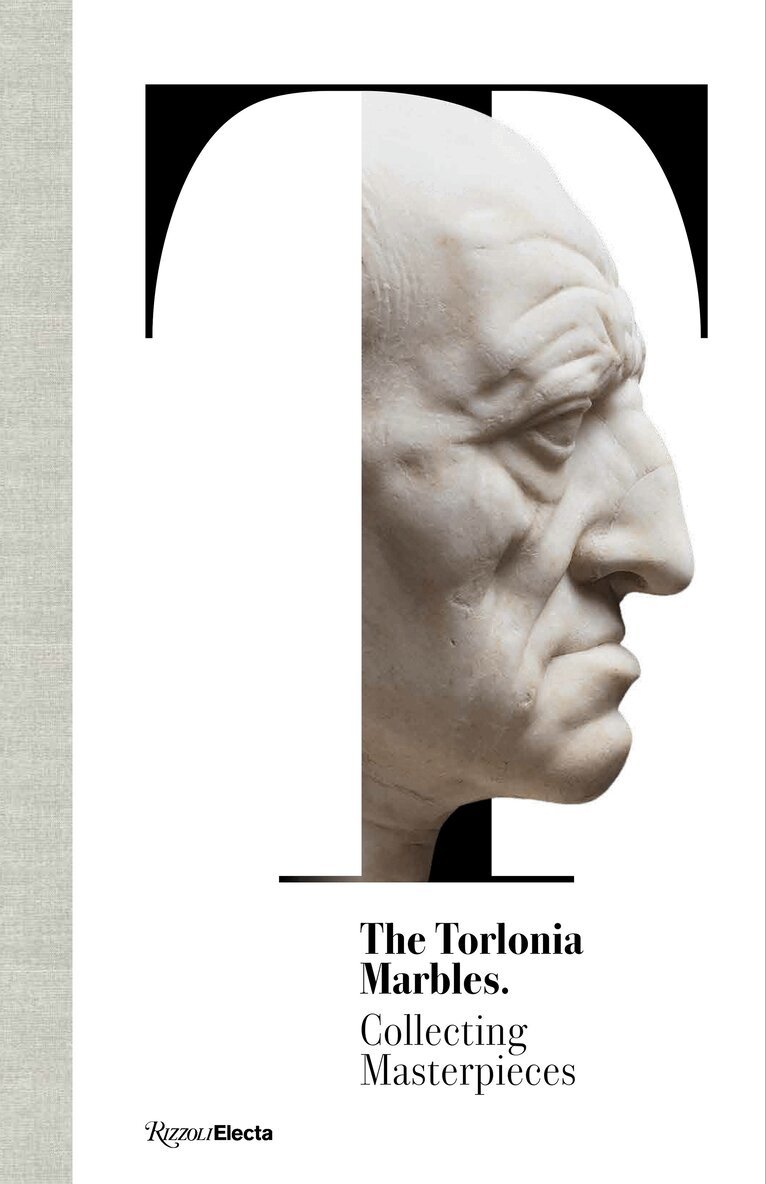
Last published in a nineteenth-century catalogue, the distinguished Torlonia Collection of more than 600 priceless Greek and Roman works marbles and bronzes, reliefs and sarcophagi, depictions of gods, and portraits of emperors is one of the most important assemblages of classical sculptures still in private hands anywhere in the world. This eagerly awaited volume presents a selection of nearly 100 sculptures, which have been chosen for their quality and historic significance and which will be featured in an unprecedented exhibition designed by David Chipperfield and held in the Villa Caffarelli, near the Musei Capitolini in Rome, before touring globally. The legendary aura surrounding this, Rome s last princely collection, is due not only to its extraordinary scope and the high quality of the works, but also to the fact that the collection has not been available to the public for decades. This revelatory book features multiple essays by leading experts on the history of the collection and scholarly entries for the works detailing important discoveries made through archaeological research as well as the cleaning and conservation of the sculptures.