Samuel L. Popkin - Böcker
Visar alla böcker från författaren Samuel L. Popkin. Handla med fri frakt och snabb leverans.
9 produkter
9 produkter
238 kr
Skickas
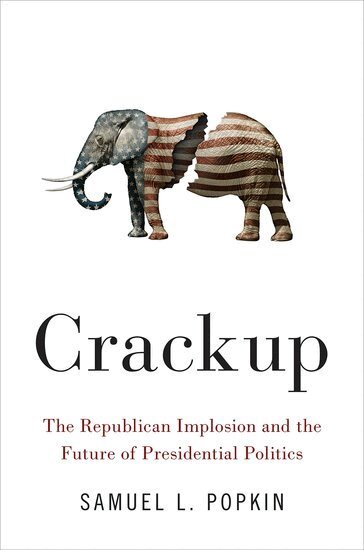
In Crackup, the eminent American politics scholar Samuel Popkin tells the story of how the Republican Party fractured into uncompromising groups with irreconcilable demands. Changes in campaign finance laws and the proliferation of mass media opened the way for newly energized groups to split the party. The 2002 "McCain-Feingold" campaign finance reform bill aimed to weaken the power of big corporations and strengthen political parties by ending corporate donations to the parties. Instead, it weakened legislative leaders and made bipartisanship a curse word.Popkin argues that moving money outside the political parties fueled the rise of single-issue advocacy groups and Super PACs funded by billionaires with pet issues. This allowed self-promoting politicians to undermine colleagues with an unprecedented use of tactics once only used to disrupt the other party. One such politician was Ted Cruz, the first Republican senator with the oratorical skills and intelligence to exploit the new possibilities. He effectively promoted himself at the expense of the party, mobilized other obstructionists in congress, and blocked compromises on immigration and healthcare. Into this abyss came Donald J. Trump, who took advantage of the party's inability to do anything for Republican voters struggling with economic decline. No other candidate, when forced to try to satisfy the irreconcilable demands of major donors and party leaders, could offer a credible alternative to his moon-promising bravado. A novel structural explanation of why the GOP ended up with Trump as their standard bearer, Crackup forces us to look at the deeper forces set in motion over a decade ago. It also reveals how lone-wolf figures like Cruz are inevitable given the new rules of the game. Unless the system for financing elections changes, we will continue to see opportunists emerge--in both parties--to block intra-party compromise.
216 kr
Skickas inom 5-8 vardagar
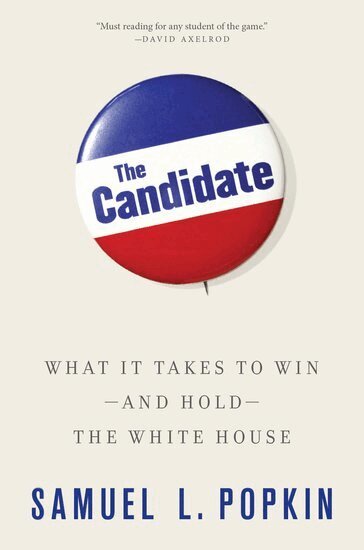
There are two winners in every presidential election campaign: The inevitable winner when it begins--such as Rudy Giuliani or Hillary Clinton in 2008--and the inevitable victor after it ends. In The Candidate, Samuel Popkin explains the difference between them.While plenty of political insiders have written about specific campaigns, only Popkin--drawing on a lifetime of presidential campaign experience and extensive research--analyzes what it takes to win the next campaign. The road to the White House is littered with geniuses of campaigns past. Why doesn't practice make perfect? Why is experience such a poor teacher? Why are the same mistakes replayed again and again? Based on detailed analyses of the winners--and losers--of the last 60 years of presidential campaigns, Popkin explains how challengers get to the White House, how incumbents stay there for a second term, and how successors hold power for their party. He looks in particular at three campaigns--George H.W. Bush's muddled campaign for reelection in 1992, Al Gore's flawed campaign for the presidency in 2000, and Hillary Clinton's mismanaged effort to win the nomination in 2008--and uncovers the lessons that Ronald Reagan can teach future candidates about teamwork. Throughout, Popkin illuminates the intricacies of presidential campaigns--the small details and the big picture, the surprising mistakes and the predictable miscues--in a riveting account of what goes on inside a campaign and what makes one succeed while another fails.As Popkin shows, a vision for the future and the audacity to run are only the first steps in a candidate's run for office. To truly survive the most grueling show on earth, presidential hopefuls have to understand the critical factors that Popkin reveals in The Candidate. In the wake of the 2012 election, Popkin's analysis looks remarkably prescient. Obama ran a strong incumbent-oriented campaign but made typical incumbent mistakes, as evidenced by his weak performance in the first debate. The Romney campaign correctly put power in the hands of a strong campaign manager, but it couldn't overcome the weaknesses of the candidate.
399 kr
Tillfälligt slut
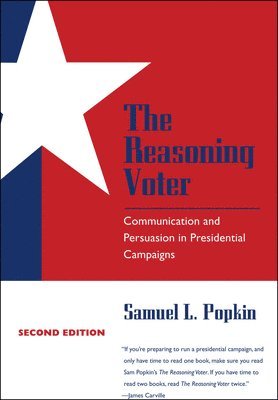
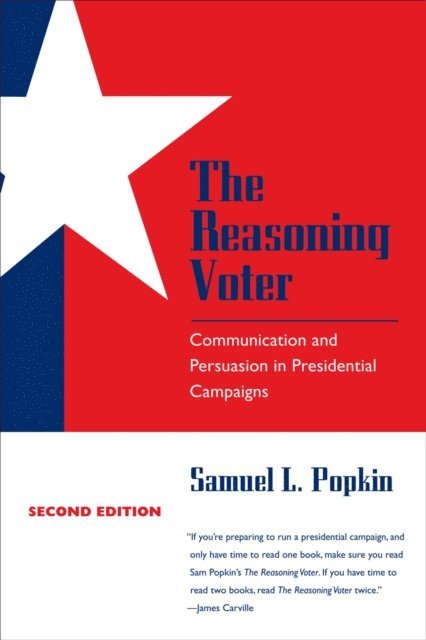
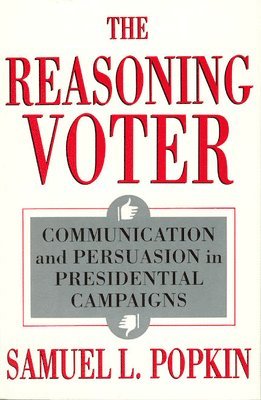
The Reasoning Voter is an insider's look at campaigns, candidates, media, and voters that convincingly argues that voters make informed logical choices. Samuel L. Popkin analyzes three primary campaigns--Carter in 1976; Bush and Reagan in 1980; and Hart, Mondale, and Jackson in 1984--to arrive at a new model of the way voters sort through commercials and sound bites to choose a candidate. Drawing on insights from economics and cognitive psychology, he convincingly demonstrates that, as trivial as campaigns often appear, they provide voters with a surprising amount of information on a candidate's views and skills. For all their shortcomings, campaigns do matter.
243 kr
Skickas inom 7-10 vardagar
The Reasoning Voter is an insider's look at campaigns, candidates, media, and voters that convincingly argues that voters make informed logical choices. Samuel L. Popkin analyzes three primary campaigns—Carter in 1976; Bush and Reagan in 1980; and Hart, Mondale, and Jackson in 1984—to arrive at a new model of the way voters sort through commercials and sound bites to choose a candidate. Drawing on insights from economics and cognitive psychology, he convincingly demonstrates that, as trivial as campaigns often appear, they provide voters with a surprising amount of information on a candidate's views and skills. For all their shortcomings, campaigns do matter."If you're preparing to run a presidential campaign, and only have time to read one book, make sure to read Sam Popkin's The Reasoning Voter. If you have time to read two books, read The Reasoning Voter twice."—James Carville, Senior Stategist, Clinton/Gore '92"A fresh and subtle analysis of voter behavior."—Thomas Byrne Edsall, New York Review of Books"Professor Popkin has brought V.O. Key's contention that voters are rational into the media age. This book is a useful rebuttal to the cynical view that politics is a wholly contrived business, in which unscrupulous operatives manipulate the emotions of distrustful but gullible citizens. The reality, he shows, is both more complex and more hopeful than that."—David S. Broder, The Washington Post
577 kr
Skickas inom 3-6 vardagar
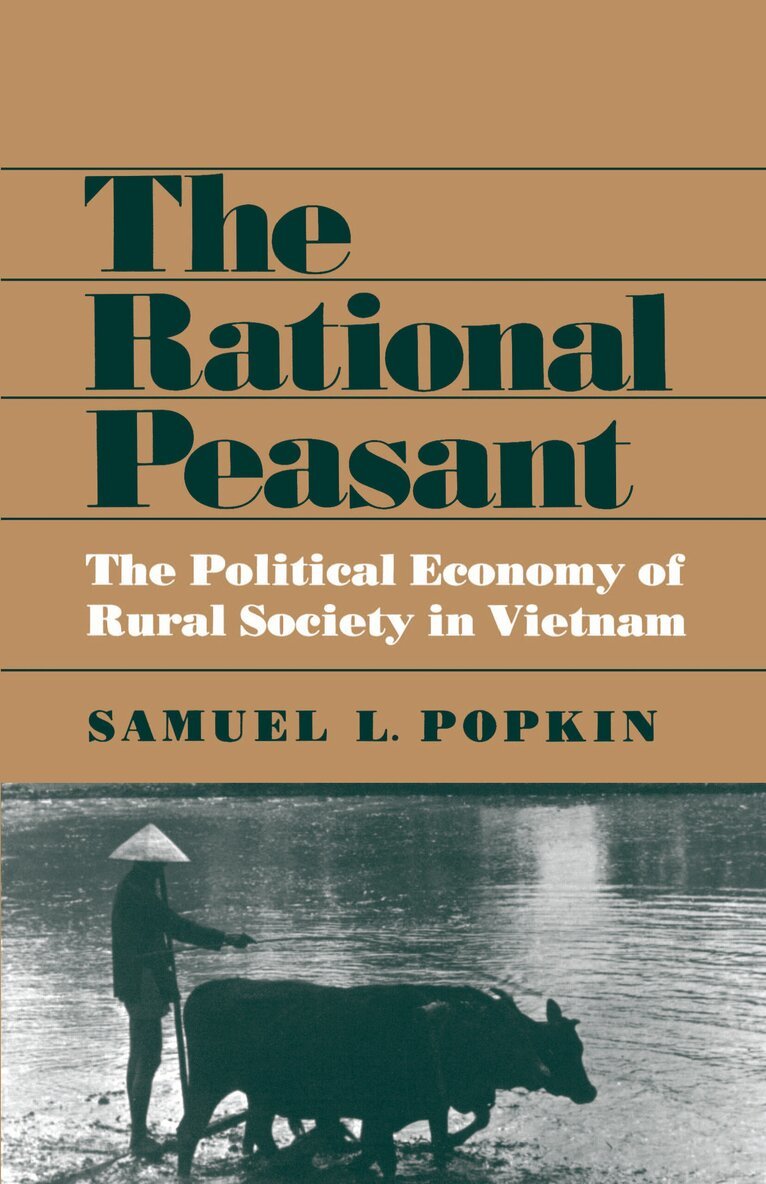
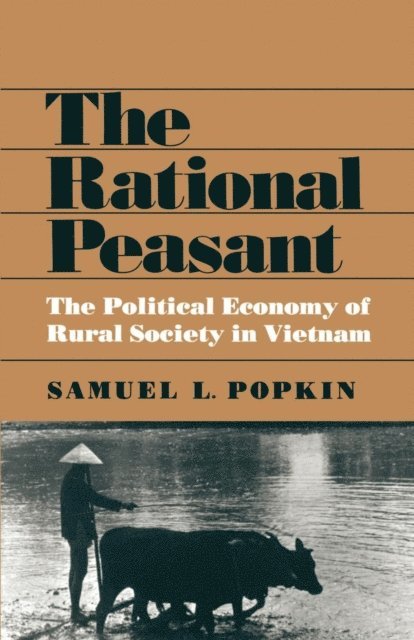
Popkin develops a model of rational peasant behavior and shows how village procedures result from the self-interested interactions of peasants. This political economy view of peasant behavior stands in contrast to the model of a distinctive peasant moral economy in which the village community is primarily responsible for ensuring the welfare of its members.
684 kr
Skickas inom 3-6 vardagar
This book, Chief of Staff: Twenty-Five Years of Managing the Presidency, provides a unique exploration of the inner workings of the White House, offering both anecdotes and professional insights into the role of senior aides who have shaped the presidency over the past quarter-century. From Eisenhower to Carter, the perspectives of eight former chiefs of staff reveal a shared sense of professionalism that transcends administrations and political affiliations. These senior aides, though not always starting as seasoned professionals, emerge from their tenure deeply transformed by a shared sense of duty and adherence to a set of unspoken rules that define their roles. Their reflections offer a glimpse into the demands and pressures of managing the presidency, showcasing a professionalism that has shaped modern White House operations. The book, which combines lively discussions and personal anecdotes, serves as a primer for aspiring White House staff and an insightful narrative for the general reader about the evolution of presidential management.Through a televised symposium and roundtable discussions moderated by John Chancellor, the participants recount their experiences, shedding light on key moments in U.S. history from 1953 to 1981. They discuss the unique dynamics of their roles, including their relationship with the president, the intricacies of policy and politics, and the challenges of navigating crises like Vietnam and Watergate. The discussions highlight the centrality of the chief of staff role, a position that has grown in importance as the White House staff expanded and assumed greater control over administrative and policy matters. Reflecting on their time in the West Wing, the participants underscore the indispensable balance of loyalty, discretion, and leadership required to support the president effectively. By documenting these perspectives, the book not only captures the pivotal role of the chief of staff in modern governance but also offers timeless lessons for anyone entrusted with managing power and influence at the highest levels.This title is part of UC Press's Voices Revived program, which commemorates University of California Press’s mission to seek out and cultivate the brightest minds and give them voice, reach, and impact. Drawing on a backlist dating to 1893, Voices Revived makes high-quality, peer-reviewed scholarship accessible once again using print-on-demand technology. This title was originally published in 1986.
1 513 kr
Skickas inom 3-6 vardagar
This book, Chief of Staff: Twenty-Five Years of Managing the Presidency, provides a unique exploration of the inner workings of the White House, offering both anecdotes and professional insights into the role of senior aides who have shaped the presidency over the past quarter-century. From Eisenhower to Carter, the perspectives of eight former chiefs of staff reveal a shared sense of professionalism that transcends administrations and political affiliations. These senior aides, though not always starting as seasoned professionals, emerge from their tenure deeply transformed by a shared sense of duty and adherence to a set of unspoken rules that define their roles. Their reflections offer a glimpse into the demands and pressures of managing the presidency, showcasing a professionalism that has shaped modern White House operations. The book, which combines lively discussions and personal anecdotes, serves as a primer for aspiring White House staff and an insightful narrative for the general reader about the evolution of presidential management.Through a televised symposium and roundtable discussions moderated by John Chancellor, the participants recount their experiences, shedding light on key moments in U.S. history from 1953 to 1981. They discuss the unique dynamics of their roles, including their relationship with the president, the intricacies of policy and politics, and the challenges of navigating crises like Vietnam and Watergate. The discussions highlight the centrality of the chief of staff role, a position that has grown in importance as the White House staff expanded and assumed greater control over administrative and policy matters. Reflecting on their time in the West Wing, the participants underscore the indispensable balance of loyalty, discretion, and leadership required to support the president effectively. By documenting these perspectives, the book not only captures the pivotal role of the chief of staff in modern governance but also offers timeless lessons for anyone entrusted with managing power and influence at the highest levels.This title is part of UC Press's Voices Revived program, which commemorates University of California Press’s mission to seek out and cultivate the brightest minds and give them voice, reach, and impact. Drawing on a backlist dating to 1893, Voices Revived makes high-quality, peer-reviewed scholarship accessible once again using print-on-demand technology. This title was originally published in 1986.
995 kr
Skickas inom 7-10 vardagar
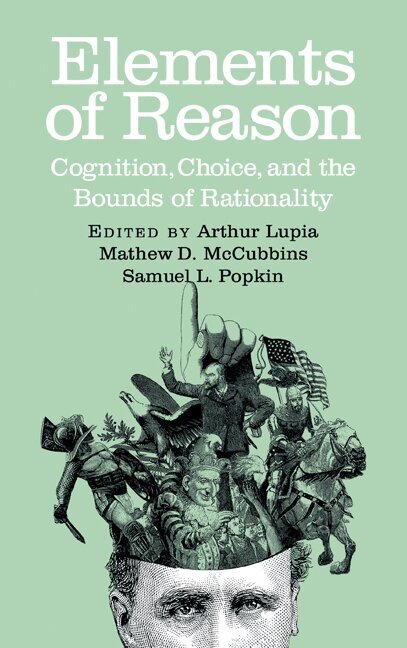
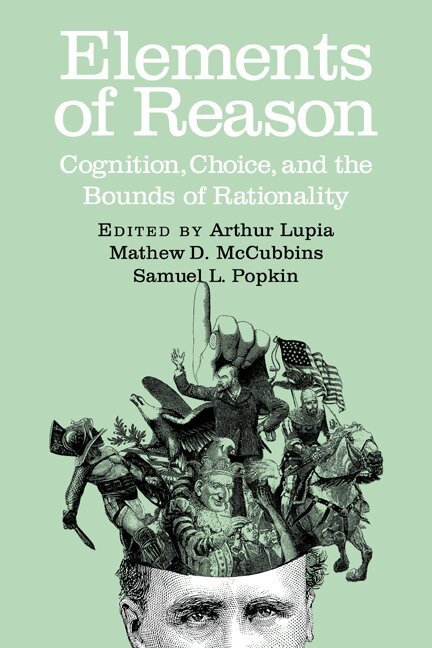
Many social scientists want to explain why people do what they do. A barrier to constructing such explanations used to be a lack of information on the relationship between cognition and choice. Now, recent advances in cognitive science, economics, political science, and psychology have clarified this relationship. In Elements of Reason, eighteen scholars from across the social sciences use these advances to uncover the cognitive foundations of social decision making. They answer tough questions about how people see and process information and provide new explanations of how basic human needs, the environment, and past experiences combine to affect human choices. Elements of Reason is written for a broad audience and should be read by anyone for whom 'Why do people do what they do?' is an important question. It is the rare book that transforms abstract debates about rationality and reason into empirically relevant explanations of how people choose.
397 kr
Skickas inom 7-10 vardagar
Many social scientists want to explain why people do what they do. A barrier to constructing such explanations used to be a lack of information on the relationship between cognition and choice. Now, recent advances in cognitive science, economics, political science, and psychology have clarified this relationship. In Elements of Reason, eighteen scholars from across the social sciences use these advances to uncover the cognitive foundations of social decision making. They answer tough questions about how people see and process information and provide new explanations of how basic human needs, the environment, and past experiences combine to affect human choices. Elements of Reason is written for a broad audience and should be read by anyone for whom 'Why do people do what they do?' is an important question. It is the rare book that transforms abstract debates about rationality and reason into empirically relevant explanations of how people choose.