Mathew D. McCubbins – författare
Visar alla böcker från författaren Mathew D. McCubbins. Handla med fri frakt och snabb leverans.
16 produkter
16 produkter
Häftad, Engelska, 1991
287 kr
Skickas inom 5-8 vardagar
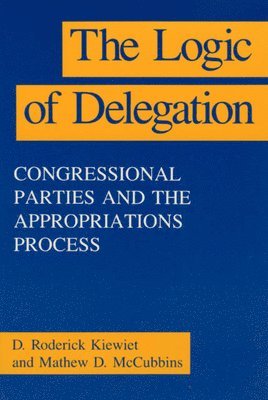
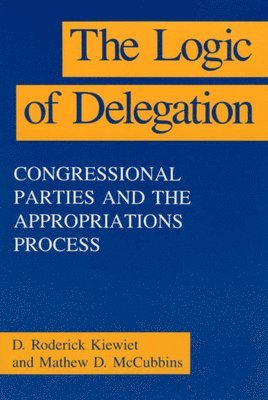
Why do majority congressional parties seem unable to act as an effective policy-making force? They routinely delegate their power to others—internally to standing committees and subcommittees within each chamber, externally to the president and to the bureaucracy. Conventional wisdom in political science insists that such delegation leads inevitably to abdication—usually by degrees, sometimes precipitously, but always completely. In The Logic of Delegation, however, D. Roderick Kiewiet and Mathew D. McCubbins persuasively argue that political scientists have paid far too much attention to what congressional parties can't do. The authors draw on economic and management theory to demonstrate that the effectiveness of delegation is determined not by how much authority is delegated but rather by how well it is delegated. In the context of the appropriations process, the authors show how congressional parties employ committees, subcommittees, and executive agencies to accomplish policy goals. This innovative study will force a complete rethinking of classic issues in American politics: the "autonomy" of congressional committees; the reality of runaway federal bureaucracy; and the supposed dominance of the presidency in legislative-executive relations.
Del 23 - California Series on Social Choice and Political Economy
Legislative Leviathan
Party Government in the House
Häftad, Engelska, 1993
376 kr
Skickas inom 5-8 vardagar
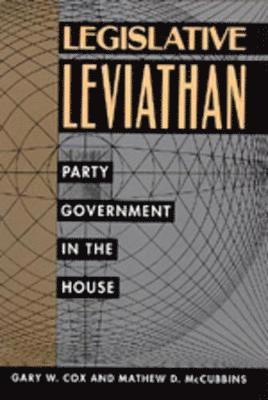
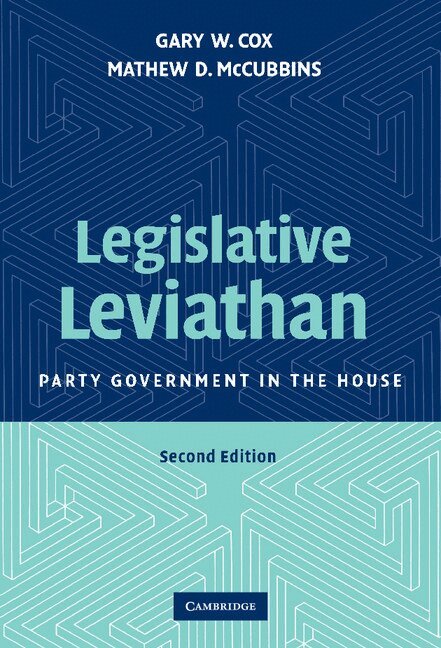
This book provides an incisive new look at the inner workings of the House of Representatives in the post-World War II era. Reevaluating the role of parties and committees, Gary Cox and Mathew McCubbins view parties in the House - especially majority parties - as a species of 'legislative cartel.' These cartels usurp the power, theoretically resident in the House, to make rules governing the structure and process of legislation. Possession of this rule-making power leads to two main consequences. First, the legislative process in general, and the committee system in particular, is stacked in favor of majority party interests. Second, because the majority party has all the structural advantages, the key players in most legislative deals are members of that party and the majority party's central agreements are facilitated by cartel rules and policed by the cartel's leadership. Debunking prevailing arguments about the weakening of congressional parties, Cox and McCubbins powerfully illuminate the ways in which parties exercise considerable discretion in organizing the House to carry out its work.This work will have an important impact on the study of American politics, and will greatly interest students of Congress, the presidency, and the political party system.
Inbunden, Engelska, 1998
1 292 kr
Skickas inom 7-10 vardagar
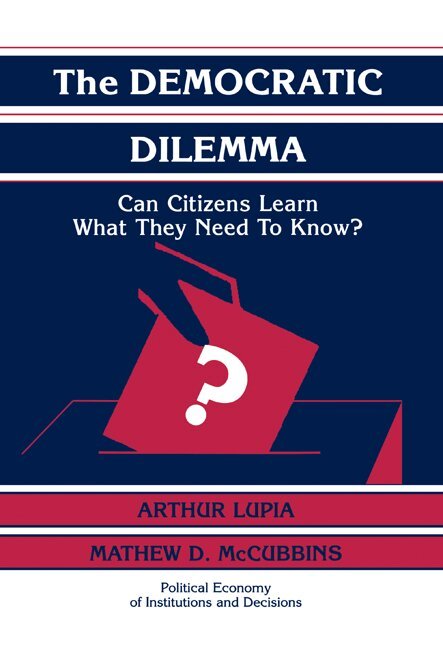
Voters cannot answer simple survey questions about politics. Legislators cannot recall the details of legislation. Jurors cannot comprehend legal arguments. Observations such as these are plentiful and several generations of pundits and scholars have used these observations to claim that voters, legislators, and jurors are incompetent. Are these claims correct? Do voters, jurors, and legislators who lack political information make bad decisions? In The Democratic Dilemma, Professors Arthur Lupia and Mathew McCubbins explain how citizens make decisions about complex issues. Combining insights from economics, political science, and the cognitive sciences, they seek to develop theories and experiments about learning and choice. They use these tools to identify the requirements for reasoned choice - the choice that a citizen would make if she possessed a certain (perhaps, greater) level of knowledge. The results clarify debates about voter, juror, and legislator competence and also reveal how the design of political institutions affects citizens' abilities to govern themselves effectively.
Häftad, Engelska, 1998
367 kr
Skickas inom 7-10 vardagar
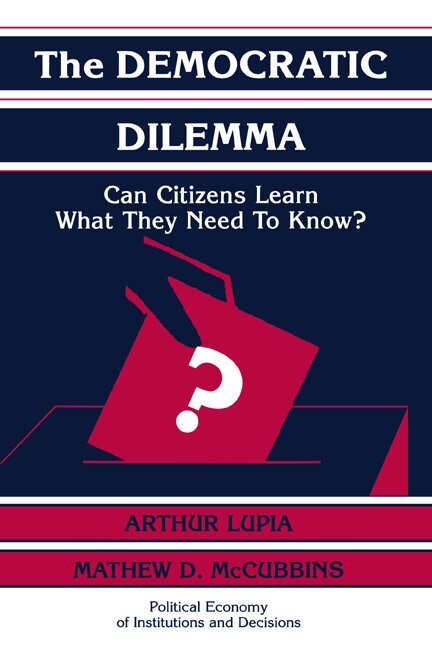
Voters cannot answer simple survey questions about politics. Legislators cannot recall the details of legislation. Jurors cannot comprehend legal arguments. Observations such as these are plentiful and several generations of pundits and scholars have used these observations to claim that voters, legislators, and jurors are incompetent. Are these claims correct? Do voters, jurors, and legislators who lack political information make bad decisions? In The Democratic Dilemma, Professors Arthur Lupia and Mathew McCubbins explain how citizens make decisions about complex issues. Combining insights from economics, political science, and the cognitive sciences, they seek to develop theories and experiments about learning and choice. They use these tools to identify the requirements for reasoned choice - the choice that a citizen would make if she possessed a certain (perhaps, greater) level of knowledge. The results clarify debates about voter, juror, and legislator competence and also reveal how the design of political institutions affects citizens' abilities to govern themselves effectively.
Häftad, Engelska, 2005
417 kr
Skickas inom 7-10 vardagar
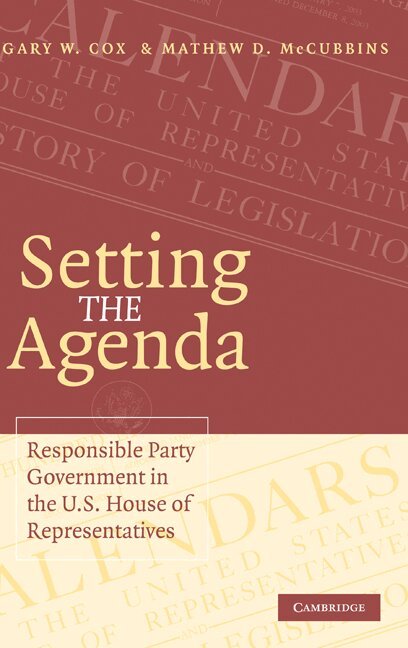
Scholars of the U.S. House disagree over the importance of political parties in organizing the legislative process. On the one hand, non-partisan theories stress how congressional organization serves members' non-partisan goals. On the other hand, partisan theories argue that the House is organized to serve the collective interests of the majority party. This book advances our partisan theory and presents a series of empirical tests of that theory's predictions (pitted against others). It considers why procedural cartels form, arguing that agenda power is naturally subject to cartelization in busy legislatures. It argues that the majority party has cartelized agenda power in the U.S. House since the adoption of Reed's rules in 1890. The evidence demonstrates that the majority party seizes agenda control at nearly every stage of the legislative process in order to prevent bills that the party dislikes from reaching the floor.
Inbunden, Engelska, 2000
1 032 kr
Skickas inom 7-10 vardagar
Many social scientists want to explain why people do what they do. A barrier to constructing such explanations used to be a lack of information on the relationship between cognition and choice. Now, recent advances in cognitive science, economics, political science, and psychology have clarified this relationship. In Elements of Reason, eighteen scholars from across the social sciences use these advances to uncover the cognitive foundations of social decision making. They answer tough questions about how people see and process information and provide new explanations of how basic human needs, the environment, and past experiences combine to affect human choices. Elements of Reason is written for a broad audience and should be read by anyone for whom 'Why do people do what they do?' is an important question. It is the rare book that transforms abstract debates about rationality and reason into empirically relevant explanations of how people choose.
Häftad, Engelska, 2000
417 kr
Skickas inom 7-10 vardagar
Many social scientists want to explain why people do what they do. A barrier to constructing such explanations used to be a lack of information on the relationship between cognition and choice. Now, recent advances in cognitive science, economics, political science, and psychology have clarified this relationship. In Elements of Reason, eighteen scholars from across the social sciences use these advances to uncover the cognitive foundations of social decision making. They answer tough questions about how people see and process information and provide new explanations of how basic human needs, the environment, and past experiences combine to affect human choices. Elements of Reason is written for a broad audience and should be read by anyone for whom 'Why do people do what they do?' is an important question. It is the rare book that transforms abstract debates about rationality and reason into empirically relevant explanations of how people choose.
Häftad, Engelska, 2007
429 kr
Skickas inom 7-10 vardagar
The second edition of Legislative Leviathan provides an incisive new look at the inner workings of the House of Representatives in the post-World War II era. Re-evaluating the role of parties and committees, Gary W. Cox and Mathew D. McCubbins view parties in the House - especially majority parties - as a species of 'legislative cartel'. These cartels seize the power, theoretically resident in the House, to make rules governing the structure and process of legislation. Most of the cartel's efforts are focused on securing control of the legislative agenda for its members. The first edition of this book had significant influence on the study of American politics and is essential reading for students of Congress, the presidency, and the political party system.
Inbunden, Engelska, 2005
708 kr
Skickas inom 7-10 vardagar
Scholars of the U.S. House disagree over the importance of political parties in organizing the legislative process. On the one hand, non-partisan theories stress how congressional organization serves members' non-partisan goals. On the other hand, partisan theories argue that the House is organized to serve the collective interests of the majority party. This book advances our partisan theory and presents a series of empirical tests of that theory's predictions (pitted against others). It considers why procedural cartels form, arguing that agenda power is naturally subject to cartelization in busy legislatures. It argues that the majority party has cartelized agenda power in the U.S. House since the adoption of Reed's rules in 1890. The evidence demonstrates that the majority party seizes agenda control at nearly every stage of the legislative process in order to prevent bills that the party dislikes from reaching the floor.
Inbunden, Engelska, 2007
1 071 kr
Skickas inom 7-10 vardagar
The second edition of Legislative Leviathan provides an incisive new look at the inner workings of the House of Representatives in the post-World War II era. Re-evaluating the role of parties and committees, Gary W. Cox and Mathew D. McCubbins view parties in the House - especially majority parties - as a species of 'legislative cartel'. These cartels seize the power, theoretically resident in the House, to make rules governing the structure and process of legislation. Most of the cartel's efforts are focused on securing control of the legislative agenda for its members. The first edition of this book had significant influence on the study of American politics and is essential reading for students of Congress, the presidency, and the political party system.
Häftad, Engelska, 1998
525 kr
Skickas inom 5-8 vardagar
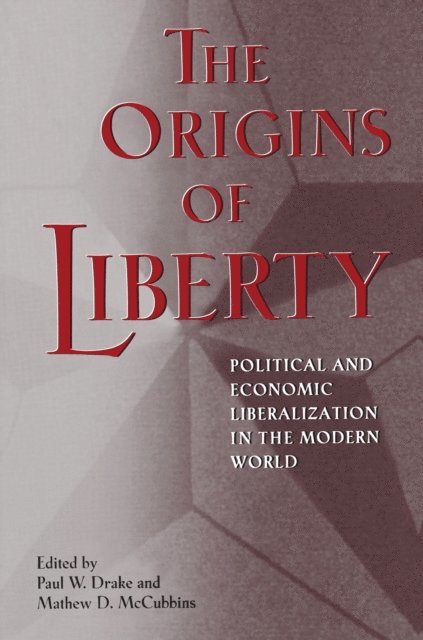
Why would sovereigns ever grant political or economic liberty to their subjects? Under what conditions would rational rulers who possess ultimate authority and who seek to maximize power and wealth ever give up any of that authority? This book draws on a wide array of empirical and theoretical approaches to answer these questions, investigating both why sovereign powers might liberalize and when. The contributors to this volume argue that liberalization or democratization will only occur when those in power calculate that the expected benefits to them will exceed the costs. More specifically, rulers take five main concerns into account in their cost-benefit analysis as they decide to reinforce or relax controls: personal welfare, personal power, internal order, external order, and control over policy--particularly economic policy. The book shows that repression is a tempting first option for rulers seeking to maximize their benefits, but that liberalization becomes more attractive as a means of minimizing losses when it becomes increasingly certain that the alternatives are chaos, deposition, or even death.Chapters cover topics as diverse as the politics of seventeenth-century England and of twentieth-century Chile; why so many countries have liberalized in recent decades; and why even democratic governments see a need to reduce state power. The book makes use of formal modeling, statistical analysis, and traditional historical analysis. The contributors are Paul Drake, Stephen Haggard, William Heller, Robert Kaufman, Phil Keefer, Brian Loveman, Mathew McCubbins, Douglass North, Ronald Rogowski, and Barry Weingast.
Inbunden, Engelska, 2002
2 458 kr
Skickas inom 10-15 vardagar
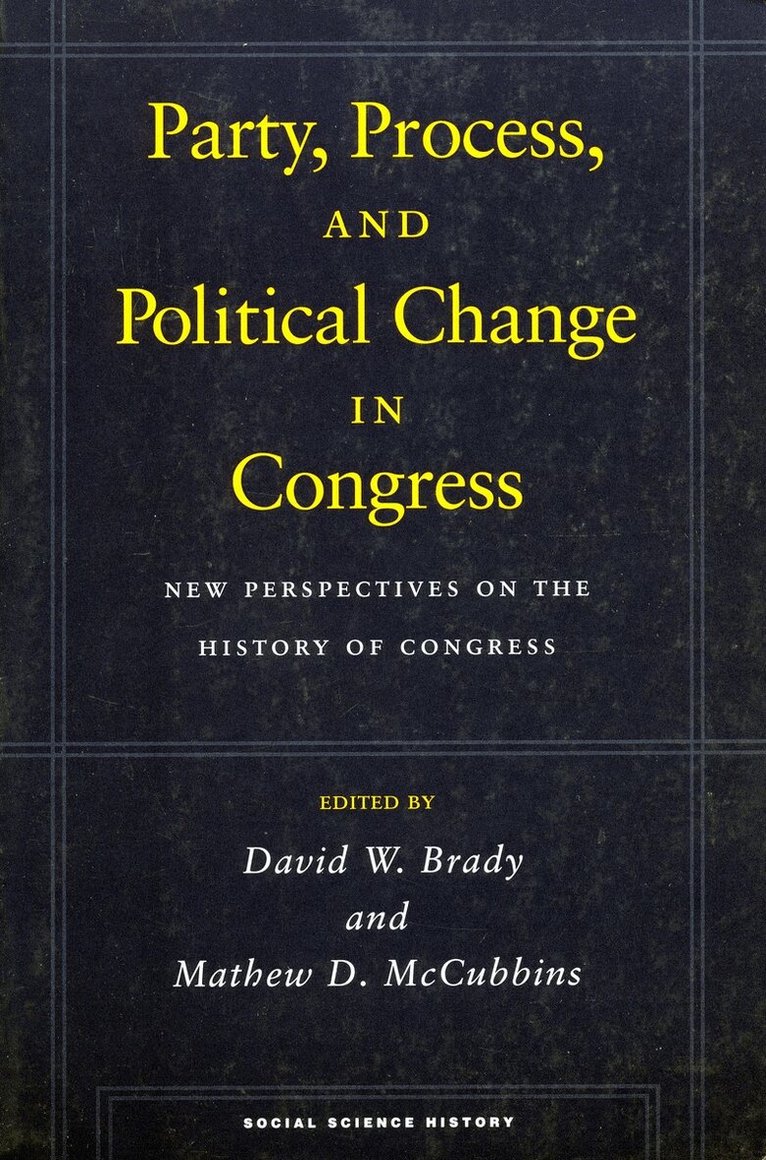
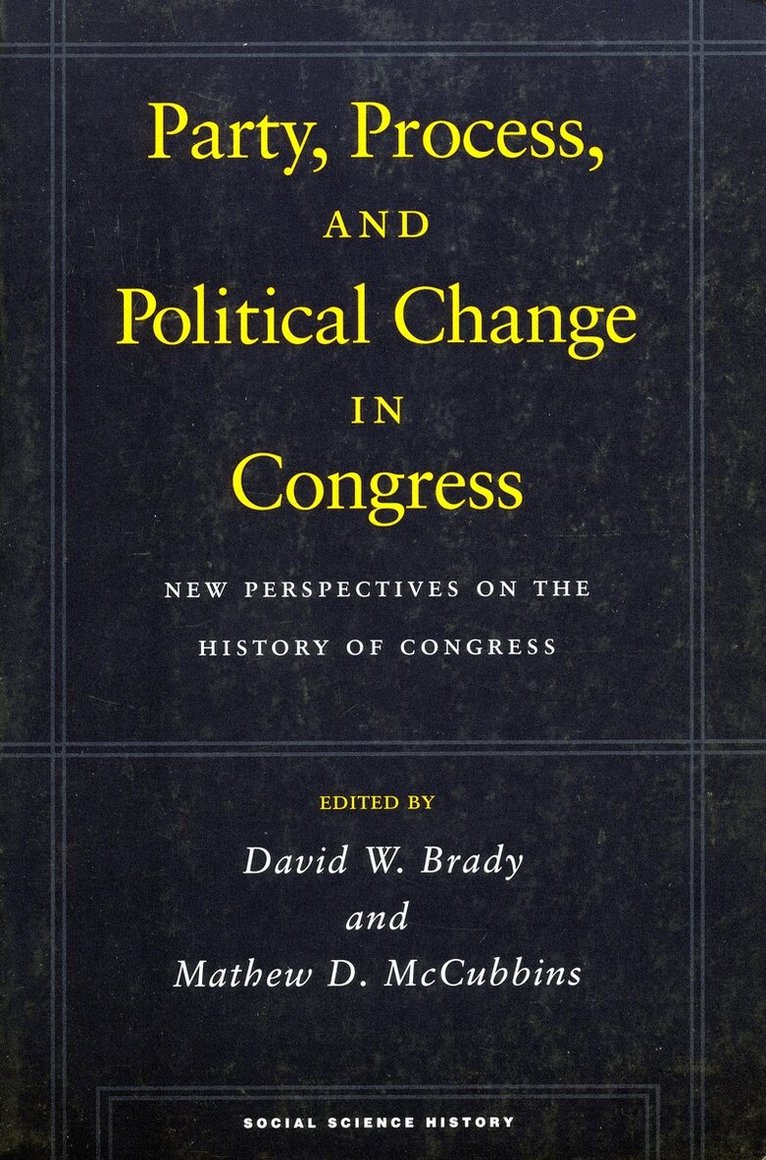
In recent decades, political scientists have produced an enormous body of scholarship dealing with the U.S. Congress, and in particular congressional organization. However, most of this research has focused on Congress in the twentieth century—especially the post-New Deal era—and the long history of Congress has been largely neglected. The contributors to this book demonstrate that this inattention to congressional history has denied us many rich opportunities to more fully understand the evolution and functioning of the modern Congress. In striking contrast to the modern era, which is marked by only modest partisan realignment and institutional change, the period preceding the New Deal was a time of rapid and substantial change in Congress. During the nation's first 150 years, parties emerged, developed, and realigned; the standing rules of the House and Senate expanded and underwent profound changes; the workload of Congress increased dramatically; and both houses grew considerably in size. Studying history is valuable in large part because it allows scholars to observe greater variation in many of the parameters of their theories, and to test their core assumptions. A historical approach pushes scholars to recognize and confront the limits of their theories, resulting in theories that have increased validity and broader applicability. Thus, incorporating history into political science gives us a more dynamic view of Congress than the relatively static picture that emerges from a strict focus on recent periods. Each contributor engages one of three general questions that have animated the literature on congressional politics in recent years: What is the role of party organizations in policy making? In what ways have congressional process and procedure changed over the years? How does congressional process and procedure affect congressional politics and policy?
Häftad, Engelska, 2002
584 kr
Skickas inom 5-8 vardagar
In recent decades, political scientists have produced an enormous body of scholarship dealing with the U.S. Congress, and in particular congressional organization. However, most of this research has focused on Congress in the twentieth century—especially the post-New Deal era—and the long history of Congress has been largely neglected. The contributors to this book demonstrate that this inattention to congressional history has denied us many rich opportunities to more fully understand the evolution and functioning of the modern Congress. In striking contrast to the modern era, which is marked by only modest partisan realignment and institutional change, the period preceding the New Deal was a time of rapid and substantial change in Congress. During the nation's first 150 years, parties emerged, developed, and realigned; the standing rules of the House and Senate expanded and underwent profound changes; the workload of Congress increased dramatically; and both houses grew considerably in size. Studying history is valuable in large part because it allows scholars to observe greater variation in many of the parameters of their theories, and to test their core assumptions. A historical approach pushes scholars to recognize and confront the limits of their theories, resulting in theories that have increased validity and broader applicability. Thus, incorporating history into political science gives us a more dynamic view of Congress than the relatively static picture that emerges from a strict focus on recent periods. Each contributor engages one of three general questions that have animated the literature on congressional politics in recent years: What is the role of party organizations in policy making? In what ways have congressional process and procedure changed over the years? How does congressional process and procedure affect congressional politics and policy?
Inbunden, Engelska, 2007
1 954 kr
Skickas inom 10-15 vardagar
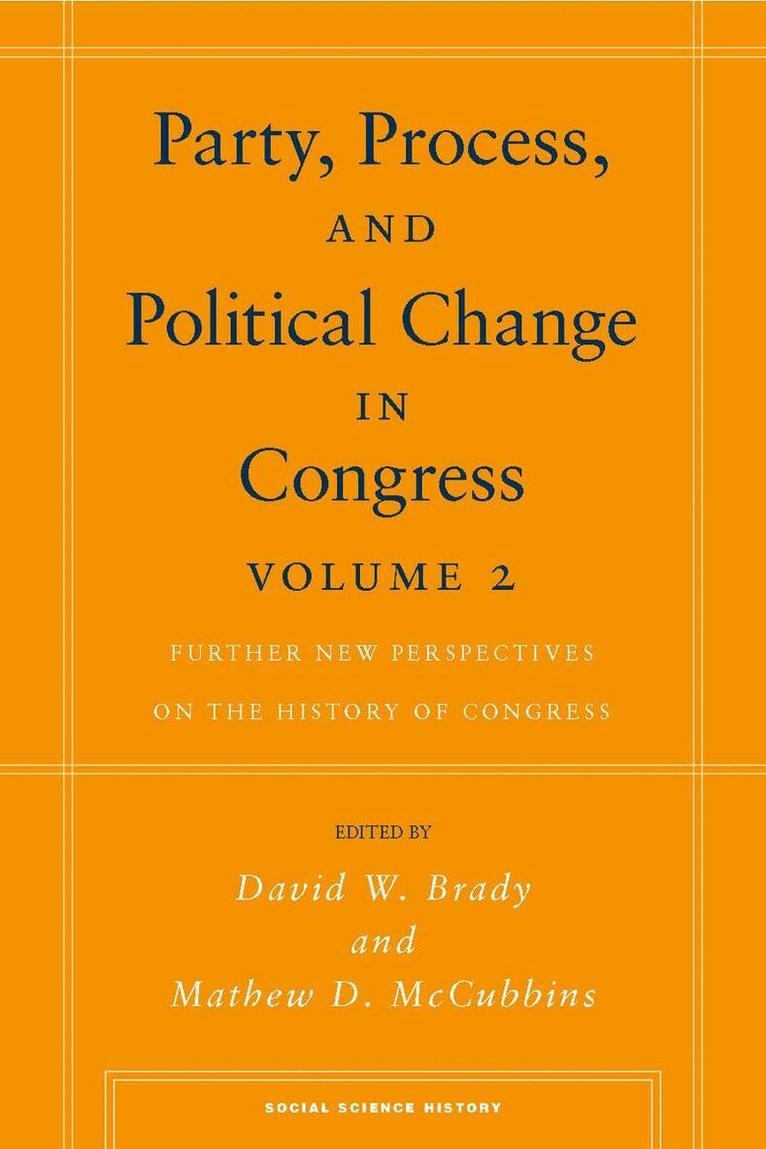
This work addresses the development of congressional practices and institutions and ties the changes to key political and economic events. In connecting political and economic events with changes in Congress, the authors examine the political economy of the history of Congress. They draw upon history to offer insights about contemporary issues such as party polarization, filibuster reform, direct election of politicians, intercameral bargaining, and the role of committees in the political process. Through this approach the authors help us to understand how politics and economics interact to affect Congress.
Häftad, Engelska, 2007
474 kr
Skickas inom 5-8 vardagar
This work addresses the development of congressional practices and institutions and ties the changes to key political and economic events. In connecting political and economic events with changes in Congress, the authors examine the political economy of the history of Congress. They draw upon history to offer insights about contemporary issues such as party polarization, filibuster reform, direct election of politicians, intercameral bargaining, and the role of committees in the political process. Through this approach the authors help us to understand how politics and economics interact to affect Congress.
Inbunden, Engelska, 1991
763 kr
Tillfälligt slut
Why do majority congressional parties seem unable to act as an effective policy-making force? They routinely delegate their power to others—internally to standing committees and subcommittees within each chamber, externally to the president and to the bureaucracy. Conventional wisdom in political science insists that such delegation leads inevitably to abdication—usually by degrees, sometimes precipitously, but always completely. In The Logic of Delegation, however, D. Roderick Kiewiet and Mathew D. McCubbins persuasively argue that political scientists have paid far too much attention to what congressional parties can't do. The authors draw on economic and management theory to demonstrate that the effectiveness of delegation is determined not by how much authority is delegated but rather by how well it is delegated. In the context of the appropriations process, the authors show how congressional parties employ committees, subcommittees, and executive agencies to accomplish policy goals. This innovative study will force a complete rethinking of classic issues in American politics: the "autonomy" of congressional committees; the reality of runaway federal bureaucracy; and the supposed dominance of the presidency in legislative-executive relations.