Scott Straus - Böcker
Visar alla böcker från författaren Scott Straus. Handla med fri frakt och snabb leverans.
11 produkter
11 produkter
274 kr
Skickas inom 10-15 vardagar
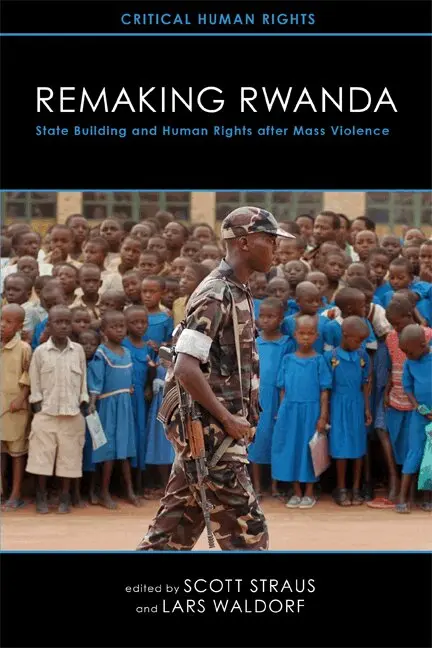
In the mid-1990s, civil war and genocide ravaged Rwanda. Since then, the country’s new leadership has undertaken a highly ambitious effort to refashion Rwanda’s politics, economy, and society, and the country’s accomplishments have garnered widespread praise. Remaking Rwanda is the first book to examine Rwanda’s remarkable post- genocide recovery in a comprehensive and critical fashion. By paying close attention to memory politics, human rights, justice, foreign relations, land use, education, and other key social institutions and practices, this volume raises serious concerns about the depth and durability of the country’s reconstruction. Edited by Scott Straus and Lars Waldorf, Remaking Rwanda brings together experienced scholars and human rights professionals to offer a nuanced, historically informed picture of post-genocide Rwanda—one that reveals powerful continuities with the nation’s past and raises profound questions about its future. “Remaking Rwanda is an ambitious book, a rich and varied compilation that demonstrates the full complement of approaches, methods, and concerns informing the study of post-genocide Rwanda.” —Lee Ann Fujii, author of Killing Neighbors: Webs of Violence in Rwanda.
234 kr
Skickas inom 10-15 vardagar
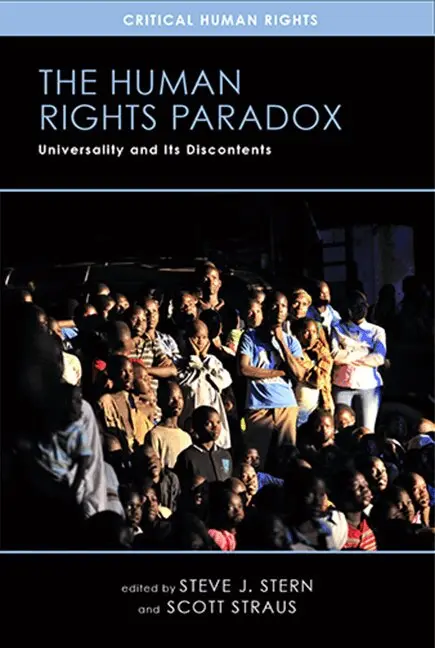
Human rights are paradoxical. Advocates across the world invoke the idea that such rights belong to all people, no matter who or where they are. But since humans can only realize their rights in particular places, human rights are both always and never universal.The Human Rights Paradox is the first book to fully embrace this contradiction and reframe human rights as history, contemporary social advocacy, and future prospect. In case studies that span Africa, Latin America, South and Southeast Asia, and the United States, contributors carefully illuminate how social actors create the imperative of human rights through relationships whose entanglements of the global and the local are so profound that one cannot exist apart from the other. These chapters provocatively analyze emerging twenty-first-century horizons of human rights—on one hand, the simultaneous promise and peril of global rights activism through social media, and on the other, the force of intergenerational rights linked to environmental concerns that are both local and global. Taken together, they demonstrate how local struggles and realities transform classic human rights concepts, including “victim,” “truth,” and “justice.”Edited by Steve J. Stern and Scott Straus, The Human Rights Paradox enables us to consider the consequences—for history, social analysis, politics, and advocacy—of understanding that human rights belong both to “humanity” as abstraction as well as to specific people rooted in particular locales.
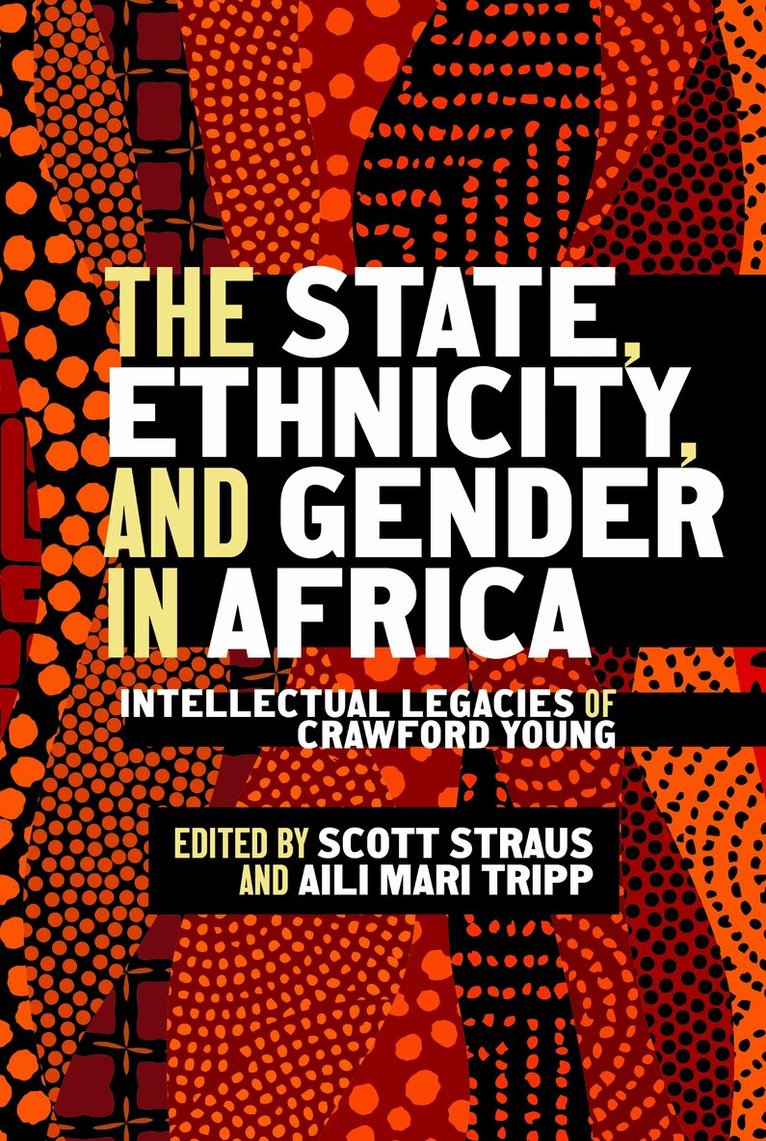
State, Ethnicity, and Gender in Africa
Intellectual Legacies of Crawford Young
Inbunden, Engelska, 2024
996 kr
Skickas inom 10-15 vardagar
Postcolonialism, the politics of ethnic and religious identity, and the role of women in African society and politics have become important, and often connected, foci in African studies. Here, fifteen chapters explore these themes in tandem. With essays that span the continent, this volume showcases the political histories, challenges, and promise of contemporary Africa.Written in honor of Crawford Young, a foundational figure in the study of African politics, the essays reflect the breadth and intellectual legacy of this towering scholar and illustrate the vast impact Young had, and continues to have, on the field. The book’s themes build from his seminal publications, and the essays were written by leading scholars who were trained by Young.
694 kr
Skickas inom 10-15 vardagar
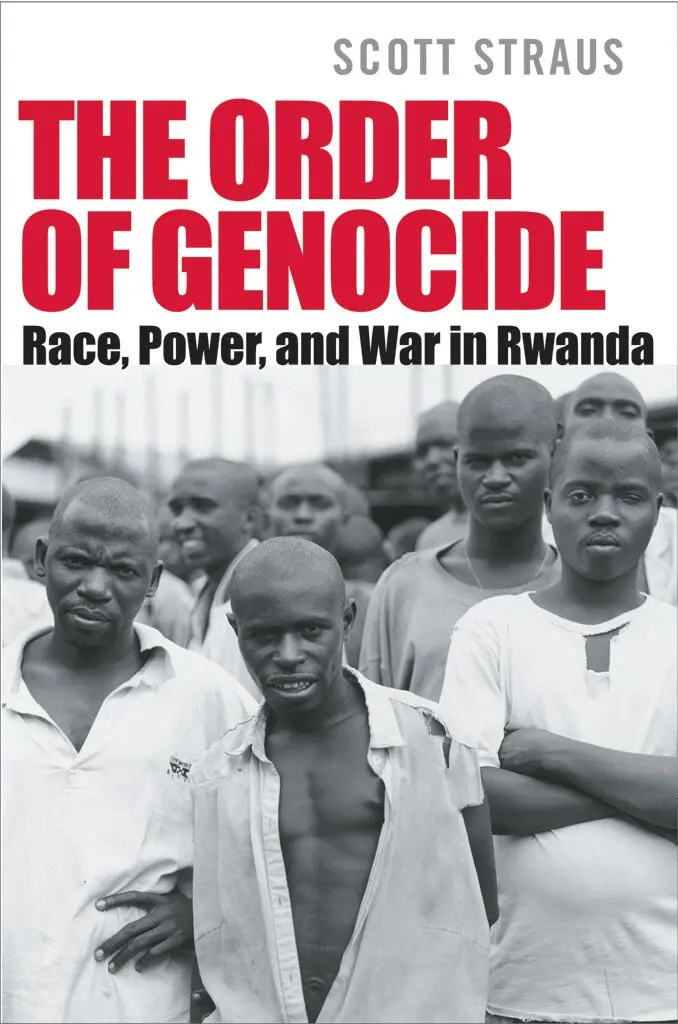
The Rwandan genocide has become a touchstone for debates about the causes of mass violence and the responsibilities of the international community. Yet a number of key questions about this tragedy remain unanswered: How did the violence spread from community to community and so rapidly engulf the nation? Why did individuals make decisions that led them to take up machetes against their neighbors? And what was the logic that drove the campaign of extermination?According to Scott Straus, a social scientist and former journalist in East Africa for several years (who received a Pulitzer Prize nomination for his reporting for the Houston Chronicle), many of the widely held beliefs about the causes and course of genocide in Rwanda are incomplete. They focus largely on the actions of the ruling elite or the inaction of the international community. Considerably less is known about how and why elite decisions became widespread exterminatory violence.Challenging the prevailing wisdom, Straus provides substantial new evidence about local patterns of violence, using original research—including the most comprehensive surveys yet undertaken among convicted perpetrators—to assess competing theories about the causes and dynamics of the genocide. Current interpretations stress three main causes for the genocide: ethnic identity, ideology, and mass-media indoctrination (in particular the influence of hate radio). Straus's research does not deny the importance of ethnicity, but he finds that it operated more as a background condition. Instead, Straus emphasizes fear and intra-ethnic intimidation as the primary drivers of the violence. A defensive civil war and the assassination of a president created a feeling of acute insecurity. Rwanda's unusually effective state was also central, as was the country's geography and population density, which limited the number of exit options for both victims and perpetrators.In conclusion, Straus steps back from the particulars of the Rwandan genocide to offer a new, dynamic model for understanding other instances of genocide in recent history—the Holocaust, Armenia, Cambodia, the Balkans—and assessing the future likelihood of such events.
1 563 kr
Skickas inom 10-15 vardagar
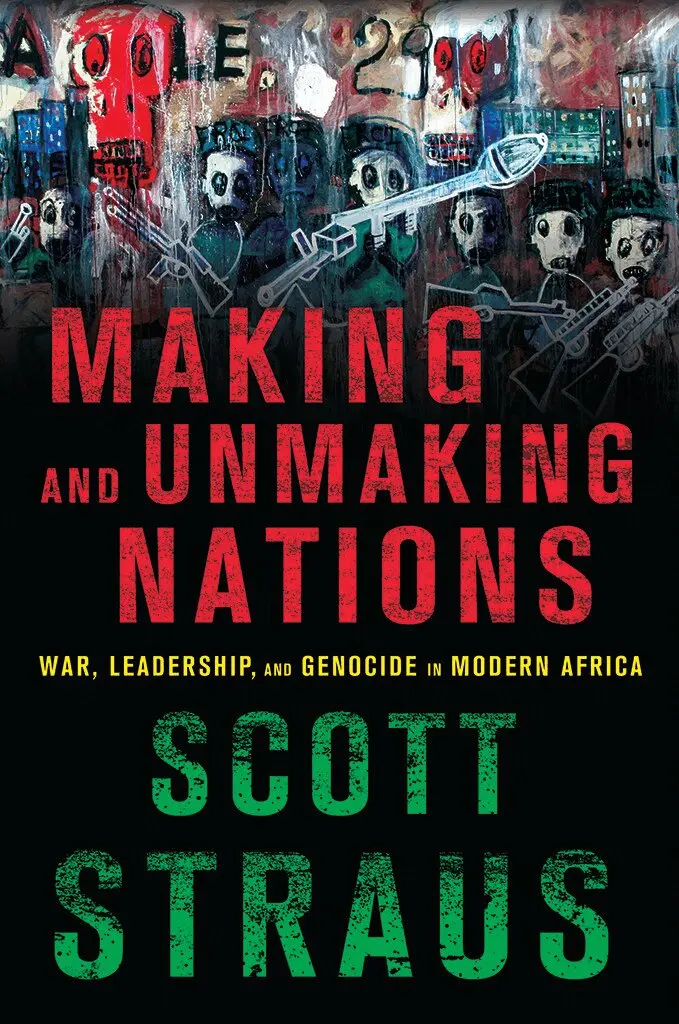
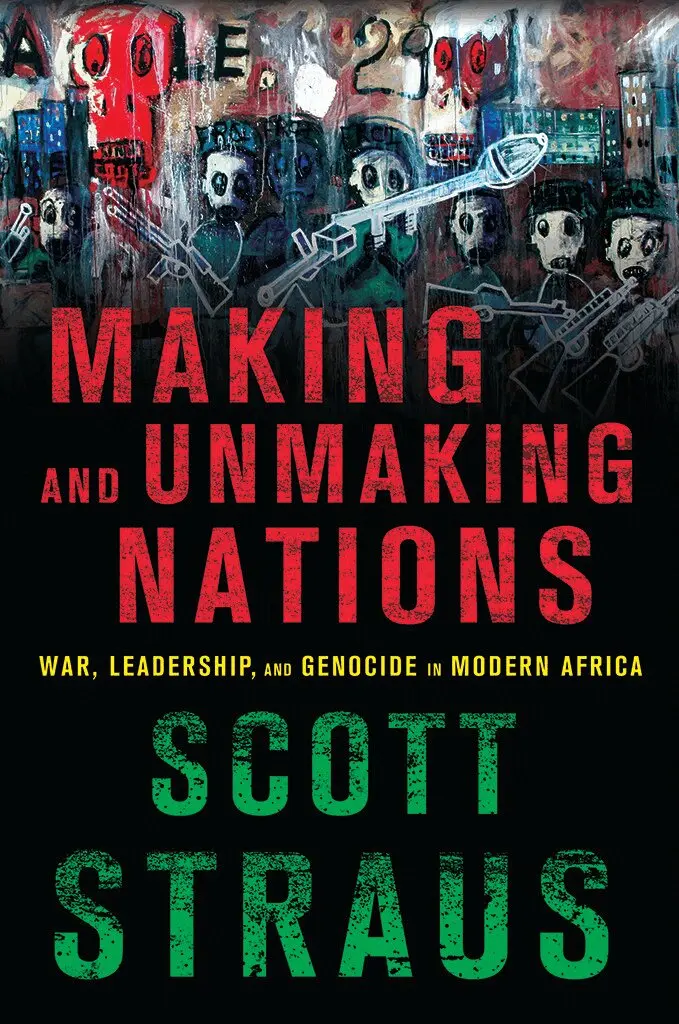
Winner of the Grawmeyer Award for Ideas Improving World Order, 2018Winner of the Joseph Lepgold PrizeWinner of the Best Books in Conflict Studies (APSA)Winner of the Best Book in Human Rights (ISA)In Making and Unmaking Nations, Scott Straus seeks to explain why and how genocide takes place—and, perhaps more important, how it has been avoided in places where it may have seemed likely or even inevitable. To solve that puzzle, he examines postcolonial Africa, analyzing countries in which genocide occurred and where it could have but did not. Why have there not been other Rwandas? Straus finds that deep-rooted ideologies—how leaders make their nations—shape strategies of violence and are central to what leads to or away from genocide. Other critical factors include the dynamics of war, the role of restraint, and the interaction between national and local actors in the staging of campaigns of large-scale violence. Grounded in Straus's extensive fieldwork in contemporary Africa, the study of major twentieth-century cases of genocide, and the literature on genocide and political violence, Making and Unmaking Nations centers on cogent analyses of three nongenocide cases (Côte d'Ivoire, Mali, and Senegal) and two in which genocide took place (Rwanda and Sudan). Straus's empirical analysis is based in part on an original database of presidential speeches from 1960 to 2005. The book also includes a broad-gauge analysis of all major cases of large-scale violence in Africa since decolonization. Straus's insights into the causes of genocide will inform the study of political violence as well as giving policymakers and nongovernmental organizations valuable tools for the future.
364 kr
Skickas inom 10-15 vardagar
The Rwandan genocide has become a touchstone for debates about the causes of mass violence and the responsibilities of the international community. Yet a number of key questions about this tragedy remain unanswered: How did the violence spread from community to community and so rapidly engulf the nation? Why did individuals make decisions that led them to take up machetes against their neighbors? And what was the logic that drove the campaign of extermination?According to Scott Straus, a social scientist and former journalist in East Africa for several years (who received a Pulitzer Prize nomination for his reporting for the Houston Chronicle), many of the widely held beliefs about the causes and course of genocide in Rwanda are incomplete. They focus largely on the actions of the ruling elite or the inaction of the international community. Considerably less is known about how and why elite decisions became widespread exterminatory violence.Challenging the prevailing wisdom, Straus provides substantial new evidence about local patterns of violence, using original research—including the most comprehensive surveys yet undertaken among convicted perpetrators—to assess competing theories about the causes and dynamics of the genocide. Current interpretations stress three main causes for the genocide: ethnic identity, ideology, and mass-media indoctrination (in particular the influence of hate radio). Straus's research does not deny the importance of ethnicity, but he finds that it operated more as a background condition. Instead, Straus emphasizes fear and intra-ethnic intimidation as the primary drivers of the violence. A defensive civil war and the assassination of a president created a feeling of acute insecurity. Rwanda's unusually effective state was also central, as was the country's geography and population density, which limited the number of exit options for both victims and perpetrators.In conclusion, Straus steps back from the particulars of the Rwandan genocide to offer a new, dynamic model for understanding other instances of genocide in recent history—the Holocaust, Armenia, Cambodia, the Balkans—and assessing the future likelihood of such events.
433 kr
Skickas inom 10-15 vardagar
Winner of the Grawmeyer Award for Ideas Improving World Order, 2018Winner of the Joseph Lepgold PrizeWinner of the Best Books in Conflict Studies (APSA)Winner of the Best Book in Human Rights (ISA)In Making and Unmaking Nations, Scott Straus seeks to explain why and how genocide takes place—and, perhaps more important, how it has been avoided in places where it may have seemed likely or even inevitable. To solve that puzzle, he examines postcolonial Africa, analyzing countries in which genocide occurred and where it could have but did not. Why have there not been other Rwandas? Straus finds that deep-rooted ideologies—how leaders make their nations—shape strategies of violence and are central to what leads to or away from genocide. Other critical factors include the dynamics of war, the role of restraint, and the interaction between national and local actors in the staging of campaigns of large-scale violence. Grounded in Straus's extensive fieldwork in contemporary Africa, the study of major twentieth-century cases of genocide, and the literature on genocide and political violence, Making and Unmaking Nations centers on cogent analyses of three nongenocide cases (Côte d'Ivoire, Mali, and Senegal) and two in which genocide took place (Rwanda and Sudan). Straus's empirical analysis is based in part on an original database of presidential speeches from 1960 to 2005. The book also includes a broad-gauge analysis of all major cases of large-scale violence in Africa since decolonization. Straus's insights into the causes of genocide will inform the study of political violence as well as giving policymakers and nongovernmental organizations valuable tools for the future.
1 798 kr
Skickas inom 11-20 vardagar
Through an intellectually stimulating and empirical approach to global studies, students examine how key factors—forces, interactions, and tensions—contribute to world events and global problems.
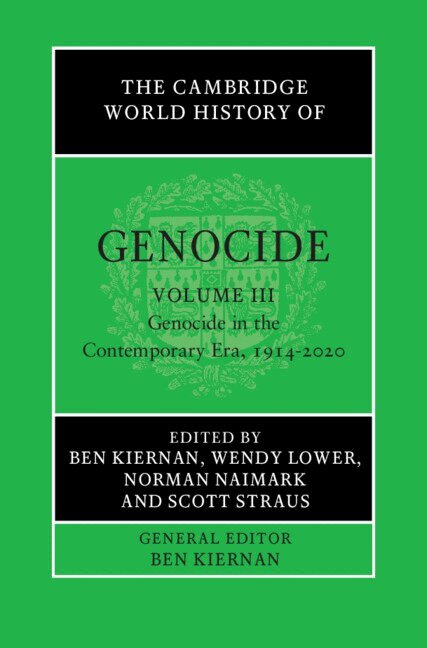
The Cambridge World History of Genocide: Volume 3, Genocide in the Contemporary Era, 1914-2020
Inbunden, Engelska, 2023
1 822 kr
Tillfälligt slut
Volume III examines the most well-known century of genocide, the twentieth century. Opening with a discussion on the definitions of genocide and 'ethnic cleansing' and their relationships to modernity, it continues with a survey of the genocide studies field, racism and antisemitism. The four parts cover the impacts of Racism, Total War, Imperial Collapse, and Revolution; the crises of World War Two; the Cold War; and Globalization. Twenty-eight scholars with expertise in specific regions document thirty genocides from 1918 to 2021, in Europe, the Middle East, Africa, Asia, and Latin America. The cases range from the Armenian Genocide to Maoist China, from the Holocaust to Stalin's Ukraine, from Indonesia to Guatemala, Biafra, Bangladesh, Cambodia, Bosnia and Rwanda, and finally the contemporary fate of the Rohingyas in Myanmar and the ISIS slaughter of Yazidis in Iraq. The volume ends with a chapter on the strategies for genocide prevention moving forward.
The Cambridge World History of Genocide: Volume 3, Genocide in the Contemporary Era, 1914-2020
Häftad, Engelska, 2025
526 kr
Skickas inom 7-10 vardagar
Volume III examines the most well-known century of genocide, the twentieth century. Opening with a discussion on the definitions of genocide and 'ethnic cleansing' and their relationships to modernity, it continues with a survey of the genocide studies field, racism and antisemitism. The four parts cover the impacts of Racism, Total War, Imperial Collapse, and Revolution; the crises of World War Two; the Cold War; and Globalization. Twenty-eight scholars with expertise in specific regions document thirty genocides from 1918 to 2021, in Europe, the Middle East, Africa, Asia, and Latin America. The cases range from the Armenian Genocide to Maoist China, from the Holocaust to Stalin's Ukraine, from Indonesia to Guatemala, Biafra, Bangladesh, Cambodia, Bosnia and Rwanda, and finally the contemporary fate of the Rohingyas in Myanmar and the ISIS slaughter of Yazidis in Iraq. The volume ends with a chapter on the strategies for genocide prevention moving forward.
377 kr
Tillfälligt slut