Serk-Bae Suh - Böcker
Visar alla böcker från författaren Serk-Bae Suh. Handla med fri frakt och snabb leverans.
4 produkter
4 produkter
1 614 kr
Skickas inom 7-10 vardagar
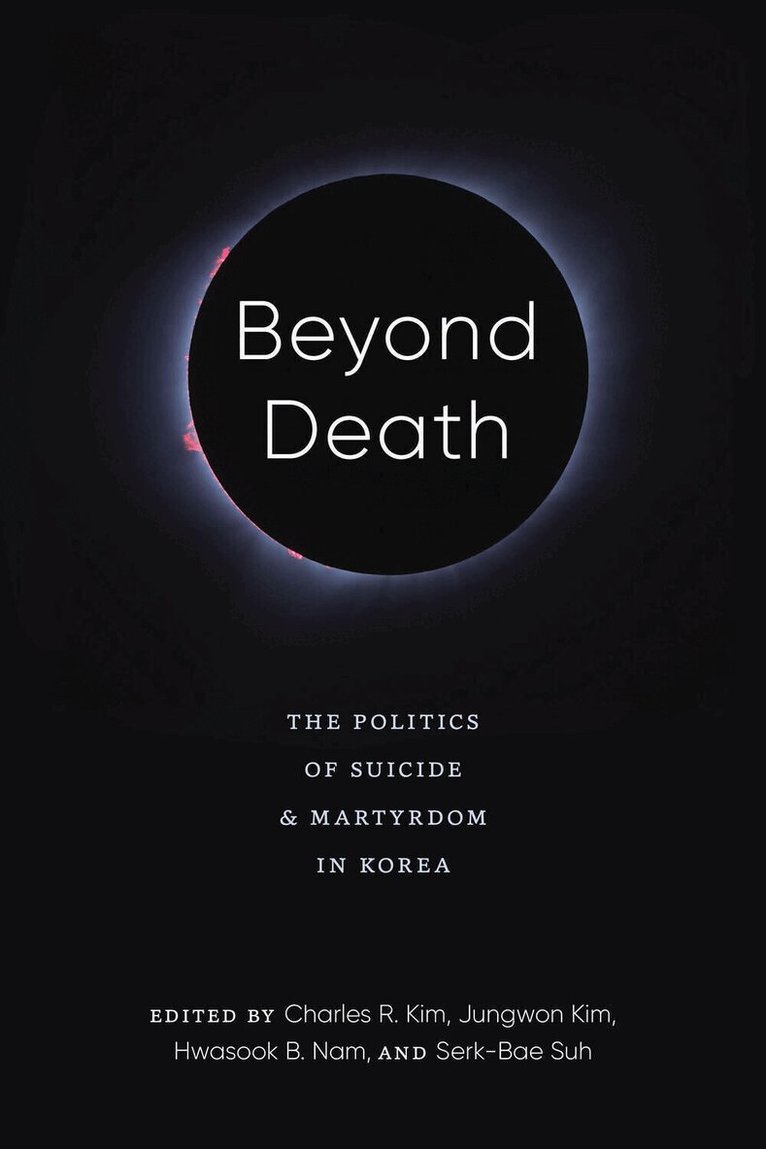
Suicide and martyrdom are closely intertwined with Korean social and political processes. In this first book-length study of the evolving ideals of honorable death and martyrdom from the Chosŏn Dynasty (1392–1910) to contemporary South Korea, interdisciplinary essays explore the changing ways in which Korean historical agents have considered what constitutes a sociopolitically meaningful death and how the surviving community should remember such events.Among the topics covered are the implications of women’s chaste suicides and men’s righteous killings in the evolving Confucian-influenced social order of the latter half of the Chosŏn Dynasty; changing nation-centered constructions of sacrifice and martyrdom put forth by influential intellectual figures in mid-twentieth-century South Korea, which were informed by the politics of postcolonial transition and Cold War ideology; and the decisive role of martyrdom in South Korea’s interlinked democracy and labor movements, including Chun Tae-il’s self-immolation in 1970, the loss of hundreds of lives during the Kwangju Uprising of 1980, and the escalation of protest suicides in the 1980s and early 1990s.
645 kr
Skickas inom 7-10 vardagar
Suicide and martyrdom are closely intertwined with Korean social and political processes. In this first book-length study of the evolving ideals of honorable death and martyrdom from the Chosŏn Dynasty (1392–1910) to contemporary South Korea, interdisciplinary essays explore the changing ways in which Korean historical agents have considered what constitutes a sociopolitically meaningful death and how the surviving community should remember such events.Among the topics covered are the implications of women's chaste suicides and men's righteous killings in the evolving Confucian-influenced social order of the latter half of the Chosŏn Dynasty; changing nation-centered constructions of sacrifice and martyrdom put forth by influential intellectual figures in mid-twentieth-century South Korea, which were informed by the politics of postcolonial transition and Cold War ideology; and the decisive role of martyrdom in South Korea's interlinked democracy and labor movements, including Chun Tae-il's self-immolation in 1970, the loss of hundreds of lives during the Kwangju Uprising of 1980, and the escalation of protest suicides in the 1980s and early 1990s.
323 kr
Skickas inom 7-10 vardagar
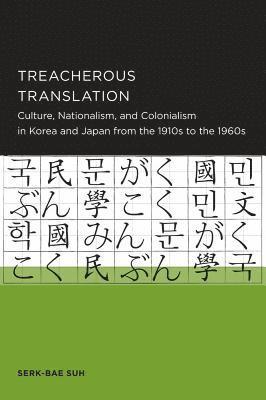
This book examines the role of translation - the rendering of texts and ideas from one language to another, as both act and trope - in shaping attitudes toward nationalism and colonialism in Korean and Japanese intellectual discourse between the time of Japan's annexation of Korea in 1910 and the passing of the colonial generation in the mid-1960s. Drawing on Korean and Japanese texts ranging from critical essays to short stories produced in the colonial and post-colonial periods, it analyzes the ways in which Japanese colonial and Korean nationalist discourse pivoted on such concepts as language, literature, and culture.
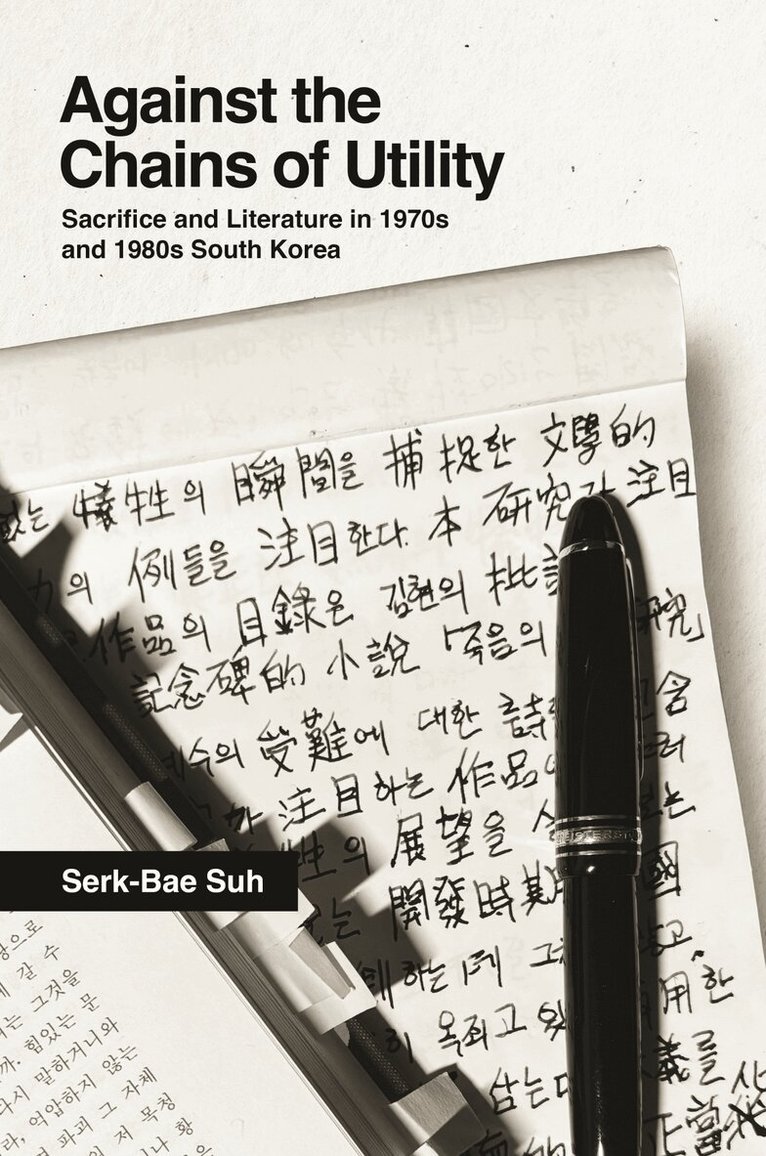
Against the Chains of Utility
Sacrifice and Literature in 1970s and 1980s South Korea
Inbunden, Engelska, 2025
835 kr
Skickas inom 7-10 vardagar
The 1970s and 1980s were pivotal decades in South Korea, marked by rapid industrialization and urbanization. The language of sacrifice was constantly employed by the developmental state to justify its exploitation of workers and violation of countless civil rights as necessary for the nation’s economic growth and security. As a counter to this prevailing rhetoric, a rich variety of literary texts emerged to capture moments of anti-utilitarian sacrifice, including Kim Hyŏn's critical essays, Pak Sangnyung's monumental novel A Study of Death (1975), and Ko Chŏnghǔi’s poems about the Passion of Jesus. Against the Chains of Utility examines the anti-utilitarian visions outlined in these and other works, which range from the idea of sacrifice as an escape from instrumental rationality to the view of literature as a deviation from the mundane world. In doing so, it tasks us with rethinking literature’s relationship to society during formative years in South Korean history. In Against the Chains of Utility, Serk-Bae Suh challenges the notion of utilitarian sacrifice, which continues to pervade every aspect of Korean society. He argues that any act of sacrifice for a higher cause is inherently utilitarian, regardless of whether its motives are morally sound or questionable. Such sacrifices establish a circuit of exchange, where sacrifice is valued solely based on its ability to achieve an end. To counter this instrumentalization, anti-utilitarian sacrifice must exist as a means without an end. Suh posits that literature's relevance to society lies in this seemingly nihilistic sacrifice, viewing literature not as a proxy for politics but as the art of imagination in language.