Jungwon Kim - Böcker
Visar alla böcker från författaren Jungwon Kim. Handla med fri frakt och snabb leverans.
4 produkter
4 produkter
1 614 kr
Skickas inom 7-10 vardagar
Suicide and martyrdom are closely intertwined with Korean social and political processes. In this first book-length study of the evolving ideals of honorable death and martyrdom from the Chosŏn Dynasty (1392–1910) to contemporary South Korea, interdisciplinary essays explore the changing ways in which Korean historical agents have considered what constitutes a sociopolitically meaningful death and how the surviving community should remember such events.Among the topics covered are the implications of women’s chaste suicides and men’s righteous killings in the evolving Confucian-influenced social order of the latter half of the Chosŏn Dynasty; changing nation-centered constructions of sacrifice and martyrdom put forth by influential intellectual figures in mid-twentieth-century South Korea, which were informed by the politics of postcolonial transition and Cold War ideology; and the decisive role of martyrdom in South Korea’s interlinked democracy and labor movements, including Chun Tae-il’s self-immolation in 1970, the loss of hundreds of lives during the Kwangju Uprising of 1980, and the escalation of protest suicides in the 1980s and early 1990s.
645 kr
Skickas inom 7-10 vardagar
Suicide and martyrdom are closely intertwined with Korean social and political processes. In this first book-length study of the evolving ideals of honorable death and martyrdom from the Chosŏn Dynasty (1392–1910) to contemporary South Korea, interdisciplinary essays explore the changing ways in which Korean historical agents have considered what constitutes a sociopolitically meaningful death and how the surviving community should remember such events.Among the topics covered are the implications of women's chaste suicides and men's righteous killings in the evolving Confucian-influenced social order of the latter half of the Chosŏn Dynasty; changing nation-centered constructions of sacrifice and martyrdom put forth by influential intellectual figures in mid-twentieth-century South Korea, which were informed by the politics of postcolonial transition and Cold War ideology; and the decisive role of martyrdom in South Korea's interlinked democracy and labor movements, including Chun Tae-il's self-immolation in 1970, the loss of hundreds of lives during the Kwangju Uprising of 1980, and the escalation of protest suicides in the 1980s and early 1990s.
Del 477 - Harvard East Asian Monographs
Virtue That Matters
Chastity Culture and Social Power in Chosŏn Korea (1392–1910)
Inbunden, Engelska, 2025
551 kr
Skickas inom 7-10 vardagar
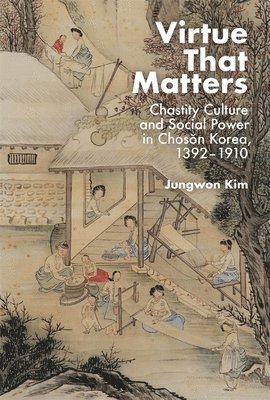
Virtue That Matters is a groundbreaking exploration of the intricate dynamics of chastity culture in Chosŏn Korea from 1392 to 1910, shedding light on its political, legal, social, and cultural significance. In this book, Jungwon Kim demonstrates how an emphasis on female chastity came to pervade society as it intertwined with state ideology and elite interests. By analyzing a copious range of sources including governmental publications, legal records, and women’s own writings, Kim unveils the rich tapestry of Chosŏn society’s attitudes toward female chastity and argues that extreme chastity culture was not merely a product of Confucianization but was also shaped by diverse social forces and individual agency. Furthermore, Kim reframes the discourse on chastity by focusing on women’s experiences and perspectives, challenging the traditional portrayal of women as marginal to Chosŏn history.Virtue That Matters illustrates the complex interplay between state-led indoctrination, socio-legal changes, and gender relations in Chosŏn Korea. Kim also shows how the discourse on women’s chastity evolved over time and continued to influence social dynamics well into the twentieth century. By highlighting the enduring legacy of chastity culture in modern Korean society, Virtue That Matters provides valuable insights into contemporary debates on gender and sexuality.
290 kr
Skickas inom 7-10 vardagar
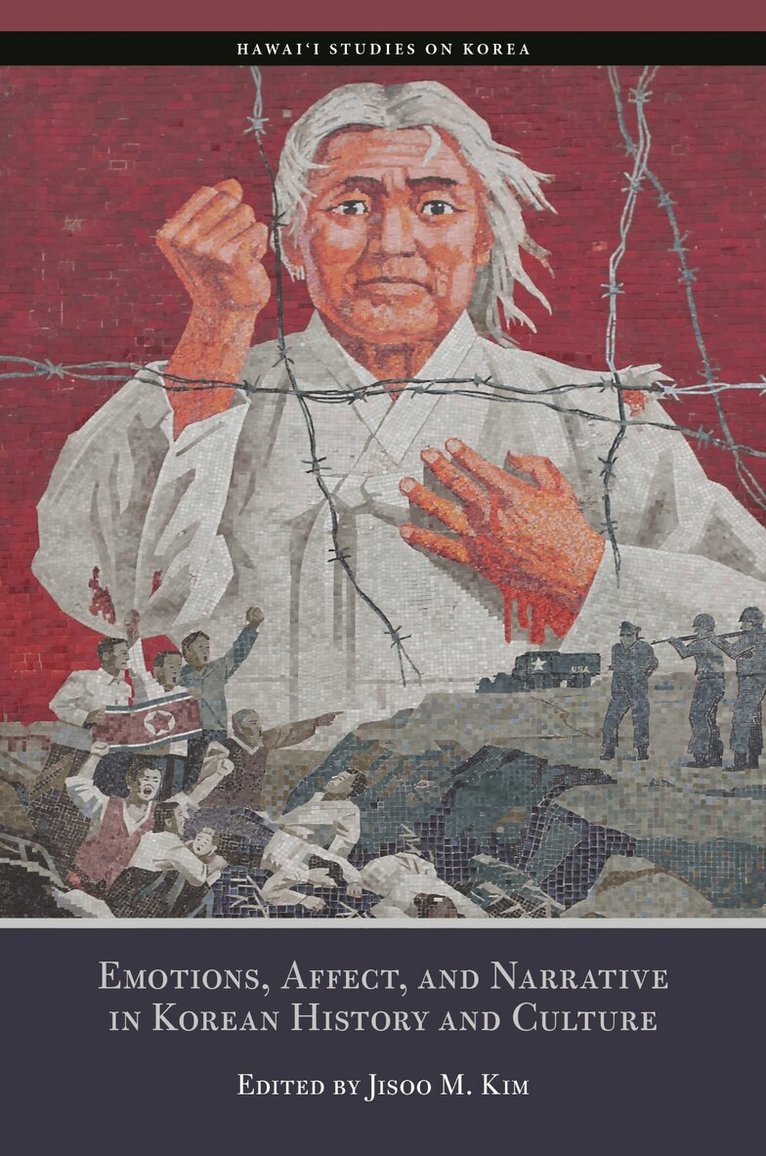
This collection of eleven essays explores emotions and affect in Korean culture across a broad temporal span, from the Koryŏ dynasty (918–1392) to the present. Drawing on a diverse array of sources—including memoirs, diplomatic letters, newspapers, films, video diaries, photographs, and ethnographic interviews—the volume examines how emotions intervene in public discourse and how affect is shaped, intensified, and managed through expressive practices. Each contributor’s critical intervention lies in offering a non-essentializing approach to studying emotions and affect in Korea. Rather than positing uniquely "Korean" feelings such as han or hwabyŏng as inherent or fixed emotional traits, the contributors argue that what is culturally distinctive is not the emotions themselves but how they have been expressed, mediated, and interpreted within specific social relationships and historical experiences. In this framework, emotions and affect are not static or universal but are historically and discursively produced.Emotions, Affect, and Narrative in Korean History and Culture also contends that to understand the present, we must critically engage with the emotional content of the past. By analyzing how different historical actors and social groups expressed particular feelings at specific moments, the essays illuminate how emotions and affect were used to narrate lived experiences and construct discourses in textual, literary, and visual forms. Together, these studies reveal how emotions and affect have functioned as a powerful medium for shaping collective memory, identity, and political subjectivity in Korea. Structured in three parts, the volume explores how emotions and affect have taken shape across different historical epochs and social milieus in Korea. Each contributor examines the shifting ways these emotional narratives have been formed, expressed, and transformed over time. Emotions, Affect, and Narrative in Korean History and Culture contributes to the dynamic field of emotion studies by adding important Korean examples.