Sharon A. Navarro - Böcker
Visar alla böcker från författaren Sharon A. Navarro. Handla med fri frakt och snabb leverans.
4 produkter
4 produkter
206 kr
Skickas inom 10-15 vardagar
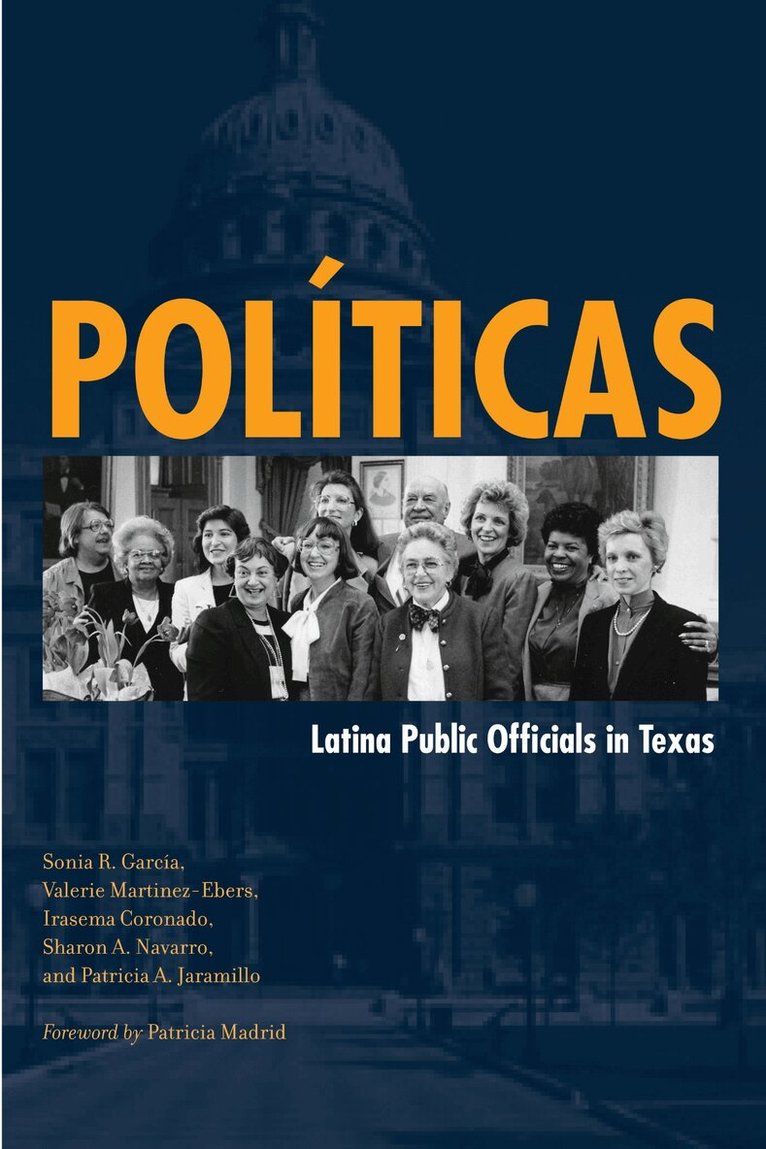
In the decades since Latinas began to hold public office in the United States in the late 1950s, they have blazed new trails in public life, bringing fresh perspectives, leadership styles, and policy agendas to the business of governing cities, counties, states, and the nation. As of 2004, Latinas occupied 27.4 percent of the more than 6,000 elected and appointed local, state, and national positions filled by Hispanic officeholders. The greatest number of these Latina officeholders reside in Texas, where nearly six hundred women occupy posts from municipal offices, school boards, and county offices to seats in the Texas House and Senate. In this book, five Latina political scientists profile the women who have been the first Latinas to hold key elected and appointed positions in Texas government. Through interviews with each woman or her associates, the authors explore and theorize about Latina officeholders' political socialization, decision to run for office and obstacles overcome, leadership style, and representational roles and advocacy. The profiles begin with Irma Rangel, the first Latina elected to the Texas House of Representatives, and Judith Zaffirini and Leticia Van de Putte, the only two Latinas to serve in the Texas Senate. The authors also interview Lena Guerrero, the first and only Latina to serve in a statewide office; judges Linda Yanes, Alma Lopez, Elma Salinas Ender, Mary Roman, and Alicia ChacÓn; mayors Blanca Sanchez Vela (Brownsville), Betty Flores (Laredo), and Olivia Serna (Crystal City); and Latina city councilwomen from San Antonio, El Paso, Dallas, Houston, and Laredo.
578 kr
Skickas inom 10-15 vardagar
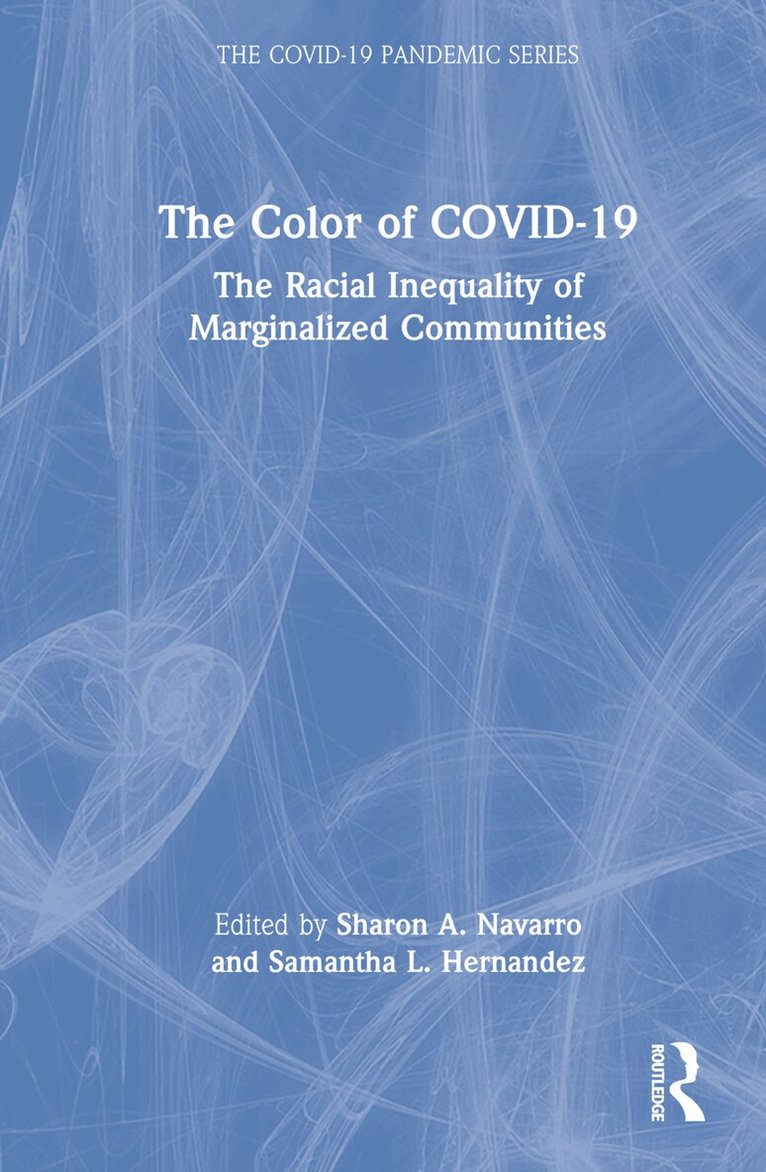
The COVID-19 pandemic has disproportionately affected communities of color while highlighting the prevalence of structural racism in the United States. This crucial collection of essays, written by leading scholars from the fields of communications, political science, health, philosophy, and geography, explores the manifold ways in which the COVID-19 pandemic has impacted upon Black, Latinx, and Indigenous communities and the way we see race relations in the United States.The COVID-19 pandemic has exposed the significance of U.S. health inequalities, which the World Health Organization defines as "avoidable [and] unfair." It has also highlighted structural racism, specifically, institutions, practices, values, customs, and policies that differentially allocate resources and opportunities so as to increase inequity among racial groups. Navarro and Hernandez therefore argue that the COVID-19 pandemic has unleashed a race war in America that has further marginalized communities of color by limiting access to resources by different racial and ethnic minorities, particularly women within these communities. Moreover, the systemic policies of the past that upheld or failed to address the unequal social conditions affecting Blacks, Latinxs, and other minorities have now been magnified with COVID-19. The volume concludes by offering recommendations to prevent future humanitarian crises from exacerbating racial divisions and having a disproportionate impact upon ethnic minorities.This timely volume will be of great interest to those interested in the study of race and the social impacts of the COVID-19 pandemic in the United States.
2 167 kr
Skickas inom 10-15 vardagar
The COVID-19 pandemic has disproportionately affected communities of color while highlighting the prevalence of structural racism in the United States. This crucial collection of essays, written by leading scholars from the fields of communications, political science, health, philosophy, and geography, explores the manifold ways in which the COVID-19 pandemic has impacted upon Black, Latinx, and Indigenous communities and the way we see race relations in the United States.The COVID-19 pandemic has exposed the significance of U.S. health inequalities, which the World Health Organization defines as "avoidable [and] unfair." It has also highlighted structural racism, specifically, institutions, practices, values, customs, and policies that differentially allocate resources and opportunities so as to increase inequity among racial groups. Navarro and Hernandez therefore argue that the COVID-19 pandemic has unleashed a race war in America that has further marginalized communities of color by limiting access to resources by different racial and ethnic minorities, particularly women within these communities. Moreover, the systemic policies of the past that upheld or failed to address the unequal social conditions affecting Blacks, Latinxs, and other minorities have now been magnified with COVID-19. The volume concludes by offering recommendations to prevent future humanitarian crises from exacerbating racial divisions and having a disproportionate impact upon ethnic minorities.This timely volume will be of great interest to those interested in the study of race and the social impacts of the COVID-19 pandemic in the United States.
1 338 kr
Skickas inom 7-10 vardagar
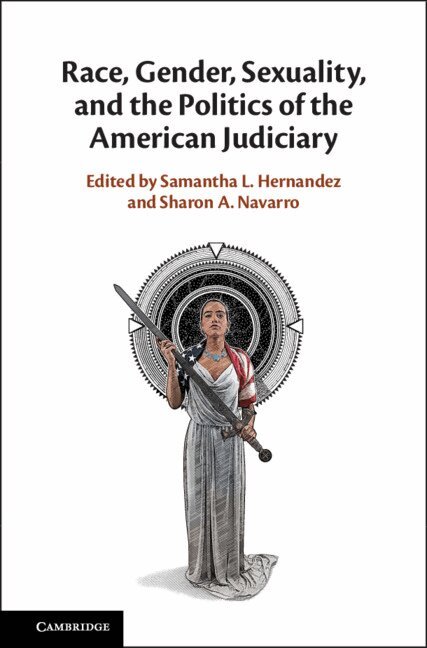
The judicial system in a liberal democracy is deemed to be an independent branch of government with judges free from political agendas or societal pressures. In reality, judges are often influenced by their economic and social backgrounds, gender, race, religion, and sexuality. This volume explores the representation of different identities in the judiciary in the United States. The contributors investigate the pipeline, ambition, institutional inclusion, retention, and representation of groups previously excluded from federal, state, and local judiciaries. This study demonstrates how diversity on the bench improves the quality of justice, bolsters confidence in the legitimacy of the courts, and provides a vital voice in decision-making power for formerly disenfranchised populations.