Stephan R. Epstein - Böcker
Visar alla böcker från författaren Stephan R. Epstein. Handla med fri frakt och snabb leverans.
2 produkter
2 produkter
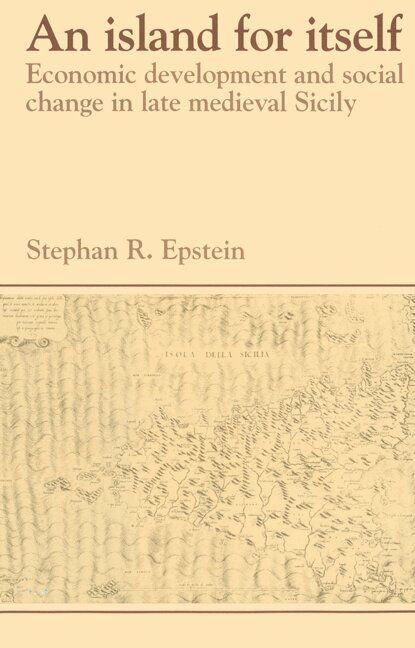
An Island for Itself
Economic Development and Social Change in Late Medieval Sicily
Häftad, Engelska, 2003
699 kr
Skickas inom 7-10 vardagar
This study of late medieval Sicily develops a critique of theories of dependence through trade, and a new interpretation of the late medieval economy. It thus addresses current debates on the origins of modern Italian economic dualism, and on the transition from feudalism to capitalism in early modern Europe. Dr Epstein argues that economic development during this period was shaped largely by regional political and institutional structures which regulated access to markets. Following the Black Death, many institutional and social constraints on commercialization were relaxed throughout western Europe as a result of social conflict and demographic change. Peasants became more commercialized; economic growth occurred through regional integration and specialization. The Sicilian economy also expanded and became increasingly export-oriented. although only a small proportion of its output was shipped abroad before 1500. Late medieval Sicily is thus shown to have been neither underdeveloped nor dependent on foreign manufactures and trade.
1 485 kr
Skickas inom 7-10 vardagar
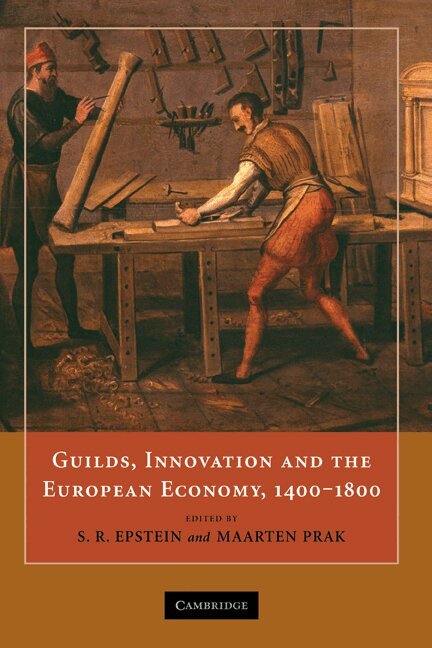
For a long time guilds have been condemned as a major obstacle to economic progress in the pre-industrial era. This re-examination of the role of guilds in the early modern European economy challenges that view by taking into account fresh research on innovation, technological change and entrepreneurship. Leading economic historians argue that industry before the Industrial Revolution was much more innovative than previous studies have allowed for and explore the different products and production techniques that were launched and developed in this period. Much of this innovation was fostered by the craft guilds that formed the backbone of industrial production before the rise of the steam engine. The book traces the manifold ways in which guilds in a variety of industries in Italy, Austria, Germany, Switzerland, France, Belgium, the Netherlands, and Britain helped to create an institutional environment conducive to technological and marketing innovations.