Steven D. Reschly - Böcker
Visar alla böcker från författaren Steven D. Reschly. Handla med fri frakt och snabb leverans.
2 produkter
2 produkter
483 kr
Tillfälligt slut
This collection of original essays focuses on the rich, historically diverse, and often misunderstood experiences of Amish, Mennonite, and other women of Anabaptist traditions across 400 years. Equal parts sociology, religious history, and gender studies, the book explores the changing roles and issues surrounding Anabaptist women in communities ranging from sixteenth-century Europe to contemporary North America.Gathered under the overarching theme of the insider/outsider distinction, the essays discuss, among other topics: *How womanhood was defined in early Anabaptist societies of the sixteenth and seventeenth centuries, and how women served as central figures by convening meetings across class boundaries or becoming religious leaders *How nineteenth-century Amish tightened the connections among the individual, the family, the household, and the community by linking them into a shared framework with the father figure at the helm *The changing work world and domestic life of Mennonite women in the three decades following World War II *The recent ascendency of antimodernism and plain dress among the Amish *The special difficulties faced by scholars who try to apply a historical or sociological method to the very same cultural subgroups from which they derive The essays in this collection follow a fascinating journey through time and place to give voice to women who are often characterized as the "quiet in the land." Their voices and their experiences demonstrate the power of religion to shape identity and social practice.
530 kr
Skickas inom 7-10 vardagar
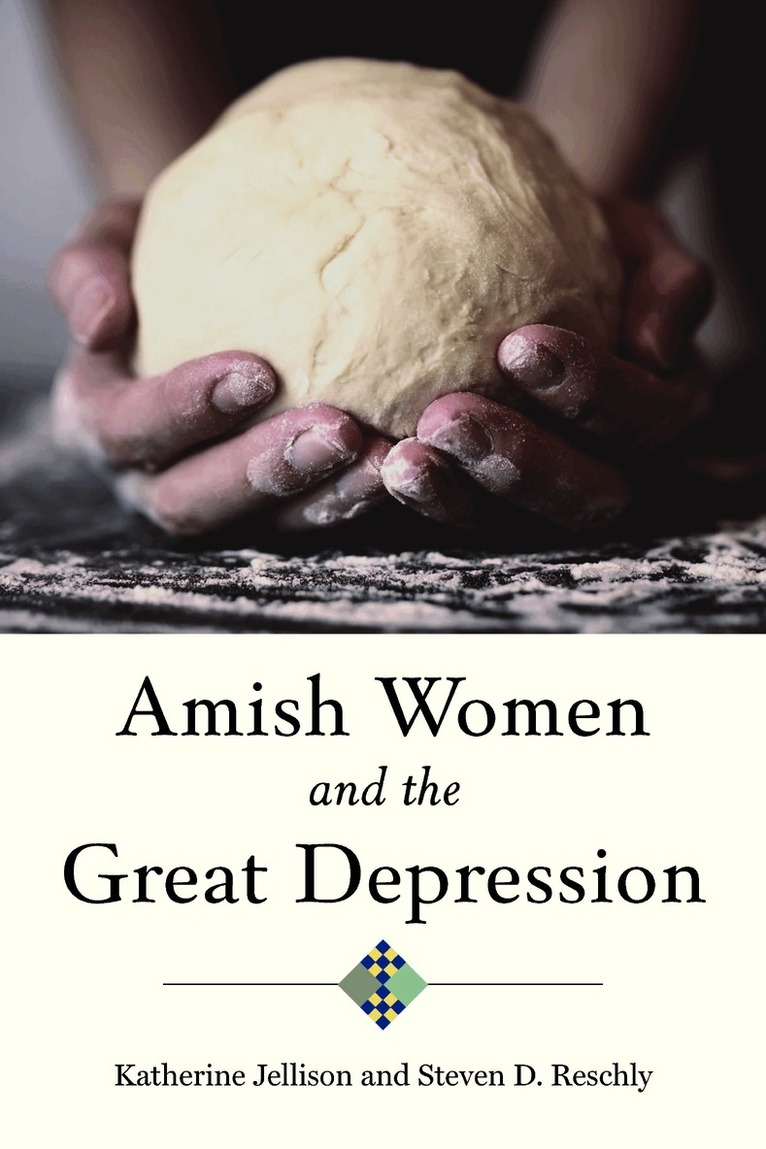
A detailed look at how Amish women sustained family farming during the Great Depression.At the end of the Great Depression, the US Bureau of Agricultural Economics (BAE) designated the Old Order Amish of Lancaster County, Pennsylvania, the most economically and culturally stable agricultural community in the nation. In Amish Women and the Great Depression, Katherine Jellison and Steven D. Reschly examine the integral role that Amish women played in this Depression-era success story. Making unprecedented use of quantitative data as well as qualitative accounts by and about Amish women, Jellison and Reschly reveal how Amish women sustained family farming during this devastating time. Using information from the federal government's 1935–1936 Study of Consumer Purchases (SCP), they closely examine the quantitative data related to Old Order Amish families and their neighbors in Lancaster County. SCP investigators approached women in these families to learn about household spending habits, farm crops and income, farm and household equipment, family size, home production, recreational practices, and dietary habits. Jellison and Reschly analyze the production and consumption activities of Amish women and their families as well as comparative data about the practices of their neighbors. Amish Women and the Great Depression also incorporates a variety of qualitative sources to enliven the statistical analysis, including Old Order Amish women's diaries and memoirs; newspaper accounts by and about Amish women; government reports and related correspondence about the Lancaster County Amish; oral histories with elderly Old Order Amish people about their experiences in the 1930s; an oral history with Walter M. Kollmorgen, the author of the 1942 BAE study of Old Order Amish community stability; and photographs by New Deal photographers. This unique portrait of Depression-era farm life provides a historic look into the farming practices and daily lives of Amish women.