Steven W. Laycock - Böcker
Visar alla böcker från författaren Steven W. Laycock. Handla med fri frakt och snabb leverans.
4 produkter
4 produkter
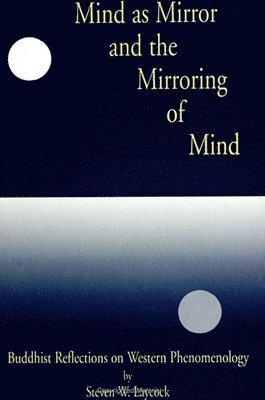
Mind as Mirror and the Mirroring of Mind
Buddhist Reflections on Western Phenomenology
Häftad, Engelska, 1994
402 kr
Tillfälligt slut
Rooted in the insights of Madhyamika dialectic and an articulated Zazen phenomenology, this study uncovers and examines the methodological presuppositions undergirding the work of Husserl, Sartre, and Merleau-Ponty and calls into serious question certain of the most fundamental assumptions of the Western phenomenological tradition regarding the nature of mind. Mind as Mirror and the Mirroring of Mind presents, for the first time, a searching and distinctively Buddhist challenge to the Western phenomenologies-a challenge, that is, to grow beyond the settled alternative assumptions that the mind either is or is not mirror-like in its experience of phenomenal reality.
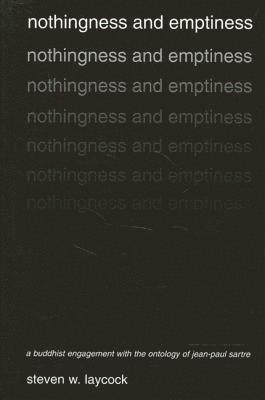
Nothingness and Emptiness
A Buddhist Engagement with the Ontology of Jean-Paul Sartre
Inbunden, Engelska, 2001
1 057 kr
Tillfälligt slut
Using Buddhist thought, explores and challenges the philosophy of Jean-Paul Sartre.This sustained and distinctively Buddhist challenge to the ontology of Jean-Paul Sartre's Being and Nothingness resolves the incoherence implicit in the Sartrean conception of nothingness by opening to a Buddhist vision of emptiness. Rooted in the insights of Madhyamika dialectic and an articulated meditative (zen) phenomenology, Nothingness and Emptiness uncovers and examines the assumptions that sustain Sartre's early phenomenological ontology and questions his theoretical elaboration of consciousness as "nothingness." Laycock demonstrates that, in addition to a "relative" nothingness (the for-itself) defined against the positivity and plenitude of the in-itself, Sartre's ontology requires, but also repudiates, a conception of "absolute" nothingness (the Buddhist "emptiness"), and is thus, as it stands, logically unstable, perhaps incoherent. The author is not simply critical; he reveals the junctures at which Sartrean ontology appeals for a Buddhist conception of emptiness and offers the needed supplement.
Nothingness and Emptiness
A Buddhist Engagement with the Ontology of Jean-Paul Sartre
Häftad, Engelska, 2001
382 kr
Tillfälligt slut
Using Buddhist thought, explores and challenges the philosophy of Jean-Paul Sartre.This sustained and distinctively Buddhist challenge to the ontology of Jean-Paul Sartre's Being and Nothingness resolves the incoherence implicit in the Sartrean conception of nothingness by opening to a Buddhist vision of emptiness. Rooted in the insights of Madhyamika dialectic and an articulated meditative (zen) phenomenology, Nothingness and Emptiness uncovers and examines the assumptions that sustain Sartre's early phenomenological ontology and questions his theoretical elaboration of consciousness as "nothingness." Laycock demonstrates that, in addition to a "relative" nothingness (the for-itself) defined against the positivity and plenitude of the in-itself, Sartre's ontology requires, but also repudiates, a conception of "absolute" nothingness (the Buddhist "emptiness"), and is thus, as it stands, logically unstable, perhaps incoherent. The author is not simply critical; he reveals the junctures at which Sartrean ontology appeals for a Buddhist conception of emptiness and offers the needed supplement.
382 kr
Tillfälligt slut
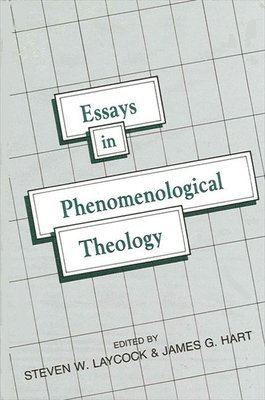
This anthology applies phenomenological concepts and methods to issues of philosophical theology and philosophical theology and philosophy: the being and nature of God, and the divine modes of relatedness to nature, to society, and to the self. Essays in Phenomenological Theology contains previously unpublished papers by Iso Kern, J. N. Findlay, Charles Courtney, Thomas Prufer, Robert Williams, James Hart, Steven Laycock, and James Buchanan. It is the first volume to assemble an entire spectrum of phenomenological-theological ideas, including those of neo-Platonic meditation, phenomenological neo-Thomism, Hegelian phenomenological dialectics, Husserlian transcendental reflection, and post-modern deconstructive iconoclasm. The book will be useful to philosophers and theologians seeking an enriched understanding of the rapidly-burgeoning discipline of phenomenological theology, and promises unexpected insights even to seasoned phenomenologists seeking to expand their horizons.