Susan J. Matt - Böcker
Visar alla böcker från författaren Susan J. Matt. Handla med fri frakt och snabb leverans.
13 produkter
13 produkter
598 kr
Skickas inom 5-8 vardagar
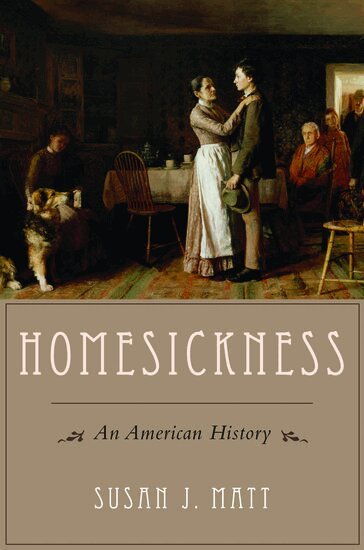
Homesickness today is dismissed as a sign of immaturity, what children feel at summer camp, but in the nineteenth century it was recognized as a powerful emotion. When gold miners in California heard the tune "Home, Sweet Home," they sobbed. When Civil War soldiers became homesick, army doctors sent them home, lest they die. Such images don't fit with our national mythology, which celebrates the restless individualism of colonists, explorers, pioneers, soldiers, and immigrants who supposedly left home and never looked back. Using letters, diaries, memoirs, medical records, and psychological studies, this wide-ranging book uncovers the profound pain felt by Americans on the move from the country's founding until the present day. Susan Matt shows how colonists in Jamestown longed for and often returned to England, African Americans during the Great Migration yearned for their Southern homes, and immigrants nursed memories of Sicily and Guadalajara and, even after years in America, frequently traveled home. These iconic representatives of the undaunted, forward-looking American spirit were often homesick, hesitant, and reluctant voyagers. National ideology and modern psychology obscure this truth, portraying movement as easy, but in fact Americans had to learn how to leave home, learn to be individualists. Even today, in a global society that prizes movement and that condemns homesickness as a childish emotion, universities counsel young adults and their families on how to manage the transition away from home, suburbanites pine for their old neighborhoods, and companies take seriously the emotional toll borne by relocated executives and road warriors. In the age of helicopter parents and boomerang kids, and the new social networks that sustain connections across the miles, Americans continue to assert the significance of home ties. By highlighting how Americans reacted to moving farther and farther from their roots, Homesickness: An American History revises long-held assumptions about home, mobility, and our national identity.
428 kr
Skickas inom 5-8 vardagar
Homesickness today is dismissed as a sign of immaturity, what children feel at summer camp, but in the nineteenth century it was recognized as a powerful emotion. When gold miners in California heard the tune "Home, Sweet Home," they sobbed. When Civil War soldiers became homesick, army doctors sent them home, lest they die. Such images don't fit with our national mythology, which celebrates the restless individualism of colonists, explorers, pioneers, soldiers, and immigrants who supposedly left home and never looked back.Using letters, diaries, memoirs, medical records, and psychological studies, this wide-ranging book uncovers the profound pain felt by Americans on the move from the country's founding until the present day. Susan Matt shows how colonists in Jamestown longed for and often returned to England, African Americans during the Great Migration yearned for their Southern homes, and immigrants nursed memories of Sicily and Guadalajara and, even after years in America, frequently traveled home. These iconic symbols of the undaunted, forward-looking American spirit were often homesick, hesitant, and reluctant voyagers. National ideology and modern psychology obscure this truth, portraying movement as easy, but in fact Americans had to learn how to leave home, learn to be individualists. Even today, in a global society that prizes movement and that condemns homesickness as a childish emotion, colleges counsel young adults and their families on how to manage the transition away from home, suburbanites pine for their old neighborhoods, and companies take seriously the emotional toll borne by relocated executives and road warriors. In the age of helicopter parents and boomerang kids, and the new social networks that sustain connections across the miles, Americans continue to assert the significance of home ties.By highlighting how Americans reacted to moving farther and farther from their roots, Homesickness: An American History revises long-held assumptions about home, mobility, and our national identity.
1 199 kr
Skickas inom 7-10 vardagar
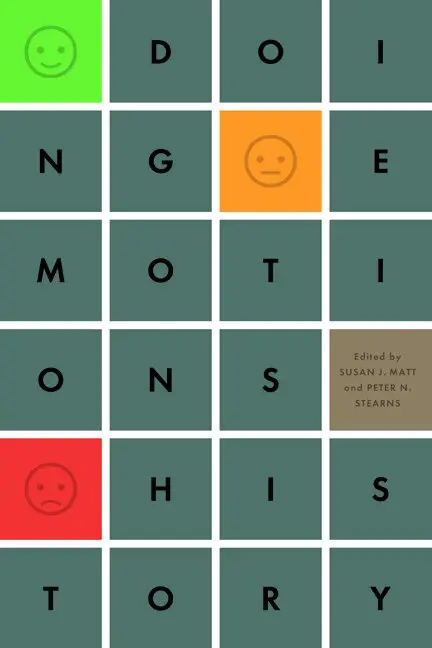
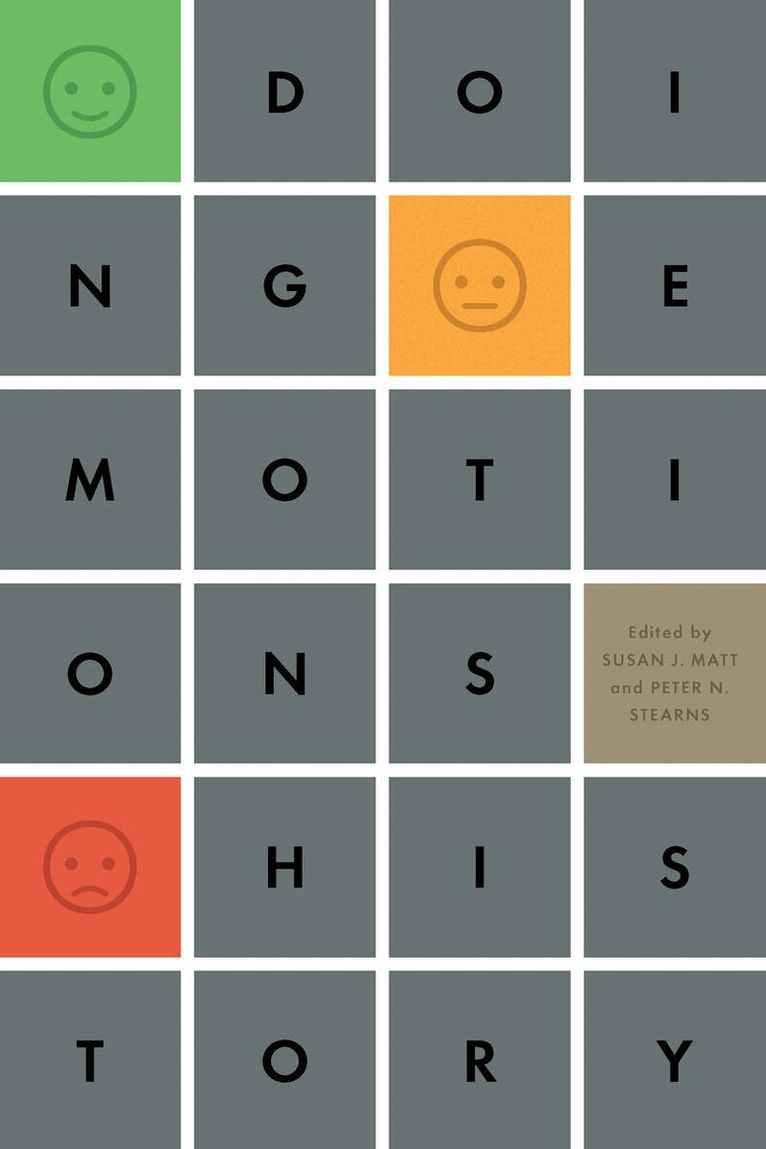
How do emotions change over time? When is hate honorable? What happens when "love" is translated into different languages? Such questions are now being addressed by historians who trace how emotions have been expressed and understood in different cultures throughout history. Doing Emotions History explores the history of feelings such as love, joy, grief, nostalgia as well as a wide range of others, bringing together the latest and most innovative scholarship on the history of the emotions. Spanning the globe from Asia and Europe to North America, the book provides a crucial overview of this emerging discipline. An international group of scholars reviews the field's current status and variations, addresses many of its central debates, provides models and methods, and proposes an array of possibilities for future research. Emphasizing the field's intersections with anthropology, psychology, sociology, neuroscience, data-mining, and popular culture, this groundbreaking volume demonstrates the affecting potential of doing emotions history. Contributors are John Corrigan, Pam Epstein, Nicole Eustace, Norman Kutcher, Brent Malin, Susan Matt, Darrin McMahon, Peter N. Stearns, and Mark Steinberg.
292 kr
Skickas inom 7-10 vardagar
How do emotions change over time? When is hate honorable? What happens when "love" is translated into different languages? Such questions are now being addressed by historians who trace how emotions have been expressed and understood in different cultures throughout history. Doing Emotions History explores the history of feelings such as love, joy, grief, nostalgia as well as a wide range of others, bringing together the latest and most innovative scholarship on the history of the emotions. Spanning the globe from Asia and Europe to North America, the book provides a crucial overview of this emerging discipline. An international group of scholars reviews the field's current status and variations, addresses many of its central debates, provides models and methods, and proposes an array of possibilities for future research. Emphasizing the field's intersections with anthropology, psychology, sociology, neuroscience, data-mining, and popular culture, this groundbreaking volume demonstrates the affecting potential of doing emotions history. Contributors are John Corrigan, Pam Epstein, Nicole Eustace, Norman Kutcher, Brent Malin, Susan Matt, Darrin McMahon, Peter N. Stearns, and Mark Steinberg.
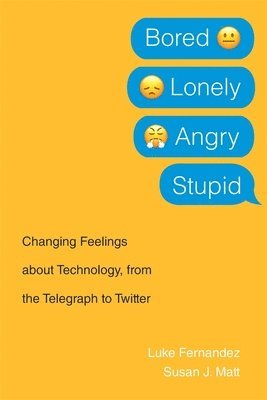
Bored, Lonely, Angry, Stupid
Changing Feelings about Technology, from the Telegraph to Twitter
Häftad, Engelska, 2020
229 kr
Skickas inom 10-15 vardagar
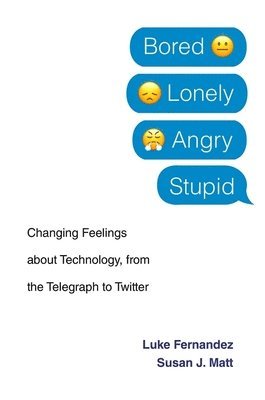
An Entrepreneur Best Book of the YearFacebook makes us lonely. Selfies breed narcissism. On Twitter, hostility reigns. Pundits and psychologists warn that digital technologies substantially alter our emotional states, but in this lively investigation of changing feelings about technology, we learn that the gadgets we use don’t just affect how we feel—they can profoundly change our sense of self. When we say we’re bored, we don’t mean the same thing as a Victorian dandy. Could it be that political punditry has helped shape a new kind of anger? Luke Fernandez and Susan Matt take us back in time to consider how our feelings of loneliness, boredom, vanity, and anger have evolved in tandem with new technologies.“Technologies have been shaping [our] emotional culture for more than a century, argue computer scientist Luke Fernandez and historian Susan Matt in this original study. Marshalling archival sources and interviews, they trace how norms (say, around loneliness) have shifted with technological change.”—Nature“A powerful story of how new forms of technology are continually integrated into the human experience.”—Publishers Weekly
317 kr
Tillfälligt slut
667 kr
Skickas inom 10-15 vardagar
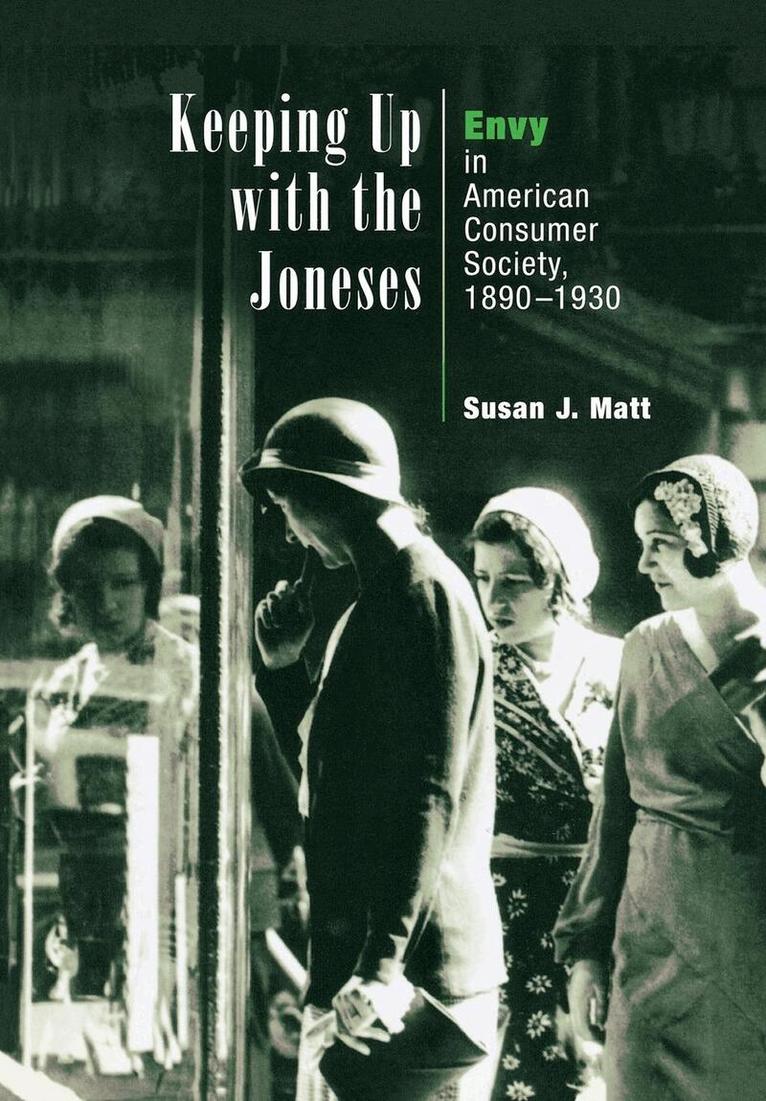
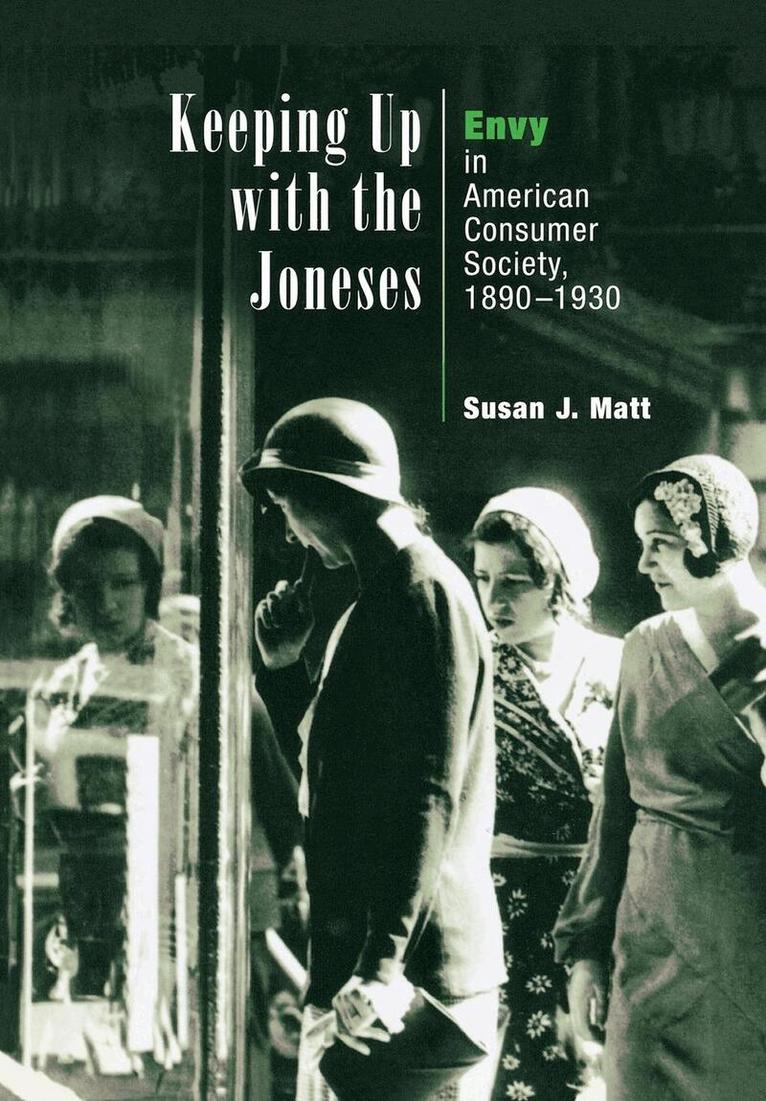
A century ago many Americans condemned envy as a destructive emotion and a sin. Today few Americans expect criticism when they express envy, and some commentators maintain that the emotion drives the economy. This shift in attitude is Susan Matt's central concern. Keeping up with the Joneses: Envy in American Consumer Society, 1890-1930 examines a key transition in the meaning of envy for the American middle class. Although people certainly have experienced envy throughout history, the expansion of the consumer economy at the turn of the twentieth century dramatically reshaped the social role of the emotion. Matt looks at how different groups within the middle class-men in white-collar jobs, bourgeois women, farm families, and children-responded to the transformation in social and cultural life.Keeping Up with the Joneses traces how attitudes about envy changed as department stores, mail-order catalogs, magazines, movies, and advertising became more prevalent, and the mass production of imitation luxury goods offered middle- and working-class individuals the opportunity to emulate upper-class life. Between 1890 and 1910 moralists sought to tame envy and emulation in order to uphold a moral economy and preserve social order. They criticized the liberal-capitalist preoccupation with personal striving and advancement and praised the virtue of contentment. They admonished the bourgeoisie to be satisfied with their circumstances and cease yearning for their neighbors' possessions. After 1910 more secular commentators gained ground, repudiating the doctrine of contentment and rejecting the notion that there were divinely ordained limits on what each class should possess. They encouraged everyone to pursue the objects of desire. Envy was no longer a sin, but a valuable economic stimulant.The expansion of consumer economy fostered such institutions as department stores and advertising firms, but it also depended on a transformation in attitudes and emotional codes. Matt explores the ways gender, geography, and age shaped this transformation. Bridging the history of emotions and the history of consumerism, she uncovers the connection between changing social norms and the growth of the consumer economy.
1 667 kr
Skickas inom 10-15 vardagar
This collection of primary sources examines the history of emotions in the United States, spanning the years 1800-1865. This period was filled with dramatic political, social and economic changes, including the development of a new national identity, the spread of chattel slavery, the rise of capitalism, the surge of religious revivalism, military and settler expansion into Native American, Mexican, and British lands, and the Civil War. While these events have been well studied, this collection explores these upheavals using the lens of the history of emotions. The volumes bring together a rich group of primary sources demonstrating how Americans responded to these large public events. It also includes sources that trace the more private and subjective experiences of daily life during the 19th century, for the era was witness to significant transformations in ideals of family and romantic love, conceptions of honour and courage, anger and indignation, selfishness and greed. It also was a period when new emotions like homesickness and boredom appeared. This fascinating collection of materials, alongside extensive editorial commentary, will be of great interest to students of American History and the History of Emotions.
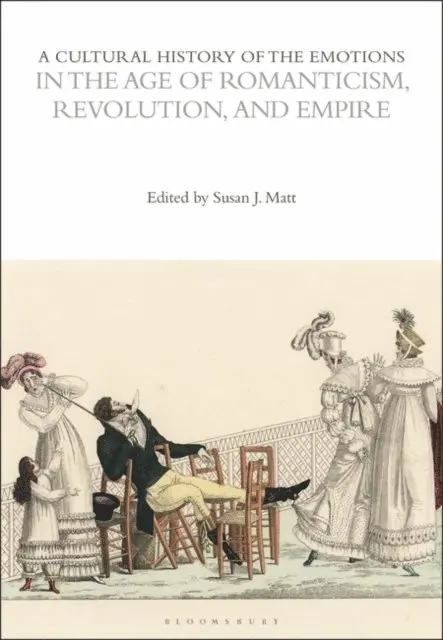
Cultural History of the Emotions in the Age of Romanticism, Revolution, and Empire
Häftad, Engelska, 2022
386 kr
Skickas inom 7-10 vardagar
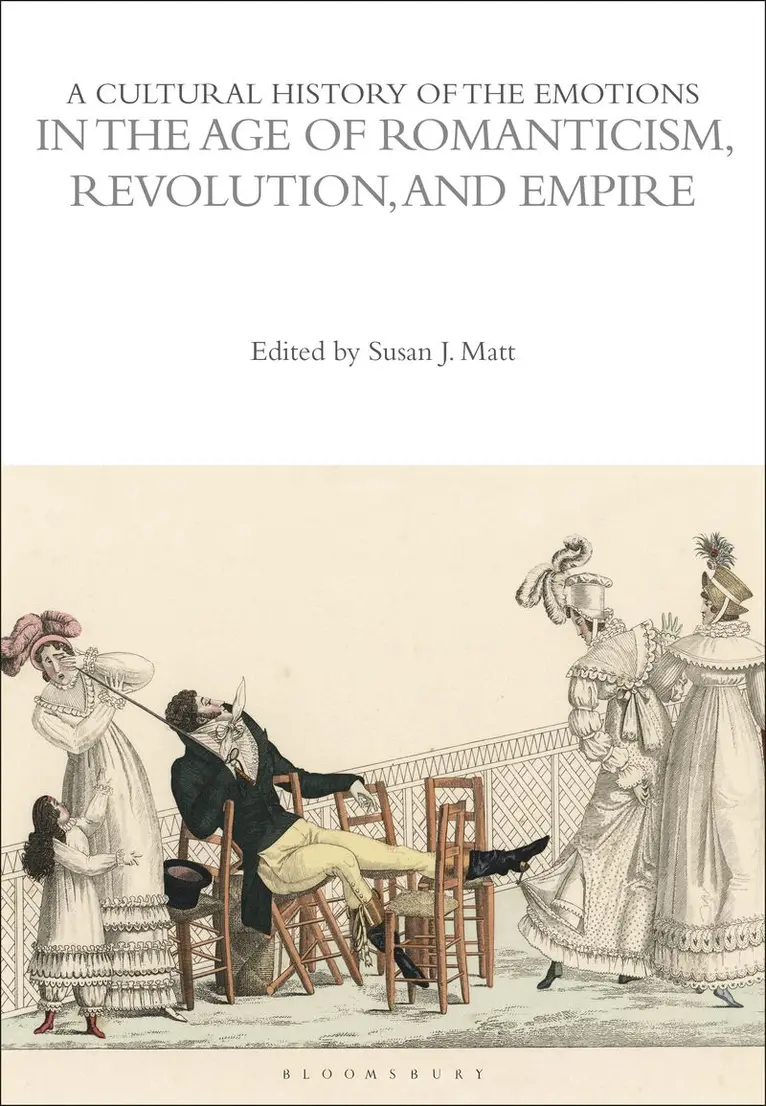
Between 1780 and 1920, modern conceptions of emotion—conceptions still very much present in the 21st century—first took shape. This book traces that history, charting the changing meaning and experience of feelings in an era shaped by political and market revolutions, romanticism, empiricism, the rise of psychology and psychoanalysis. During this period, the word emotion itself gained currency, gradually supplanting older vocabularies and visions of feeling. Terms to describe feelings changed; so too did conceptions of emotions’ proper role in politics, economics, and culture. Political upheavals turned a spotlight on the role of feeling in public life; in domestic life, sentimental bonds gained new importance, as families were transformed from productive units to emotional ones. From the halls of parliaments to the familial hearth, from the art museum to the theatre, from the pulpit to the concert hall, lively debates over feelings raged across the 19th century.
499 kr
Kommande
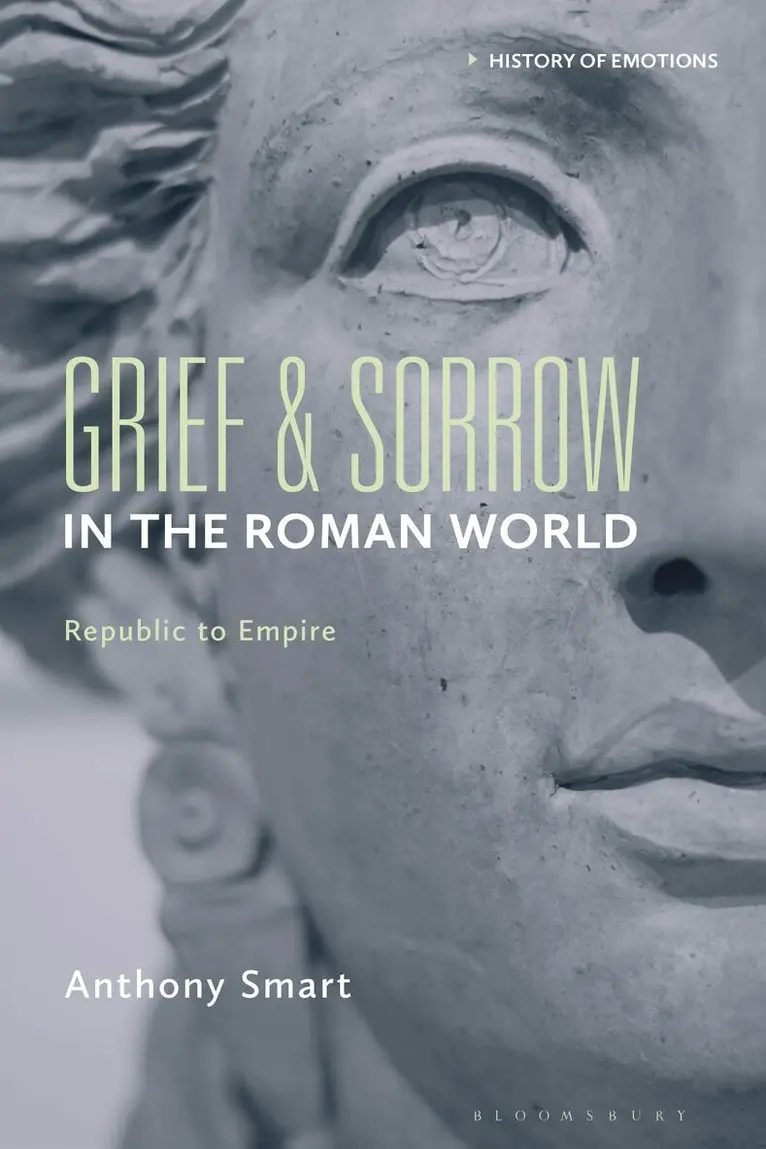
Engaging with the long history of emotions, this book provides a new narrative of how grief was defined, experienced and used in Ancient Rome. From studies of tears and weeping, to Roman funerary monuments and inscriptions, the role of female grief in navigating political conflict, and letters of consolation, Grief and Sorrow in the Roman World explores the language of grief and individuality of sorrow in Rome, and asks how and why they shaped their emotions in this way.Revisiting familiar sources such as Livy and Plutarch it offers new interpretations to place the Roman emotional framework against our own. Can we recognise our own notions of grief in the Ancient World? Do we feel pain in the same way as our Roman ancestors did? Exploring these questions and more, Anthony Smart challenges existing perceptions of grief and sorrow in the Roman world and places emotions at the centre of this rich culture.
Death and Emotions in Anglo-China
Negotiating Grief Across Cultures in the Nineteenth Century
Inbunden, Engelska, 2026
1 398 kr
Kommande
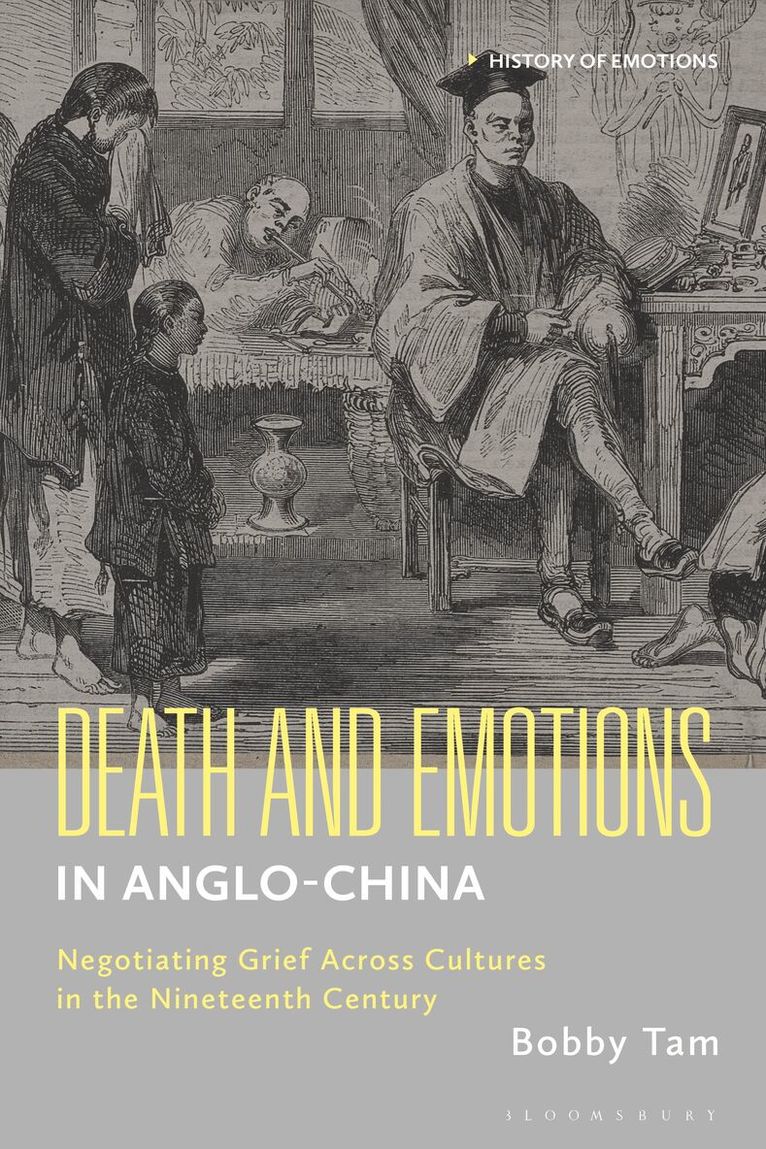
This book uncovers the history of emotions surrounding death in colonial and semi-colonial Anglo-China during the 19th century. Engaging with both English and Chinese sources, including obituaries, memoirs, personal correspondence, missionary publications, mourning poetry and travel accounts, Death and Emotions in Anglo-China explores how this common human experience was understood, expressed, and felt across different cultures, where it became not merely a personal matter but a hotly contested issue.Illustrating how emotions of death solidified communities, buttressed regimes and galvanised political movements, the book pays attention to the dilemma between personal grief and communal commemoration, arguing that the chaotic process of grieving was often pushed aside by collective narratives, which stressed the emotional norm of solemnity. Such collective emotions provided the Western powers, namely the British, a sentimental rhetoric of sacrifice for their imperial cause, and for the Chinese, a powerful impetus to rising Chinese nationalism by the turn of the century.Focusing on a culturally dynamic context previously overlooked in the field of emotional history, this book contributes to the global dimension of growing interests in historicizing the universal human conditions of emotions and death.
1 398 kr
Kommande
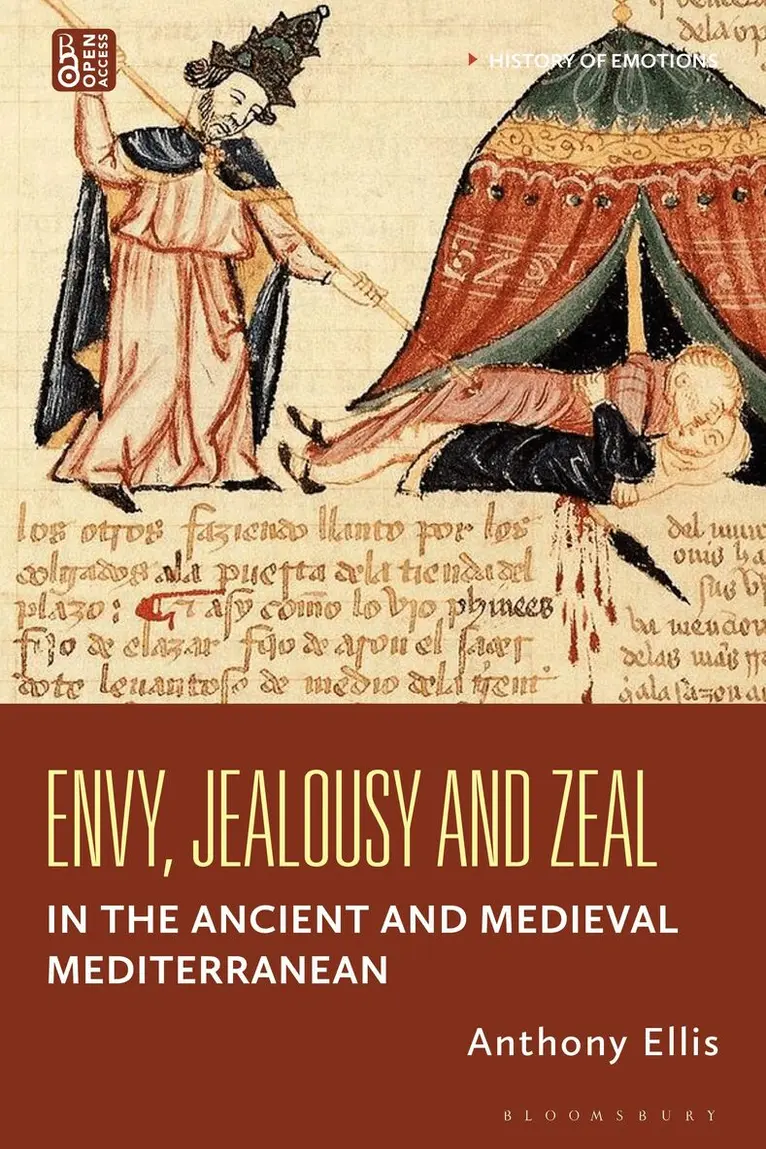
Envy, Jealousy and Zeal in the Ancient and Medieval Mediterranean is a cross-cultural history of the rivalrous emotions. Based in close studies of half a dozen pre-modern Mediterranean societies, from the biblical Israelites and the classical Greeks to Umayyad Córdoba and medieval Latin Christendom, it traces changing understandings of jealousy and envy across two millennia. By treating envy, jealousy and their estranged cousin zeal as concepts with long and complex histories, it shows how they have reflected and in turn influenced broader social changes in gender relations, friendship, class structure, marriage norms, religious piety, sexuality, emotional style and language. Is jealousy a healthy social virtue, or a manifestation of the utter depravity of human nature? The answer depends, to a remarkable extent, on the language you speak.A host of unexpected stories emerge along the way: how religious ‘zealotry’ evolved out of pious ‘jealousy’ to become the emotion which drove devout heroes to combat heretics; how ‘romantic jealousy’ developed in tandem with the biblical metaphor of God as a ‘jealous husband’ thrashing his wife for infidelity; how philosophers since antiquity have waged war on jealousy and envy through a succession of utopian projects spanning from Plato’s Republic and Christian monasticism all the way to the free, or heavily discounted, love of the Hippy communes. Ancient and medieval texts brim with answers to timeless questions: is jealousy the proof of love, or rather love’s opposite? What role is there for envy in a healthy community? When does ideological zeal improve society, when does it lead to intolerance and misguided violence? Using historical anthropology this open access book question basic assumptions about these emotions within contemporary psychology, philosophy and theology. Through extensive interdisciplinary dialogue, it offers a new basis for a cross-cultural understanding of these fundamental human feelings.The ebook editions of this book are available open access under a CC BY-NC-ND 4.0 licence on bloomsburycollections.com. Open access was funded by The Swiss National Science Foundation.
Cultural History of the Emotions in the Age of Romanticism, Revolution, and Empire
Inbunden, Engelska, 2021
1 226 kr
Skickas inom 7-10 vardagar
Between 1780 and 1920, modern conceptions of emotion—conceptions still very much present in the 21st century—first took shape. This book traces that history, charting the changing meaning and experience of feelings in an era shaped by political and market revolutions, romanticism, empiricism, the rise of psychology and psychoanalysis. During this period, the word emotion itself gained currency, gradually supplanting older vocabularies and visions of feeling. Terms to describe feelings changed; so too did conceptions of emotions’ proper role in politics, economics, and culture. Political upheavals turned a spotlight on the role of feeling in public life; in domestic life, sentimental bonds gained new importance, as families were transformed from productive units to emotional ones. From the halls of parliaments to the familial hearth, from the art museum to the theatre, from the pulpit to the concert hall, lively debates over feelings raged across the 19th century.