Tamar Lewinsky – författare
Visar alla böcker från författaren Tamar Lewinsky. Handla med fri frakt och snabb leverans.
4 produkter
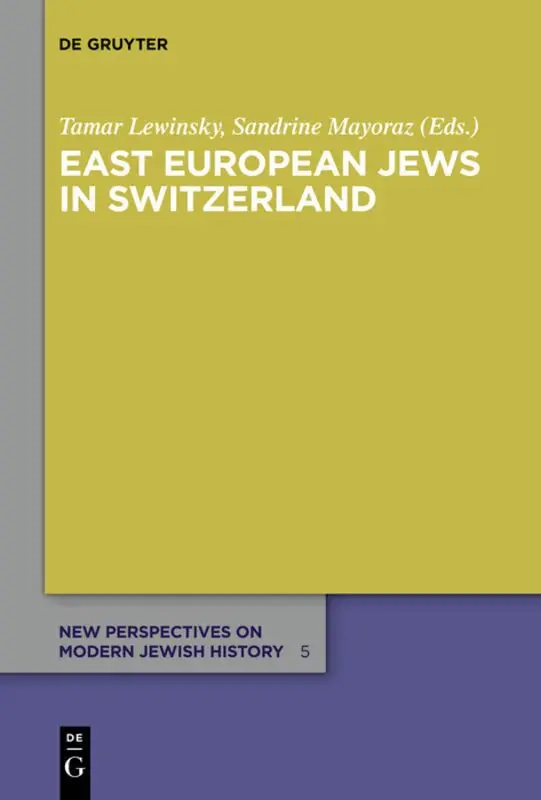
East European Jews in Switzerland
Av Tamar Lewinsky, Sandrine Mayoraz
Inbunden, 2013
1612 kr
Lägg i varukorg
During the era of Jewish mass migration from Eastern Europe (from the 1880s until the First World War), Switzerland played an important role in absorbing immigrants. Though located at the periphery of the main migration routes, the federal state with its liberal policies on foreigners became a key …
East European Jews in Switzerland
Av Sandrine Mayoraz, Tamar Lewinsky
E-bok, 2013
1626 kr
Lägg i varukorg
During the era of Jewish mass migration from Eastern Europe (from the 1880s until the First World War), Switzerland played an important role in absorbing immigrants. Though located at the periphery of the main migration routes, the federal state with its liberal policies on foreigners became a key …
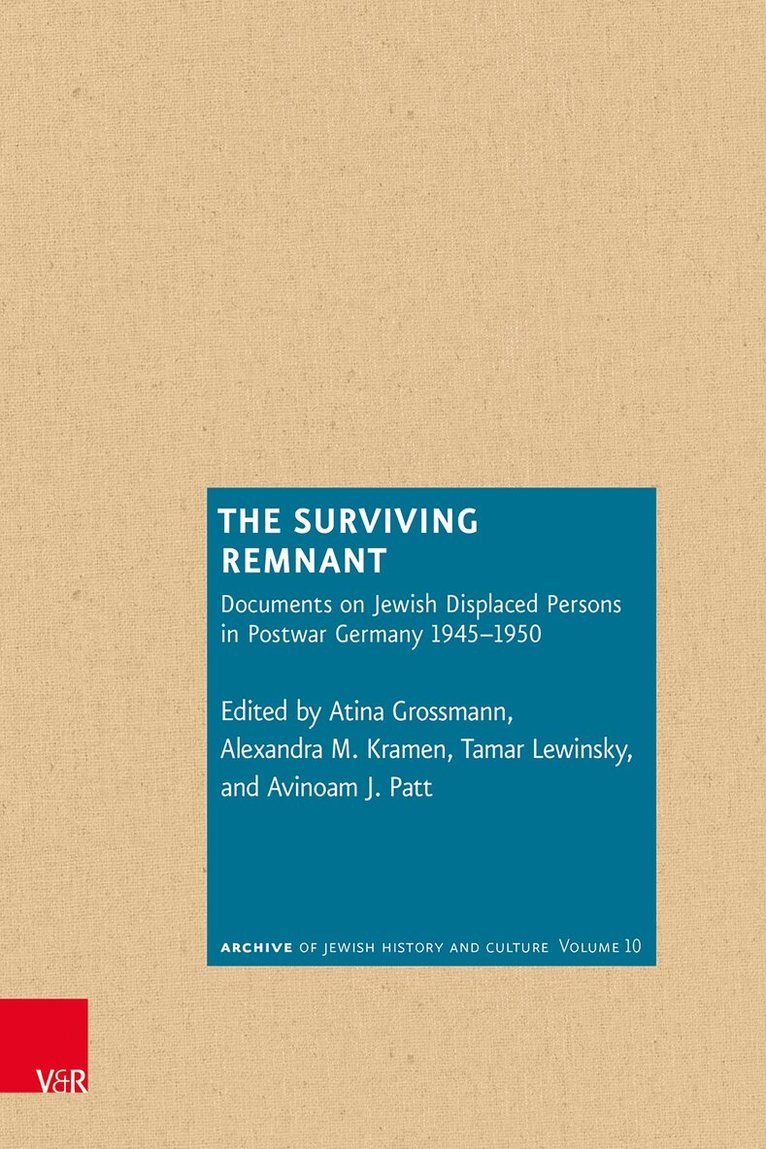
Surviving Remnant
Documents on Jewish Displaced Persons in Postwar Germany 1945–1950
Av Atina Grossmann, Alexandra M. Kramen m. fl.
Inbunden, 2024
1705 kr
Lägg i varukorg
This volume features 72 documents (in Yiddish, English, Hebrew, and German) created between 1945 and 1949, that complicate standard representations of the highly variegated community of Jewish Displaced Persons (DPs) in Allied-occupied Germany, who came to be known as the surviving remnant or …