Tara Fickle - Böcker
Visar alla böcker från författaren Tara Fickle. Handla med fri frakt och snabb leverans.
4 produkter
4 produkter
1 253 kr
Skickas inom 7-10 vardagar
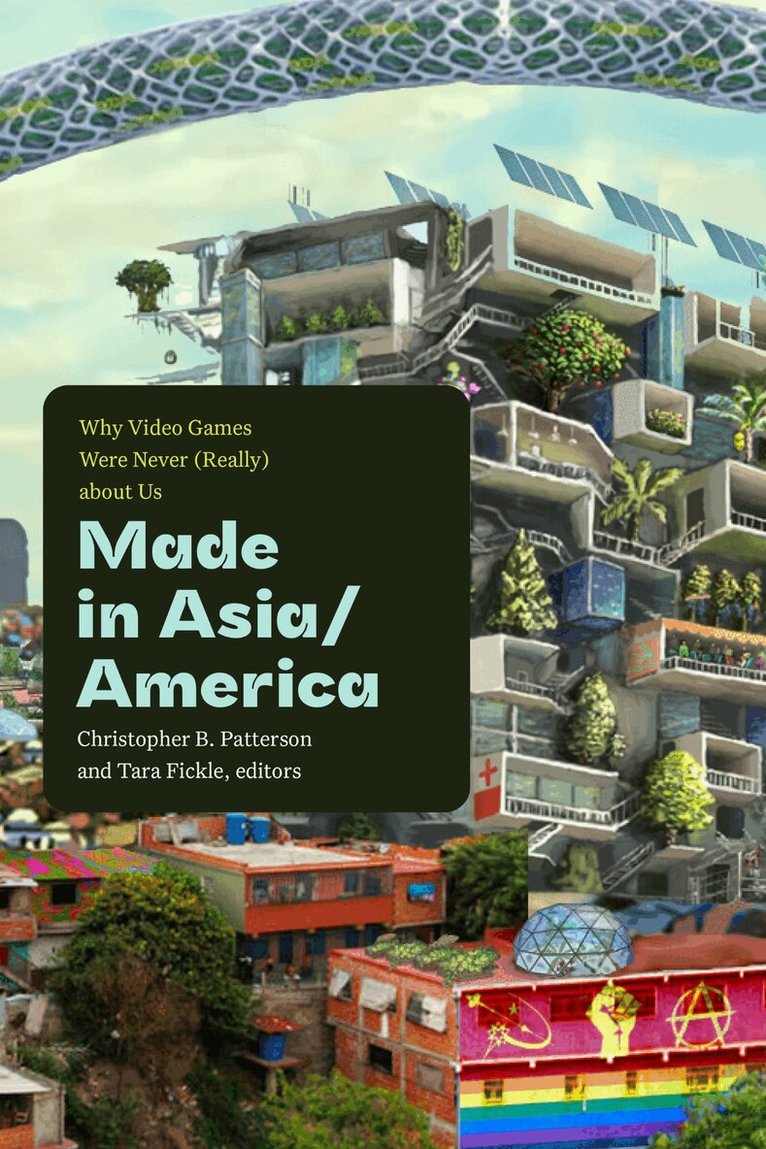
Made in Asia/America explores the key role video games play within the race makings of Asia/America. Its fourteen critical essays on games, ranging from Death Stranding to Animal Crossing, and five roundtables with twenty Asian/American game makers examine the historical entanglements of games, Asia, and America, and reveal the ways games offer new modes of imagining imperial violence, racial difference, and coalition. Shifting away from Eurocentric, white, masculinist takes on gaming, the contributors focus on minority and queer experiences, practices, and innovative scholarly methods to better account for the imperial circulation of games. Encouraging ambiguous and contextual ways of understanding games, the editors offer an “interactive” editorial method, a genre-expanding approach that encourages hybrid works of autotheory, queer of color theory, and conversation among game makers and scholars to generate divergent meanings of games, play, and “Asian America.”Contributors. Matthew Seiji Burns, Edmond Y. Chang, Naomi Clark, Miyoko Conley, Toby Đỗ, Anthony Dominguez, Tara Fickle, Sarah Christina Ganzon, Yuxin Gao, Domini Gee, Melos Han-Tani, Huan He, Matthew Jungsuk Howard, Rachael Hutchinson, Paraluman (Luna) Javier, Sisi Jiang, Marina Ayano Kittaka, Minh Le, Haneul Lee, Rachel Li, Christian Kealoha Miller, Patrick Miller, Keita C. Moore, Souvik Mukherjee, Christopher B. Patterson, Pamela (Pam) Punzalan, Takeo Rivera, Yasheng She, D. Squinkifer, Lien B. Tran, Prabhash Ranjan Tripathy, Emperatriz Ung, Gerald Voorhees, Yizhou (Joe) Xu, Robert Yang, Mike Ren Yi
318 kr
Skickas
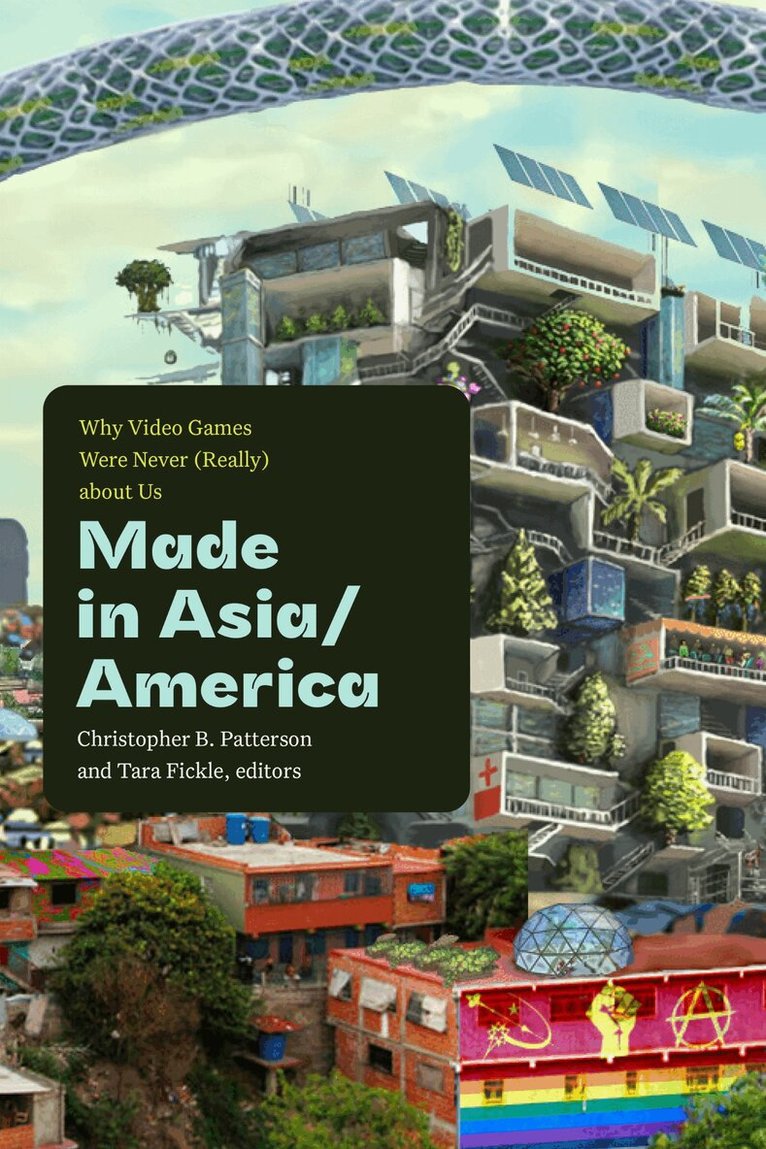
Made in Asia/America explores the key role video games play within the race makings of Asia/America. Its fourteen critical essays on games, ranging from Death Stranding to Animal Crossing, and five roundtables with twenty Asian/American game makers examine the historical entanglements of games, Asia, and America, and reveal the ways games offer new modes of imagining imperial violence, racial difference, and coalition. Shifting away from Eurocentric, white, masculinist takes on gaming, the contributors focus on minority and queer experiences, practices, and innovative scholarly methods to better account for the imperial circulation of games. Encouraging ambiguous and contextual ways of understanding games, the editors offer an “interactive” editorial method, a genre-expanding approach that encourages hybrid works of autotheory, queer of color theory, and conversation among game makers and scholars to generate divergent meanings of games, play, and “Asian America.”Contributors. Matthew Seiji Burns, Edmond Y. Chang, Naomi Clark, Miyoko Conley, Toby Đỗ, Anthony Dominguez, Tara Fickle, Sarah Christina Ganzon, Yuxin Gao, Domini Gee, Melos Han-Tani, Huan He, Matthew Jungsuk Howard, Rachael Hutchinson, Paraluman (Luna) Javier, Sisi Jiang, Marina Ayano Kittaka, Minh Le, Haneul Lee, Rachel Li, Christian Kealoha Miller, Patrick Miller, Keita C. Moore, Souvik Mukherjee, Christopher B. Patterson, Pamela (Pam) Punzalan, Takeo Rivera, Yasheng She, D. Squinkifer, Lien B. Tran, Prabhash Ranjan Tripathy, Emperatriz Ung, Gerald Voorhees, Yizhou (Joe) Xu, Robert Yang, Mike Ren Yi
309 kr
Skickas inom 7-10 vardagar
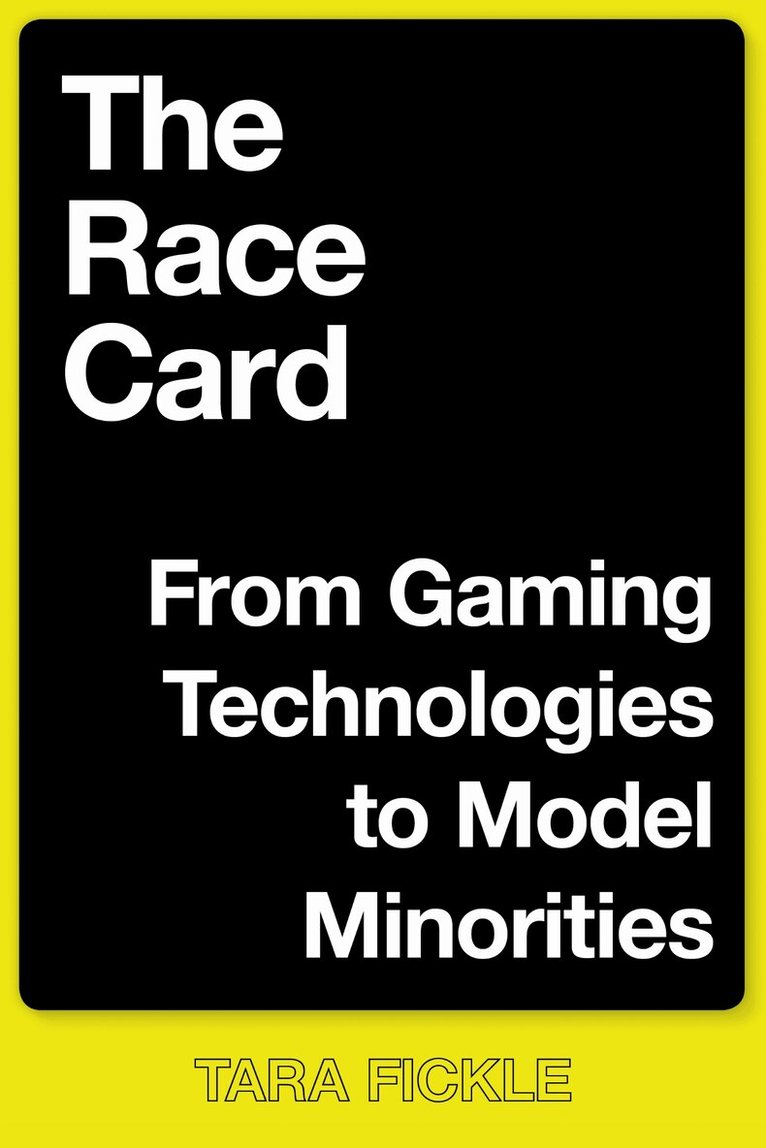
Winner, 2020 American Book Award, given by the Before Columbus FoundationHow games have been used to establish and combat Asian American racial stereotypes As Pokémon Go reshaped our neighborhood geographies and the human flows of our cities, mapping the virtual onto lived realities, so too has gaming and game theory played a role in our contemporary understanding of race and racial formation in the United States. From the Chinese Exclusion Act and Japanese American internment to the model minority myth and the globalization of Asian labor, Tara Fickle shows how games and game theory shaped fictions of race upon which the nation relies. Drawing from a wide range of literary and critical texts, analog and digital games, journalistic accounts, marketing campaigns, and archival material, Fickle illuminates the ways Asian Americans have had to fit the roles, play the game, and follow the rules to be seen as valuable in the US. Exploring key moments in the formation of modern US race relations, The Race Card charts a new course in gaming scholarship by reorienting our focus away from games as vehicles for empowerment that allow people to inhabit new identities, and toward the ways that games are used as instruments of soft power to advance top-down political agendas. Bridging the intellectual divide between the embedded mechanics of video games and more theoretical approaches to gaming rhetoric, Tara Fickle reveals how this intersection allows us to overlook the predominance of game tropes in national culture. The Race Card reveals this relationship as one of deep ideological and historical intimacy: how the games we play have seeped into every aspect of our lives in both monotonous and malevolent ways.
704 kr
Skickas
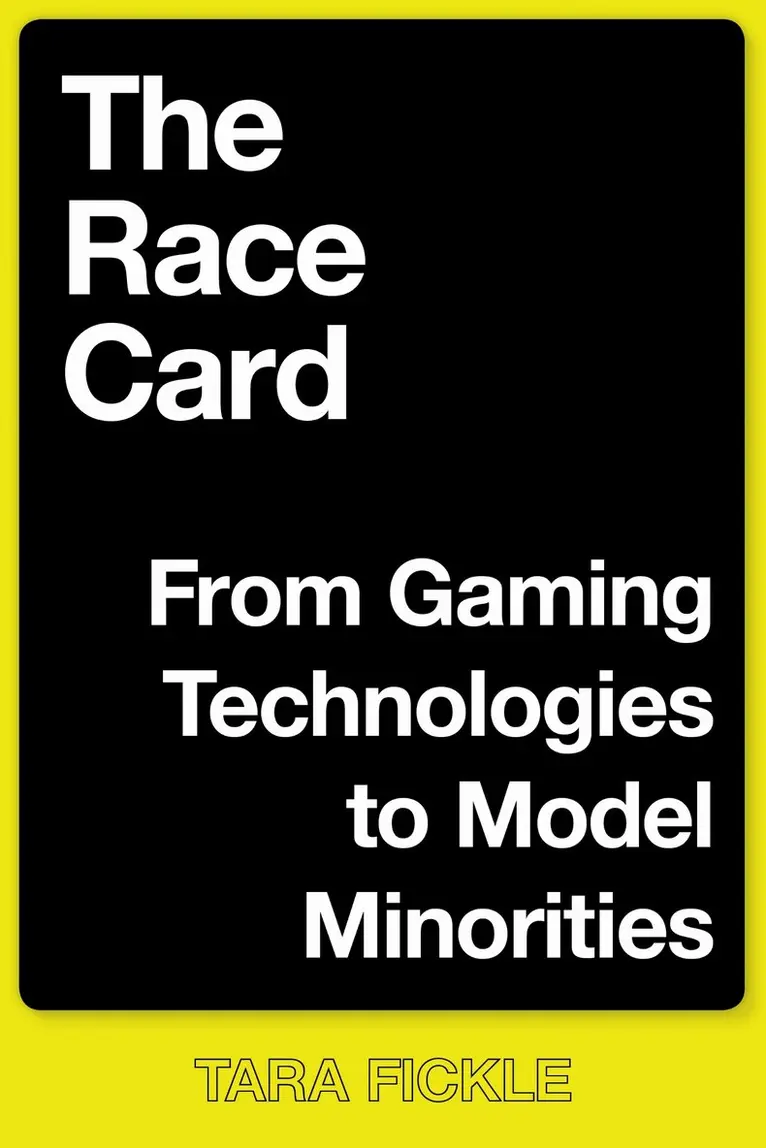
Winner, 2020 American Book Award, given by the Before Columbus FoundationHow games have been used to establish and combat Asian American racial stereotypes As Pokémon Go reshaped our neighborhood geographies and the human flows of our cities, mapping the virtual onto lived realities, so too has gaming and game theory played a role in our contemporary understanding of race and racial formation in the United States. From the Chinese Exclusion Act and Japanese American internment to the model minority myth and the globalization of Asian labor, Tara Fickle shows how games and game theory shaped fictions of race upon which the nation relies. Drawing from a wide range of literary and critical texts, analog and digital games, journalistic accounts, marketing campaigns, and archival material, Fickle illuminates the ways Asian Americans have had to fit the roles, play the game, and follow the rules to be seen as valuable in the US. Exploring key moments in the formation of modern US race relations, The Race Card charts a new course in gaming scholarship by reorienting our focus away from games as vehicles for empowerment that allow people to inhabit new identities, and toward the ways that games are used as instruments of soft power to advance top-down political agendas. Bridging the intellectual divide between the embedded mechanics of video games and more theoretical approaches to gaming rhetoric, Tara Fickle reveals how this intersection allows us to overlook the predominance of game tropes in national culture. The Race Card reveals this relationship as one of deep ideological and historical intimacy: how the games we play have seeped into every aspect of our lives in both monotonous and malevolent ways.