Thomas R. Flanagan - Böcker
Visar alla böcker från författaren Thomas R. Flanagan. Handla med fri frakt och snabb leverans.
5 produkter
5 produkter
A Democratic Approach to Sustainable Futures: A Workbook for Addressing the Global Problematique
Häftad, Engelska
292 kr
Skickas inom 3-6 vardagar
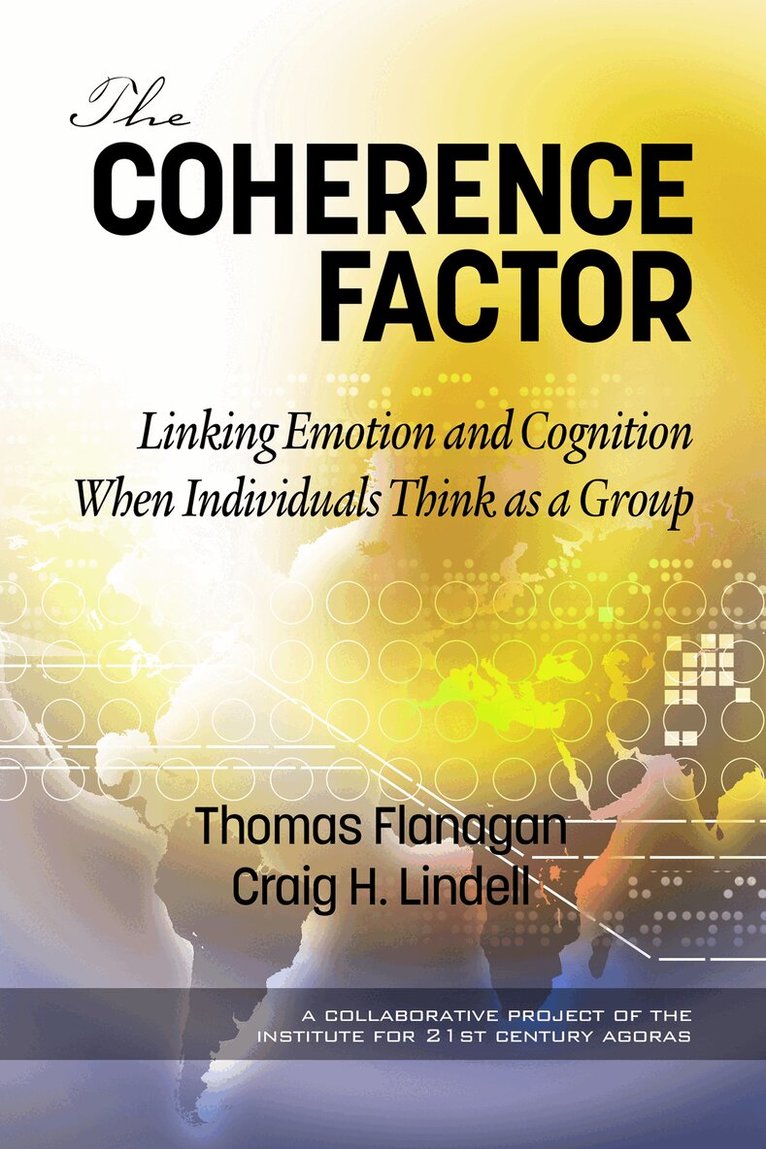
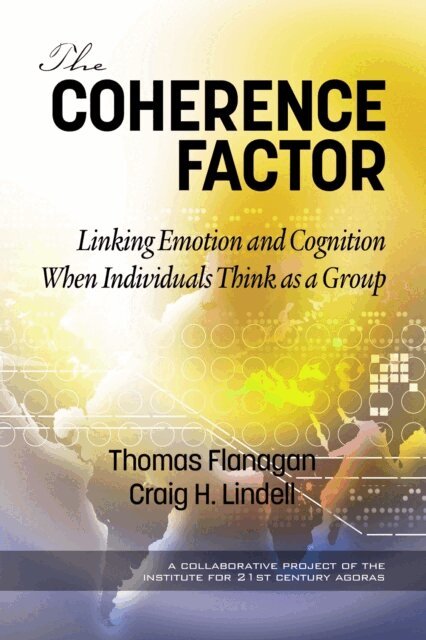
Coherence Factor
Linking Emotion and Cognition When Individuals Think as a Group
Häftad, Engelska, 2018
581 kr
Skickas inom 7-10 vardagar
Cogito, ergo sum. ('I think, therefore I am.') When Descartes quipped this, he erroneously split thinking from feeling. He assumed thoughts emerge from a substance other than feeling. This is a historic tragedy, and it is unnecessary. It brings us to a risky end-game. When we attempt to meld preconceived thought with evoked feelings, we come to the craft of 'spin doctors.' Instead, there is a natural path for connecting thinking and feeling. It involves emotional reflection at the time that understandings are created.This book draws attention to a form of dialogue which is called design dialogue. Design dialogue constructs new meaning from the bottom up. Individuals construct new meanings through individual thinking. In design dialogue, meaning results from group thinking. Group thinking is not as simple as thinking individually while being present within a group. The design process results in a series of co-constructed learning artifacts which, ultimately, constitute a new understanding. The process is concurrently emotional and cognitive, and melding emotion and cognition is achievable with effective design dialogue methods.The first chapter introduces emotion as the catalyst for considering questions, persisting in reflection, and concluding a cycle of thought. This chapter fills in gaps with the treatment of emotion and cognition. The second chapter lays out the sequence of observation-taking, sensemaking, meaning-making, and perspective-taking that are essential steps in thinking. Frameworks for thinking in educational traditions focus not so much on the neurological mechanics of the thought process but rather on the overall internalization of a 'way' of understanding things. A third chapter presents a methodology for managing a design dialogue. Group facilitators generally invent and modify their own approaches for leading design projects. This chapter presents a codified approach that offers an advantage of supporting continuous improvement of complex design management methodology. And the final chapter considers the emergence of a sapient group-mind through the agency of design dialogue. This conjectured group-mind is considered in the context of the civic infrastructure that is needed to sustain the continual growth of the human superorganism structure.As humanity has moved from tribes, to cities, to institutions, and now to globally connected networks, each leap forward has been accompanied by profound changes in social practices and belief systems. Recent findings from the field of cognitive science have confirmed a suspicion that we have long held about each other. Individual thinking is biased and flawed. Inclusive and democratically managed discussion, deliberation and design all help to identify and dampen flawed understandings. The individual mind, an essential ingredient in the human spirit, is now, as a matter of practical necessity, bending to the wisdom of a well-informed group mind. The speed and strength of newly emerging social forces and evolving civic trends point to the conclusion that we are on the threshold for a new way of being. This book seeks to evoke reflection on how we can start communicating in a way that prepares us for life in that new future.
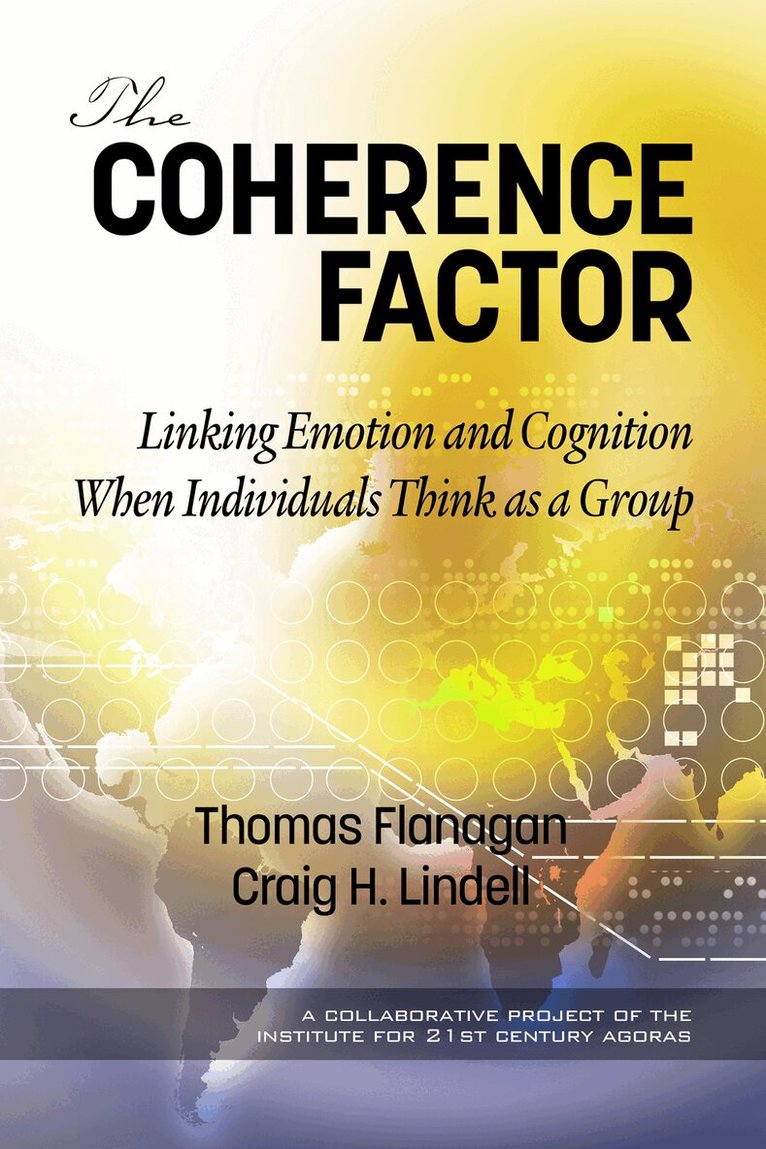
Coherence Factor
Linking Emotion and Cognition When Individuals Think as a Group
Inbunden, Engelska, 2018
1 027 kr
Skickas inom 7-10 vardagar
Cogito, ergo sum. ('I think, therefore I am.') When Descartes quipped this, he erroneously split thinking from feeling. He assumed thoughts emerge from a substance other than feeling. This is a historic tragedy, and it is unnecessary. It brings us to a risky end-game. When we attempt to meld preconceived thought with evoked feelings, we come to the craft of 'spin doctors.' Instead, there is a natural path for connecting thinking and feeling. It involves emotional reflection at the time that understandings are created.This book draws attention to a form of dialogue which is called design dialogue. Design dialogue constructs new meaning from the bottom up. Individuals construct new meanings through individual thinking. In design dialogue, meaning results from group thinking. Group thinking is not as simple as thinking individually while being present within a group. The design process results in a series of co-constructed learning artifacts which, ultimately, constitute a new understanding. The process is concurrently emotional and cognitive, and melding emotion and cognition is achievable with effective design dialogue methods.The first chapter introduces emotion as the catalyst for considering questions, persisting in reflection, and concluding a cycle of thought. This chapter fills in gaps with the treatment of emotion and cognition. The second chapter lays out the sequence of observation-taking, sensemaking, meaning-making, and perspective-taking that are essential steps in thinking. Frameworks for thinking in educational traditions focus not so much on the neurological mechanics of the thought process but rather on the overall internalization of a 'way' of understanding things. A third chapter presents a methodology for managing a design dialogue. Group facilitators generally invent and modify their own approaches for leading design projects. This chapter presents a codified approach that offers an advantage of supporting continuous improvement of complex design management methodology. And the final chapter considers the emergence of a sapient group-mind through the agency of design dialogue. This conjectured group-mind is considered in the context of the civic infrastructure that is needed to sustain the continual growth of the human superorganism structure.As humanity has moved from tribes, to cities, to institutions, and now to globally connected networks, each leap forward has been accompanied by profound changes in social practices and belief systems. Recent findings from the field of cognitive science have confirmed a suspicion that we have long held about each other. Individual thinking is biased and flawed. Inclusive and democratically managed discussion, deliberation and design all help to identify and dampen flawed understandings. The individual mind, an essential ingredient in the human spirit, is now, as a matter of practical necessity, bending to the wisdom of a well-informed group mind. The speed and strength of newly emerging social forces and evolving civic trends point to the conclusion that we are on the threshold for a new way of being. This book seeks to evoke reflection on how we can start communicating in a way that prepares us for life in that new future.
517 kr
Skickas inom 7-10 vardagar
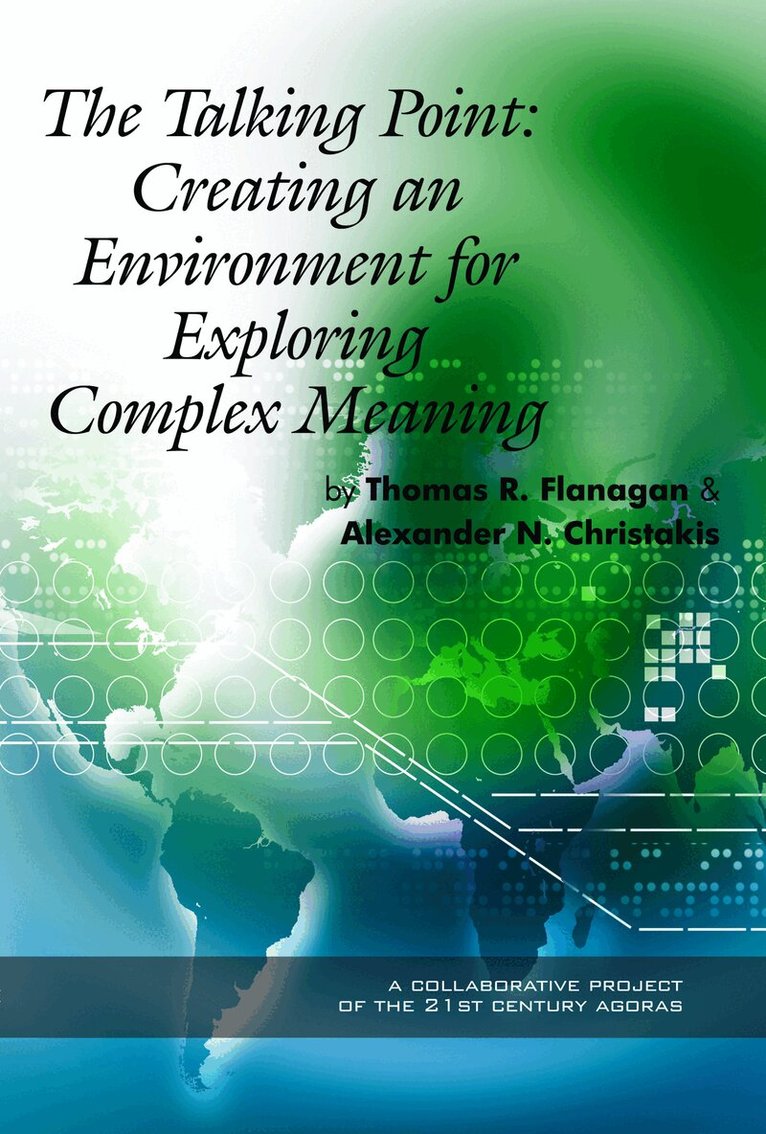
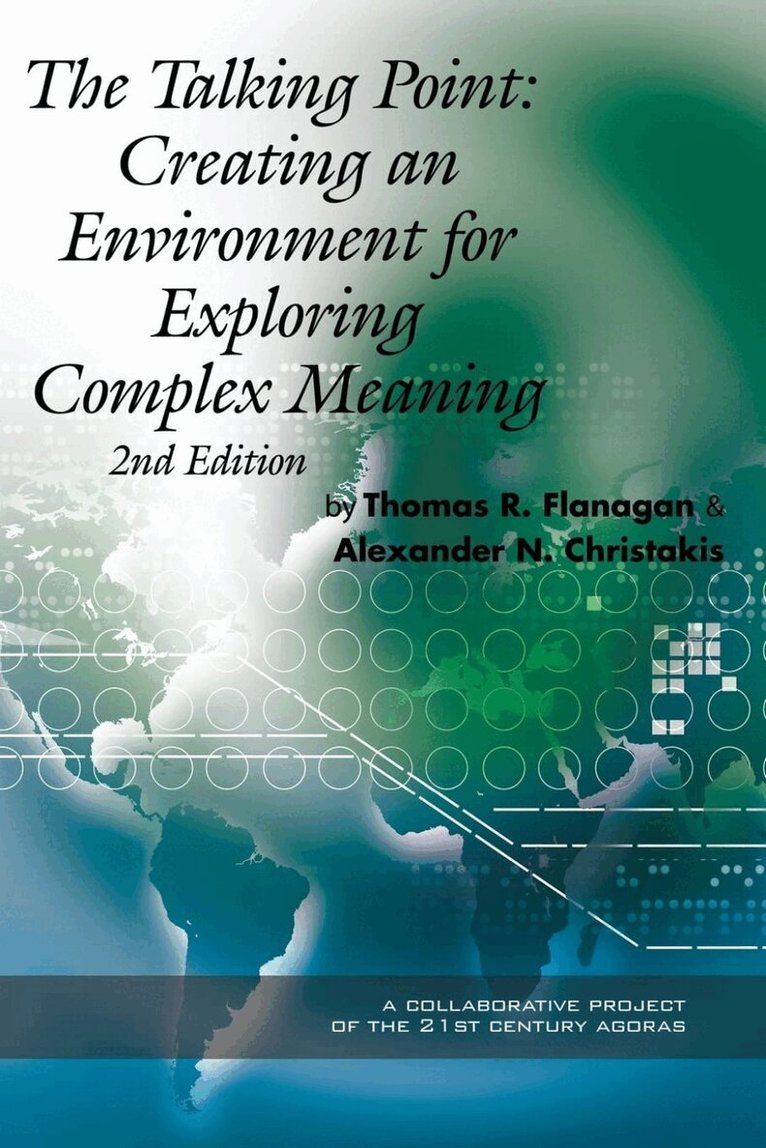
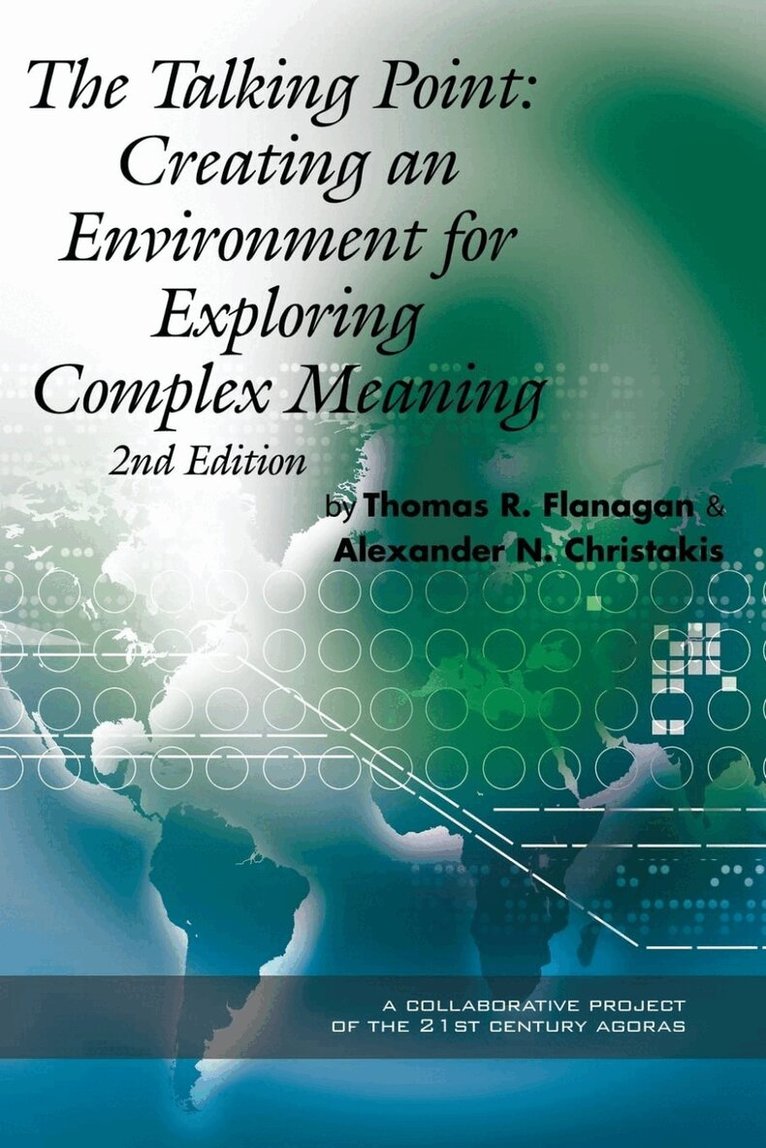
The Talking Point is all about how people learn within groups. People can be much smarter than crowds if you measure “smart” as decision-making speed. Crowds can be much wiser than individuals if you measure wisdom by depth of understanding. It is possible to understand a great deal of information yet (or maybe because of this) you can also be slow to make decisions. If rushed, crowds will make poor decisions in spite of their wisdom. So... to get good group decisions on a time scale that will keep pace with policy development needs and social necessities, groups have to be supported so that their decision-making process can be accelerated. Much has been said and written about this problem over the years. It is dangerous to have the power of groups without the wisdom of groups, and it is tragic to have the wisdom of groups without the power of groups. The Talking Point presents a meeting point for the wisdom and power of groups through the use of Structured Dialogic Design. With hopeful intentions, as a culture we have poisoned the well just when we need it most. We have touted design charettes and stakeholder processes as engagement vehicles and then ignored, marginalized or corrupted the very input that we swore to hold as sacred. This has created a myth that large scale collaboration is not possible, and the myth has led to considerable disillusionment among would-be participants and could-be sponsors. Structured Dialogic Design seeks to bust the myth about our limited capabilities to sustain boundary spanning collaboration. To bust this myth, Structured Dialogic Design needs to usher in a new wave of collaborative planning. Scholars have identified the Structured Dialogic Design methodology as the cutting edge of “third phase” science - where the reality of a situation embraces interactions between objective findings and subjective intentions. The Talking Point provides a window for observing how Structured Dialogic Design has been put into practice and paints a panorama of the issues that confront complex social system design. This book is itself a bridge between scholarship and practice, written to be accessible yet anchored to major themes in cognitive psychology, information systems, social systems, and models of group learning. The book is an invitation for transformational leaders and those who support transformational leaders to pick up a new tool in the essential quest to put our nation and our world back on track toward sustainable futures. The Talking Point is a fresh source of water in a world that is thirsty for new ways of solving complex problems.
952 kr
Skickas inom 7-10 vardagar
The Talking Point is all about how people learn within groups. People can be much smarter than crowds if you measure “smart” as decision-making speed. Crowds can be much wiser than individuals if you measure wisdom by depth of understanding. It is possible to understand a great deal of information yet (or maybe because of this) you can also be slow to make decisions. If rushed, crowds will make poor decisions in spite of their wisdom. So... to get good group decisions on a time scale that will keep pace with policy development needs and social necessities, groups have to be supported so that their decision-making process can be accelerated. Much has been said and written about this problem over the years. It is dangerous to have the power of groups without the wisdom of groups, and it is tragic to have the wisdom of groups without the power of groups. The Talking Point presents a meeting point for the wisdom and power of groups through the use of Structured Dialogic Design. With hopeful intentions, as a culture we have poisoned the well just when we need it most. We have touted design charettes and stakeholder processes as engagement vehicles and then ignored, marginalized or corrupted the very input that we swore to hold as sacred. This has created a myth that large scale collaboration is not possible, and the myth has led to considerable disillusionment among would-be participants and could-be sponsors. Structured Dialogic Design seeks to bust the myth about our limited capabilities to sustain boundary spanning collaboration. To bust this myth, Structured Dialogic Design needs to usher in a new wave of collaborative planning. Scholars have identified the Structured Dialogic Design methodology as the cutting edge of “third phase” science - where the reality of a situation embraces interactions between objective findings and subjective intentions. The Talking Point provides a window for observing how Structured Dialogic Design has been put into practice and paints a panorama of the issues that confront complex social system design. This book is itself a bridge between scholarship and practice, written to be accessible yet anchored to major themes in cognitive psychology, information systems, social systems, and models of group learning. The book is an invitation for transformational leaders and those who support transformational leaders to pick up a new tool in the essential quest to put our nation and our world back on track toward sustainable futures. The Talking Point is a fresh source of water in a world that is thirsty for new ways of solving complex problems.