Tiago Saraiva - Böcker
Visar alla böcker från författaren Tiago Saraiva. Handla med fri frakt och snabb leverans.
8 produkter
8 produkter
1 156 kr
Skickas inom 7-10 vardagar
“Engineering” has firmly taken root in the entangled bank of biology even as proposals to remake the living world have sent tendrils in every direction, and at every scale. Nature Remade explores these complex prospects from a resolutely historical approach, tracing cases across the decades of the long twentieth century. These essays span the many levels at which life has been engineered: molecule, cell, organism, population, ecosystem, and planet. From the cloning of agricultural crops and the artificial feeding of silkworms to biomimicry, genetic engineering, and terraforming, Nature Remade affirms the centrality of engineering in its various forms for understanding and imagining modern life. Organized around three themes—control and reproduction, knowing as making, and envisioning—the chapters in Nature Remade chart different means, scales, and consequences of intervening and reimagining nature.
393 kr
Skickas inom 7-10 vardagar
“Engineering” has firmly taken root in the entangled bank of biology even as proposals to remake the living world have sent tendrils in every direction, and at every scale. Nature Remade explores these complex prospects from a resolutely historical approach, tracing cases across the decades of the long twentieth century. These essays span the many levels at which life has been engineered: molecule, cell, organism, population, ecosystem, and planet. From the cloning of agricultural crops and the artificial feeding of silkworms to biomimicry, genetic engineering, and terraforming, Nature Remade affirms the centrality of engineering in its various forms for understanding and imagining modern life. Organized around three themes—control and reproduction, knowing as making, and envisioning—the chapters in Nature Remade chart different means, scales, and consequences of intervening and reimagining nature.
The Orchard in the Ruins: Cloning Oranges and Cultivating Whiteness in America and the Global South
Inbunden, Engelska
1 814 kr
Kommande
The Orchard in the Ruins: Cloning Oranges and Cultivating Whiteness in America and the Global South
Häftad, Engelska
535 kr
Kommande
368 kr
Tillfälligt slut
531 kr
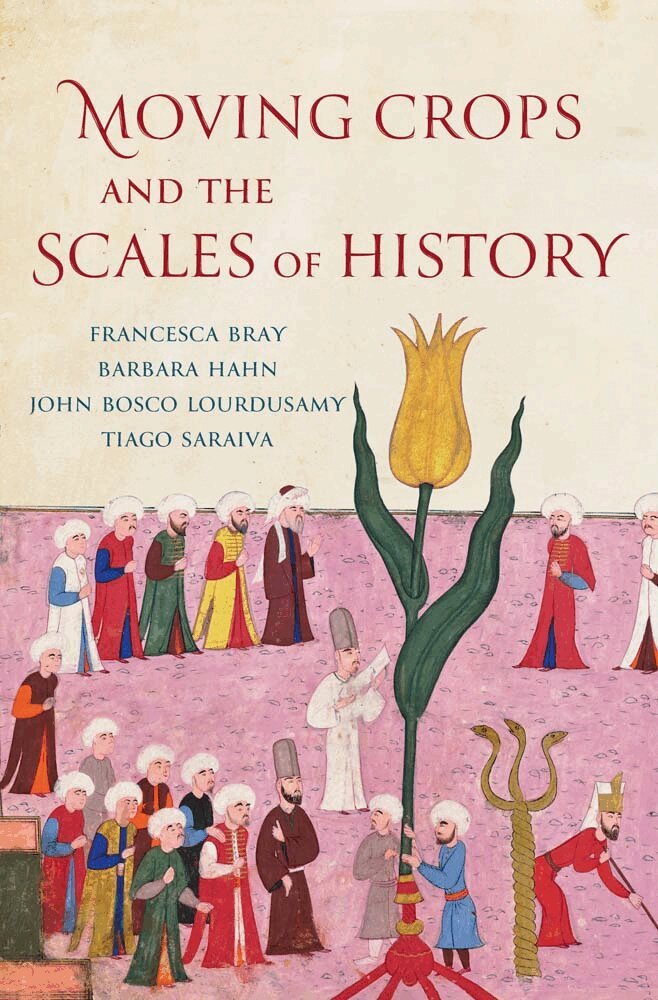
A bold redefinition of historical inquiry based on the “cropscape”—the people, creatures, technologies, ideas, and places that surround a crop“Refreshingly perceptive. . . . A pathbreaking book that I can’t recommend enough.”—Harro Maat, Technology and CultureHuman efforts to move crops from one place to another have been a key driving force in history. Crops have been on the move for millennia, from wildlands into fields, from wetlands to dry zones, from one imperial colony to another. This book is a bold but approachable attempt to redefine historical inquiry based on the “cropscape”: the assemblage of people, places, creatures, technologies, and other elements that form around a crop.The cropscape is a method of reconnecting the global with the local, the longue durée with microhistory, and people, plants, and places with abstract concepts such as tastes, ideas, skills, politics, and economic forces. Through investigating a range of contrasting cropscapes spanning millennia and the globe, the authors break open traditional historical structures of period, geography, and direction to glean insight into previously invisible actors and forces.
356 kr
Skickas inom 10-15 vardagar
This book deals with the simultaneous making of Portuguese engineers and the Portuguese nation-state from the mid seventeenth century to the late twentieth century. It argues that the different meanings of being an engineer were directly dependent of projects of nation building and that one cannot understand the history of engineering in Portugal without detailing such projects. Symmetrically, the authors suggest that the very same ability of collectively imagining a nation relied on large measure on engineers and their practices. National culture was not only enacted through poetry, music, and history, but it demanded as well fortresses, railroads, steam engines, and dams.Portuguese engineers imagined their country in dialogue with Italian, British, French, German or American realities, many times overlapping such references. The book exemplifies how history of engineering makes more salient the transnational dimensions of national history. This is valid beyond the Portuguese case and draws attention to the potential of history of engineering for reshaping national histories and their local specificities into global narratives relevant for readers across different geographies.
830 kr
Kommande
CONVIVIUM: Food Systems at the Limit invites readers on a journey through the intricate networks that feed the world. It explores how food production shapes landscapes, cities and everyday life, uncovering the architecture of global food systems. From greenhouses and fishing ports to agricultural enterprises and feed-crop fields, it traces how architecture and territory respond to the pressures of industrialized food production.Through a rich interplay of essays, photography, and research, CONVIVIUM highlights the environmental, political, and social challenges that define what and how we eat. It asks pressing questions that link ecology and culture, science and design: How do tomatoes connect to salmon? What happens to soil after desertification? How do barns shape animal lives? And how does soy from Brazil end up feeding livestock in Europe?At the heart of this volume are twelve protagonists—tomato, strawberry, salmon, tropical fruits, cow, bull, octopus, carp, shrimp, soy, grains, and worm—each with its own story to tell. These characters guide readers through a complex web of trade routes, technologies, and labour. They reveal how food production is linked to climate change, migration, and the transformation of rural and urban spaces. By following these stories, CONVIVIUM exposes the hidden infrastructures, economic systems, and spatial consequences of industrial agriculture and global supply chains.Richly illustrated, the book combines analytical insight with visual storytelling. It invites readers to rethink the systems behind everyday meals—to see how food shapes the world we inhabit and to imagine more sustainable and equitable ways of living together.With contributions by Grace Abou Jaoude, Maximilian Atta, Andjelka Badnjar, Sepp Braun, Giulia Bruno, Jean-Marc Caimi, Neal Haddaway, Diego Inglez de Souza, Natalie Judkowsky, Nikos Katsikis, Andres Lepik, María D. López Rodríguez, Jan Müller, Víctor Muñoz Sanz, Sofia Nannini, Raj Patel, Valentina Piccinni, Olga Pindyuk, Stefan Pielmeier, Réka Rozsnyói, Tiago Saraiva, Gent Shehu, Katrin Schneider, Dániel Szalai, Amelie Steffen, Carolyn Steel, Rafael Sousa Santos, André Tavares, Mark Titley, José Luis Vicente Vicente, and Sinan von Stietencron.