Tom Conley - Böcker
Visar alla böcker från författaren Tom Conley. Handla med fri frakt och snabb leverans.
14 produkter
14 produkter
Del 6 - Wiley Blackwell Companions to Film Directors
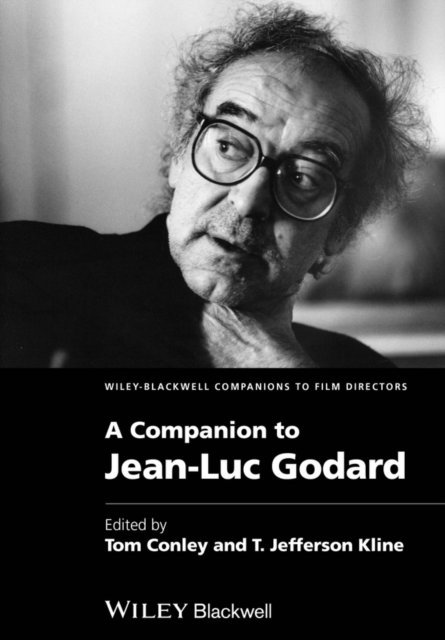
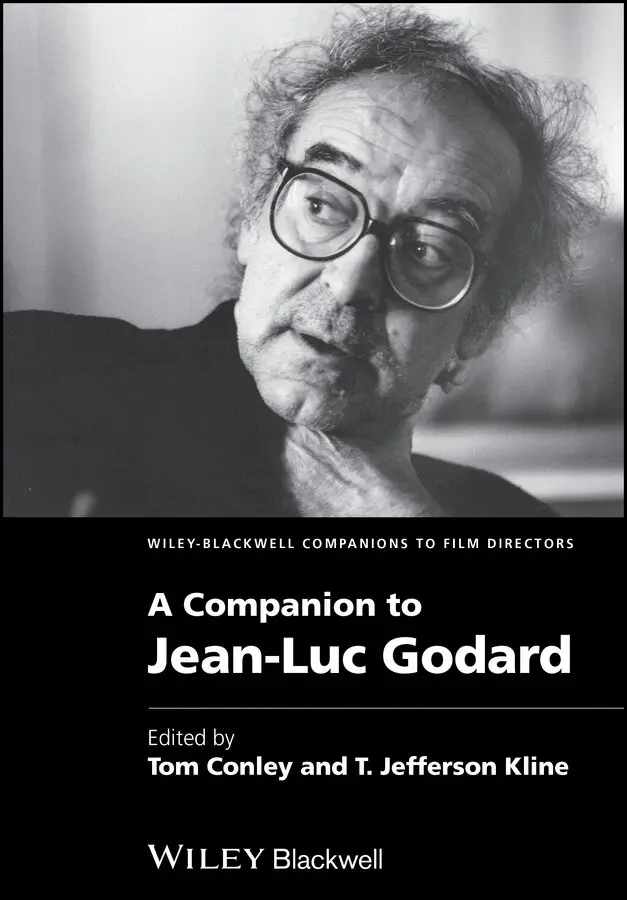
Companion to Jean-Luc Godard
Inbunden, Engelska, 2014
2 342 kr
Skickas inom 7-10 vardagar
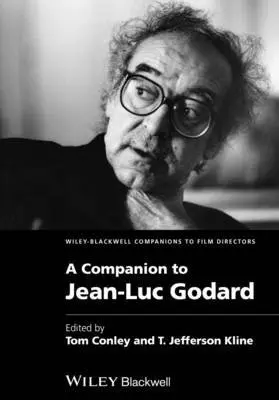
This compendium of original essays offers invaluable insights into the life and works of one of the most important and influential directors in the history of cinema, exploring his major films, philosophy, politics, and connections to other critics and directors. Presents a compendium of original essays offering invaluable insights into the life and works of one of the most important and influential filmmakers in the history of cinemaFeatures contributions from an international cast of major film theorists and criticsProvides readers with both an in-depth reading of Godard’s major films and a sense of his evolution from the New Wave to his later political periodsBrings fresh insights into the great director’s biography, including reflections on his personal philosophy, politics, and connections to other critics and filmmakersExplores many of the 80 features Godard made in nearly 60 years, and includes coverage of his recent work in video
Del 37 - Cambridge Studies in French
The Graphic Unconscious in Early Modern French Writing
Häftad, Engelska, 2006
674 kr
Skickas inom 7-10 vardagar
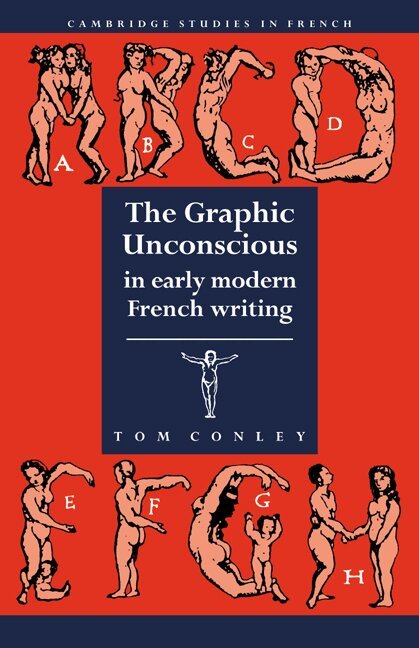
This 1992 book studies the importance of typographic shapes in French Renaissance literature in the context of psychoanalysis and of the history of printed writing. Focusing on the poetry of Clement Marot, Rabelais's Gargantua, Ronsard's sonnets and the Essais of Montaigne, it argues that printed characters can either supplement or betray what they appear to articulate, revealing compositional patterns that do not appear to be under authorial control. Professor Conley shows that graphic forms are crucial for the development of complex interactions of verbal and visual materials in the early years of print culture. Marot and Rabelais articulate a religious programme through the letter; Ronsard conflates the arts in poetry of the French court in the middle years of the sixteenth century; Montaigne stages the birth of the self in print and inscribes political dimensions in the relationship between the letter and meaning. This unconscious, proto-Freudian writing has complex historical relations with verbal and visual practices in the media of the twentieth century.
Del 37 - Cambridge Studies in French
The Graphic Unconscious in Early Modern French Writing
Inbunden, Engelska, 1992
1 492 kr
Skickas inom 7-10 vardagar
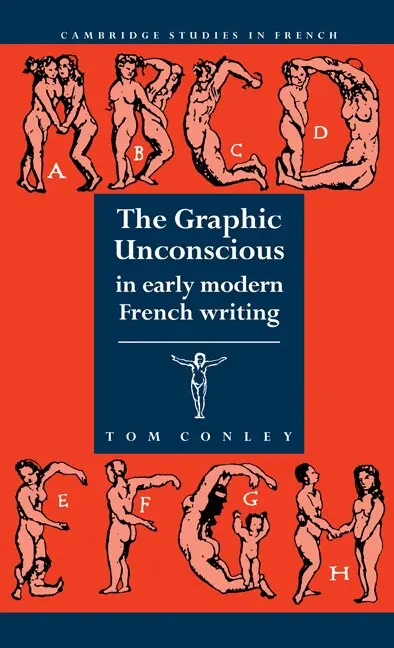
This 1992 book studies the importance of typographic shapes in French Renaissance literature in the context of psychoanalysis and of the history of printed writing. Focusing on the poetry of Clement Marot, Rabelais's Gargantua, Ronsard's sonnets and the Essais of Montaigne, it argues that printed characters can either supplement or betray what they appear to articulate, revealing compositional patterns that do not appear to be under authorial control. Professor Conley shows that graphic forms are crucial for the development of complex interactions of verbal and visual materials in the early years of print culture. Marot and Rabelais articulate a religious programme through the letter; Ronsard conflates the arts in poetry of the French court in the middle years of the sixteenth century; Montaigne stages the birth of the self in print and inscribes political dimensions in the relationship between the letter and meaning. This unconscious, proto-Freudian writing has complex historical relations with verbal and visual practices in the media of the twentieth century.
640 kr
Skickas inom 10-15 vardagar
Identity Papers was first published in 1996. Minnesota Archive Editions uses digital technology to make long-unavailable books once again accessible, and are published unaltered from the original University of Minnesota Press editions.What does citizenship mean? What is the process of "naturalization" one goes through in becoming a citizen, and what is its connection to assimilation? How do the issues of identity raised by this process manifest themselves in culture? These questions, and the way they arise in contemporary France, are the focus of this diverse collection.The essays in this volume range in subject from fiction and essay to architecture and film. Among the topics discussed are the 1937 Exposition Universelle; films dealing with Vichy France; François Truffaut's Histoire d'Adèle H.; the war of Algerian independence; and nation building under François Mitterrand.Contributors: Anne Donadey, Elizabeth Ezra, Richard J. Golsan, Lynn A. Higgins, T. Jefferson Kline, Panivong Norindr, Shanny Peer, Rosemarie Scullion, David H. Slavin, Philip H. Solomon; Florianne Wild, .Steven Ungar is professor of cinema and comparative literature at the University of Iowa and author of Scandal and Aftereffect: Blanchot and France since 1930 (Minnesota, 1995). Tom Conley is professor of French at Harvard University.
291 kr
Skickas inom 10-15 vardagar
Cartography and cinema are what might be called locational machinery. Maps and movies tell their viewers where they are situated, what they are doing, and, to a strong degree, who they are. In this groundbreaking work, eminent scholar Tom Conley establishes the ideological power of maps in classic, contemporary, and avant-garde cinema to shape the imaginary and mediated relations we hold with the world. Cartographic Cinema examines the affinities of maps and movies through comparative theory and close analysis of films from the silent era to the French New Wave to Hollywood blockbusters. In doing so, Conley reveals that most of the movies we see contain maps of various kinds and almost invariably constitute a projective apparatus similar to cartography. In addition, he demonstrates that spatial signs in film foster a critical relation with the prevailing narrative and mimetic registers of cinema. Conley convincingly argues that the very act of watching films, and cinema itself, is actually a form of cartography. Unlike its function in an atlas, a map in a movie often causes the spectator to entertain broader questions—not only about cinema but also of the nature of space and being.
305 kr
Skickas inom 10-15 vardagar
At a time when traditional film theory privileged the purely visual, Film Hieroglyphs introduced a new way of watching film—examining the ways in which writing bears on cinema. Author Tom Conley gives special consideration to the points (ruptures) at which story, image, and writing appear to be at odds with one another.Conley hypothesizes that major directors—Renoir, Lang, Walsh, Rossellini—tend unconsciously to meld history and ideology. Graphic elements are seen as simultaneously foreign and integral to the field of the image. From these contradictions hieroglyphs emerge that mark a design attesting to a hidden rhetoric and to configurations of meaning that cinema cannot always control.Tom Conley is Lowell Professor of romance languages and visual and environmental studies at Harvard University. Among his books is The Self-Made Map (1996), as well as translations of The Fold (1992) by Gilles Deleuze and In the Metro (2002) by Marc Augé, all available from the University of Minnesota Press.
296 kr
Skickas inom 10-15 vardagar
An Errant Eye studies how topography, the art of describing local space and place, developed literary and visual form in early modern France. Arguing for a "new poetics of space" ranging throughout French Renaissance poetry, prose, and cartography, Tom Conley performs dazzling readings of maps, woodcuts, and poems to plot a topographical shift in the late Renaissance in which space, subjectivity, and politics fall into crisis. He charts the paradox of a period whose demarcation of national space through cartography is rendered unstable by an ambient world of printed writing.This tension, Conley demonstrates, cuts through literature and graphic matter of various shapes and forms-hybrid genres that include the comic novel, the emblem-book, the eclogue, sonnets, and the personal essay. An Errant Eye differs from historical treatments of spatial invention through Conley's argument that the topographic sensibility is one in which the ocular faculty, vital to the description of locale, is endowed with tact and touch.Detailed close readings of Apian, Rabelais, Montaigne, and others empower the reader with a lively sense of the topographical impulse, deriving from Conley's own "errant eye," which is singularly discerning in attentiveness to the ambiguities of charted territory, the contours of woodcut images, and the complex combinations of word and figure in French Renaissance poetry, emblem, and politics.
326 kr
Skickas inom 7-10 vardagar
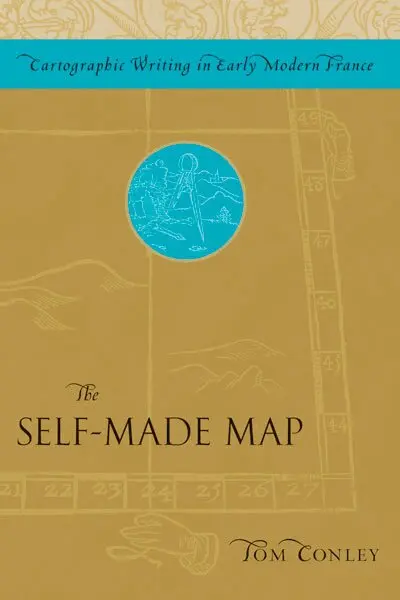
The Self-Made Map argues that during the Renaissance in France a "new cartographic impulse" affected both the "graphic and imaginary forms of literature." In this wide-ranging and fascinating work, Tom Conley demonstrates that as new maps were plotted during this period, a new sense of self emerged, one defined in part by the relationship of the self to space.Conley traces the explosion of interest in mapmaking that occurred with the discovery of the New World, and discusses the commensurate rise of what he defines as cartographic writing-writing that "holds, penetrates, delineates, and explores space." Considering the works of such writers as Rabelais, Montaigne, and Descartes, Conley provides a "navigation" through the printed page, revealing the emerging values of Renaissance France. In his examination of the placing of words, letters, and graphic elements in books, he exposes the playful and sometimes enigmatic relation between spatial organization and text.Conley also exposes the ideological exercise inherent in mapmaking, arguing that Renaissance cartography is inseparably bound up with the politics of the era. He undertakes close readings of maps and illustrations, discussing the necessity of viewing Renaissance maps in the context of their typographic layout, graphic reproduction, and literary and ideological import.Richly illustrated throughout, The Self-Made Map combines studies of art, geography, history, literature, and printing to show a clear historical transformation, along the way linking geographical discoveries, printing processes, and political awareness. Conley's provocative analysis discloses how early modern printed literature and cartography worked together to crystallize broader issues engaging the then emergent status of cultural identity, nation, and individuality.
207 kr
Skickas inom 5-8 vardagar
1 545 kr
Skickas inom 3-6 vardagar
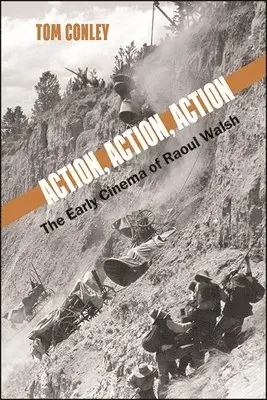
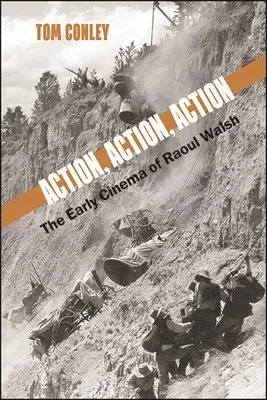
Studies the force of action, motion, and vision in the early cinema of Hollywood director Raoul Walsh.Director of over 150 films from 1912 to 1964, Raoul Walsh was a core figure in Hollywood from its beginnings to the end of the studio system. Perhaps best known for such films as The Big Trail (starring John Wayne in his first leading role), High Sierra, and White Heat, Walsh cut his teeth under D. W. Griffith, and, like his contemporary John Ford, found a style and signature in his silent cinema and early talkies. Through close analysis of seven of his films, six shot between 1915 and 1933 and one a remake from 1956, and stressing the visual character of their settings and situations, Tom Conley examines how composition and montage-or action-often overtake the crisp narratives these films convey. Rife with contradiction, they ask us to see what makes them possible and how they contend with prevailing codes. Films discussed include Regeneration (1915); Sadie Thompson (1928) and a likely avatar, The Revolt of Mamie Stover (1956); The Cock-Eyed World (1929); The Big Trail (1930); Me and My Gal (1932); and The Bowery (1933).
601 kr
Skickas inom 3-6 vardagar
Studies the force of action, motion, and vision in the early cinema of Hollywood director Raoul Walsh.Director of over 150 films from 1912 to 1964, Raoul Walsh was a core figure in Hollywood from its beginnings to the end of the studio system. Perhaps best known for such films as The Big Trail (starring John Wayne in his first leading role), High Sierra, and White Heat, Walsh cut his teeth under D. W. Griffith, and, like his contemporary John Ford, found a style and signature in his silent cinema and early talkies. Through close analysis of seven of his films, six shot between 1915 and 1933 and one a remake from 1956, and stressing the visual character of their settings and situations, Tom Conley examines how composition and montage-or action-often overtake the crisp narratives these films convey. Rife with contradiction, they ask us to see what makes them possible and how they contend with prevailing codes. Films discussed include Regeneration (1915); Sadie Thompson (1928) and a likely avatar, The Revolt of Mamie Stover (1956); The Cock-Eyed World (1929); The Big Trail (1930); Me and My Gal (1932); and The Bowery (1933).
1 989 kr
Skickas inom 5-8 vardagar
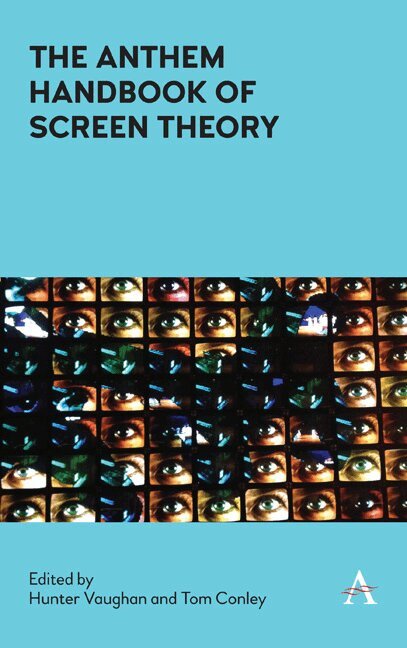
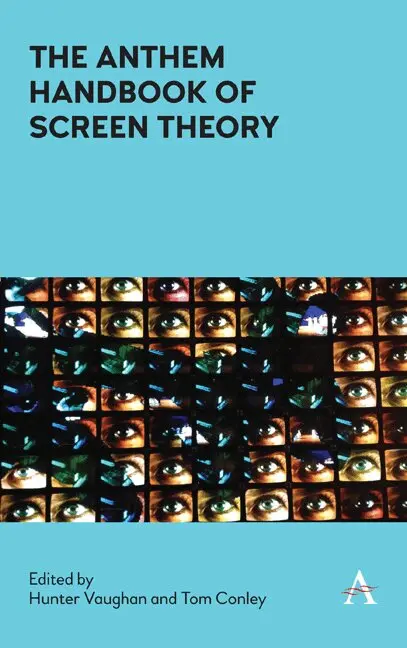
The Anthem Handbook of Screen Theory offers a unique and progressive survey of screen theory and how it can be applied to a range of moving-image texts and sociocultural contexts. Focusing on the “handbook” angle, the book includes only original essays from established authors in the field and new scholars on the cutting edge of helping screen theory evolve for the twenty-first-century vistas of new media, social shifts and geopolitical change. This method guarantees a strong foundation and clarity for the canon of film theory, while also situating it as part of a larger genealogy of art theories and critical thought, and reveals the relevance and utility of film theories and concepts to a wide array of expressive practices and specified arguments. The Anthem Handbook of Screen Theory is at once inclusive, applicable and a chance for writers to innovate and really play with where they think the field is, can and should be heading.
756 kr
Skickas inom 5-8 vardagar
The Anthem Handbook of Screen Theory offers a unique and progressive survey of screen theory and how it can be applied to a range of moving-image texts and sociocultural contexts. Focusing on the “handbook” angle, the book includes only original essays from established authors in the field and new scholars on the cutting edge of helping screen theory evolve for the twenty-first-century vistas of new media, social shifts and geopolitical change. This method guarantees a strong foundation and clarity for the canon of film theory, while also situating it as part of a larger genealogy of art theories and critical thought, and reveals the relevance and utility of film theories and concepts to a wide array of expressive practices and specified arguments. The Anthem Handbook of Screen Theory is at once inclusive, applicable and a chance for writers to innovate and really play with where they think the field is, can and should be heading.
1 789 kr
Skickas inom 7-10 vardagar
This book explores the emerging challenges to foreign policymaking in liberal democracies and the adequacy of the 'marketplace of ideas' in responding to these challenges. Looking at foreign policy challenges as diverse as democratization, globalization and climate change, from the role of values in environmental debate to the Iraq invasion and the war on drugs, the contributors critically examine how key global issues are framed in public debate across three of the world's most mature liberal democracies: the US, the UK, and Australia. The book contributes to a better understanding of the limits of the 'marketplace of ideas' in helping to produce wise and accountable policy, and how those limits may soon be overcome.Examining how key global issues are framed in foreign policy debate across a range of liberal democratic societies, this book will strongly appeal to academics and students with an interest in international relations, policymaking and politics, as well as to governmental and think tank policymakers and advisors.