Ton de Jong – författare
Visar alla böcker från författaren Ton de Jong. Handla med fri frakt och snabb leverans.
13 produkter
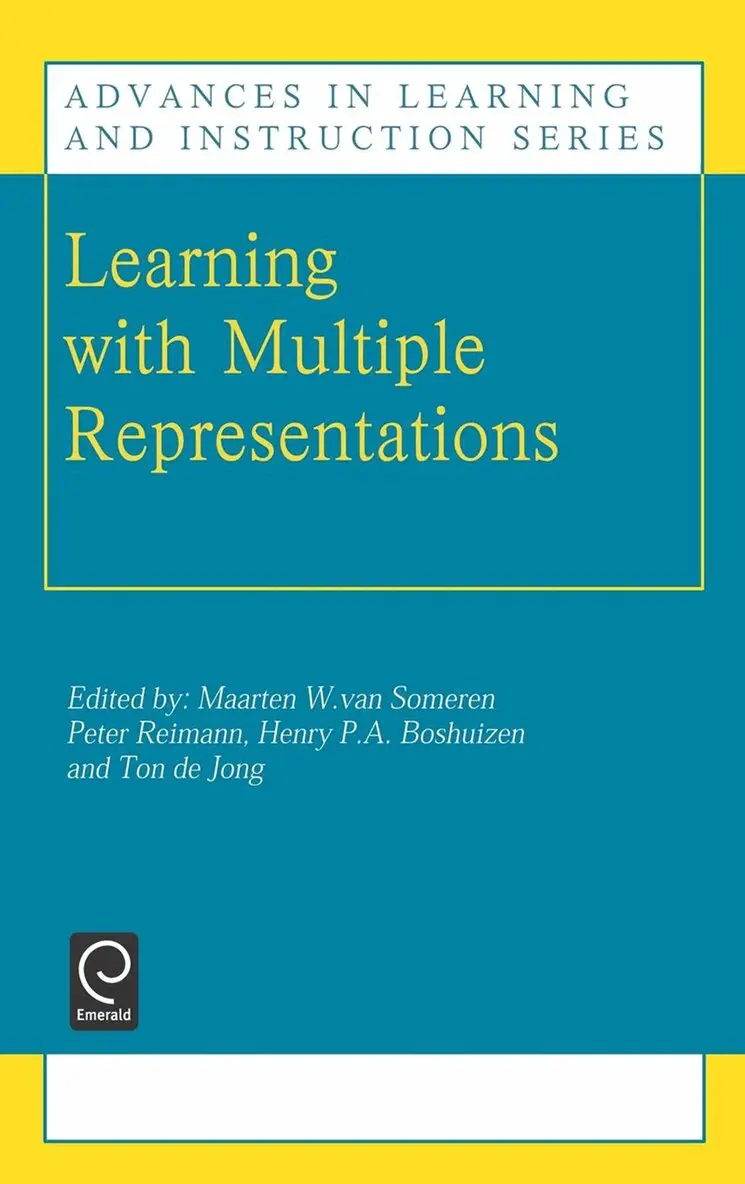
Learning with Multiple Representations
Av M.W. Van Someren, Peter Reimann m. fl.
Inbunden, 1998
1314 kr
Lägg i varukorg
The book is written in the framework of a European collaborative research programme, Learning in Humans and Machines, funded by the European Science Foundation. The book's purpose is to collect papers on learning declarative knowledge and problem solving skills that involve multiple representations …
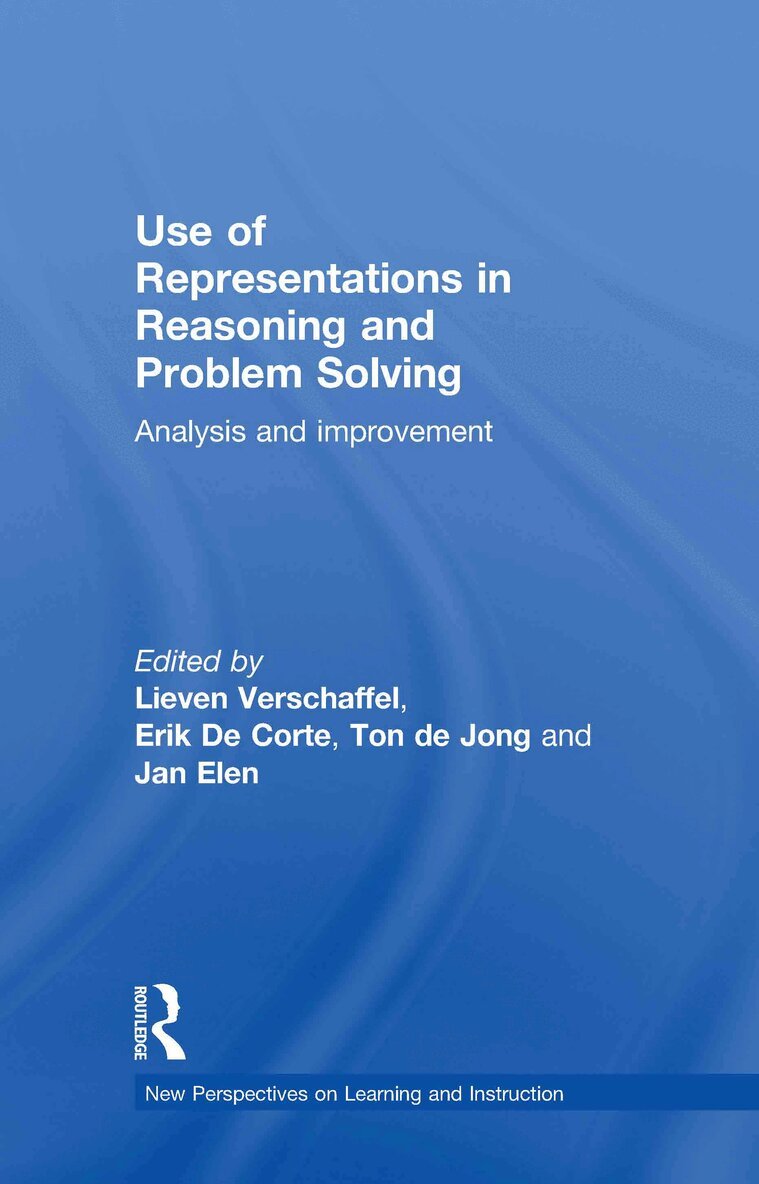
Use of Representations in Reasoning and Problem Solving
Analysis and Improvement
Av Lieven Verschaffel, Erik de Corte m. fl.
Inbunden, 2010
2661 kr
Lägg i varukorg
Within an increasingly multimedia focused society, the use of external representations in learning, teaching and communication has increased dramatically. Whether in the classroom, university or workplace, there is a growing requirement to use and interpret a large variety of external …
Use of Representations in Reasoning and Problem Solving
Analysis and Improvement
Av Lieven Verschaffel, Erik de Corte m. fl.
Häftad, 2010
925 kr
Lägg i varukorg
Within an increasingly multimedia focused society, the use of external representations in learning, teaching and communication has increased dramatically. Whether in the classroom, university or workplace, there is a growing requirement to use and interpret a large variety of external …
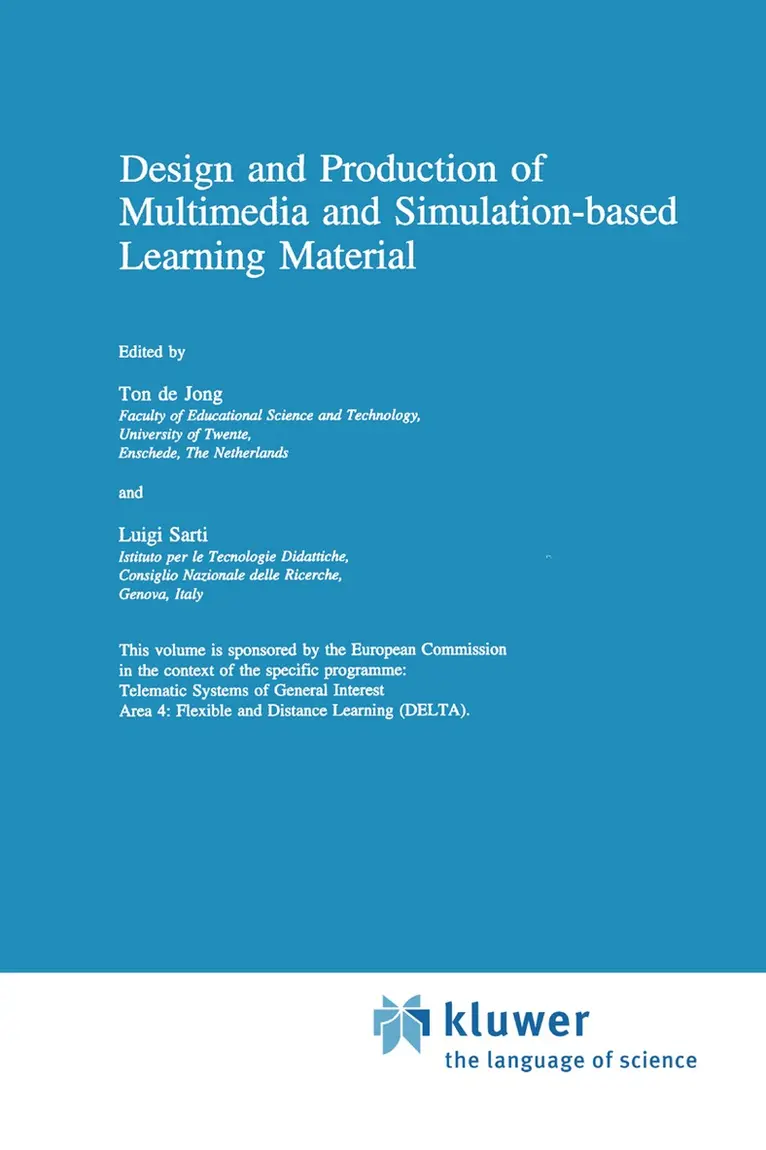
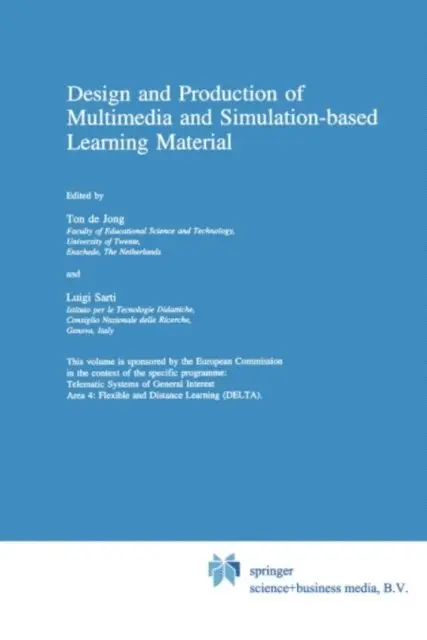
Design and Production of Multimedia and Simulation-based Learning Material
Av Ton de Jong, L Sarti
Inbunden, 1994
1065 kr
Lägg i varukorg
This volume results from a meeting that was held in Barcelona, Spain, April 1993, under the auspices of the DELTA programme of the European Commission. DELTA (Developing European Learning through Technological Advance) is the commission's technology R&D programme that concentrates on "Telematic …
Use of Representations in Reasoning and Problem Solving
Analysis and Improvement
Av Jan Elen, Ton de Jong m. fl.
E-bok, 2010
1094 kr
Lägg i varukorg
Within an increasingly multimedia focused society, the use of external representations in learning, teaching and communication has increased dramatically. Whether in the classroom, university or workplace, there is a growing requirement to use and interpret a large variety of external …
Use of Representations in Reasoning and Problem Solving
Analysis and Improvement
Av Jan Elen, Ton de Jong m. fl.
E-bok, 2010
1094 kr
Lägg i varukorg
Within an increasingly multimedia focused society, the use of external representations in learning, teaching and communication has increased dramatically. Whether in the classroom, university or workplace, there is a growing requirement to use and interpret a large variety of external …
Cyber-Physical Laboratories in Engineering and Science Education
Av Michael E. Auer, Abul K.M. Azad m. fl.
Häftad, 2019
1096 kr
Lägg i varukorg
This volume investigates a number of issues needed to develop a modular, effective, versatile, cost effective, pedagogically-embedded, user-friendly, and sustainable online laboratory system that can deliver its true potential in the national and global arenas. This allows individual researchers to …
Cyber-Physical Laboratories in Engineering and Science Education
Av Michael E. Auer, Abul K.M. Azad m. fl.
Inbunden, 2018
1065 kr
Lägg i varukorg
This volume investigates a number of issues needed to develop a modular, effective, versatile, cost effective, pedagogically-embedded, user-friendly, and sustainable online laboratory system that can deliver its true potential in the national and global arenas. This allows individual researchers to …
Cyber-Physical Laboratories in Engineering and Science Education
Av Ton de Jong, Arthur Edwards m. fl.
E-bok, 2018
1427 kr
Lägg i varukorg
This volume investigates a number of issues needed to develop a modular, effective, versatile, cost effective, pedagogically-embedded, user-friendly, and sustainable online laboratory system that can deliver its true potential in the national and global arenas. This allows individual researchers to …
Simulation-Based Experiential Learning
Av Hans Spada, Ton de Jong m. fl.
E-bok, 2012
1502 kr
Lägg i varukorg
In October of 1992 an assembly of researchers in simulation and computer models for instruction convened in Bonas, France, to learn from one another in a non-automated environment. The event was the Advanced Research Workshop entitled The Use of Computer Models for Explication, Analysis, and …
Simulation-Based Experiential Learning
Av Douglas M. Towne, Ton de Jong m. fl.
Häftad, 2011
1129 kr
Lägg i varukorg
In October of 1992 an assembly of researchers in simulation and computer models for instruction convened in Bonas, France, to learn from one another in a non-automated environment. The event was the Advanced Research Workshop entitled The Use of Computer Models for Explication, Analysis, and …
Design and Production of Multimedia and Simulation-based Learning Material
Av Ton de Jong, L Sarti
Häftad, 2012
1065 kr
Lägg i varukorg
This volume results from a meeting that was held in Barcelona, Spain, April 1993, under the auspices of the DELTA programme of the European Commission. DELTA (Developing European Learning through Technological Advance) is the commission's technology R&D programme that concentrates on "Telematic …
Design and Production of Multimedia and Simulation-based Learning Material
Av L Sarti, Ton de Jong
E-bok, 2012
1418 kr
Lägg i varukorg
This volume results from a meeting that was held in Barcelona, Spain, April 1993, under the auspices of the DELTA programme of the European Commission. DELTA (Developing European Learning through Technological Advance) is the commission''s technology R&D programme that concentrates on "Telematic …