Hans Spada - Böcker
Visar alla böcker från författaren Hans Spada. Handla med fri frakt och snabb leverans.
6 produkter
6 produkter
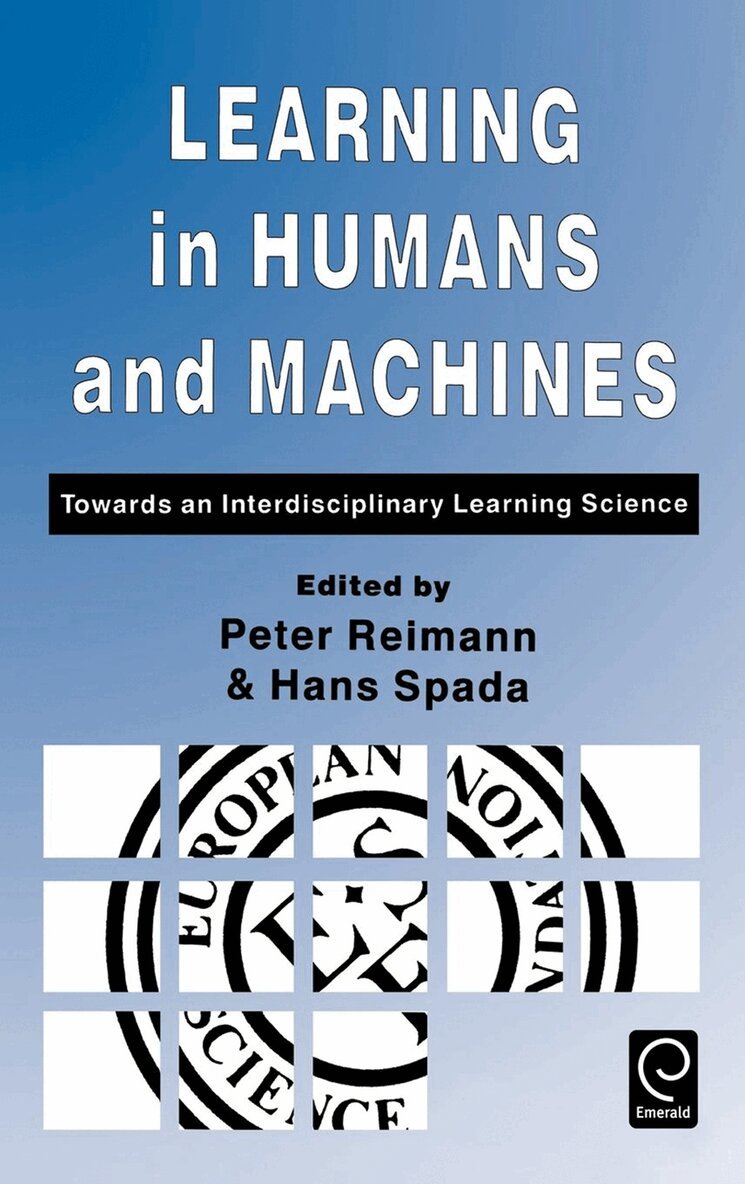
Learning in Humans and Machines
Towards an Interdisciplinary Learning Science
Inbunden, Engelska, 1995
1 183 kr
Skickas inom 7-10 vardagar
The book discusses the analysis, comparison and integration of computational approaches to learning and research on human learning. Learning has for some time been an issue of minor importance in the cognitive sciences. It has, however, now become one of the most active research fields in psychology, the neurosciences, and computer science (machine learning). The aim of this book is to provide the reader with an overview of the prolific research on learning throughout the disciplines. The book will not only provide a general overview for those who are new to the field but will also provide specialist knowledge for those who want to learn more about alternative approaches and conceptualizations of learning in other disciplines. The contributing authors are all considered as leading experts in their field and come from the fields of cognitive, computer and educational science. They provide an assessment of the state-of-the-art of research, links between the disciplines, and they highlight the critically important research issues and methodologies, thus providing a basis for future research.
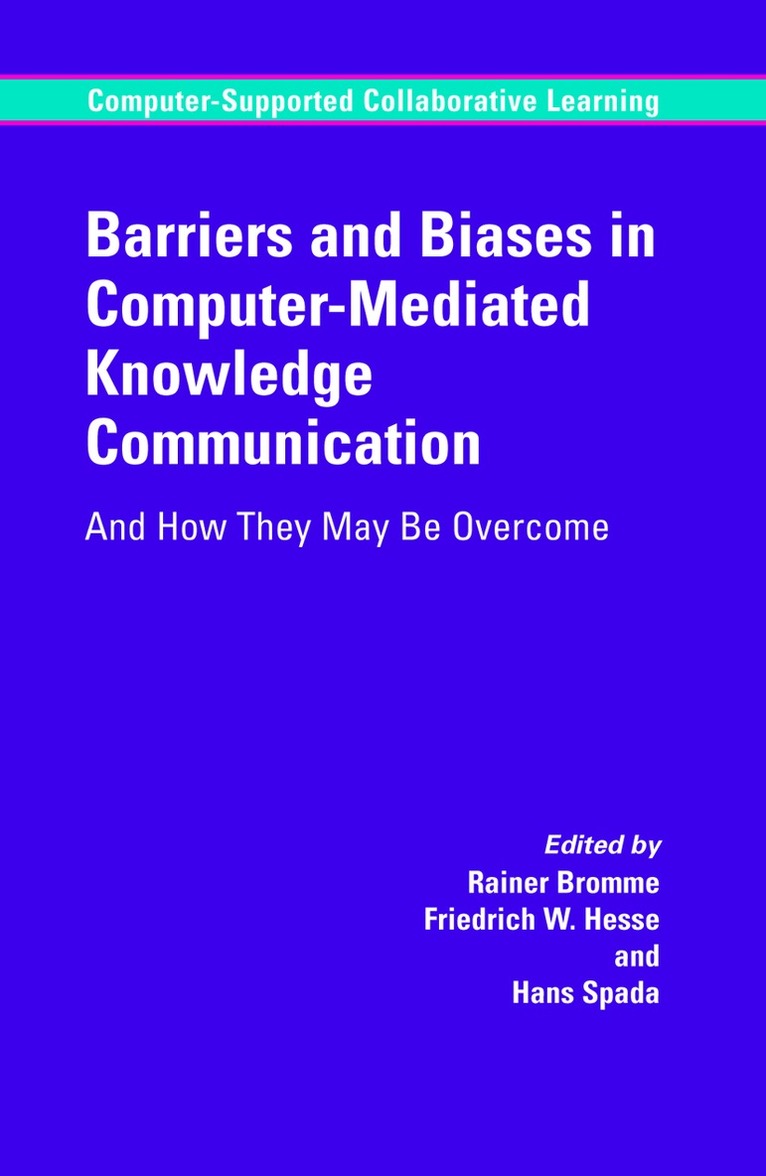
Barriers and Biases in Computer-Mediated Knowledge Communication
And How They May Be Overcome
Inbunden, Engelska, 2005
1 532 kr
Skickas inom 10-15 vardagar
We report a study of one aspect of the changing industrial landscape, the use of virtual team working in the supply chain. The supply chain is the group of companies that are involved in the design and manufacture and distribution of products, notably complex products such as cars. Supply chain partnerships often involve cross-company team working, and as members of such teams are rarely collocated, virtual team working supported by IT, offers considerable potential benefits. Companies hope that these technologies can be used to support distributed computer supported collaborative working for purposes such as concurrent engineering and it is this kind of virtual teaming which we decided to investigate. We believe that exploring how virtual teams communicate is an effective way of examining how well they are operating and identifying the impacts of the technologies on their interactions. In the workplace free and open communication is considered to be very important to organizations facing a rapidly changing business environment. Similarly free and equal communication among members has been reported to be important if genuine team working is to be implemented in the workplace, (Carletta et al., 1998). If organizations are to derive benefits such as innovative problem solving from virtual team working then such open communication seems desirable. Communications technologies such as videoconferencing, shared applications etc. clearly offer the possibilities of such communications among geographically distributed or virtual teams.
Del 9 - Research in Social Problems and Public Policy
Environmental Risks
Perception, Evaluation and Management
Inbunden, Engelska, 2001
1 375 kr
Skickas inom 7-10 vardagar
Environmental risks are among the most serious challenges of today's societies. Virtually all environmental risks are anthropogenic. The consequences of past decisions made by individuals, business, and governments have already devastated many of the earth's ecological systems and there is an ongoing discussion about the potential effects of environmental change and whether the earth will still provide a livable environment for future generations. The past decade has seen a dramatic growth in publications that focus on environmental issues. However, this literature has been dominated by the natural sciences and research focuses on obtaining more accurate information about natural and ecological processes, with the tacit assumption that this information will prove useful to improve individual, organizational, and societal decision making. This volume focuses on the psychological, sociological, and cultural aspects of environmental risks that have not been given adequate and integrated attention in the past. Understanding of the psychological, social, cultural, and political forces will determine the successes and failures of environmental risk management. In particular, public policy could be improved by the integration of more accurate assumptions about people's cognitions, attitudes, and emotions towards environmental risks.
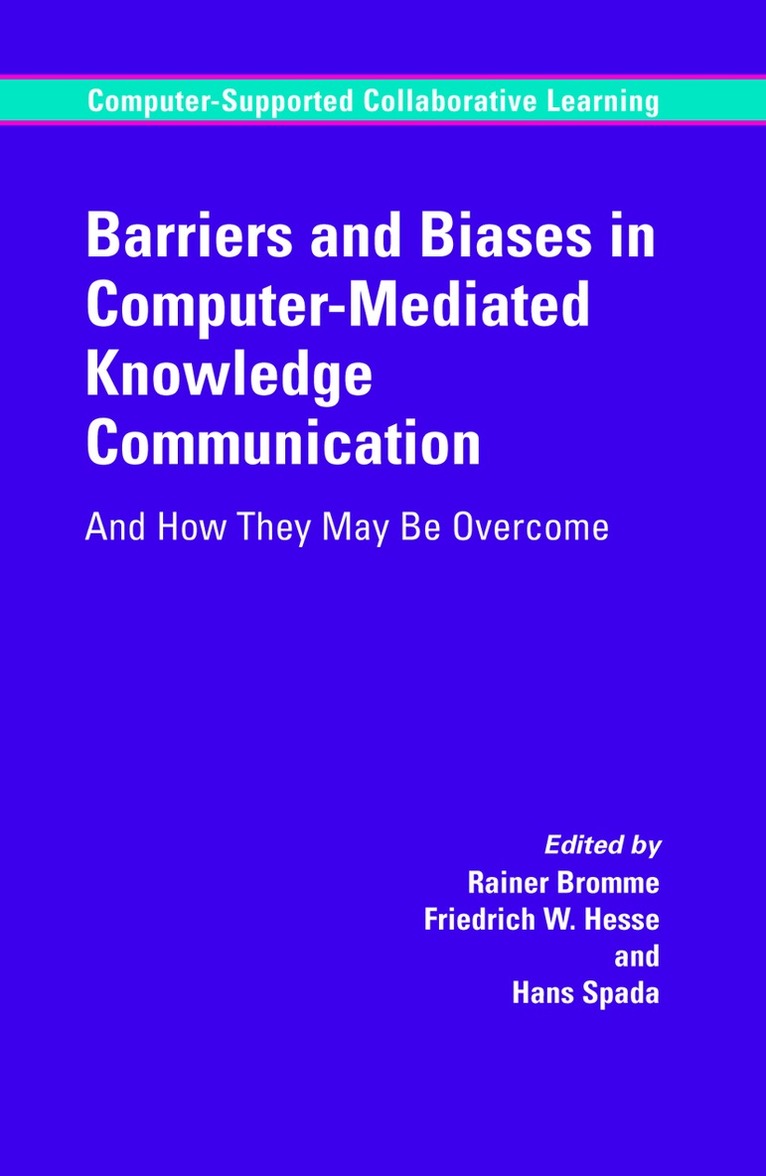
Barriers and Biases in Computer-Mediated Knowledge Communication
And How They May Be Overcome
Häftad, Engelska, 2010
1 532 kr
Skickas inom 10-15 vardagar
We report a study of one aspect of the changing industrial landscape, the use of virtual team working in the supply chain. The supply chain is the group of companies that are involved in the design and manufacture and distribution of products, notably complex products such as cars. Supply chain partnerships often involve cross-company team working, and as members of such teams are rarely collocated, virtual team working supported by IT, offers considerable potential benefits. Companies hope that these technologies can be used to support distributed computer supported collaborative working for purposes such as concurrent engineering and it is this kind of virtual teaming which we decided to investigate. We believe that exploring how virtual teams communicate is an effective way of examining how well they are operating and identifying the impacts of the technologies on their interactions. In the workplace free and open communication is considered to be very important to organizations facing a rapidly changing business environment. Similarly free and equal communication among members has been reported to be important if genuine team working is to be implemented in the workplace, (Carletta et al., 1998). If organizations are to derive benefits such as innovative problem solving from virtual team working then such open communication seems desirable. Communications technologies such as videoconferencing, shared applications etc. clearly offer the possibilities of such communications among geographically distributed or virtual teams.
805 kr
Skickas inom 3-6 vardagar
1 095 kr
Skickas inom 10-15 vardagar
In October of 1992 an assembly of researchers in simulation and computer models for instruction convened in Bonas, France, to learn from one another in a non-automated environment. The event was the Advanced Research Workshop entitled The Use of Computer Models for Explication, Analysis, and Experiential Learning. Sponsored by the Scientific Affairs Division of NATO, this workshop brought together 29 leading experts in the field loosely described as instruction and learning in simulation environments. The three-day workshop was organized in a manner to maximize exchange of knowledge, of beliefs, and of issues. The participants came from six countries with experiences to share, with opinions to voice, and with questions to explore. Starting some weeks prior to the workshop, the exchange included presentation of the scientific papers, discussions immediately following each presentation, and informal discussions outside the scheduled meeting times. Naturally, the character and content of the workshop was determined by the backgrounds and interests of the participants. One objective in drawing together these particular specialists was to achieve a congress with coherent diversity, i.e., we sought individuals who could view an emerging area from different perspectives yet had produced work of interest to many. Major topic areas included theories of instruction being developed or tested, use of multiple domain models to enhance understanding, experiential learning environments, modelling diagnostic environments, tools for authoring complex models, and case studies from industry.