Victoria Emma Pagán - Böcker
Visar alla böcker från författaren Victoria Emma Pagán. Handla med fri frakt och snabb leverans.
8 produkter
8 produkter
213 kr
Skickas inom 10-15 vardagar
Conspiracy is a thread that runs throughout the tapestry of Roman history. From the earliest days of the Republic to the waning of the Empire, conspiracies and intrigues created shadow worlds that undermined the openness of Rome's representational government. To expose these dark corners and restore a sense of order and safety, Roman historians frequently wrote about famous conspiracies and about how their secret plots were detected and the perpetrators punished. These accounts reassured readers that the conspiracy was a rare exception that would not happen again-if everyone remained vigilant.In this first book-length treatment of conspiracy in Roman history, Victoria PagÁn examines the narrative strategies that five prominent historians used to disclose events that had been deliberately shrouded in secrecy and silence. She compares how Sallust, Livy, and Tacitus constructed their accounts of the betrayed Catilinarian, Bacchanalian, and Pisonian conspiracies. Her analysis reveals how a historical account of a secret event depends upon the transmittal of sensitive information from a private setting to the public sphere-and why women and slaves often proved to be ideal transmitters of secrets. PagÁn then turns to Josephus's and Appian's accounts of the assassinations of Caligula and Julius Caesar to explore how the two historians maintained suspense throughout their narratives, despite readers' prior knowledge of the outcomes.
237 kr
Skickas inom 10-15 vardagar
Conspiracy theory as a theoretical framework has emerged only in the last twenty years; commentators are finding it a productive way to explain the actions and thoughts of individuals and societies. In this compelling exploration of Latin literature, PagÁn uses conspiracy theory to illuminate the ways that elite Romans invoked conspiracy as they navigated the hierarchies, divisions, and inequalities in their society. By seeming to uncover conspiracy everywhere, Romans could find the need to crush slave revolts, punish rivals with death or exile, dismiss women, denigrate foreigners, or view their emperors with deep suspicion. Expanding on her earlier Conspiracy Narratives in Roman History, PagÁn here interprets the works of poets, satirists, historians, and orators-Juvenal, Tacitus, Suetonius, Terence, and Cicero, among others-to reveal how each writer gave voice to fictional or real actors who were engaged in intrigue and motivated by a calculating worldview.Delving into multiple genres, PagÁn offers a powerful critique of how conspiracy and conspiracy theory can take hold and thrive when rumor, fear, and secrecy become routine methods of interpreting (and often distorting) past and current events. In Roman society, where knowledge about others was often lacking and stereotypes dominated, conspiracy theory explained how the world worked. The persistence of conspiracy theory, from antiquity to the present day, attests to its potency as a mechanism for confronting the frailties of the human condition.
462 kr
Skickas inom 5-8 vardagar
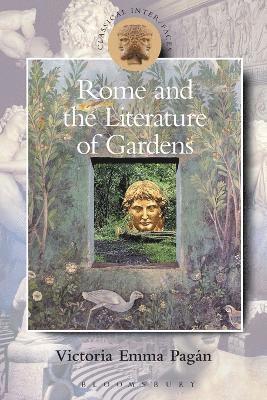
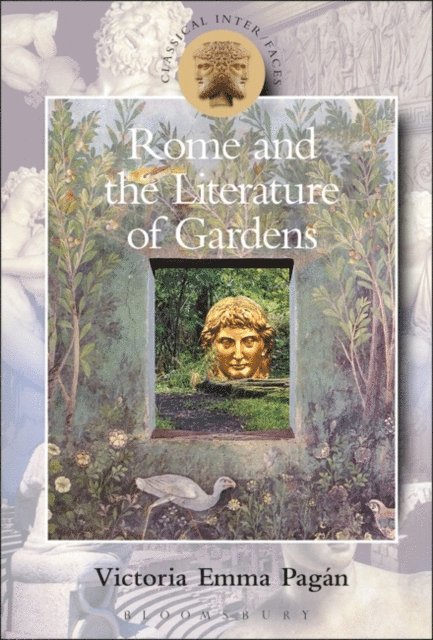
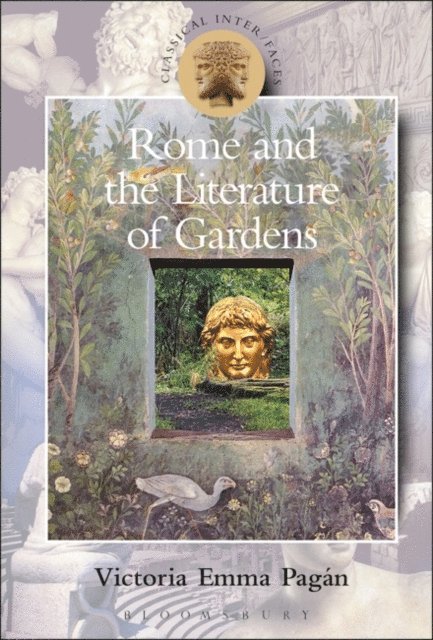
"Rome and the Literature of Gardens" explores the garden as a powerful locus of transformation and transgression in the "De Re Rustica" of Columella, the "Satires" of Horace, the "Annals" of Tacitus, and the "Confessions" of Saint Augustine. In keeping with the approach of this series, a concluding chapter examines the reincarnation of these expressions in the contemporary plays "Arcadia" and "The Invention of Love" by Tom Stoppard. Many books on gardens in ancient Rome concentrate on either technical agricultural manuals, or pastoral poetry, or the physical remains of Roman gardens. Instead, this book considers images of gardens from a kaleidoscope of genres, especially those that the Romans made their own: satire, annalistic history, and autobiography. This atypical approach makes a unique contribution to the field of Latin literature and garden history, bridging the gap between material culture and cultural history.
1 039 kr
Skickas inom 10-15 vardagar
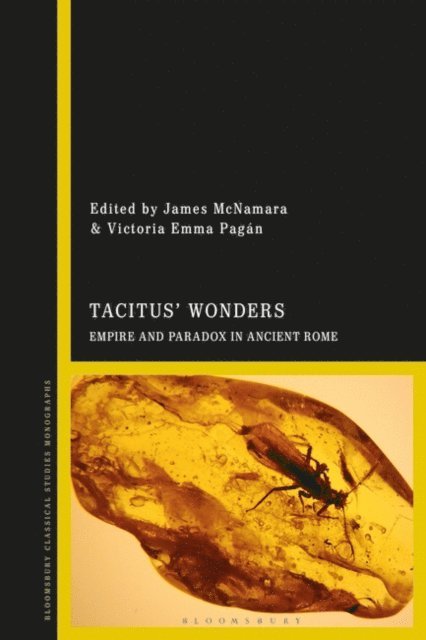
This volume approaches the broad topic of wonder in the works of Tacitus, encompassing paradox, the marvellous and the admirable. Recent scholarship on these themes in Roman literature has tended to focus on poetic genres, with comparatively little attention paid to historiography: Tacitus, whose own judgments on what is worthy of note have often differed in interesting ways from the preoccupations of his readers, is a fascinating focal point for this complementary perspective. Scholarship on Tacitus has to date remained largely marked by a divide between the search for veracity – as validated by modern historiographical standards – and literary approaches, and as a result wonders have either been ignored as unfit for an account of history or have been deprived of their force by being interpreted as valid only within the text. While the modern ideal of historiographical objectivity tends to result in striving for consistent heuristic and methodological frameworks, works as varied as Tacitus’ Histories, Annals and opera minora can hardly be prefaced with a statement of methodology broad enough to escape misrepresenting their diversity. In our age of specialization a streamlined methodological framework is a virtue, but it should not be assumed that Tacitus had similar priorities, and indeed the Histories and Annals deserve to be approached with openness towards the variety of perspectives that a tradition as rich as Latin historiographical prose can include within its scope. This collection proposes ways to reconcile the divide between history and historiography by exploring contestable moments in the text that challenge readers to judge and interpret for themselves, with individual chapters drawing on a range of interpretive approaches that mirror the wealth of authorial and reader-specific responses in play.
365 kr
Skickas inom 10-15 vardagar
This volume approaches the broad topic of wonder in the works of Tacitus, encompassing paradox, the marvellous and the admirable. Recent scholarship on these themes in Roman literature has tended to focus on poetic genres, with comparatively little attention paid to historiography: Tacitus, whose own judgments on what is worthy of note have often differed in interesting ways from the preoccupations of his readers, is a fascinating focal point for this complementary perspective. Scholarship on Tacitus has to date remained largely marked by a divide between the search for veracity – as validated by modern historiographical standards – and literary approaches, and as a result wonders have either been ignored as unfit for an account of history or have been deprived of their force by being interpreted as valid only within the text. While the modern ideal of historiographical objectivity tends to result in striving for consistent heuristic and methodological frameworks, works as varied as Tacitus’ Histories, Annals and opera minora can hardly be prefaced with a statement of methodology broad enough to escape misrepresenting their diversity. In our age of specialization a streamlined methodological framework is a virtue, but it should not be assumed that Tacitus had similar priorities, and indeed the Histories and Annals deserve to be approached with openness towards the variety of perspectives that a tradition as rich as Latin historiographical prose can include within its scope. This collection proposes ways to reconcile the divide between history and historiography by exploring contestable moments in the text that challenge readers to judge and interpret for themselves, with individual chapters drawing on a range of interpretive approaches that mirror the wealth of authorial and reader-specific responses in play.
2 151 kr
Skickas inom 7-10 vardagar
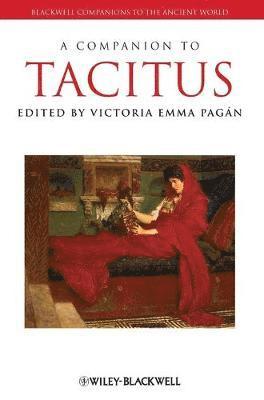
A Companion to Tacitus brings much needed clarity and accessibility to the notoriously difficult language and yet indispensable historical accounts of Tacitus. The companion provides both a broad introduction and showcases new theoretical approaches that enrich our understanding of this complex author. Tacitus is one of the most important Roman historians of his time, as well as a great literary stylist, whose work is characterized by his philosophy of human natureEncourages interdisciplinary discussion intended to engage scholars beyond Classics including philosophy, cultural studies, political science, and literatureShowcases new theoretical approaches that enrich our understanding of this complex authorClarifies and explains the notoriously difficult language of TacitusWritten and designed to prepare a new generation of scholars to examine for themselves the richness of Tacitean thoughtIncludes contributions from a broad range of established international scholars and rising stars in the field
4 706 kr
Skickas inom 7-10 vardagar
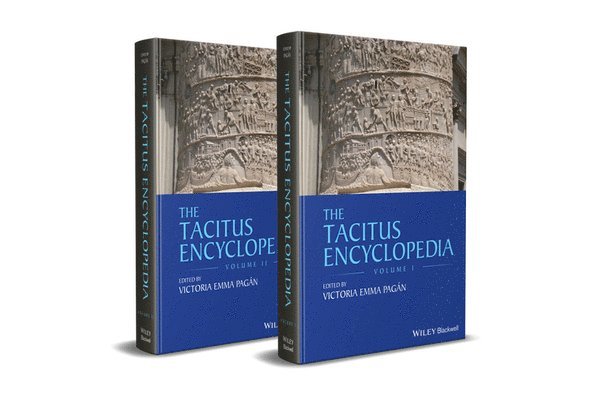
The most comprehensive reference work on Tacitus published in English The Tacitus Encyclopedia is the only complete reference of its kind in the field of Tacitean studies. Spanning two volumes, this unprecedented resource contains more than 1,000 entries covering every person and place named in all extant works of Roman historian and politician Tacitus (c. 56-120 CE). Written by an international collaboration of diverse contributors, the entries contextualize individuals and places named in Tacitus and show their relationship to the larger Tacitean corpus. Alphabetized and cross-referenced entries contain general descriptions and background information of items as they appear in the texts, citations to ancient sources and relevant scholarship, and suggested readings. Designed to be a starting point for further research, the Encyclopedia also includes 165 key concepts topics related to the study of Tacitus, including ancient historiography, history, social history, gender and sexuality, literary criticism, ancient authors, reception, and material culture. Providing readers with an expansive view of the contents of Tacitus, this invaluable reference: Covers approximately 1,000 individuals and 400 regions, cities, towns, and geographical and topological featuresProvides readers of all levels with an accessible entry point to Tacitus’s Annals, Histories, Agricola, Germania, and Dialogue on OratorsExplores a broad range of topics such as gender, slavery, literary history, and the reigns of individual emperorsTreats the scholarship and reception of Tacitus from antiquity to the presentDiscusses scholarly trends, current methodology, and future directions of Tacitean studiesAvailable in print and online, The Tacitus Encyclopedia is a must-have resource for students and academics in the fields of history, historiography, classics, art history, social sciences, European intellectual history, archaeology, and Roman studies.
290 kr
Skickas inom 7-10 vardagar
The greatest of Roman historians, Publius Cornelius Tacitus (56-117 CE) studied rhetoric in Rome. His rhetorical and oratorical gifts are evident throughout his most substantial works, the incomplete but still remarkable Annals and Histories. In concise and concentrated prose, marked by sometimes bitter and ironic reflections on the human capacity to misuse power, Tacitus charts the violent trajectory of the Roman Empire from Augustus' death in 14 CE to the end of Domitian's rule in 96. Victoria Emma Pagan looks at Tacitus from a range of perspectives: as a literary stylist, perhaps influenced by Sallust; his notion of time; his modes of discourse; his place in the historiography of the era; and the later reception of Tacitus in the Renaissance and early modern periods. Tacitus remains of major interest to students of the Bible, as well as classicists, by virtue of his reference to 'Christus' and Nero's persecution of the Christians after the great fire of Rome in 64 CE. This lively survey enables its readers fully to appreciate why, in holding a mirror up to venality and greed, the work of Tacitus remains eternal.