W. J. T. Mitchell - Böcker
Visar alla böcker från författaren W. J. T. Mitchell. Handla med fri frakt och snabb leverans.
18 produkter
18 produkter
363 kr
Skickas inom 7-10 vardagar
The first edition of this book, published in 1994, reshaped the direction of landscape studies by considering landscape not simply as an object to be seen or a text to be read, but as an instrument of cultural force, a central tool in the creation of national and social identities. This second edition adds not only a new preface, but five new essays—from Edward Said, W. J. T. Mitchell, Jonathan Bordo, Michael Taussig, and Robert Pogue Harrison-extending the scope of the book in remarkable ways.
1 016 kr
Skickas inom 3-6 vardagar
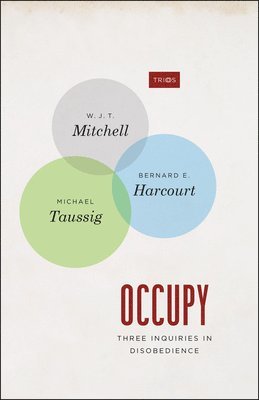
Mic check! Mic check! Lacking amplification in Zuccotti Park, Occupy Wall Street protestors addressed one another by repeating and echoing speeches throughout the crowd. In "Occupy", W. J. T. Mitchel, Bernard E. Harcourt, and Michael Taussig take the protestors' lead and perform their own resonant call-and-response, playing off of each other in three essays that engage the extraordinary Occupy movement that has swept across the world, examining everything from self-immolations in the Middle East to the G8 crackdown in Chicago to the many protest signs still visible worldwide. "You break through the screen like "Alice in Wonderland"," Taussig writes in the opening essay, "and now you can't leave or do without it." Following Taussig's artful blend of participatory ethnography and poetic meditation on Zuccotti Park, political and legal scholar Harcourt examines the crucial difference between civil and political disobedience. He shows how by effecting the latter - by rejecting the very discourse and strategy of politics - Occupy Wall Street protestors enacted a radical new form of protest.Finally, media critic and theorist Mitchell surveys the global circulation of Occupy images across mass and social media and looks at contemporary works by artists such as Antony Gormley and how they engage the body politic, ultimately examining the use of empty space itself as revolutionary monument. "Occupy" stands not as a primer on or an authoritative account of 2011's revolutions, but as a snapshot, a second draft of history, beyond journalism and the polemics of the moment - an occupation itself. Each Trios book addresses a pressing theme in critical theory, philosophy, or cultural studies through three extended essays written in close collaboration by leading scholars.
150 kr
Skickas inom 7-10 vardagar
Mic check! Mic check! Lacking amplification in Zuccotti Park, Occupy Wall Street protestors addressed one another by repeating and echoing speeches throughout the crowd. In "Occupy", W. J. T. Mitchell, Bernard E. Harcourt, and Michael Taussig take the protestors' lead and perform their own resonant call-and-response, playing off of each other in three essays that engage the extraordinary Occupy movement that has swept across the world, examining everything from self-immolations in the Middle East to the G8 crackdown in Chicago to the many protest signs still visible worldwide. "You break through the screen like Alice in Wonderland," Taussig writes in the opening essay, "and now you can't leave or do without it." Following Taussig's artful blend of participatory ethnography and poetic meditation on Zuccotti Park, political and legal scholar Harcourt examines the crucial difference between civil and political disobedience. He shows how by effecting the latter - by rejecting the very discourse and strategy of politics - Occupy Wall Street protestors enacted a radical new form of protest.Finally, media critic and theorist Mitchell surveys the global circulation of Occupy images across mass and social media and looks at contemporary works by artists such as Antony Gormley and how they engage the body politic, ultimately examining the use of empty space itself as a revolutionary monument. "Occupy" stands not as a primer on or an authoritative account of 2011's revolutions, but as a snapshot, a second draft of history, beyond journalism and the polemics of the moment - an occupation itself. Each Trios book addresses a pressing theme in critical theory, philosophy, or cultural studies through three extended essays written in close collaboration by leading scholars.
236 kr
Skickas inom 7-10 vardagar
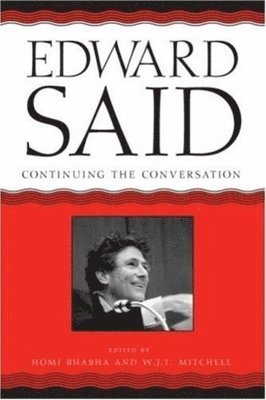
In Edward Said: Continuing the Conversation, Edward Said's long-time friends and collaborators continue their dialogue with Said where they left off following his death in the fall of 2003. The essays, imagining and recalling the cadences of Said's conversation, take various forms, including elaborations on his ideas, applications of his thought to new problems, and recollections of the indescribable electricity that made conversation with him intense and memorable. This lively, personal tone is a direct result of editors Homi Bhabha and W. J. T. Mitchell urging contributors to write in the spirit of a conversation interrupted, a call on hold, a letter waiting for a reply, a question hanging in the air. This is a work of immense imaginative and intellectual force and compelling candor, honoring Said's legacy as an activist intellectual. This collection includes essays by Lila Abu-Lughod, Daniel Barenboim, Akeel Bilgrami, Paul Bove, Timothy Brennan, Noam Chomsky, Ranajit Guha, Harry Harootunian, Saree Makdisi, Aamir Mufti, Roger Owen, Gyan Prakash, Dan Rabinowitz, Jacqueline Rose, and Gayatri Spivak.
183 kr
Skickas inom 7-10 vardagar
"A remarkably rich and provocative set of essays on the virtually infinite kinds of meanings generated by images in both the verbal and visual arts. Ranging from Michelangelo to Velazquez and Delacroix, from the art of the emblem book to the history of photography and film, The Language of Images offers at once new ways of thinking about the inexhaustibly complex relation between verbal and iconic representation."—James A. W. Heffernan, Dartmouth College
210 kr
Skickas inom 7-10 vardagar
The fourteen distinguished contributors to this volume explore ways we tell, understand, and use stories. More important, through their exploration they collectively demonstrate that the study of narrative, like the study of other significant human creations, has taken a quantum leap in the modern era. No longer the province of literary specialists who borrow their terms from psychology or linguistics, the study of narrative has become and invaluable source of insight for all the branches of human and natural science. Multidisciplinary in scope, these essays dramatize and and clarify the most fundamental debates about the nature and value of narrative as a means by which human beings attempt to represent and make sense of the world.
192 kr
Skickas inom 7-10 vardagar
"Against Theory," the title essay in this volume, challenges the notion that literary theory has any real work to do, or any results to show. This challenge—issued by Steven Knapp and Walter Benn Michaels in Critical Inquiry (8:4)—strikes some critics as scandalous, others as provocative and productive. The argument is directed against both sides of the current debates in literary theory, criticizing theoretical "objectivists" like E. D. Hirsch, Jr., on the one hand, and proponents of indeterminacy like Paul de Man on the other. The attack is not just on a particular way of doing theory but on the entire project of literary theory. The challenge is not only to a way of thinking and writing but to a way of making a living. The resulting controversy has drawn so much attention among literary critics that it has been collected in a single volume so that the debate can be followed from start to finish. This collection includes the essay "Against Theory," seven responses to it, and a rejoinder by Knapp and Michaels (originally published in Critical Inquiry 9:4); in addition, there are two new statements plus a final reply by Knapp and Michaels. The debate chronicled in this volume raises the most fundamental issues in the theory of meaning and the practice of interpretation. Are Knapp and Michaels confronting literary theory with a new "pragmatic" form of theory? Or are they (as some of their respondents suggest) arguing for a new form of nihilism? "If it is a nihilism," writes editor W. J. T. Mitchell, "it is one that demands an answer, not easy polemical dismissal, one that calls for theory to clarify its claims, not to mystify them and the easy assurance of intellectual fashion and institutional authority." It is the intention of Against Theory to aid in that clarification.
236 kr
Skickas inom 7-10 vardagar
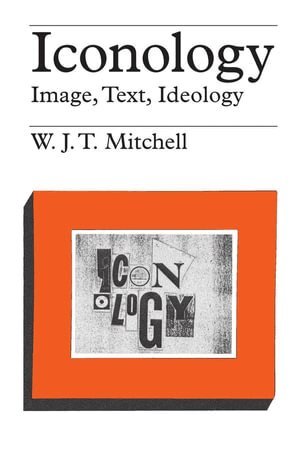
"[Mitchell] undertakes to explore the nature of images by comparing them with words, or, more precisely, by looking at them from the viewpoint of verbal language. . . . The most lucid exposition of the subject I have ever read."—Rudolf Arnheim, Times Literary Supplement
404 kr
Skickas inom 7-10 vardagar
In this companion volume to "Iconology", the author extends his investigation to pictures - the concrete, representational objects in which images appear. Although we have many words about pictures, Mitchell notes that we do not yet have a satisfactory theory of them. What we have is a variety of disciplines - semiotics, philosophical inquiries into representation, new departures in art history, studies in mass media - that attempt to converge on the problem of pictorial representation and visual culture. Identifying the problems inherent in the attempt to master visual representation with verbal discourse, Mitchell proposes instead to "picture theory." He looks at the way pictures function in theories about culture, consciousness, and representation, and at theory itself as a form of picturing. What precisely, he asks, are pictures (and theories about pictures) doing now , in the late 20th century, when the power of the visual is said to be greater than ever before, and the "pictorial turn" supplants the "linguistic turn" in the study of culture?Focusing on Spike Lee's "Do the Right Thing", Oliver Stone's "JFK", and television coverage of the Gulf War, he examines the capacity of visual images to awaken or stifle public debate, collective emotion, and political violence. An "applied iconology," this volume by one of America's leading theorists of visual representation offers an account of the interplay between the visible and the readable across the culture, from literature to visual art to the mass media.
329 kr
Skickas inom 7-10 vardagar
Why do we have such extraordinarily powerful responses toward the images and pictures we see in everyday life? Why do we behave as if pictures were alive, possessing the power to influence us, to demand things from us, to persuade us, seduce us, or even lead us astray? According to W. J. T. Mitchell, we need to reckon with images not just as inert objects that convey meaning but as animated beings with desires, needs, appetites, demands, and drives of their own. What Do Pictures Want? explores this idea and highlights Mitchell's innovative and profoundly influential thinking on picture theory and the lives and loves of images. Ranging across the visual arts, literature, and mass media, Mitchell applies characteristically brilliant and wry analyses to Byzantine icons and cyberpunk films, racial stereotypes and public monuments, ancient idols and modern clones, offensive images and found objects, American photography and aboriginal painting. Opening new vistas in iconology and the emergent field of visual culture, he also considers the importance of Dolly the Sheep—who, as a clone, fulfills the ancient dream of creating a living image—and the destruction of the World Trade Center on 9/11, which, among other things, signifies a new and virulent form of iconoclasm.What Do Pictures Want? offers an immensely rich and suggestive account of the interplay between the visible and the readable. A work by one of our leading theorists of visual representation, it will be a touchstone for art historians, literary critics, anthropologists, and philosophers alike. “A treasury of episodes—generally overlooked by art history and visual studies—that turn on images that ‘walk by themselves’ and exert their own power over the living.”—Norman Bryson, Artforum
277 kr
Skickas inom 7-10 vardagar
Communications, philosophy, film and video, digital culture: media studies straddles an astounding array of fields and disciplines and produces a vocabulary that is in equal parts rigorous and intuitive. "Critical Terms for Media Studies" defines, and at times redefines, what this new and hybrid area aims to do, illuminating the key concepts behind its liveliest debates and most dynamic topics. Part of a larger conversation that engages culture, technology, and politics, this exciting collection of essays explores our most critical language for dealing with the qualities and modes of contemporary media. Edited by two outstanding scholars in the field, W.J.T. Mitchell and Mark B.N. Hansen, and featuring a team of distinguished contributors - including N. Katherine Hayles, Johanna Drucker, and Bernard Stiegler - "Critical Terms for Media Studies" offers diverse opportunities for students to understand the language that underpins much of new media.The essays, commissioned expressly for this volume, not only emphasize the ways in which technology changes our understanding of mediation, but also help to articulate issues important to media practitioners, such as the obsolescence of the body and the changing role of memory. Mitchell and Hansen have organized these essays into three interrelated groups: 'Aesthetics' engages with terms that describe sensory experiences and judgments, 'Technology' offers entry into a broad array of technological concepts, and 'Society' invites inquiry into language that describes the systems that allow a medium to function. A compelling reference work for the twenty-first century and the media that form our experience within it, "Critical Terms for Media Studies" will engage and deepen anyone's knowledge of one of our most important new fields.
253 kr
Skickas inom 7-10 vardagar
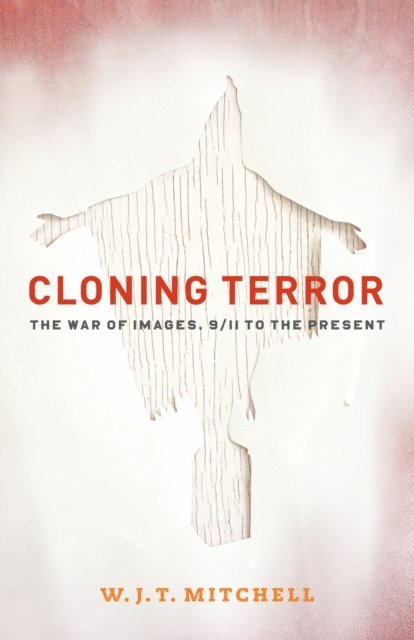
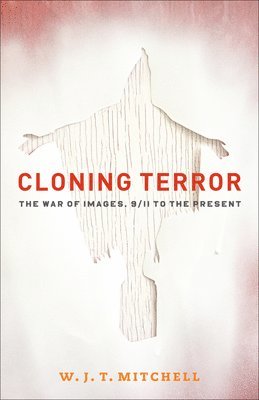
The phrase 'War on Terror' has quietly been retired from official usage, but it persists in the American psyche, and our understanding of it is hardly complete. Nor will it be, W. J. T. Mitchell argues, without a grasp of the images that it spawned, and that spawned it. Exploring the role of verbal and visual images in the War on Terror, Mitchell finds a conflict whose shaky metaphoric and imaginary conception has created its own reality. At the same time, Mitchell locates in the concept of clones and cloning an anxiety about new forms of image-making that has amplified the political effects of the War on Terror. Cloning and terror, he argues, share an uncanny structural resemblance, shuttling back and forth between imaginary and real, metaphoric and literal manifestations. In Mitchell's startling analysis, cloning terror emerges as the inevitable metaphor for the way in which the War on Terror has not only helped recruit more fighters to the jihadist cause but undermined the American constitution with 'faith-based' foreign and domestic policies.Bringing together the hooded prisoners of Abu Ghraib with the cloned stormtroopers of the "Star Wars" saga, Mitchell draws attention to the figures of faceless anonymity that stalk the ever-shifting and unlocatable 'fronts' of the War on Terror. A striking new investigation of the role of images from our foremost scholar of iconology, "Cloning Terror" will expand our understanding of the visual legacy of a new kind of war and reframe our understanding of contemporary biopower and biopolitics.
273 kr
Skickas inom 7-10 vardagar
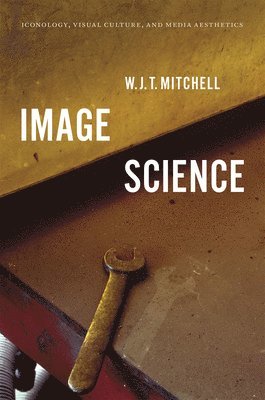
Almost thirty years ago, W. J. T. Mitchell's Iconology helped launch the interdisciplinary study of visual media, now a central feature of the humanities. Along with his subsequent Picture Theory and What Do Pictures Want?, Mitchell's now-classic work introduced such ideas as the pictorial turn, the image/picture distinction, the metapicture, and the biopicture. These key concepts imply an approach to images as true objects of investigation--”an "image science." Continuing with this influential line of thought, Image Science gathers Mitchell's most recent essays on media aesthetics, visual culture, and artistic symbolism. The chapters delve into such topics as the physics and biology of images, digital photography and realism, architecture and new media, and the occupation of space in contemporary popular uprisings. The book looks both backward at the emergence of iconology as a field and forward toward what might be possible if image science can indeed approach pictures the same way that empirical sciences approach natural phenomena. Essential for those involved with any aspect of visual media, Image Science is a brilliant call for a method of studying images that overcomes the "two-culture split" between the natural and human sciences.
2 026 kr
Kommande
597 kr
Kommande
227 kr
Skickas inom 7-10 vardagar
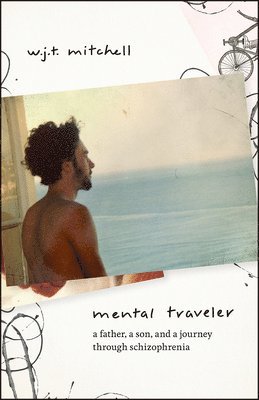
How does a parent make sense of a child's severe mental illness? How does a father meet the daily challenges of caring for his gifted but delusional son, while seeking to overcome the stigma of madness and the limits of psychiatry? W. J. T. Mitchell's memoir tells the story--at once representative and unique--of one family's encounter with mental illness, and bears witness to the life of the talented young man who was his son.Gabriel Mitchell was diagnosed with schizophrenia at the age of twenty-one and died by suicide eighteen years later. He left behind a remarkable archive of creative work and a father determined to honor his son's attempts to conquer his own illness. Before his death, Gabe had been working on a film that would show madness from inside and out, as media stereotype and spectacle, symptom and stigma, malady and minority status, disability and gateway to insight. He was convinced that madness is an extreme form of subjective experience that we all endure at some point in our lives, whether in moments of ecstasy or melancholy or in the enduring trauma of a broken heart. Gabe's declared ambition was to transform schizophrenia from a death sentence to a learning experience, and madness from a curse to a critical perspective. Through vignettes and memories, by turns difficult, unsettling, and humorous, Mental Traveler shows how Mitchell was drawn into Gabe's quest for enlightenment within madness. Shot through with love and pain, this memoir holds many lessons for anyone struggling to cope with mental illness, and especially for parents and caregivers of those caught in its grasp.
395 kr
Skickas inom 10-15 vardagar
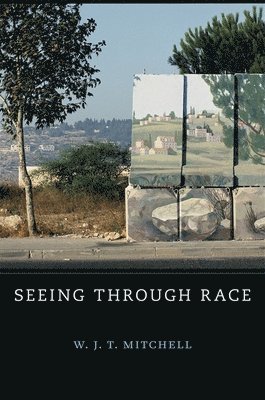
According to W. J. T. Mitchell, a “color-blind” post-racial world is neither achievable nor desirable. Against popular claims that race is an outmoded construct that distracts from more important issues, Mitchell contends that race remains essential to our understanding of social reality. Race is not simply something to be seen but is among the fundamental media through which we experience human otherness. Race also makes racism visible and is thus our best weapon against it.The power of race becomes most apparent at times when pedagogy fails, the lesson is unclear, and everyone has something to learn. Mitchell identifies three such moments in America’s recent racial history. First is the post–Civil Rights moment of theory, in which race and racism have been subject to renewed philosophical inquiry. Second is the moment of blackness, epitomized by the election of Barack Obama and accompanying images of blackness in politics and popular culture. Third is the “Semitic Moment” in Israel-Palestine, where race and racism converge in new forms of anti-Semitism and Islamophobia. Mitchell brings visual culture, iconology, and media studies to bear on his discussion of these critical turning points in our understanding of the relation between race and racism.
308 kr
Skickas inom 3-6 vardagar