W. Puck Brecher - Böcker
Visar alla böcker från författaren W. Puck Brecher. Handla med fri frakt och snabb leverans.
7 produkter
7 produkter
Del 399 - Harvard East Asian Monographs
Honored and Dishonored Guests
Westerners in Wartime Japan
Häftad, Engelska, 2021
210 kr
Skickas inom 7-10 vardagar
The brutality and racial hatred exhibited by Japan’s military during the Pacific War piqued outrage in the West and fanned resentments throughout Asia. Public understanding of Japan’s wartime atrocities, however, often fails to differentiate the racial agendas of its military and government elites from the racial values held by the Japanese people. While not denying brutalities committed by the Japanese military, Honored and Dishonored Guests overturns these standard narratives and demonstrates rather that Japan’s racial attitudes during wartime are more accurately discerned in the treatment of Western civilians living in Japan than the experiences of enemy POWs.The book chronicles Western communities in wartime Japan, using this body of experiences to reconsider allegations of Japanese racism and racial hatred. Its bold thesis is borne out by a broad mosaic of stories from dozens of foreign families and individuals who variously endured police harassment, suspicion, relocation, starvation, denaturalization, internment, and torture, as well as extraordinary acts of charity. The book’s account of stranded Westerners—from Tokyo, Yokohama, and Kobe to the mountain resorts of Karuizawa and Hakone—yields a unique interpretation of race relations and wartime life in Japan.
Del 399 - Harvard East Asian Monographs
Honored and Dishonored Guests
Westerners in Wartime Japan
Inbunden, Engelska, 2017
414 kr
Skickas inom 7-10 vardagar
The brutality and racial hatred exhibited by Japan’s military during the Pacific War piqued outrage in the West and fanned resentments throughout Asia. Public understanding of Japan’s wartime atrocities, however, often fails to differentiate the racial agendas of its military and government elites from the racial values held by the Japanese people. While not denying brutalities committed by the Japanese military, Honored and Dishonored Guests overturns these standard narratives and demonstrates rather that Japan’s racial attitudes during wartime are more accurately discerned in the treatment of Western civilians living in Japan than the experiences of enemy POWs.The book chronicles Western communities in wartime Japan, using this body of experiences to reconsider allegations of Japanese racism and racial hatred. Its bold thesis is borne out by a broad mosaic of stories from dozens of foreign families and individuals who variously endured police harassment, suspicion, relocation, starvation, denaturalization, internment, and torture, as well as extraordinary acts of charity. The book’s account of stranded Westerners—from Tokyo, Yokohama, and Kobe to the mountain resorts of Karuizawa and Hakone—yields a unique interpretation of race relations and wartime life in Japan.
469 kr
Skickas inom 7-10 vardagar
Eccentric artists are “the vagaries of humanity” that inhabit the deviant underside of Japanese society: This was the conclusion drawn by pre–World War II commentators on most early modern Japanese artists. Postwar scholarship, as it searched for evidence of Japan’s modern roots, concluded the opposite: The eccentric, mad, and strange are moral exemplars, paragons of virtue, and shining hallmarks of modern consciousness. In recent years, the pendulum has swung again, this time in favour of viewing these oddballs as failures and dropouts without lasting cultural significance. This work corrects the disciplinary (and exclusionary) nature of such interpretations by reconsidering the sudden and dramatic emergence of aesthetic eccentricity during the Edo period (1600–1868). It explains how, throughout the period, eccentricity (ki) and madness (ky?) developed and proliferated as subcultural aesthetics. By excavating several generations of early modern Japan’s eccentric artists, it demonstrates that individualism and strangeness carried considerable moral and cultural value. Indeed, Edo society fetishized various marginal personae—the recluse, the loser, the depraved, the outsider, the saint, the mad genius—as local heroes and paragons of moral virtue. This book concludes that a confluence of intellectual, aesthetic, and social conditions enabled multiple concurrent heterodoxies to crystallize around strangeness as a prominent cultural force in Japanese society. A study of impressive historical and disciplinary breadth, The Aesthetics of Strangeness also makes extensive use of primary sources, many previously overlooked in existing English scholarship. Its coverage of the entire Edo period and engagement with both Chinese and native Japanese traditions reinterprets Edo-period tastes and perceptions of normalcy. By wedding art history to intellectual history, literature, aesthetics, and cultural practice, W. Puck Brecher strives for a broadly interdisciplinary perspective on this topic. Readers will discover that the individuals that form the backbone of his study lend credence to a new interpretation of Edo-period culture: a growing valuation of eccentricity within artistic and intellectual circles that exerted indelible impacts on mainstream society. The Aesthetics of Strangeness demystifies this emergent paradigm by illuminating the conditions and tensions under which certain rubrics of strangeness— ki and ky? particularly—were appointed as aesthetic criteria. Its revision of early modern Japanese culture constitutes an important contribution to the field.
754 kr
Skickas inom 7-10 vardagar
This wide-ranging collection seeks to reassess conventional understanding of Japan’s Asia-Pacific War by defamiliarizing and expanding the rhetorical narrative. Its nine chapters, diverse in theme and method, are united in their goal to recover a measured historicity about the conflict by either introducing new areas of knowledge or reinterpreting existing ones. Collectively, they cast doubt on the war as familiar and recognizable, compelling readers to view it with fresh eyes.Following an introduction that problematizes timeworn narratives about a “unified Japan” and its “illegal war” or “race war,” early chapters on the destruction of Japan’s diplomatic records and government interest in an egalitarian health care policy before, during, and after the war oblige us to question selective histories and moral judgments about wartime Japan. The discussion then turns to artistic/cultural production and self-determination, specifically to Osaka rakugo performers who used comedy to contend with state oppression and to the role of women in creating care packages for soldiers abroad. Other chapters cast doubt on well-trod stereotypes (Japan’s lack of pragmatism in its diplomatic relations with neutral nations and its irrational and fatalistic military leadership) and examine resistance to the war by a prominent Japanese Christian intellectual. The volume concludes with two nuanced responses to race in wartime Japan, one maintaining the importance of racial categories while recognizing the “performance of Japaneseness,” the other observing that communities often reflected official government policies through nationality rather than race. Contrasting findings like these underscore the need to ask new questions and fill old gaps in our understanding of a historical event that, after more than seventy years, remains as provocative and divisive as ever.Defamiliarizing Japan’s Asia-Pacific War will find a ready audience among World War II historians as well as specialists in war and society, social history, and the growing fields of material culture and civic history.
292 kr
Skickas inom 7-10 vardagar
This wide-ranging collection seeks to reassess conventional understanding of Japan’s Asia-Pacific War by defamiliarizing and expanding the rhetorical narrative. Its nine chapters, diverse in theme and method, are united in their goal to recover a measured historicity about the conflict by either introducing new areas of knowledge or reinterpreting existing ones. Collectively, they cast doubt on the war as familiar and recognizable, compelling readers to view it with fresh eyes.Following an introduction that problematizes timeworn narratives about a "unified Japan" and its "illegal war" or "race war," early chapters on the destruction of Japan’s diplomatic records and government interest in an egalitarian health care policy before, during, and after the war oblige us to question selective histories and moral judgments about wartime Japan. The discussion then turns to artistic/cultural production and self-determination, specifically to Osaka rakugo performers who used comedy to contend with state oppression and to the role of women in creating care packages for soldiers abroad. Other chapters cast doubt on well-trod stereotypes (Japan’s lack of pragmatism in its diplomatic relations with neutral nations and its irrational and fatalistic military leadership) and examine resistance to the war by a prominent Japanese Christian intellectual. The volume concludes with two nuanced responses to race in wartime Japan, one maintaining the importance of racial categories while recognizing the "performance of Japaneseness," the other observing that communities often reflected official government policies through nationality rather than race. Contrasting findings like these underscore the need to ask new questions and fill old gaps in our understanding of a historical event that, after more than seventy years, remains as provocative and divisive as ever.Defamiliarizing Japan’s Asia-Pacific War will find a ready audience among World War II historians as well as specialists in war and society, social history, and the growing fields of material culture and civic history.
798 kr
Skickas inom 7-10 vardagar
The sports world’s attention was focused on Japan for the Tokyo 2020 Summer Olympics and Paralympics. The years-long buildup to and aftermath of the games occurred in the midst of the global pandemic, which delayed the event until 2021. Given all of this, there is perhaps no better time to delve into an often overlooked but critical facet of sport in Japan—namely religion.Religion has long been a part of the Japanese sport tradition—from Shugendō practitioners offering sumo bouts to the gods to soccer players of all ages praying for success at Shintō shrines; from the use of meditation and ritual in martial arts to gain focus or superhuman abilities to religious organizations sponsoring sporting events and teams and school sports clubs. Religion and Sport in Japan brings together historians and sport and religious studies specialists from Japan, the US, and Europe to address sport’s ties to corporate and national identity, politics, environmentalism, ritual, and sacred space. Major themes discussed include the spiritual geographies of sport, sport as invented tradition, technologies of self, material culture, and civil religion. The chapters are written so that sport historians with no background in the study of Japan or religious studies scholars who have never before examined the world of sport will find the material accessible. To provide further grounding for non-field specialists, the volume begins with two background chapters that introduce sport studies in Japan and the study of religion and sport.
767 kr
Skickas inom 7-10 vardagar
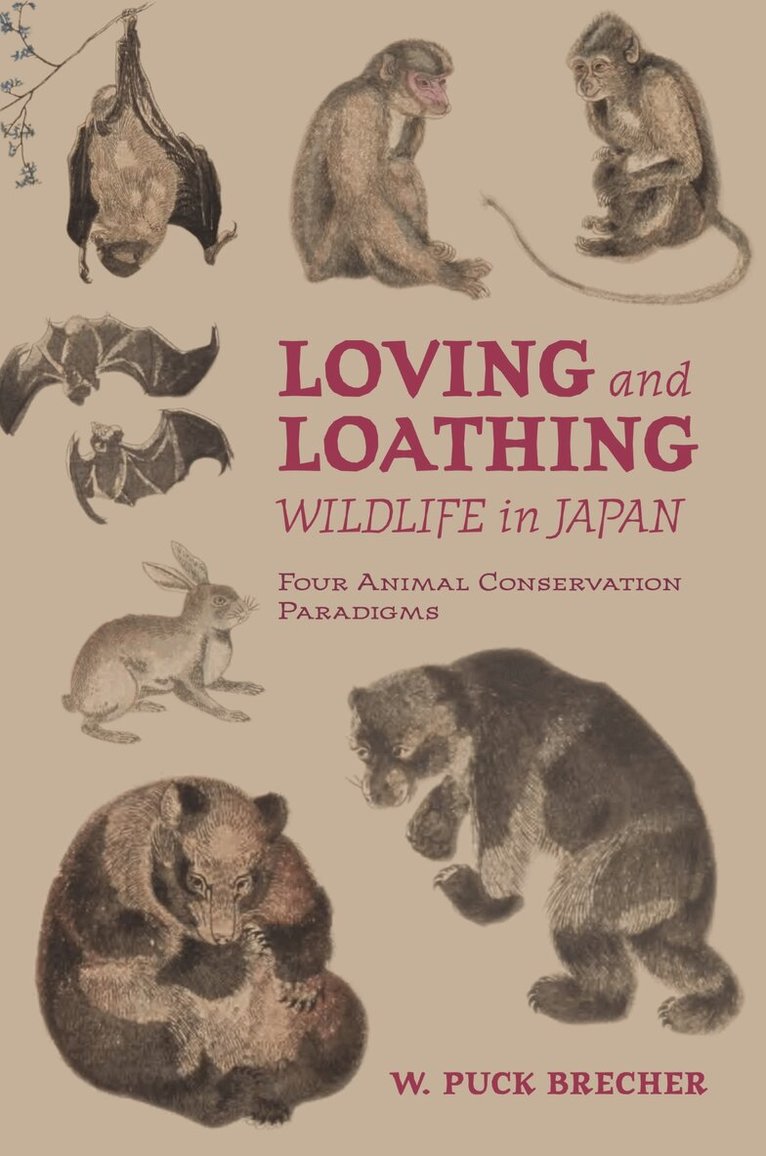
For over a century, Japan has vexed and disappointed its Western allies by resisting their efforts to protect biodiversity. Consequently, foreign critics have long derided Japan as "the world’s boldest eco-outlaw." Its animal protections are equally disappointing: comprehensive assessments by the World Animal Protection Index rank Japan among the worst in the developed world. Given Japan’s close relationships with its foreign allies, its systemic disregard for wildlife conservation seems strangely out of character. Wildlife conservation, in fact, arguably stands as one of the greatest and most enduring sources of friction between Japan and the Western order. This enigma is neither easily understood nor rectified.Loving and Loathing Wildlife in Japan explores Japan’s complex relationship with wildlife conservation, an issue that currently challenges societies around the world. Tracing the topic from the seventeenth-century animal laws to the 1999 Act on the Welfare and Management of Animals, W. Puck Brecher examines the four dominant paradigms—compassionate control (pre-1868), utility (1868–1945), conservation (1868–1980), and welfare (1902–1999)—that have dictated how Japan has conceptualized and handled its engagements with wildlife. These paradigms span the broad range of political and attitudinal approaches adopted by modernizing Japan as it sought to manage its wildlife resources. Each offers a distinctive perspective on Japanese society, politics, and their relationship with the natural environment. Collectively, their historical arc invites readers to contemplate patterns that have variously advanced and hindered wildlife conservation, as well as potentials for future improvement. In doing so, the book illuminates historical contexts necessary to understand modern Japan’s puzzling reputation as an environmental outlier and its struggle to reconcile tradition with environmental responsibility.