Walid El Hamamsy – författare
Visar alla böcker från författaren Walid El Hamamsy. Handla med fri frakt och snabb leverans.
5 produkter
5 produkter
2 664 kr
Skickas inom 10-15 vardagar
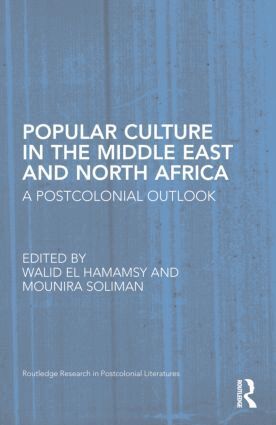
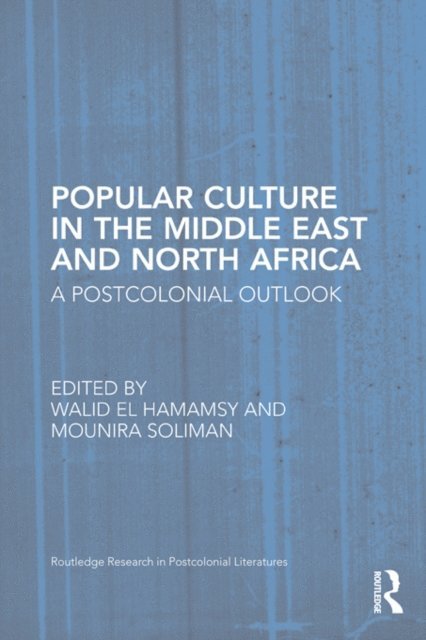
This book explores the body and the production process of popular culture in, and on, the Middle East and North Africa, Turkey, and Iran in the first decade of the 21st century, and up to the current historical moment. Essays consider gender, racial, political, and cultural issues in film, cartoons, music, dance, photo-tattoos, graphic novels, fiction, and advertisements. Contributors to the volume span an array of specializations ranging across literary, postcolonial, gender, media, and Middle Eastern studies and contextualize their views within a larger historical and political moment, analyzing the emergence of a popular expression in the Middle East and North Africa region in recent years, and drawing conclusions pertaining to the direction of popular culture within a geopolitical context. The importance of this book lies in presenting a fresh perspective on popular culture, combining media that are not often combined and offering a topical examination of recent popular production, aiming to counter stereotypical representations of Islamophobia and otherness by bringing together the perspectives of scholars from different cultural backgrounds and disciplines. The collection shows that popular culture can effect changes and alter perceptions and stereotypes, constituting an area where people of different ethnicities, genders, and orientations can find common grounds for expression and connection.
836 kr
Skickas inom 10-15 vardagar
This book explores the body and the production process of popular culture in, and on, the Middle East and North Africa, Turkey, and Iran in the first decade of the 21st century, and up to the current historical moment. Essays consider gender, racial, political, and cultural issues in film, cartoons, music, dance, photo-tattoos, graphic novels, fiction, and advertisements. Contributors to the volume span an array of specializations ranging across literary, postcolonial, gender, media, and Middle Eastern studies and contextualize their views within a larger historical and political moment, analyzing the emergence of a popular expression in the Middle East and North Africa region in recent years, and drawing conclusions pertaining to the direction of popular culture within a geopolitical context. The importance of this book lies in presenting a fresh perspective on popular culture, combining media that are not often combined and offering a topical examination of recent popular production, aiming to counter stereotypical representations of Islamophobia and otherness by bringing together the perspectives of scholars from different cultural backgrounds and disciplines. The collection shows that popular culture can effect changes and alter perceptions and stereotypes, constituting an area where people of different ethnicities, genders, and orientations can find common grounds for expression and connection.
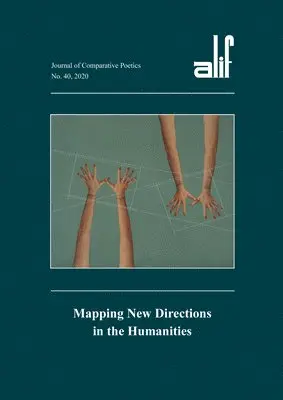
Alif: Journal of Comparative Poetics, No. 40: Mapping New Directions in the Humanities
Häftad, Engelska, 2021
1 169 kr
Skickas inom 5-8 vardagar
1 010 kr
Skickas
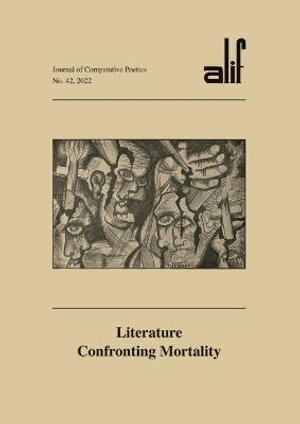
A wide-ranging, multi-disciplinary collection of essays that decenter, critique, and problematize predominant notions of the meaning of mortality for human creativityThis issue of Alif explores the ways in which humans have come to confront their mortality across time and space. Contributions question the nature of loss, grief, and the possibility of an afterlife. Is death only an interlude? Perhaps simply the end? How have people used literature and the arts to conceptualize its relentless presence in our existence?The articles in this issue decenter, critique, and problematize predominant notions of the meaning of mortality for human creativity. They provide a wide scope of responses to mortality, anthropologically, philosophically, and psychologically. They shed light on different cultural receptions of loss, annihilation, and mortality, ranging from India to Yemen, Palestine to Iraq, the Island of Lampedusa to the war-ravished city of Beirut, among many other locales. Death is dealt with in an intimate fashion through the exploration and reinterpretation of modern and classical elegiac poetry, children’s picturebooks, fictional accounts of war, grief, and displacement, and dramatic treatments of dying and the afterlife.Contributors: Hajjaj Abu Jabr, Egyptian Academy of Arts, Cairo, EgyptKaram AbuSehly, Beni-Suef University, Beni Suef, EgyptHala Amin, Beni-Suef University, Beni Suef, EgyptShaimaa El-Ateek, Imam Mohammad Ibn Saud Islamic University, Riyadh, Saudi ArabiaMohamed Birairi, Beni-Suef University, Beni-Suef, Egypt, and American University in Cairo, Cairo, EgyptElliott Colla, Georgetown University, Washington, DC, USASaeed Elmasry, Cairo University, Cairo, EgyptShaimaa Gohar, Ain Shams University, Cairo, EgyptWalid El Khachab, York University, Toronto, CanadaYasmine Motawy, American University in Cairo, Cairo, EgyptDani Nassif, University of Münster, Münster, GermanyAndrea Maria Negri, Ludwig Maximilian University of Munich, Munich, GermanyMarwa Ramadan, Zagazig University, Zagazig, EgyptCaroline Rooney, University of Kent, Kent, United KingdomTania Al Saadi, Stockholm University, Stockholm, SwedenMay Telmissany, University of Ottawa, Ottawa, CanadaShahla Ujayli, American University of Madaba, Madaba, Jordan
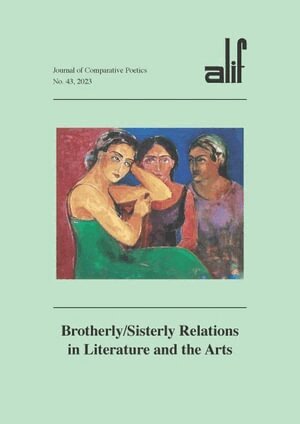
Alif: Journal of Comparative Poetics, no. 43
Brotherly/Sisterly Relations in Literature and the Arts
Häftad, Engelska, 2023
1 261 kr
Skickas inom 11-20 vardagar
A rich exploration of sibling bonds in literature and the artsThis issue of Alif explores representations of brotherhood/sisterhood in literature and the arts. What does it mean to be part of a brotherly/sisterly bond? And what do such bonds entail, positively or otherwise? These questions have been extensively posed and revisited in a variety of traditions old and new. Sibling relations, here defined, can also transcend kinship and blood relations to include shared causes and values, such as political solidarity and gender equality.Contributors:Shereen Abouelnaga, Cairo University, EgyptAbdelrahman Abuabed, independent scholar, Doha, QatarKaram AbuSehly, Beni-Suef University, EgyptSaad Al-Bazei, King Saud University, Riyadh, Saudi ArabiaMariam Elashmawy, Freie Universität Berlin, GermanySafaa Fathy, poet, essayist, and filmmaker, FranceAnna Głowacka, independent scholar, AustriaHala K. Gomaa, independent scholar, Cairo, EgyptNoha Hanafy, The British University in Egypt, Cairo, EgyptMagda Hasabelnaby, Ain Shams University, Cairo, EgyptAmina Mansour, photographer, creative conceptualizer, and copywriter, Cairo, EgyptDalia Said Mostafa, The University of Manchester, UKManal Al-Natour, West Virginia University, Morgantown, West Virginia, USAAndrea Maria Negri, Ludwig Maximilian University of Munich, GermanyYomna Saber, Qatar University, Doha, QatarMuhammed F. Salem, independent scholar, Cairo, EgyptMary Youssef, Binghamton University, New York State, USA