Warren Young – författare
4 667 kr
Skickas inom 3-6 vardagar
2 264 kr
Skickas inom 10-15 vardagar
2 336 kr
Skickas inom 10-15 vardagar
808 kr
Skickas inom 10-15 vardagar
1 893 kr
Skickas inom 10-15 vardagar
1 084 kr
Skickas inom 10-15 vardagar
2 511 kr
Skickas inom 10-15 vardagar
740 kr
Kommande
831 kr
Läs direkt efter köp
A Financial Theory of the Business Cycle presents a new approach to business cycle theory based on the net present value. The book develops a novel diagrammatic approach to illustrate how fractional reserve banking systematically distorts net-present-value calculations. In addition to providing fresh insights, the new diagrammatic approach provides a comparative framework that can be used to compare pre-existing theories, including those of John Maynard Keynes, Friedrich Hayek, Milton Friedman, and Robert E. Lucas, Jr.
The net present value is the most important concept in the theory and practice of modern finance. As such, it is the proper framework for explaining the systematic financial losses that occur during the business cycle. Eugen von Böhm-Bawerk and Irving Fisher developed the modern theory of the net present value, and the financial theory of the business cycle developed in this book is rooted in their tradition. Although financial elements played a central role in their respective theories, Keynes and Hayek did not use the net present value. This failure created problems that still haunt business cycle theory today. This book addresses these problems and attempts to steer financial theories of the business cycle back to the course set by Böhm-Bawerk and Fisher.
In addition to macroeconomists, this book will appeal to financial economists, money and banking experts, accountants, financial analysts, and businesspeople generally.
831 kr
Läs direkt efter köp
A Financial Theory of the Business Cycle presents a new approach to business cycle theory based on the net present value. The book develops a novel diagrammatic approach to illustrate how fractional reserve banking systematically distorts net-present-value calculations. In addition to providing fresh insights, the new diagrammatic approach provides a comparative framework that can be used to compare pre-existing theories, including those of John Maynard Keynes, Friedrich Hayek, Milton Friedman, and Robert E. Lucas, Jr.
The net present value is the most important concept in the theory and practice of modern finance. As such, it is the proper framework for explaining the systematic financial losses that occur during the business cycle. Eugen von Böhm-Bawerk and Irving Fisher developed the modern theory of the net present value, and the financial theory of the business cycle developed in this book is rooted in their tradition. Although financial elements played a central role in their respective theories, Keynes and Hayek did not use the net present value. This failure created problems that still haunt business cycle theory today. This book addresses these problems and attempts to steer financial theories of the business cycle back to the course set by Böhm-Bawerk and Fisher.
In addition to macroeconomists, this book will appeal to financial economists, money and banking experts, accountants, financial analysts, and businesspeople generally.
952 kr
Läs direkt efter köp
808 kr
Skickas inom 10-15 vardagar
901 kr
Läs direkt efter köp
The purpose of this book is to describe the intellectual process by which Real Business Cycle models were developed. The approach taken focuses on the core elements in the development of RBC models: (i) building blocks, (ii) catalysts, and (iii) meta-syntheses. This is done by detailed examination of all available unpublished variorum drafts of the key papers in the RBC story, so as to determine the origins of the ideas. The analysis of the process their discovery is then set out followed by explanations of the evolution and dissemination of the models, from first generation papers through full blown research programs. This is supplemented by interviews and correspondence with the individuals who were at the center of the development of RBC models, such as Kydland, Prescott, Long, Plosser, King, Lucas and Barro, among others.
This book gets stright to the heart of the debates surrounding RBC models and as such contributes to a real assessment of their impact on modern macroeconomics. The volume, therefore, will interest all scholars looking at macroeconomics as well as historians of economic thought more generally.
901 kr
Läs direkt efter köp
The purpose of this book is to describe the intellectual process by which Real Business Cycle models were developed. The approach taken focuses on the core elements in the development of RBC models: (i) building blocks, (ii) catalysts, and (iii) meta-syntheses. This is done by detailed examination of all available unpublished variorum drafts of the key papers in the RBC story, so as to determine the origins of the ideas. The analysis of the process their discovery is then set out followed by explanations of the evolution and dissemination of the models, from first generation papers through full blown research programs. This is supplemented by interviews and correspondence with the individuals who were at the center of the development of RBC models, such as Kydland, Prescott, Long, Plosser, King, Lucas and Barro, among others.
This book gets stright to the heart of the debates surrounding RBC models and as such contributes to a real assessment of their impact on modern macroeconomics. The volume, therefore, will interest all scholars looking at macroeconomics as well as historians of economic thought more generally.
712 kr
Läs direkt efter köp
1 116 kr
Skickas inom 10-15 vardagar
1 116 kr
Skickas inom 10-15 vardagar
1 084 kr
Skickas inom 10-15 vardagar
1 459 kr
Läs direkt efter köp
1 416 kr
Läs direkt efter köp
601 kr
Skickas inom 5-8 vardagar
67 kr
Läs direkt efter köp
Prevention of Reoffending
The Value of Rehabilitation and the Management of High Risk Offenders
1 382 kr
Skickas inom 5-8 vardagar
Endogenous Growth
Theory, Methods and Morphology
1 229 kr
Kommande
1 375 kr
Läs direkt efter köp
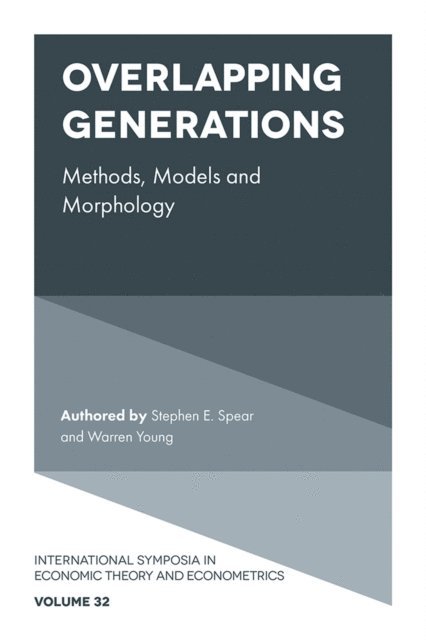
The 800 pound gorilla in the room of macroeconomics is the question of why the overlapping generations model didn’t become the central workhorse model for macroeconomics. Introduced in 1958 by Paul Samuelson, the model postulates an infinite number of finite-lived families. This is in stark contrast to the more dominant neoclassical growth model, which is based on the assumption that real economies are populated by a finite number of dynastic families. Despite the greater realism of the former model and the inherent implausibility of the assumptions underlying the growth model, the growth model has become dominant. The authors here explore the co-evolution of the two models to shed light on why this happened, spanning the entire post-WWII era.
Overlapping Generations
Methods, Models and Morphology
1 278 kr
Skickas inom 5-8 vardagar
1 375 kr
Läs direkt efter köp
The 800 pound gorilla in the room of macroeconomics is the question of why the overlapping generations model didn’t become the central workhorse model for macroeconomics. Introduced in 1958 by Paul Samuelson, the model postulates an infinite number of finite-lived families. This is in stark contrast to the more dominant neoclassical growth model, which is based on the assumption that real economies are populated by a finite number of dynastic families. Despite the greater realism of the former model and the inherent implausibility of the assumptions underlying the growth model, the growth model has become dominant. The authors here explore the co-evolution of the two models to shed light on why this happened, spanning the entire post-WWII era.
1 084 kr
Skickas inom 10-15 vardagar
1 671 kr
Skickas inom 10-15 vardagar
2 110 kr
Läs direkt efter köp
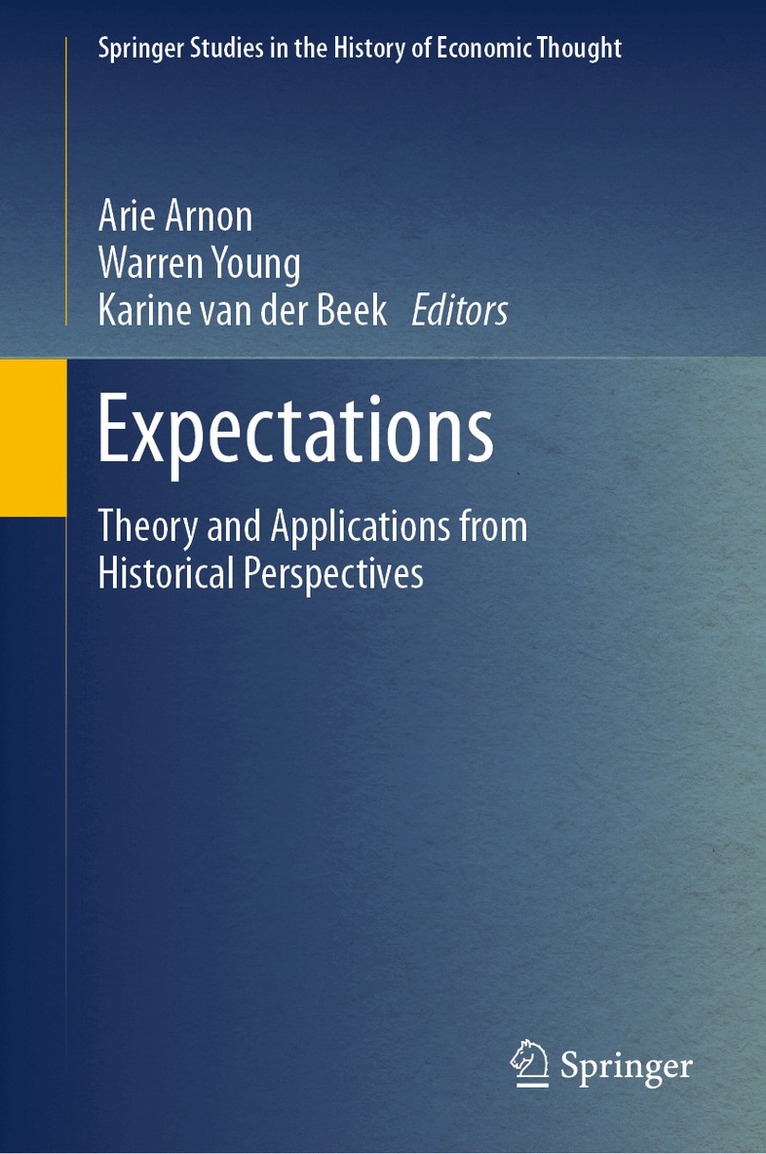
This book provides a unique historical perspective on expectations in economic theory, and applications of expectations models in economic history. Based on papers presented at the 2017 Thomas Guggenheim Conference, it brings together the work of economists, historians of economics, and economic historians on issues and events concerning expectations in economics and economic history. The contributions address: (i) the history of expectations models; (ii) growth, expectations and political economy; (iii) controversies regarding expectations methods and models; (iv) expectations in theory and reality; and (v) expectations in economic history.
The book opens with a lecture by Thomas Guggenheim Prize winner Duncan Foley on the evolution of expectations in modern economic thought. The remaining content is divided into two parts, the first of which focuses on the utilization of expectations in the “ancient” and “meso” periods of high theory, i.e., from Smithian to Keynesian approaches. The papers cover topics such as “modern” applications of expectations in both “Tobinesque-Phillips” and “Harrodian-Solowian” contexts, and the debate between Friedmanite and Keynesian approaches to expectation formation. In turn, the last part presents essays on the role of economic expectations in connection with historical events and contexts, ranging from the early 20th century to World War II, and on the application of expectations theory to hyperinflation and stabilization, taking Israel as a case study.