• Fri frakt över 249 kr
  • •
  • Snabba leveranser
  • •
  • Billiga böcker
Kundservice

Du är på sajten för privatpersoner.

Företag, bibliotek eller offentlig verksamhet?

Du handlar på classic.bokus.com, där alla dina funktioner finns intakta.
Till classic.bokus.com
Bokus logotyp. Gå till startsidan.
  • Erbjudanden
  • Nyheter
  • Student
  • Topplistor
  • Barn & ungdom
  • Bokus Play
  • E-böcker
  • Pocketböcker
  • Spel & pussel

10% rabatt på allt med kod NYSTART10 →

Sidfot

Mina sidor

    Hjälp

    • Kundservice
    • Vanliga frågor och svar
    • Frakt och leverans
    • Retur vid ångerrätt
    • Reklamera vara
    • Betalning
    • Köpvillkor
    • Allmänna villkor
    • Information om webbplatsens tillgänglighet

    Om Bokus

    • Om oss
    • Pressrum
    • För studenter
    • För företag
    • För bibliotek och offentlig verksamhet
    • För leverantörer
    • Hållbarhet

    Populärt

    • Aktuella erbjudanden
    • Presentkort
    • Studentlitteratur
    • Nya böcker
    • Topplistor
    • Signerade böcker
    • Engelska böcker

    Inspiration

    • Boktips
    • BookTok
    • Populära bokserier
    • Barnbokskaraktärer
    • Populära författare
    Logotyp för Bokus
    Följ oss på Facebook (extern länk)Följ oss på Instagram (extern länk)Följ oss på YouTube (extern länk)Följ oss på TikTok (extern länk)
    bokus @ CookiesAnpassa cookiesIntegritetspolicyKöpvillkor
    Till Citymail hemsida (extern länk)Till Budbee hemsida (extern länk)Till Postnord hemsida (extern länk)Till Schenker hemsida (extern länk)Till Early Bird hemsida (extern länk)Till Walleys hemsida (extern länk)
    1. Ekonomi och Ledarskap
    2. Nationalekonomi
    3. Internationell ekonomi

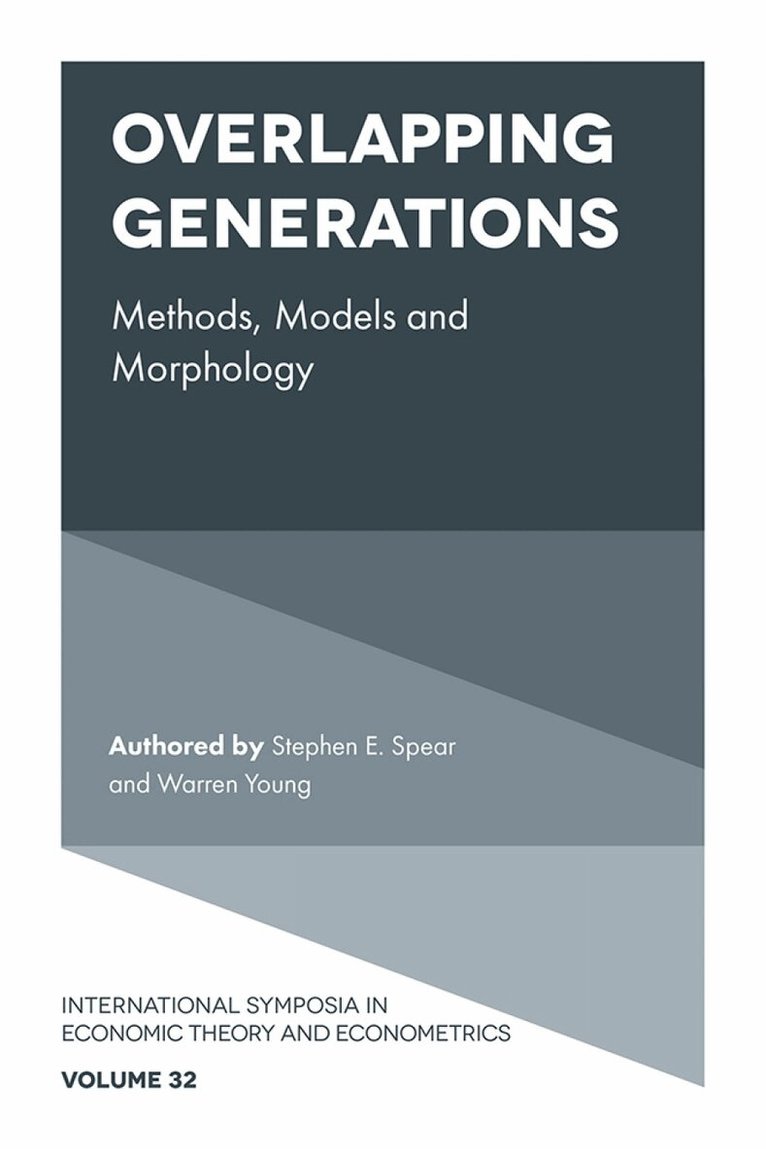
    Overlapping Generations

    Methods, Models and Morphology

    AvStephen E. Spear,Warren Young

    Inbunden, Engelska, 2023

    Del 32 i serien International Symposia in Economic Theory and Econometrics

    1 276 kr

    Beställningsvara. Skickas inom 5-8 vardagar. Fri frakt över 249 kr.

    Beskrivning

    The 800 pound gorilla in the room of macroeconomics is the question of why the overlapping generations model didn’t become the central workhorse model for macroeconomics. Introduced in 1958 by Paul Samuelson, the model postulates an infinite number of finite-lived families. This is in stark contrast to the more dominant neoclassical growth model, which is based on the assumption that real economies are populated by a finite number of dynastic families. Despite the greater realism of the former model and the inherent implausibility of the assumptions underlying the growth model, the growth model has become dominant. The authors here explore the co-evolution of the two models to shed light on why this happened, spanning the entire post-WWII era.

    Produktinformation

    • Utgivningsdatum:2023-09-04
    • Mått:152 x 229 x 18 mm
    • Vikt:508 g
    • Format:Inbunden
    • Språk:Engelska
    • Serie:International Symposia in Economic Theory and Econometrics
    • Antal sidor:264
    • Förlag:Emerald Publishing Limited
    • ISBN:9781837530533

    Utforska kategorier

    • Internationell ekonomi inom Ekonomi och Ledarskap
    • Finansiering inom Ekonomi och Ledarskap
    • Ekonomiska system inom Ekonomi och Ledarskap

    Mer om författaren

    Stephen E. Spear is Professor of Economics at Tepper School of Business, Carnegie Mellon University, Pittsburgh, USA.Warren Young is Professor Emiratus at the Department of Economics, Bar Ilan University, Ramat Gan, Israel.

    Recensioner i media

    This book is a real tour de force in clarity and tremendous scope. It should be on the reading list for all advanced economics graduate students.

    Innehållsförteckning

    • Introduction. Introduction Chapter 1. Origins of the Workhorse Models Chapter 2. OLG – The Next Generations, 1960-1970 Chapter 3. Expectations and the Neutrality of Money c. 1972: From OLG to SOLG Chapter 4. Infinite Lived Agents: Dynasty, 1970-1980 Chapter 5. OLG and Money, 1970-1980 Chapter 6. OLG and Theory, 1970-1980 Chapter 7. Boomers Chapter 8. Gen X and Beyond: 1995-2015 Chapter 9. The Ascendance of ILA and the Future of Macro Chapter 10. Morphology of OLG Models and Methods in Comparative Perspective Chapter 11. Summary and Conclusion