Peter Galbács - Böcker
Visar alla böcker från författaren Peter Galbács. Handla med fri frakt och snabb leverans.
3 produkter
3 produkter
Del 35 - International Symposia in Economic Theory and Econometrics
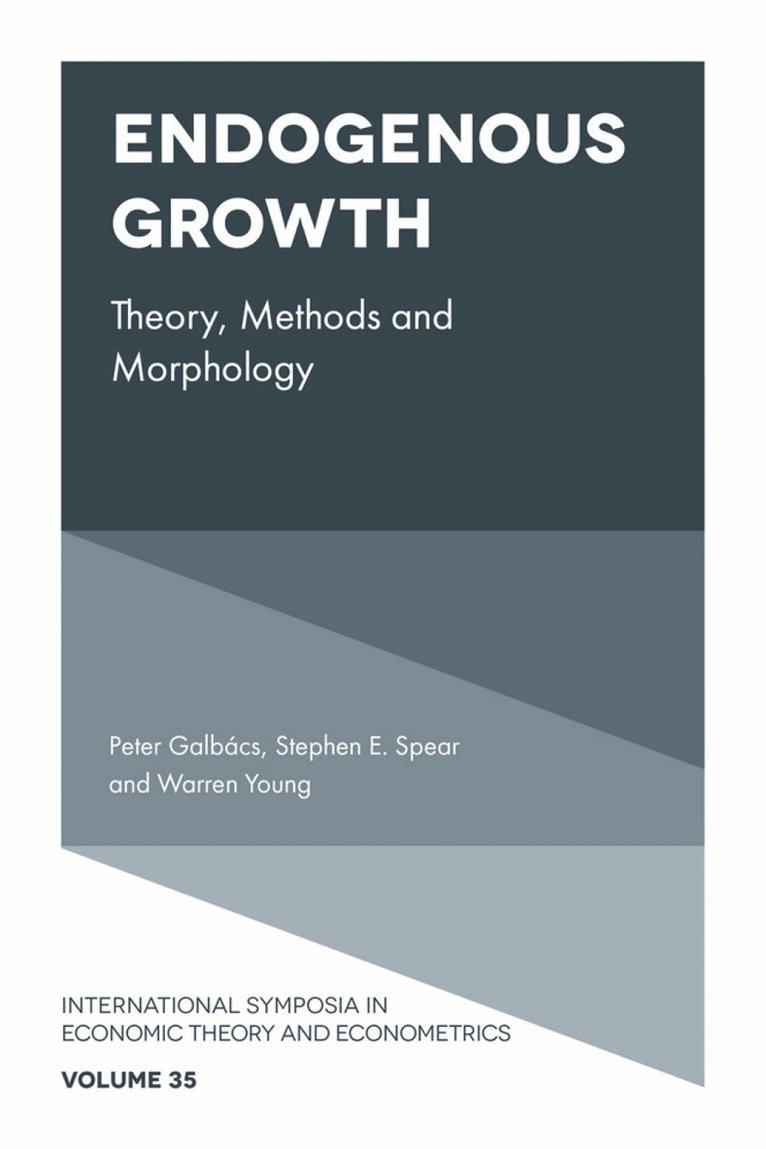
Endogenous Growth
Theory, Methods and Morphology
Inbunden, Engelska, 2026
1 204 kr
Kommande
Endogenous Growth traces the intellectual evolution of growth theory, from its formative origins to its modern formalisation. The authors investigate how endogenous growth theory developed alongside the dominant analytical frameworks of dynamic macroeconomics. The book examines why models incorporating imperfect competition, heterogeneous returns, and alternative equilibrium concepts were long overshadowed. Through careful attention to the mathematical foundations—Hamiltonians, dynamic programming, and the shifting conceptualisation of capital—the authors reveal how the field’s trajectory shaped both the promise and the limitations of its models, and why a richer treatment of competition, capital, and equilibrium is essential for understanding long-run growth.This volume of the International Symposia in Economic Theory and Econometrics series fills a conspicuous gap in contemporary macroeconomic pedagogy. By devoting greater space to model exposition, historical context, and dynamic optimization techniques, the authors provide a gentler yet analytically robust pathway into modern mathematical economics. The result is a timely, clarifying work that engages constructively with established literature while offering a complementary framework for understanding the mechanisms that truly drive economic growth.
1 101 kr
Skickas inom 10-15 vardagar
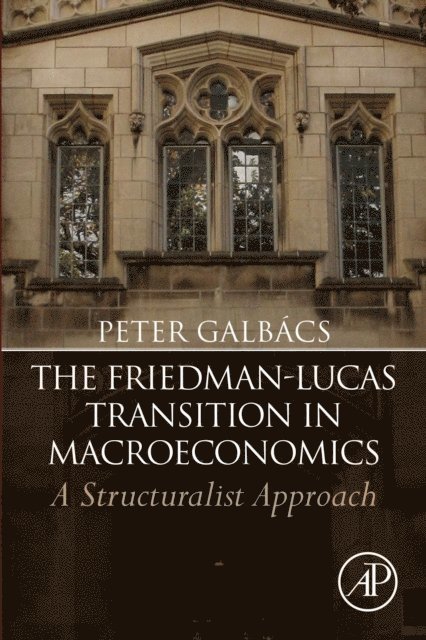
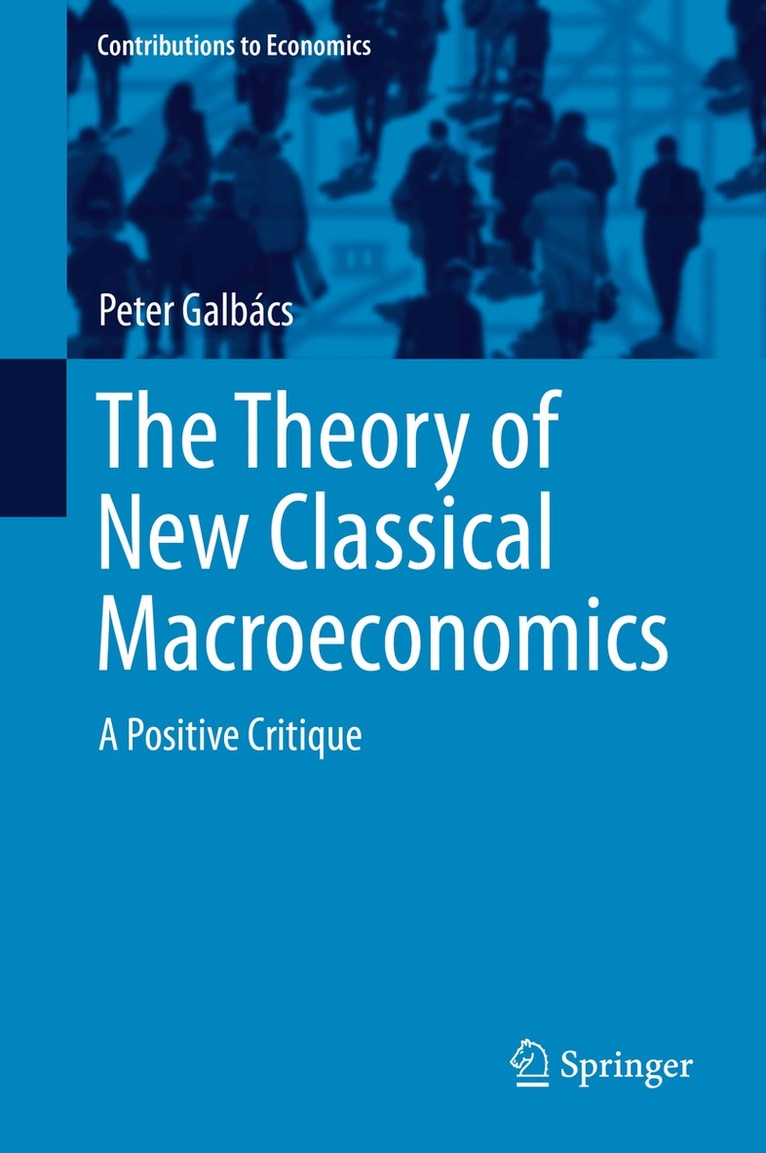
This book examines new classical macroeconomics from a comparative and critical point of view that confronts the original texts and later comments as a first dimension of comparison. The second dimension appears in a historical context, since none of the new classical doctrines can be analyzed ignoring the parallelism and discrepancies with the theory of Keynes, Friedman or Phelps. Radicalism of new classical macroeconomics has brought fundamental changes in economic thought, but the doctrines got vulgarized and distorted thanks to the mass of followers. Nowadays, economic theory and policy, trying to find their ways, have a less clear relationship than ever. Therefore, this volume is aimed at mapping and reconsidering the policy instruments and transmission mechanisms offered by the new classicals. Its central question points to the real nature of new classical macroeconomics: what consequences are grounded by the assumptions new classicals used. Moreover, issues raised by automatic fiscal stabilizers and fiscal reforms are analyzed as well, even if they were out of the range of classical texts. The book draws a picture of new classical macroeconomics stressing the analogies with Keynesian countercyclical policies, instead of the discrepancies commonly held.
1 069 kr
Skickas inom 10-15 vardagar
This book examines new classical macroeconomics from a comparative and critical point of view that confronts the original texts and later comments as a first dimension of comparison. The second dimension appears in a historical context, since none of the new classical doctrines can be analyzed ignoring the parallelism and discrepancies with the theory of Keynes, Friedman or Phelps. Radicalism of new classical macroeconomics has brought fundamental changes in economic thought, but the doctrines got vulgarized and distorted thanks to the mass of followers. Nowadays, economic theory and policy, trying to find their ways, have a less clear relationship than ever. Therefore, this volume is aimed at mapping and reconsidering the policy instruments and transmission mechanisms offered by the new classicals. Its central question points to the real nature of new classical macroeconomics: what consequences are grounded by the assumptions new classicals used. Moreover, issues raised by automatic fiscal stabilizers and fiscal reforms are analyzed as well, even if they were out of the range of classical texts. The book draws a picture of new classical macroeconomics stressing the analogies with Keynesian countercyclical policies, instead of the discrepancies commonly held.