Wendy A Woloson - Böcker
Visar alla böcker från författaren Wendy A Woloson. Handla med fri frakt och snabb leverans.
7 produkter
7 produkter
267 kr
Skickas inom 7-10 vardagar
169 kr
Skickas inom 7-10 vardagar
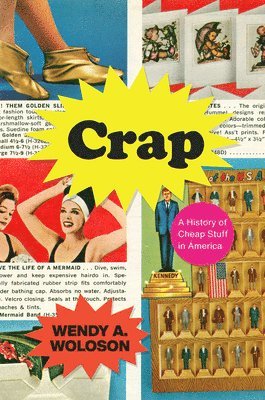
Crap. We all have it. Filling drawers. Overflowing bins and baskets. Proudly displayed or stuffed in boxes in basements and garages. Big and small. Metal, fabric, and a whole lot of plastic. So much crap. Abundant cheap stuff is about as American as it gets. And it turns out these seemingly unimportant consumer goods offer unique insights into ourselves—our values and our desires.In Crap: A History of Cheap Stuff in America, Wendy A. Woloson takes seriously the history of objects that are often cynically-made and easy to dismiss: things not made to last; things we don't really need; things we often don't even really want. Woloson does not mock these ordinary, everyday possessions but seeks to understand them as a way to understand aspects of ourselves, socially, culturally, and economically: Why do we—as individuals and as a culture—possess these things? Where do they come from? Why do we want them? And what is the true cost of owning them?Woloson tells the history of crap from the late eighteenth century up through today, exploring its many categories: gadgets, knickknacks, novelty goods, mass-produced collectibles, giftware, variety store merchandise. As Woloson shows, not all crap is crappy in the same way—bric-a-brac is crappy in a different way from, say, advertising giveaways, which are differently crappy from commemorative plates. Taking on the full brilliant and depressing array of crappy material goods, the book explores the overlooked corners of the American market and mindset, revealing the complexity of our relationship with commodity culture over time.By studying crap rather than finely made material objects, Woloson shows us a new way to truly understand ourselves, our national character, and our collective psyche. For all its problems, and despite its disposability, our crap is us.
470 kr
Tillfälligt slut
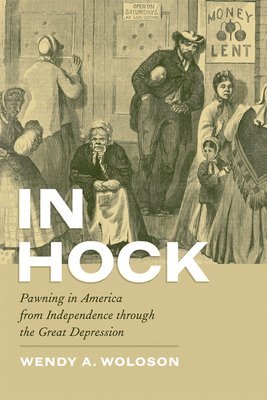
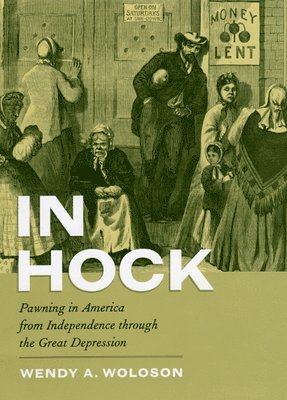
Puncturing the myth of the seamy storefront stocked with stolen watches and overseen by a shifty proprietor, "In Hock" reveals that pawnshops have long played an integral role in Americans' economic lives. The definitive history of pawn-broking in the United States from the nation's founding through the Great Depression, this volume demonstrates that the practice was inextricably intertwined with the rise of capitalism. The class of working poor begotten by this economic tide could make ends meet, Wendy A. Woloson argues, only by regularly visiting pawnshops to supplement their inadequate wages. Nonetheless, businessmen, reformers, and cultural critics berated the shops for promoting vice and used anti-Semitic stereotypes to cast their proprietors as greedy and cold-hearted. Parsing and subverting these caricatures, Woloson shows that pawnbrokers were in fact shrewd businessmen, often from humble origins, who honed sophisticated knowledge of a wide range of goods and their values in different markets.In the process, she paints a resonant portrait of the generations of Americans whose struggle for economic survival often depended on an institution that has remained, until now, woefully misunderstood.
250 kr
Skickas inom 7-10 vardagar
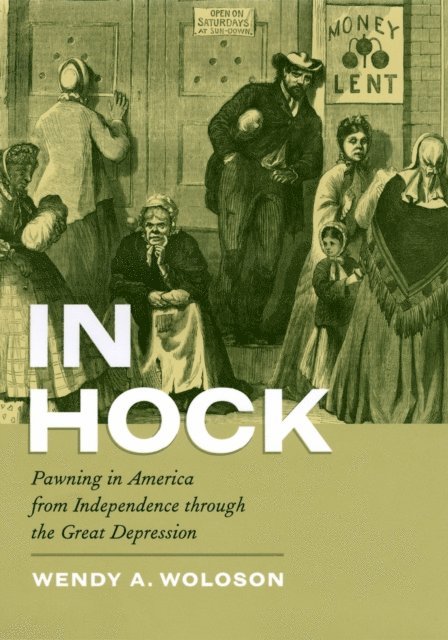
The definitive history of pawnbroking in the United States from the nation's founding through the Great Depression, "In Hock" demonstrates that the pawnshop was essential to the rise of capitalism. The class of working poor created by this economic tide could make ends meet only, Wendy A. Woloson argues, by regularly pawning household objects to supplement inadequate wages. Nonetheless, businessmen, reformers, and cultural critics claimed that pawnshops promoted vice, and employed anti-Semitic stereotypes to cast their proprietors as greedy and cold-hearted. Using personal correspondence, business records, and other rich archival sources to uncover the truth behind the rhetoric, Woloson brings to life a diverse cast of characters and shows that pawnbrokers were in fact shrewd businessmen, often from humble origins, who possessed sophisticated knowledge of a wide range of goods in various resale markets. A much-needed new look at a misunderstood institution, "In Hock" is both a first-rate academic study of a largely ignored facet of the capitalist economy and a resonant portrait of the economic struggles of generations of Americans.
Del 120 - The Johns Hopkins University Studies in Historical and Political Science
Refined Tastes
Sugar, Confectionery, and Consumers in Nineteenth-Century America
Inbunden, Engelska, 2002
551 kr
Tillfälligt slut
American consumers today regard sugar as a mundane and sometimes even troublesome substance linked to hyperactivity in children and other health concerns. Yet two hundred years ago American consumers treasured sugar as a rare commodity and consumed it only in small amounts. In Refined Tastes: Sugar, Confectionery, and Consumers in Nineteenth-Century America, Wendy A. Woloson demonstrates how the cultural role of sugar changed from being a precious luxury good to a ubiquitous necessity. Sugar became a social marker that established and reinforced class and gender differences. During the eighteenth and early nineteenth centuries, Woloson explains, the social elite saw expensive sugar and sweet confections as symbols of their wealth. As refined sugar became more affordable and accessible, new confections-children's candy, ice cream, and wedding cakes-made their way into American culture, acquiring a broad array of social meanings. Originally signifying male economic prowess, sugar eventually became associated with femininity and women's consumerism. Woloson's work offers a vivid account of this social transformation-along with the emergence of consumer culture in America.
Capitalism by Gaslight
Illuminating the Economy of Nineteenth-Century America
Inbunden, Engelska, 2015
711 kr
Skickas inom 7-10 vardagar
While elite merchants, financiers, shopkeepers, and customers were the most visible producers, consumers, and distributors of goods and capital in the nineteenth century, they were certainly not alone in shaping the economy. Lurking in the shadows of capitalism's past are those who made markets by navigating a range of new financial instruments, information systems, and modes of transactions: prostitutes, dealers in used goods, mock auctioneers, illegal slavers, traffickers in stolen horses, emigrant runners, pilfering dock workers, and other ordinary people who, through their transactions and lives, helped to make capitalism as much as it made them.Capitalism by Gaslight illuminates American economic history by emphasizing the significance of these markets and the cultural debates they provoked. These essays reveal that the rules of economic engagement were still being established in the nineteenth century: delineations between legal and illegal, moral and immoral, acceptable and unsuitable were far from clear. The contributors examine the fluid mobility and unstable value of people and goods, the shifting geographies and structures of commercial institutions, the blurred boundaries between legitimate and illegitimate economic activity, and the daily lives of men and women who participated creatively-and often subversively-in American commerce.With subjects ranging from women's studies and African American history to material and consumer culture, this compelling volume illustrates that when hidden forms of commerce are brought to light, they can become flashpoints revealing the tensions, fissures, and inequities inherent in capitalism itself.Contributors: Paul Erickson, Robert J. Gamble, Ellen Gruber Garvey, Corey Goettsch, Joshua R. Greenberg, Katie M. Hemphill, Craig B. Hollander, Brian P. Luskey, Will B. Mackintosh, Adam Mendelsohn, Brendan P. O'Malley, Michael D. Thompson, Wendy A. Woloson.
831 kr
Skickas inom 10-15 vardagar
Explores how marketers have leveraged feelings of personal familiarity in modern consumer capitalismOur wired world connects us with corporations in ways that, just a generation ago, would have been hard to imagine. Marketers track users' habits down to the swipe and scroll; brand influencers reach out to followers in ever more personal ways. Yet, however much we may feel individually recognized (or targeted) by today's marketers, the connections they make are, in truth, fleeting and tactical. They are also nothing new. Marketplace transactions have long been mediated by interactions that blur the line between the putatively public and rational world of commerce and the supposedly private and emotional realm of personal relations. That there is an affective tenor to every sales scenario has never been a secret to talented marketers.How, exactly, marketers have tried to set those moods by endowing commercial relationships with an aura of personal affinity is the subject of Commercial Intimacy. Its chapters explore the broad theme of commercial intimacy (that is, market-based feelings of spatial and emotional closeness) in US consumer culture from the mid-nineteenth century to the late twentieth century. They show how experiences of intimacy have been orchestrated by marketers operating at a variety of distances, from the face-to-face solicitations made by retail clerks and direct-sales agents to the long-distance appeals made by mail-order merchants, print and TV advertisers, telemarketers, and e-commerce platforms. The volume pays especially close attention to how these revenue-minded acts of ingratiation worked, how they were shaped by the technologies behind them, and how they capitalized on contemporary dynamics of gender and sexuality. At the heart of this volume, then, is the question of how our understanding of business history changes when we take the emotional, sensational, and affective dynamics of intimacy to be foundational elements of commercial persuasion.Contributors: Samuel Backer, Jennifer M. Black, Donna J. Drucker, Isabelle Marina Held, Julie A. Johnson, Lindsay Mitchell Keiter, Stephanie Kolberg, Brenton J. Malin, Cynthia B. Meyers, Richard K. Popp, Nicole E. Weber, Wendy A. Woloson.