Wendy Beth Hyman - Böcker
Visar alla böcker från författaren Wendy Beth Hyman. Handla med fri frakt och snabb leverans.
7 produkter
7 produkter
1 500 kr
Skickas inom 5-8 vardagar
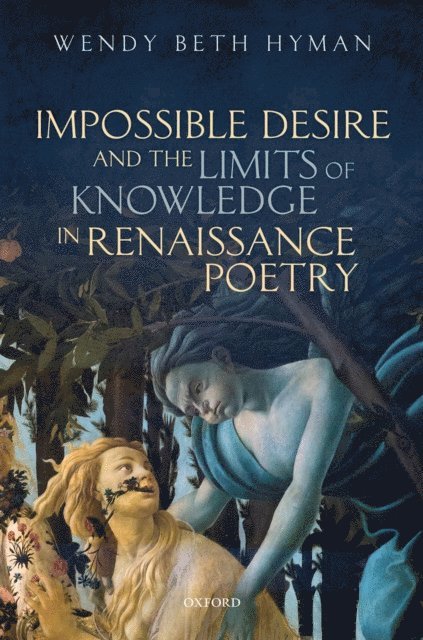
Impossible Desire and the Limits of Knowledge in Renaissance Poetry examines the limits of embodiment, knowledge, and representation at a disregarded nexus: the erotic carpe diem poem in early modern England. These macabre seductions offer no compliments or promises, but instead focus on the lovers' anticipated decline, and--quite stunningly given the Reformation context--humanity's relegation not to a Christian afterlife but to a Marvellian 'desert of vast Eternity.' In this way, a poetic trope whose classical form was an expression of pragmatic Epicureanism became, during the religious upheaval of the Reformation, an unlikely but effective vehicle for articulating religious doubt. Its ambitions were thus largely philosophical, and came to incorporate investigations into the nature of matter, time, and poetic representation. Renaissance seduction poets invited their auditors to participate in a dangerous intellectual game, one whose primary interest was expanding the limits of knowledge. The book theorizes how Renaissance lyric's own fragile relationship to materiality and time, and its self-conscious relationship to making, positioned it to grapple with these 'impossible' metaphysical and representational problems. Although attentive to poetics, the book also challenges the commonplace view that the erotic invitation is exclusively a lyrical mode. Carpe diem's revival in post-Reformation Europe portends its radicalization, as debates between man and maid are dramatized in disputes between abstractions like chastity and material facts like death. Offered here is thus a theoretical reconsideration of the generic parameters and aspirations of the carpe diem trope, wherein questions about embodiment and knowledge are also investigations into the potentialities of literary form.
2 492 kr
Skickas inom 10-15 vardagar
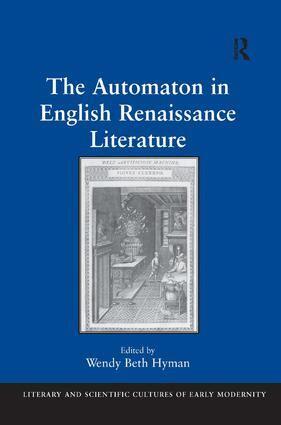
The Automaton in English Renaissance Literature features original essays exploring the automaton-from animated statue to anthropomorphized machine-in the poetry, prose, and drama of England in the 16th and 17th centuries. Addressing the history and significance of the living machine in early modern literature, the collection places literary automata of the period within their larger aesthetic, historical, philosophical, and scientific contexts. While no single theory or perspective conscribes the volume, taken as a whole the collection helps correct an assumption that frequently emerges from a post-Enlightenment perspective: that these animated beings are by definition exemplars of the new science, or that they point necessarily to man's triumphant relationship to technology. On the contrary, automata in the sixteenth and seventeenth centuries seem only partly and sporadically to function as embodiments of an emerging mechanistic or materialist worldview. Renaissance automata were just as likely not to confirm for viewers a hypothesis about the man-machine. Instead, these essays show, automata were often a source of wonder, suggestive of magic, proof of the uncannily animating effect of poetry-indeed, just as likely to unsettle the divide between man and divinity as that between man and matter.
2 070 kr
Kommande
695 kr
Kommande
939 kr
Skickas inom 10-15 vardagar
The Automaton in English Renaissance Literature features original essays exploring the automaton-from animated statue to anthropomorphized machine-in the poetry, prose, and drama of England in the 16th and 17th centuries. Addressing the history and significance of the living machine in early modern literature, the collection places literary automata of the period within their larger aesthetic, historical, philosophical, and scientific contexts. While no single theory or perspective conscribes the volume, taken as a whole the collection helps correct an assumption that frequently emerges from a post-Enlightenment perspective: that these animated beings are by definition exemplars of the new science, or that they point necessarily to man's triumphant relationship to technology. On the contrary, automata in the sixteenth and seventeenth centuries seem only partly and sporadically to function as embodiments of an emerging mechanistic or materialist worldview. Renaissance automata were just as likely not to confirm for viewers a hypothesis about the man-machine. Instead, these essays show, automata were often a source of wonder, suggestive of magic, proof of the uncannily animating effect of poetry-indeed, just as likely to unsettle the divide between man and divinity as that between man and matter.
Teaching Social Justice Through Shakespeare
Why Renaissance Literature Matters Now
Inbunden, Engelska, 2019
2 329 kr
Skickas inom 3-6 vardagar
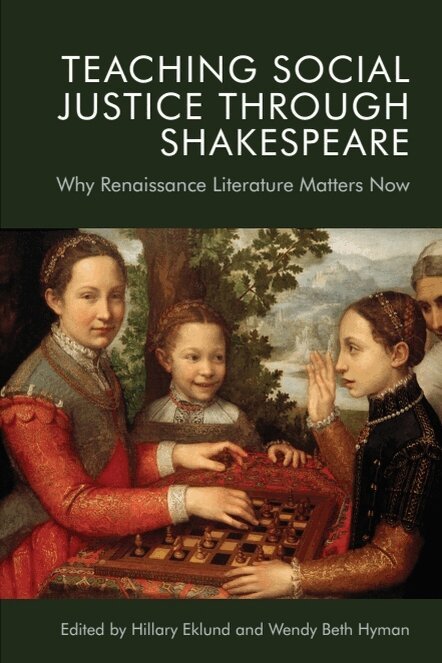
New ideas for teaching contemporary social justice through Shakespeare and Renaissance literatureDescribes innovative and portable teaching methods informed by recent scholarship in early modern literature, cultural studies, and critical pedagogyOffers strategies for effective teaching and advocacy amidst the growing cultural and economic complexities of higher educationDemonstrates the relevance of historical literary study to contemporary cultural conversations, especially those about social justiceHistoricizes the malicious "whitening" of Shakespeare and European culture, recognizing instead multiple, multicultural, accessible ShakespearesPresents Shakespeare’s plays as a common corpus of great value to democratic conversations in widely divergent contexts Gives educators language for promoting the virtue of humanistic inquiry and when higher education is on the defensiveThis book is for teachers who want to heighten the intellectual impact of their courses by using their classrooms as a creative space for social formation and action. Its twenty-one chapters provide diverse perspectives on Shakespeare and early modern literature that engage innovation, collaboration, and forward-looking practices. They model ways of mobilizing justice with early modern texts and claim the intellectual benefits of integrating social justice into courses. The book reconceives the relationship between students and Renaissance literature in ways that enable them – and us – to move from classroom discussions to real-life applications.
Teaching Social Justice Through Shakespeare
Why Renaissance Literature Matters Now
Häftad, Engelska, 2021
413 kr
Skickas inom 7-10 vardagar
New ideas for teaching contemporary social justice through Shakespeare and Renaissance literatureDescribes innovative and portable teaching methods informed by recent scholarship in early modern literature, cultural studies, and critical pedagogyOffers strategies for effective teaching and advocacy amidst the growing cultural and economic complexities of higher educationDemonstrates the relevance of historical literary study to contemporary cultural conversations, especially those about social justiceHistoricizes the malicious "whitening" of Shakespeare and European culture, recognizing instead multiple, multicultural, accessible ShakespearesPresents Shakespeare’s plays as a common corpus of great value to democratic conversations in widely divergent contexts Gives educators language for promoting the virtue of humanistic inquiry and when higher education is on the defensiveThis book is for teachers who want to heighten the intellectual impact of their courses by using their classrooms as a creative space for social formation and action. Its twenty-one chapters provide diverse perspectives on Shakespeare and early modern literature that engage innovation, collaboration, and forward-looking practices. They model ways of mobilizing justice with early modern texts and claim the intellectual benefits of integrating social justice into courses. The book reconceives the relationship between students and Renaissance literature in ways that enable them – and us – to move from classroom discussions to real-life applications.