• Fri frakt över 249 kr
  • •
  • Snabba leveranser
  • •
  • Billiga böcker
Kundservice

Du är på sajten för privatpersoner.

Företag, bibliotek eller offentlig verksamhet?

Du handlar på classic.bokus.com, där alla dina funktioner finns intakta.
Till classic.bokus.com
Bokus logotyp. Gå till startsidan.
  • Erbjudanden
  • Nyheter
  • Student
  • Topplistor
  • Barn & ungdom
  • Bokus Play
  • E-böcker
  • Pocketböcker
  • Spel & pussel

10% rabatt på allt med kod: NYSTART10 →

Sidfot

Mina sidor

    Hjälp

    • Kundservice
    • Vanliga frågor och svar
    • Frakt och leverans
    • Retur vid ångerrätt
    • Reklamera vara
    • Betalning
    • Köpvillkor
    • Allmänna villkor
    • Information om webbplatsens tillgänglighet

    Om Bokus

    • Om oss
    • Pressrum
    • För studenter
    • För företag
    • För bibliotek och offentlig verksamhet
    • För leverantörer
    • Hållbarhet

    Populärt

    • Aktuella erbjudanden
    • Presentkort
    • Studentlitteratur
    • Nya böcker
    • Topplistor
    • Signerade böcker
    • Engelska böcker

    Inspiration

    • Boktips
    • BookTok
    • Populära bokserier
    • Barnbokskaraktärer
    • Populära författare
    Logotyp för Bokus
    Följ oss på Facebook (extern länk)Följ oss på Instagram (extern länk)Följ oss på YouTube (extern länk)Följ oss på TikTok (extern länk)
    bokus @ CookiesAnpassa cookiesIntegritetspolicyKöpvillkor
    Till Citymail hemsida (extern länk)Till Budbee hemsida (extern länk)Till Postnord hemsida (extern länk)Till Schenker hemsida (extern länk)Till Early Bird hemsida (extern länk)Till Walleys hemsida (extern länk)
    1. Skönlitteratur
    2. Litteraturvetenskap
    3. Litteraturvetenskap

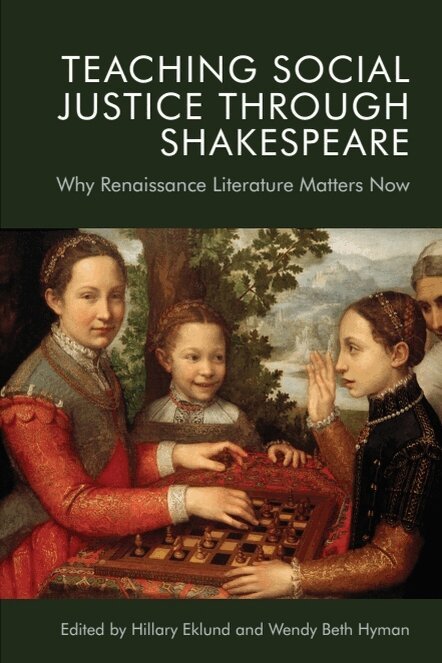
    Teaching Social Justice Through Shakespeare

    Why Renaissance Literature Matters Now

    AvHillary Eklund,Wendy Beth Hyman

    Inbunden, Engelska, 2019

    2 340 kr

    Beställningsvara. Skickas inom 3-6 vardagar. Fri frakt över 249 kr.

    Beskrivning

    New ideas for teaching contemporary social justice through Shakespeare and Renaissance literatureDescribes innovative and portable teaching methods informed by recent scholarship in early modern literature, cultural studies, and critical pedagogyOffers strategies for effective teaching and advocacy amidst the growing cultural and economic complexities of higher educationDemonstrates the relevance of historical literary study to contemporary cultural conversations, especially those about social justiceHistoricizes the malicious "whitening" of Shakespeare and European culture, recognizing instead multiple, multicultural, accessible ShakespearesPresents Shakespeare’s plays as a common corpus of great value to democratic conversations in widely divergent contexts Gives educators language for promoting the virtue of humanistic inquiry and when higher education is on the defensiveThis book is for teachers who want to heighten the intellectual impact of their courses by using their classrooms as a creative space for social formation and action. Its twenty-one chapters provide diverse perspectives on Shakespeare and early modern literature that engage innovation, collaboration, and forward-looking practices. They model ways of mobilizing justice with early modern texts and claim the intellectual benefits of integrating social justice into courses. The book reconceives the relationship between students and Renaissance literature in ways that enable them – and us – to move from classroom discussions to real-life applications.

    Produktinformation

    • Utgivningsdatum:2019-10-14
    • Mått:156 x 234 x 17 mm
    • Vikt:572 g
    • Format:Inbunden
    • Språk:Engelska
    • Antal sidor:288
    • Förlag:Edinburgh University Press
    • ISBN:9781474455589

    Utforska kategorier

    • Litteraturvetenskap inom Skönlitteratur

    Mer om författaren

    Hillary Eklund is Provost Distinguished Professor, Associate Professor of English, and Chair of the department at Loyola University New Orleans. She is the author of Literature and Moral Economy in the Early Modern Atlantic: Elegant Sufficiencies (Ashgate, 2015) and the editor of Ground-Work: English Renaissance Literature and Soil Science (Duquesne University Press, 2017). She has essays published or forthcoming in journals such as Shakespeare Studies, SEL, and Criticism, and in essay collections on a variety of topics from Shakespeare and Spenser to the environmental humanities. Her book in progress investigates the representations, uses, and controversies surrounding wetlands in the early modern period. Wendy Beth Hyman is Associate Professor of English and Comparative Literature at Oberlin College. She is author of the Impossible Desire and the Limits of Knowledge in Renaissance Poetry (Oxford UP, 2019), and editor of The Automaton in English Renaissance Literature (Ashgate 2011). She has published essays on early modern mechanical birds, insect poetry and early modern microscopy, the inner lives of Renaissance machines, physics and metaphysics in early modern lyric, metaphoricity and science, jacquemarts and Jack Falstaff, Spenser’s Faerie Queene, Nashe’s Unfortunate Traveller, and the pedagogy of book history. Professor Hyman is at work on a second monograph, attending to the relationships among mimesis, myth, and other kinds of literary fictions in Shakespearean and Spenserian romance.

    Recensioner i media

    Teaching Social Justice Through Shakespeare felt urgently needed in 2019. Writing this review in the summer of 2020 [...] the urgency feels so much the greater. Eklund and Hyman have assembled an extraordinary array of essays, ones that draw Shakespeare into discussions of (among other things) race, gender and gender identity, disability, incarceration, and environmental devastation.

    Innehållsförteckning

    • AcknowledgmentsNotes on the contributors Introduction: Making Meaning and Doing Justice with Early Modern Texts, Wendy Beth Hyman and Hillary EklundPart I: Defamiliarizing Shakespeare 1. Topical Shakespeare and the Urgency of Ambiguity, Adhaar Noor Desai2. Shakespeare in Transition, Sawyer Kemp3. Shakespeare in Japan: Disability and a Pedagogy of Disorientation, Allison P. Hobgood 4. Global Performance and Local Reception: Teaching Hamlet and More in Singapore, Emily Griffiths JonesPart II: Decolonizing Shakespeare5. African-American Shakespeares: Loving Blackness as Political Resistance, Jason M. Demeter6. Chicano Shakespeare: the Bard, the Border, and the Peripheries of Performance, Ruben Espinosa7. "Intelligently organized resistance": Shakespeare in the Diasporic Politics of John E. Bruce, Kim F. HallPart III: Ethical Queries and Practices8. Sexual Violence, Trigger Warnings, and the Early Modern Classroom, Kirsten Mendoza9. Rural Shakespeare and the Tragedy of Education, Jeffrey Osborne10. Shakespearean Tragedy, Ethics, and Social Justice, Mary Janell Metzger11. Teaching Environmental Justice and Early Modern Texts: Collaboration and Connected Classrooms, Rebecca Laroche and Jennifer Munroe12. Failing with Shakespeare: Political Pedagogy in Trump’s Autumn, Steve MentzPart IV: Revitalizing the Archive and Remixing Traditional Approaches 13. Teaching Serial with Shakespeare: Using Rhetoric to Resist, Rachel E. Holmes14. Adjunct Pleasure: Shakespeare’s Sonnets and the Writing on the Walls, Matthew Harrison15. Confronting Bias and Identifying Facts: Teaching Resistance Through Shakespeare, Carla Della Gatta16. Literary Justice: The Participatory Ethics of Early Modern Possible Worlds, Debapriya SarkarPart V: Shakespeare, Service, and Community17. Shakespeare, Service Learning, and the Embattled Humanities, Hillary Eklund18. Teaching Shakespeare Inside-Out: Creating a Dialogue Between Traditional and Incarcerated Students, Jayme M. Yeo19. "‘Shakespeare’ on his lips": Dreaming of The Shakespeare Center for Radical Thought and Transformative Action, Eric L. De Barros20. From Pansophia to Public Humanities: Connecting Past and Present Through Community-Based Learning, Tania Boster21. Cultivating Critical Content Knowledge: Early Modern Literature, Pre-Service Teachers, and New Methodologies for Social Justice, Todd Butler and Ashley BoydAfterword, Ayanna ThompsonBibliographyIndex