William M. Barton - Böcker
Visar alla böcker från författaren William M. Barton. Handla med fri frakt och snabb leverans.
12 produkter
12 produkter
730 kr
Skickas inom 10-15 vardagar
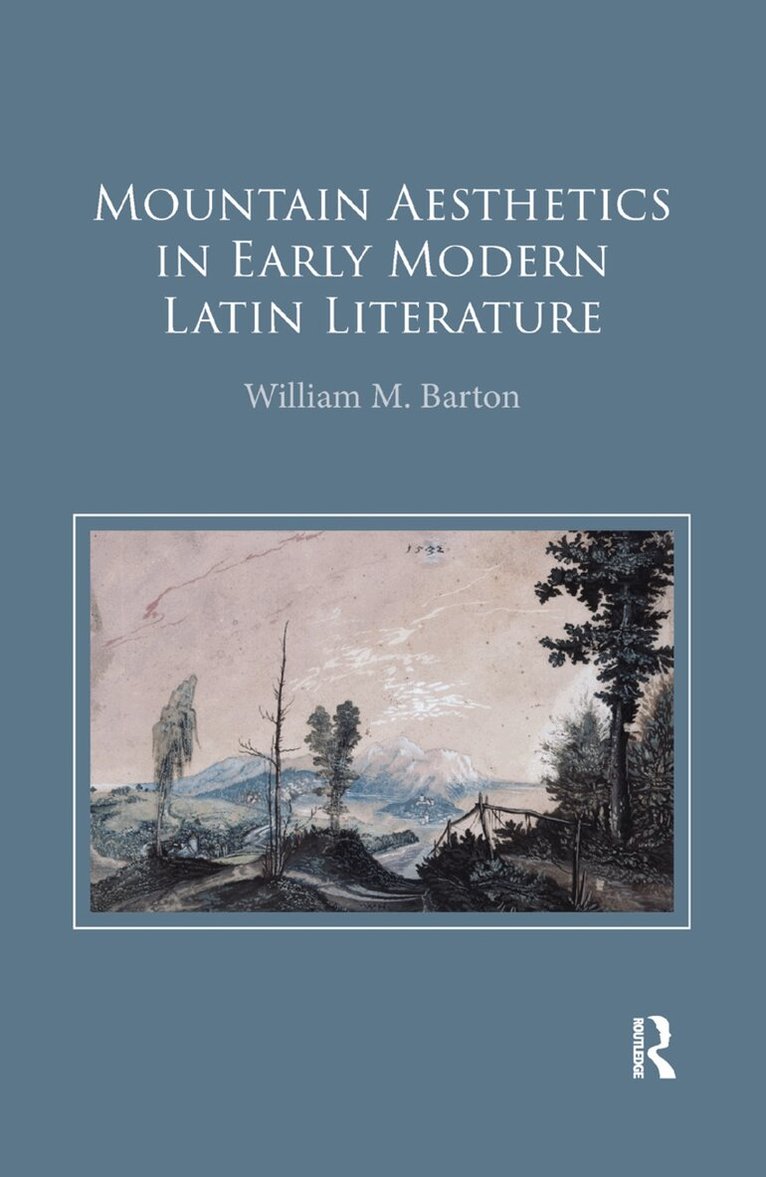
In the late Renaissance and Early Modern period, man’s relationship to nature changed dramatically. An important part of this change occurred in the way that beauty was perceived in the natural world and in the particular features which became privileged objects of aesthetic gratification. This study explores the shift in aesthetic attitude towards the mountain that took place between 1450 and 1750. Over the course of these 300 years the mountain transformed from a fearful and ugly place to one of beauty and splendor. Accepted scholarly opinion claims that this change took place in the vernacular literature of the early and mid-18th century. Based on previously unknown and unstudied material, this volume now contends that it took place earlier in the Latin literature of the late Renaissance and Early Modern period. The aesthetic attitude shift towards the mountain had its catalysts in two broad spheres: the development of an idea of ‘landscape’ in the geographical and artistic traditions of the 16th century on the one hand, and the increasing amount of scientific and theological investigation dedicated to the mountain on the other, reaching a pinnacle in the late 17th and early 18th centuries. The new Latin evidence for the change in aesthetic attitude towards the mountain unearthed in the course of this study brings material to light which is relevant for the current philosophical debate in environmental aesthetics. The book’s concluding chapter shows how understanding the processes that produced the late Renaissance and Early Modern shift in aesthetic attitude towards the mountain can reveal important information about the modern aesthetic appreciation of nature. Alongside a standard bibliography of primary literature, this volume also offers an extended annotated bibliography of further Latin texts on the mountains from the Renaissance and Early Modern period. This critical bibliography is the first of its kind and constitutes an essential tool for further study in the field.
2 574 kr
Skickas inom 10-15 vardagar
In the late Renaissance and Early Modern period, man’s relationship to nature changed dramatically. An important part of this change occurred in the way that beauty was perceived in the natural world and in the particular features which became privileged objects of aesthetic gratification. This study explores the shift in aesthetic attitude towards the mountain that took place between 1450 and 1750. Over the course of these 300 years the mountain transformed from a fearful and ugly place to one of beauty and splendor. Accepted scholarly opinion claims that this change took place in the vernacular literature of the early and mid-18th century. Based on previously unknown and unstudied material, this volume now contends that it took place earlier in the Latin literature of the late Renaissance and Early Modern period. The aesthetic attitude shift towards the mountain had its catalysts in two broad spheres: the development of an idea of ‘landscape’ in the geographical and artistic traditions of the 16th century on the one hand, and the increasing amount of scientific and theological investigation dedicated to the mountain on the other, reaching a pinnacle in the late 17th and early 18th centuries. The new Latin evidence for the change in aesthetic attitude towards the mountain unearthed in the course of this study brings material to light which is relevant for the current philosophical debate in environmental aesthetics. The book’s concluding chapter shows how understanding the processes that produced the late Renaissance and Early Modern shift in aesthetic attitude towards the mountain can reveal important information about the modern aesthetic appreciation of nature. Alongside a standard bibliography of primary literature, this volume also offers an extended annotated bibliography of further Latin texts on the mountains from the Renaissance and Early Modern period. This critical bibliography is the first of its kind and constitutes an essential tool for further study in the field.
1 958 kr
Skickas inom 10-15 vardagar
This study provides a critical edition of the Pervigilium Veneris with a Latin text, translation and commentary. This late-antique poem, the ‘Vigil of Venus’, is of unknown date and authorship. It exists in four heavily corrupted manuscripts, including the Codex Salmasianus, as part of a collection of later Latin poetry compiled around the 6th Century AD. Considerable attention has been paid to the piece since its first edition in the 16th century, largely on account of its singularity, mysterious origins and enigmatic final stanza, in which the poet suddenly bursts into the piece lamenting his 'lost muse'. Despite this scholarly interest, much work remained to be done in order to arrive at a more solid text of the poem and a more complete understanding of its meaning. This new edition, with detailed commentary notes and a full introduction to the historical and literary contexts of the poem, furthers our knowledge by offering new perspectives and analysis, incorporating existing scholarship and reviving ideas that had previously been set aside.
530 kr
Skickas inom 10-15 vardagar
This study provides a critical edition of the Pervigilium Veneris with a Latin text, translation and commentary. This late-antique poem, the ‘Vigil of Venus’, is of unknown date and authorship. It exists in four heavily corrupted manuscripts, including the Codex Salmasianus, as part of a collection of later Latin poetry compiled around the 6th Century AD. Considerable attention has been paid to the piece since its first edition in the 16th century, largely on account of its singularity, mysterious origins and enigmatic final stanza, in which the poet suddenly bursts into the piece lamenting his 'lost muse'. Despite this scholarly interest, much work remained to be done in order to arrive at a more solid text of the poem and a more complete understanding of its meaning. This new edition, with detailed commentary notes and a full introduction to the historical and literary contexts of the poem, furthers our knowledge by offering new perspectives and analysis, incorporating existing scholarship and reviving ideas that had previously been set aside.
460 kr
Kommande
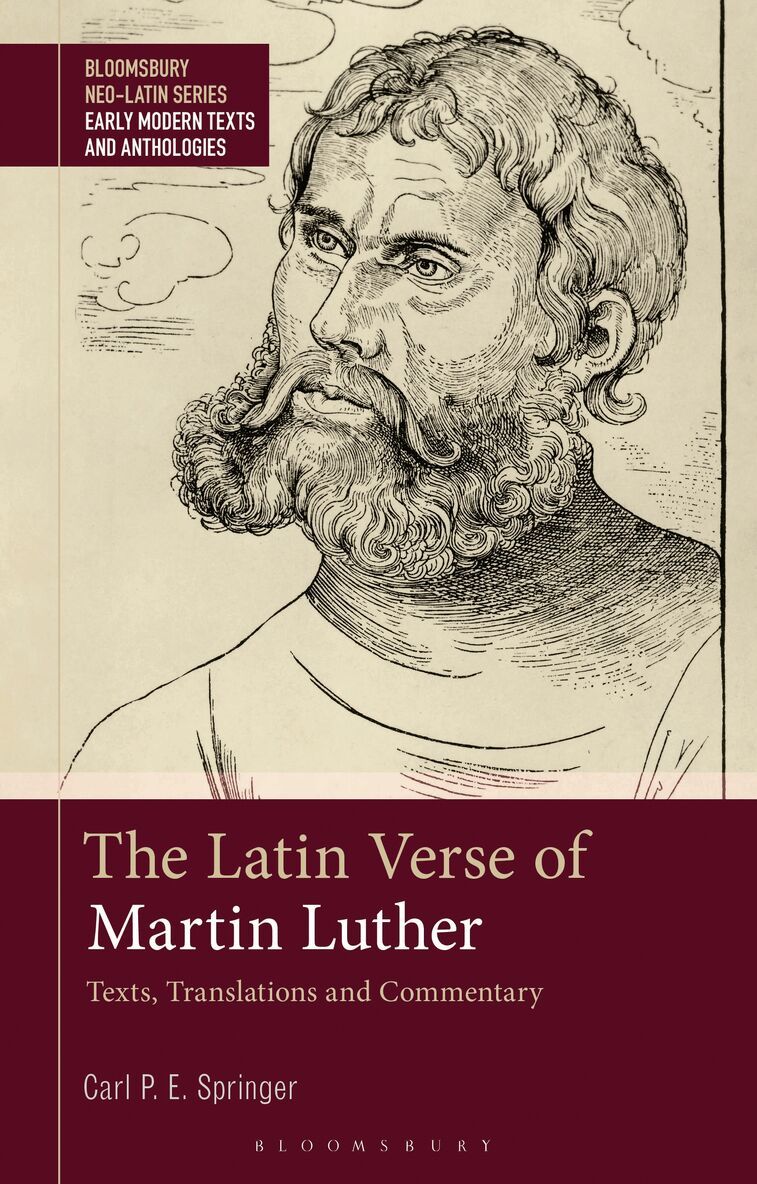
Martin Luther wrote a number of Latin poems, mostly using traditional classical metres, over the course of his career. He used them to praise friends, insult adversaries and express his faith in times of distress. Up until now, Luther’s Neo-Latin poetry has largely fallen through the disciplinary cracks. Literary scholars have traditionally paid more attention to the Latin verse of more celebrated humanist poets such as Petrarch. Students of the Reformation have concentrated far more often on Luther’s prose and his famous German hymns than on his Latin poems. Even scholars who are familiar with Luther’s Neo-Latin poetry have dismissed it as of only marginal significance.As this book demonstrates, Luther’s Latin verses are valuable cultural products that amply reward scholarly reconsideration. Springer’s volume is the first to provide English translations of all of them. It also includes extensive introductions and line-by-line annotations for each of the poems, situating them within their literary traditions and contemporary contexts. As such, it enables readers to see that far from being a reformer who more or less repudiated the Classics, or someone who merely dabbled in them, Luther was a confident, even bold, Latin poet, who was serious about working out his own distinctive synthesis between Christianity and the language and literature of the ancient Romans.
1 617 kr
Kommande
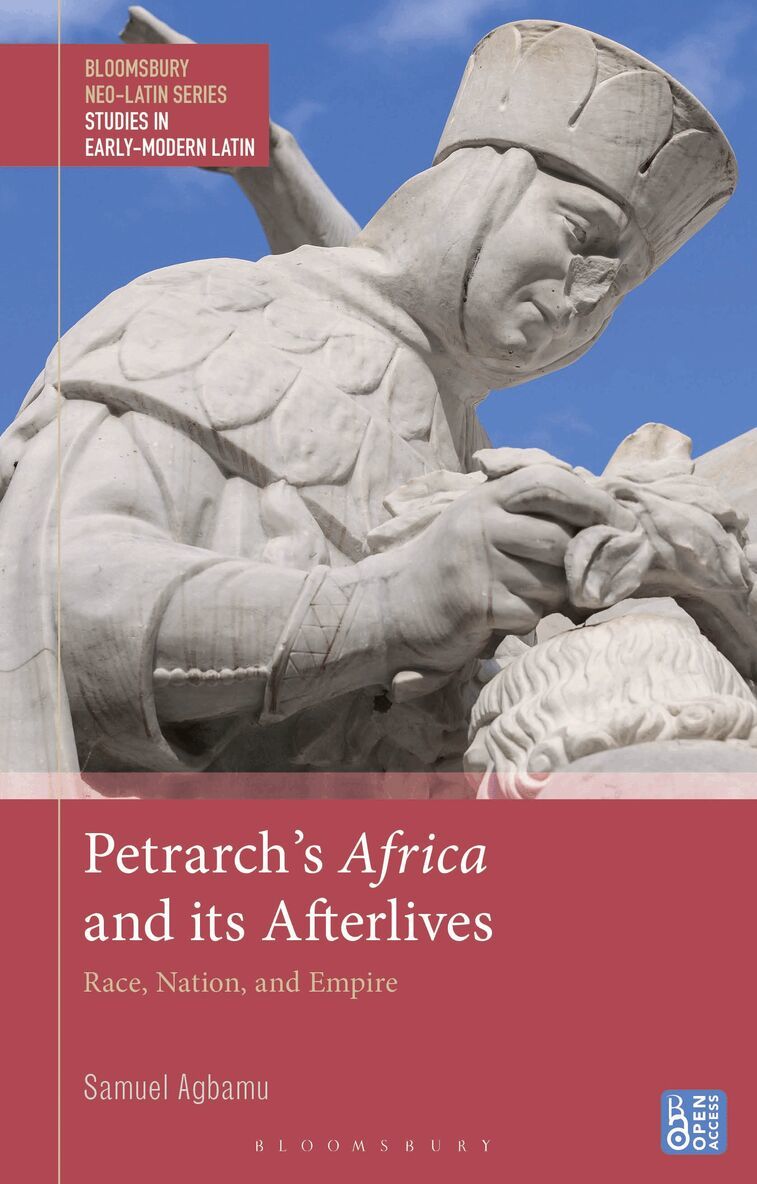
This open access monograph sheds new light on the epic by focusing on its importance as a vector for ideas about Africa and Africans between the 14th and 20th centuries. In Italy and abroad, the 14th-century poet Petrarch’s Italian verse has secured his place in literary history. Yet his greatest triumph was to be crowned in Rome in 1341, ostensibly for his then incomplete Latin epic of the Second Punic War, the Africa. However, soon after the poem’s posthumous publication, the Africa fell into relative obscurity. The afterlives of the epic remain largely unexplored, particularly with regard to Petrarch’s representation of the Second Punic War and the continent on which Scipio Africanus defeated Hannibal: Africa.The book also explores the contribution of the Africa to early modern and modern discourses of religion, nation and empire. Samuel Agbamu uncovers the role of the Africa in the intellectual archaeologies of nation, empire and race in the modern era and its role as a vector in the transmission and transformation of Roman ideas of empire and identity as reflected in accounts of the Punic War. This monograph makes its case through fresh close readings of the Africa, using new methodologies based on Premodern Critical Race Studies and Critical Muslim Studies.The eBook editions of this book are available open access under a CC BY-NC-ND 4.0 licence on bloomsburycollections.com. Open access was funded by the University of Reading.
1 544 kr
Skickas inom 10-15 vardagar
Presenting a range of Neo-Latin poems written by distinguished classical scholars across Europe from c. 1490 to c. 1900, this anthology includes a selection of celebrated names in the history of scholarship. Individual chapters present the Neo-Latin poems alongside new English translations (usually the first) and accompanying introductions and commentaries that annotate these verses for a modern readership, and contextualise them within the careers of their authors and the history of classical scholarship in the Renaissance and early modern period.An appealing feature of Renaissance and early modern Latinity is the composition of fine Neo-Latin poetry by major classical scholars, and the interface between this creative work and their scholarly research. In some cases, the two are actually combined in the same work. In others, the creative composition and scholarship accompany each other along parallel tracks, when scholars are moved to write their own verse in the style of the subjects of their academic endeavours. In still further cases, early modern scholars produced fine Latin verse as a result of the act of translation, as they attempted to render ancient Greek poetry in a fitting poetic form for their contemporary readers of Latin.
469 kr
Skickas inom 10-15 vardagar
Presenting a range of Neo-Latin poems written by distinguished classical scholars across Europe from c. 1490 to c. 1900, this anthology includes a selection of celebrated names in the history of scholarship. Individual chapters present the Neo-Latin poems alongside new English translations (usually the first) and accompanying introductions and commentaries that annotate these verses for a modern readership, and contextualise them within the careers of their authors and the history of classical scholarship in the Renaissance and early modern period.An appealing feature of Renaissance and early modern Latinity is the composition of fine Neo-Latin poetry by major classical scholars, and the interface between this creative work and their scholarly research. In some cases, the two are actually combined in the same work. In others, the creative composition and scholarship accompany each other along parallel tracks, when scholars are moved to write their own verse in the style of the subjects of their academic endeavours. In still further cases, early modern scholars produced fine Latin verse as a result of the act of translation, as they attempted to render ancient Greek poetry in a fitting poetic form for their contemporary readers of Latin.
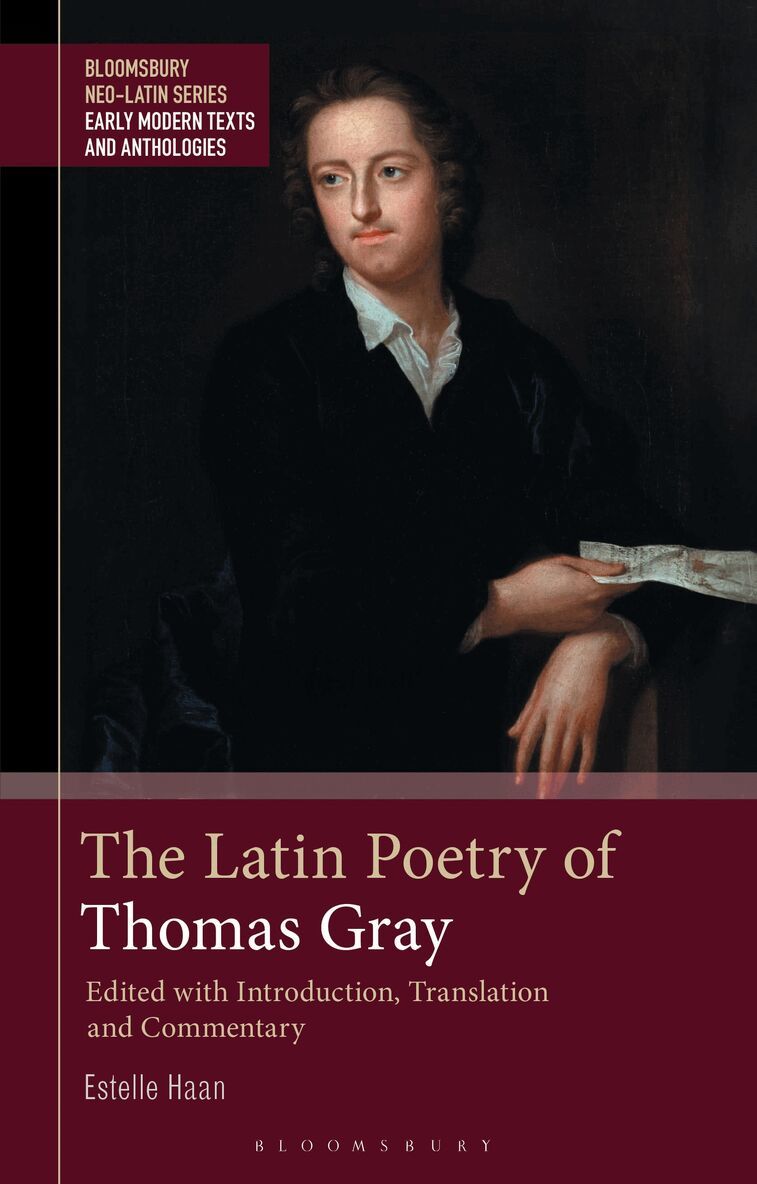
Latin Poetry of Thomas Gray
Edited with Introduction, Translation and Commentary
Häftad, Engelska, 2026
557 kr
Kommande
In the first full-scale edition of Thomas Gray’s Latin poetry, the Latin text and facing English translation are complemented by a detailed introduction and comprehensive commentary that situate Gray’s Latin verse in relation to his vernacular poetry, epistolary correspondence, and, especially, his appropriation of classical and Neo-Latin literature. This book also traces hitherto unlocated manuscripts of several of his Latin poems, and includes an editio princeps of recently discovered Latin verses pertaining to his Neapolitan sojourn.Gray’s Latin poetry presents an illuminating portrait of the artist as a young man, mapping his growth and development from his Etonian days to his undergraduate years at Cambridge University, to his continental journey and his return to England. Impressively eclectic in its scope and tone, it ranges from experimental renderings of English, Greek and Italian verse to more strikingly original pieces, including poetic reinterpretations of Alexander Pope’s Essay on Man and John Locke’s An Essay Concerning Humane Understanding. Gray looks back to a classical past, offering imaginative re-readings of Lucretius, Virgil and Horace. At the same time, his Latin verse is firmly rooted in a postclassical world. At its heart is the theme of presences, whether sacred, imagined, absent or remembered, conveyed with a linguistic ingenuity that facilitates the encoding of homoeroticism in a Neo-Latin language of sensibility.
1 617 kr
Kommande
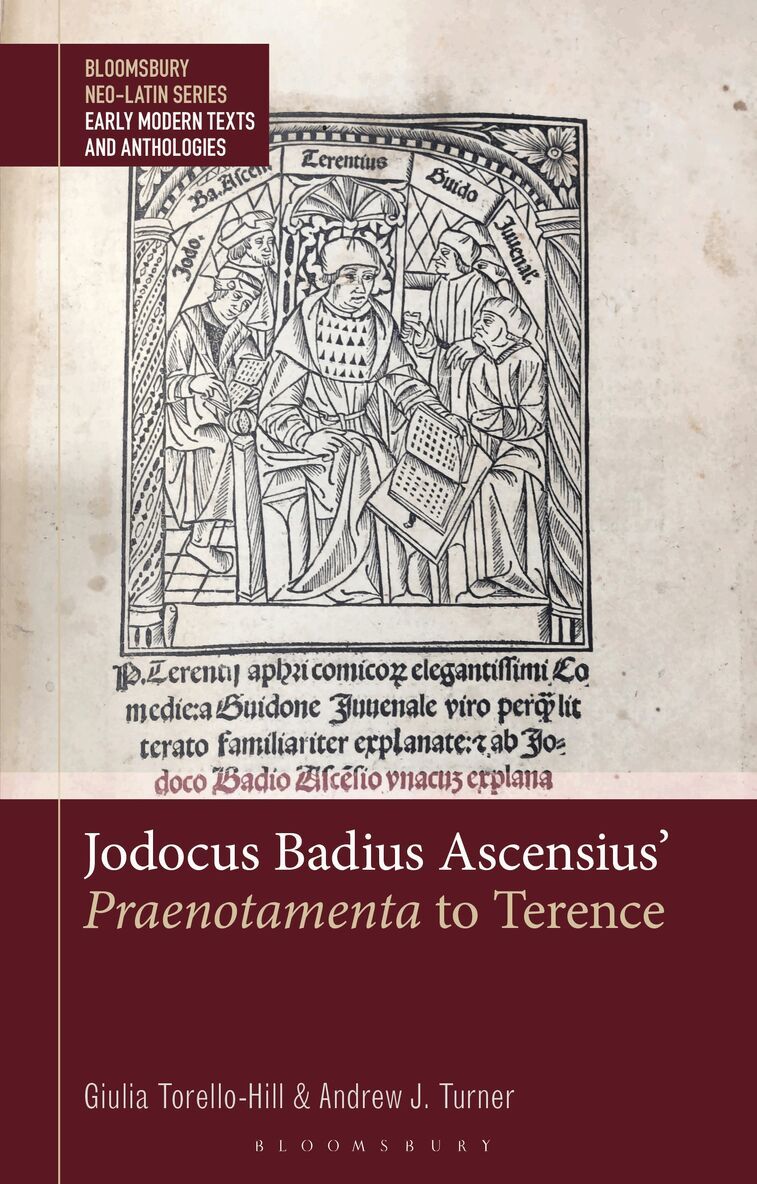
Offering the first scholarly edition and English translation of Praenotamenta, a treatise on ancient drama by Flemish scholar, editor and publisher Jodocus Badius Ascensius (1462-1535), along with his introductory notes to Terence's Andria, this book challenges existing scholarship and fosters an interdisciplinary approach to his work. Drawing on works on classical and literary criticism, intellectual history and drama, this edition will enable scholars to fully appreciate the role of Praenotamenta in the development of early modern dramatic criticism. Andrew J. Turner and Giulia Torello-Hill present a detailed analysis of the sources, composition, circulation and legacy of the treatise.First published in 1502 in Badius’s third edition of Terence’s plays, Praenotamenta was reprinted 18 times in the following twenty years, circulating widely across Europe. The treatise offered a diverse readership of educators, students, scholars and theatre practitioners a concise and accessible compendium of the main generic features of classical drama, its development and mise-en-scene – and its influence can be seen in treatises on poetics across Europe in France, Italy, Spain and England. Supported by a full introduction and commentary, the text and English translation of this important work are made accessible to a wide modern audience for the first time and will be essential reading for scholars in Classics, Neo-Latin and Theatre Studies.
1 617 kr
Kommande
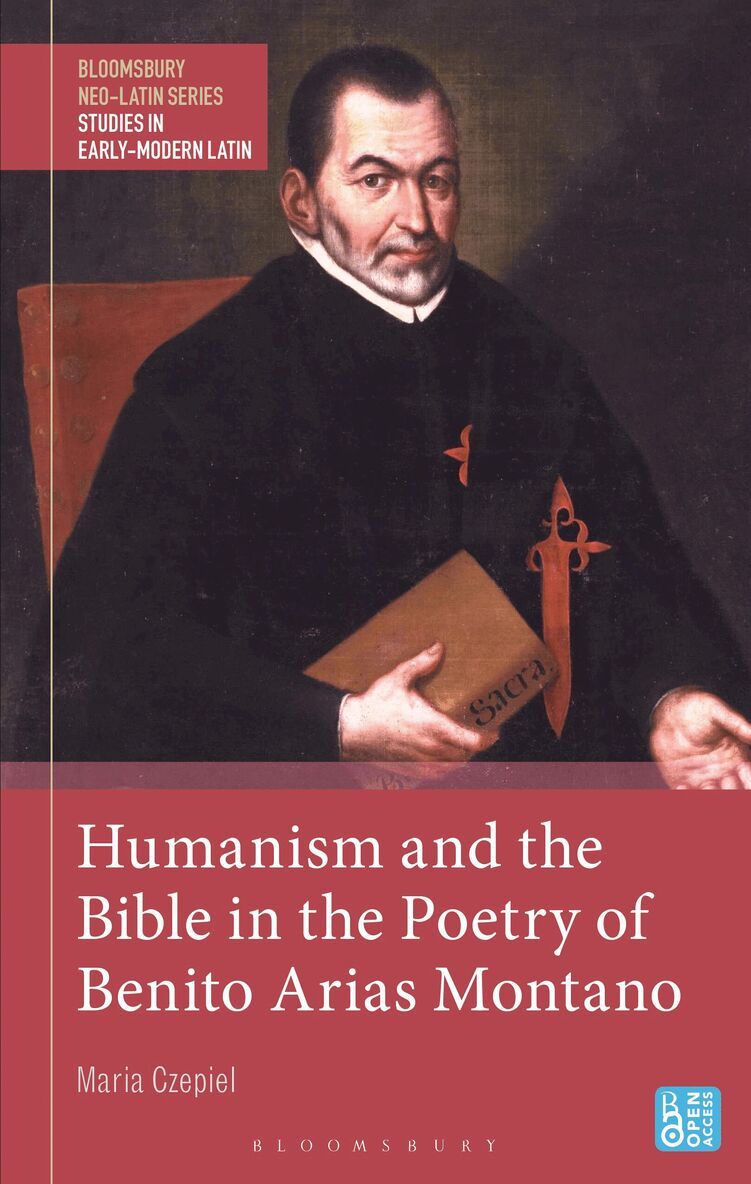
This open-access book fills a gap in our understanding of the religious poetry of sixteenth-century Spain by arguing for a new significance to the poetry of one of its central figures. The Latin poetry of cleric, scholar, librarian and political advisor Benito Arias Montano escaped censorship inspired by the 1559 Valdés Index, and so provides a unique window into the development of religious poetry in the late sixteenth century between Renaissance biblical paraphrase and the advent of Baroque religious poetry.Although Arias Montano was a true Renaissance polymath, learned in disciplines ranging from philology to natural philosophy, his interest in emerging humanist disciplines had to be balanced with his convictions that the Bible was the only source of true knowledge. Part One of this study presents an overview of his work and compares this with other religious poets writing across Europe. Czepiel argues that this scholar, a Spanish Catholic of the sixteenth century, is an early exponent of a European trend which sought to apply an encyclopaedic range of humanist disciplines to the study of the Bible, something which was previously attributed to the later seventeenth-century Protestant Republic of Letters. Part Two comprises case studies of particular scholarly disciplines within Arias Montano's poetry, including the study of Classical texts, Hebraist studies, historiography and political theory, and biblical geography and architecture. In each case, Czepiel argues for the poetry betraying a clear anxiety about the limitations and proper use of humanist scholarship.The ebook editions of this book are available open access under a CC BY-NC-ND 4.0 licence on bloomsburycollections.com. Open access was funded by Arts and Humanities Research Council (AHRC).
William Dillingham's Aegyptus Triumphata
Edited with Introduction, Translation and Commentary
Inbunden, Engelska, 2026
1 617 kr
Kommande
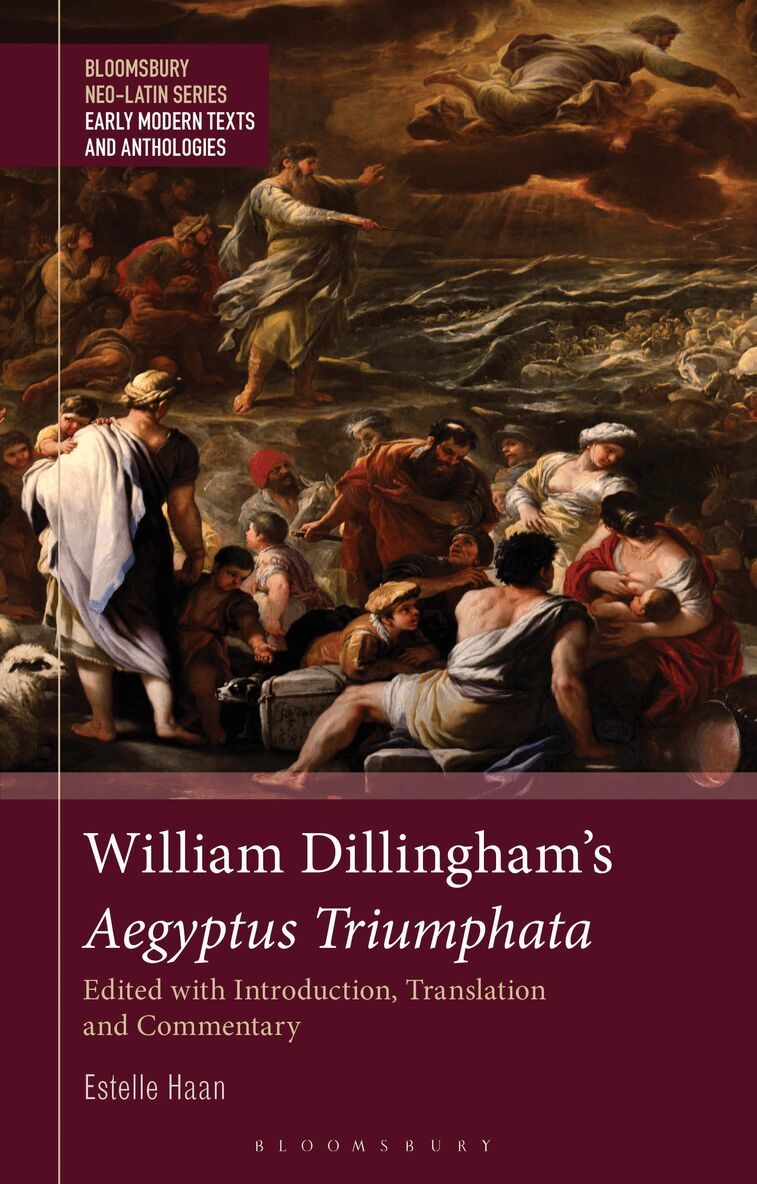
William Dillingham’s Aegyptus Triumphata (1680) takes as its subject the plagues of Egypt, the crossing of the Red Sea, and Moses’ consequential hymn of thanksgiving to God (Exodus 7–15). This, the first edition of the poem, introduces it to the scholarly community. Balancing accessibility with critical and theoretical rigour, it presents the Latin text and a facing English translation, complemented by an Introduction and Commentary that situate the work in relation to: biblical verse-paraphrase; the biblical epic tradition from the late antique to the early modern periods; Dillingham’s Neo-Latin and vernacular corpus; his role as an anthologist and promoter of Neo-Latin verse; and his appropriation of biblical, classical, and Neo-Latin literature.This accomplished, yet hitherto neglected, poem assumes an interesting place alongside late antique and early modern Latin epics inspired by the Old Testament in general and by Exodus in particular. Central to the genre is an intertextual engagement with Virgil’s Aeneid. Dillingham’s brief epic Romanizes and creatively embellishes its biblical source through authorial commentary, a recourse to epic simile, and, most notably, an experimental engagement with Virgil’s poetic corpus and the biblical text’s quasi-Virgilian afterlives.